
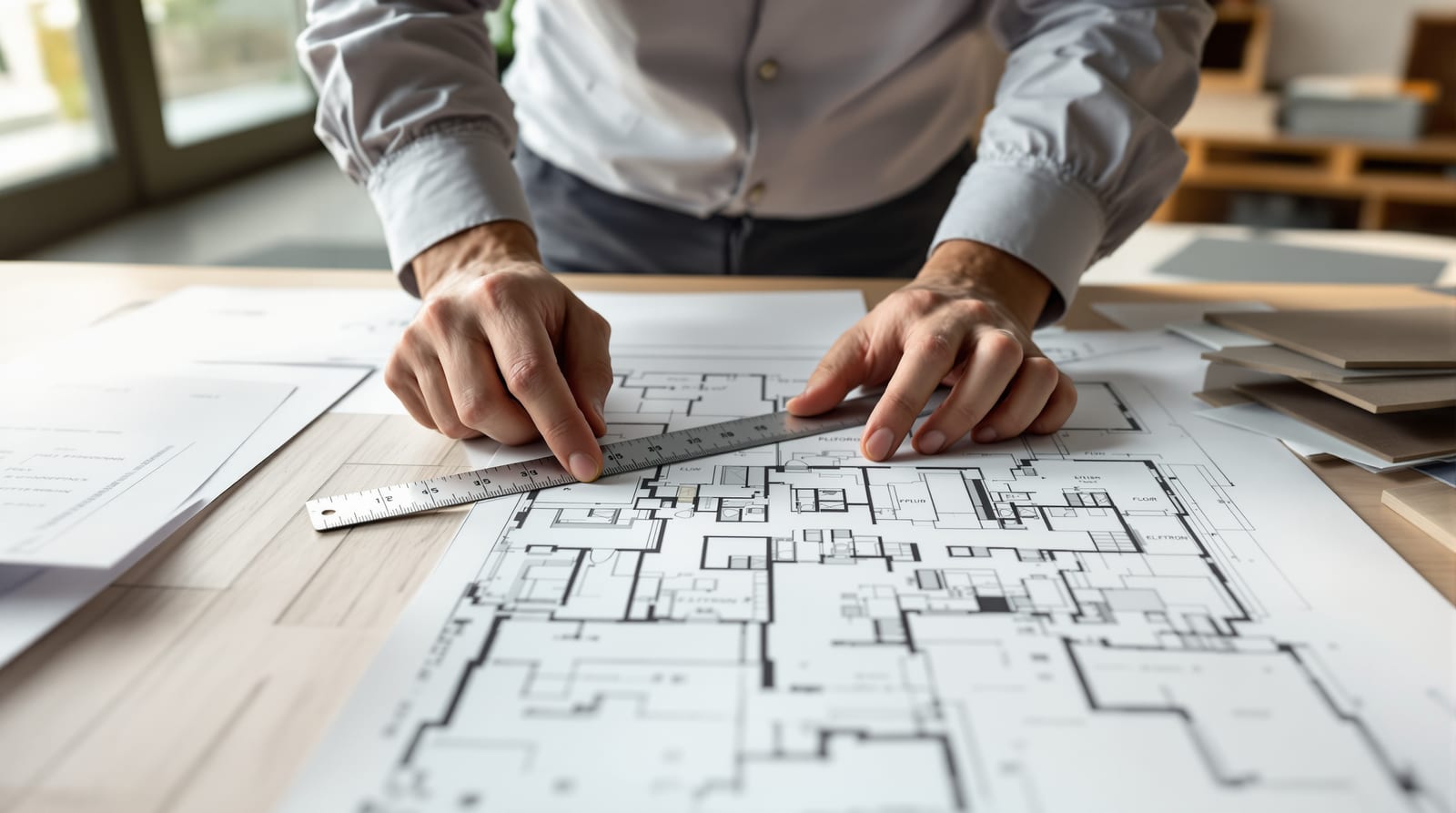
NBC Flooring Requirements in India: What the National Building Code Means for Your Floor (2026)
Anti-slip wet areas, flush thresholds (=12 mm), tactile and accessible floors, damp-proofing and floor loading — the NBC 2016 and RPwD provisions that govern flooring, turned into practical actions.
Most people think the National Building Code only governs columns, beams and fire exits — not the floor underfoot. It does both. The NBC 2016, read with the RPwD 2021 Harmonised Guidelines, quietly dictates how slippery your bathroom floor may be, how high a doorway lip can rise, where tactile tiles must run, and how much load your slab finish must carry. Get these wrong and you fail an accessibility audit, lose an occupancy certificate, or worse, someone slips. This guide turns the relevant NBC and allied provisions into plain requirements and practical actions for homeowners and professionals handling approvals and builds.
What the NBC actually is — and how it touches flooring
The National Building Code of India 2016 (NBC 2016), published by the Bureau of Indian Standards, is a recommended national framework that most state and municipal building bye-laws adopt by reference. It does not usually specify "use this tile"; instead it sets performance and safety intents — non-slip surfaces, barrier-free movement, damp protection, structural loading and fire behaviour — and then points to the relevant IS codes for the material itself.
So flooring sits at the intersection of several NBC parts. Part 3 (Development, Group Housing and accessibility), Part 4 (Fire and Life Safety), Part 6 (Structural Design, loads), and Part 9 (Plumbing, drainage of wet areas) all carry clauses that decide what your finished floor must do. Layered on top is the RPwD Act 2016 with the 2021 Harmonised Guidelines and Standards for Universal Accessibility, which is the operative document for tactile, level and accessible floors in public and many residential common areas. For the material standards behind compliance, see our companion flooring-standards-india and is-15622-tile-standard-explained-india.
The practical truth: an approving authority, an accessibility auditor, or a discerning buyer will check your floor against these intents. Below, each requirement is mapped to its NBC/allied provision and the action you take on site.
The master table: requirement to NBC provision to action
| Flooring requirement | NBC / allied provision (intent) | Practical action on site |
|---|---|---|
| Slip-resistant wet and common-area floors | NBC 2016 Part 4 and Part 3 / RPwD 2021 Guidelines — non-slip floor finishes in bathrooms, kitchens, lobbies, ramps, stairs | Specify anti-skid tiles R10-R11 (DIN 51130) for wet areas, R11-R12 for ramps and outdoor; matt or textured, not high-gloss |
| Flush / level floor transitions | RPwD 2021 — level, flush surfaces along accessible routes; thresholds kept to a minimum | Keep finished floor levels equal across doorways; eliminate steps on the accessible path; bevel any unavoidable level change |
| Threshold height limit | RPwD 2021 Harmonised Guidelines — door thresholds not to exceed 12 mm (and bevelled) | Detail bathroom and balcony thresholds =12 mm; chamfer the lip at 1:2; never a sharp upstand |
| Tactile / guiding floor indicators | RPwD 2021 / IS 17852 (tactile ground surface indicators) — guiding (directional) and warning (dotted) blocks | Lay guiding strips along the route and warning blocks before stairs, ramps, level changes, edges; contrasting colour |
| Accessible ramps in lieu of steps | NBC Part 3 / RPwD 2021 — ramp gradient 1:12 (max), with non-slip surface and handrails | Build ramps at 1:12 (gentler if length allows), R11+ surface, kerb edge, landings every 9 m |
| Damp-proofing of ground floors | NBC Part 9 / IS 3067 — damp-proof course, waterproofing of floors in contact with ground and wet areas | Provide DPC at plinth, tank and BBM under ground-floor finishes; waterproof bathroom/balcony screeds and turn up at walls |
| Plinth protection and level | NBC Part 3 — minimum plinth height above ground, apron / plinth protection | Set plinth above surrounding ground per local bye-law; slope apron away; protect finish from rising damp |
| Floor (imposed) loading | NBC 2016 Part 6 Section 1 (loads, per IS 875 Part 2) — minimum imposed loads by occupancy | Confirm the slab and finish suit the use: ~2 kN/m2 residential rooms, ~3-4 kN/m2 assembly/offices; heavy stone adds dead load |
| Fire / smoke behaviour of resilient floors | NBC Part 4 — surface flame spread and smoke for finishes in high-rise / assembly / exit routes | Use non-combustible stone/ceramic where possible; for vinyl/carpet in high-rises, demand low flame-spread, low-smoke certification |
| Drainage slope to floor traps | NBC Part 9 — wet-area floors to drain to traps; no ponding | Lay bathroom/balcony/terrace floors to fall ~1:80 to 1:100 toward the drain; check with a water test |
Anti-slip: where NBC and RPwD are strictest
Slip is the single most common floor hazard the code targets. NBC 2016 and the RPwD Guidelines call for non-slip finishes on wet floors (bathrooms, kitchens), circulation areas (lobbies, corridors), ramps and stair treads. India has no single mandatory slip number embedded in the bye-laws, so the standard professional practice is to specify against the DIN 51130 R-scale (ramp test) or barefoot DIN 51097 A/B/C:
| Area | Recommended slip class | Why |
|---|---|---|
| Bathrooms, shower zones (barefoot, wet) | DIN 51097 Class B/C, or R10 | Wet, barefoot, high fall risk |
| Kitchens, utility, balconies | R10-R11 | Wet + greasy underfoot |
| Lobbies, corridors, common areas | R9-R10, matt | Foot traffic, occasional wet |
| Ramps, entrance steps, outdoor | R11-R12 | Rain, gradient, shoes |
| Pool decks | R11-R12 / Class C | Constant water, barefoot |
Practical action: never put a polished/high-gloss PGVT or mirror-polished marble on a wet floor or a ramp, regardless of how good it looks. Use matt, textured, or anti-skid surfaces there, and reserve the gloss for dry living and bedroom floors. For the deeper treatment see anti-slip-flooring-standards-india and anti-slip-flooring-wet-areas-india.
Level transitions and the 12 mm threshold
A barrier-free accessible route demands a continuous, level floor. The RPwD 2021 Harmonised Guidelines fix two things that flooring directly controls:
- No level changes on the accessible path. Finished floor levels should be the same across rooms and doorways along the route. Where bathroom waterproofing forces a difference, keep it minimal and bevelled.
- Threshold height =12 mm, bevelled. Any unavoidable threshold (typically a shower or balcony lip to contain water) must not exceed 12 mm in height, and the upstand should be chamfered so a wheelchair, walker or toe does not catch.
This is where most Indian builds quietly fail: the bathroom floor is dropped, a granite patti rises 30-40 mm at the door, and the threshold becomes both a trip hazard and an accessibility violation. The fix is detailing during screed, not after tiling.
SVG: flush level threshold detail (=12 mm)
Tactile and accessible floors
For public buildings and many residential common areas, the RPwD Guidelines (aligned with IS 17852 on tactile ground surface indicators) require tactile flooring: two types of detectable warning underfoot. Guiding blocks (parallel raised bars) lead a person along a safe directional path; warning blocks (raised dots) signal a hazard — the top and bottom of stairs and ramps, edges, level changes, and approaches to crossings or lifts. They must contrast in colour with the surrounding floor for low-vision users.
Practical actions: run a continuous guiding line from the entrance to the lift/reception; place a 300-600 mm band of warning blocks before every stair flight and ramp; use yellow or another high-contrast tone against the base floor; keep the tactile surface itself slip-resistant. This ties directly to accessible-flooring-standards-india, which covers the layout rules in depth.
SVG: tactile floor indicators
Damp-proofing, plinth and drainage
NBC Part 9 and IS 3067 expect ground-bearing floors and wet areas to resist moisture. Two failures dominate Indian sites: rising damp through the plinth, and water tracking out of bathrooms.
- Damp-proof course (DPC): a continuous DPC at plinth level and a damp-proof membrane under ground-floor finishes block capillary rise from the soil. Without it, marble and wood floors blister and tiles debond.
- Plinth height and apron: keep the plinth above surrounding ground per the local bye-law and slope the external apron away so rainwater drains off, not into, the structure.
- Wet-area waterproofing: waterproof the bathroom/balcony/terrace screed and turn it up at least 150-300 mm at walls and under thresholds. Pair this with the =12 mm bevelled lip so water is contained without a trip step.
- Drainage falls: lay wet-area floors to a fall of roughly 1:80 to 1:100 toward the trap. Always do a 24-hour water (ponding) test before finishing. For sub-floor moisture control during installation see underlayment-and-moisture-barrier-india.
Floor loading and fire
Loading. NBC 2016 Part 6 (loads, drawing on IS 875 Part 2) sets minimum imposed loads by occupancy — broadly around 2 kN/m2 for residential rooms and 3-4 kN/m2 for offices and assembly spaces. The point for flooring: heavy finishes add dead load. A 20 mm marble or granite slab on a thick mortar bed adds meaningful weight; on long spans or cantilevers, the structural engineer must account for it. Confirm the build-up before committing to thick stone on upper floors.
Fire and smoke. Flooring is generally low fire-risk, and stone, ceramic and vitrified tiles are non-combustible — they are the safe default. The caution is resilient floors (vinyl, carpet, some engineered products) in high-rise and assembly buildings and on exit routes: NBC Part 4 cares about surface flame spread and smoke generation there. Specify products with low flame-spread and low-smoke certification for those locations, and keep escape corridors and staircases to non-combustible finishes. See fire-rated-flooring-india for the detailed material picture.
Putting it together for an approval or build
If you are submitting for approval or handing over a build, walk this short checklist: anti-slip class specified for every wet and common area; finished floor levels equal across the accessible route; all thresholds =12 mm and bevelled; tactile guiding and warning blocks where required, in contrasting colour; ramps at 1:12 with non-slip surface; DPC and wet-area waterproofing detailed; drainage falls and a ponding test; floor dead load confirmed with the structural engineer; non-combustible or certified low-smoke finishes in high-rise/exit areas. For private homes, a buyer's-eye sweep is covered in how-to-evaluate-builder-floor-before-buying-india.
NBC compliance is rarely about exotic materials. It is about ordinary tiles and stone, detailed correctly at the threshold, the slope, the plinth and the route. Get those right and the floor is safe, legal and accessible by design.
Frequently asked questions
Is the NBC legally binding for flooring in India?
The NBC 2016 is a recommendatory code, but most state and municipal building bye-laws adopt it by reference, which makes the relevant provisions effectively mandatory for approval. The RPwD Act 2016 and its 2021 Harmonised Guidelines are legally enforceable for accessibility in public buildings and many common areas. Always confirm against your local bye-law.
What is the maximum threshold height allowed at a door?
Under the RPwD 2021 Harmonised Guidelines, thresholds on an accessible route should not exceed 12 mm in height and must be bevelled (chamfered) so wheels and toes do not catch. The best practice is a fully flush transition wherever waterproofing allows.
Does the NBC specify a slip-resistance number for floors?
The NBC and RPwD call for non-slip finishes in wet areas, circulation spaces, ramps and stairs but do not embed a single mandatory number in the bye-laws. Professionals specify against DIN 51130 (R9-R13) or DIN 51097 (A/B/C); R10-R11 is the usual minimum for wet floors and R11-R12 for ramps and outdoors.
Where are tactile floor indicators required?
Tactile ground surface indicators (per the RPwD Guidelines and IS 17852) are required along accessible routes in public buildings and many residential common areas: guiding blocks lead the path, and warning blocks are placed before stairs, ramps, edges, level changes and lifts. They must contrast in colour and remain slip-resistant.
Do heavy stone floors need structural clearance?
Yes for thick stone on upper floors, long spans or cantilevers. A 20 mm granite or marble slab on a mortar bed adds significant dead load on top of the NBC Part 6 imposed loads, so the structural engineer should confirm the slab and build-up can carry it before you finalise the finish.
Export this guide
Related Guides — Deep-dive reading
Accessible Flooring Standards in India: Age-Friendly & Barrier-Free Floors (RPwD, NBC, Harmonised Guidelines)
How to specify slip-resistant, level, glare-free and tactile flooring that meets India's accessibility law and codes for homes with elders or disabled users and for public buildings.
Flooring & SurfacesAnti Slip Flooring for Bathroom and Wet Areas in India: R-Ratings, Finishes and Genuinely Safe Tile Choices
How to choose genuinely safe flooring for bathrooms, kitchens, balconies, pools, entrances and elderly- or child-friendly homes — the R-rating system, finishes that grip wet feet, anti-skid natural stone, slope to drains and the tiles to avoid.
Flooring & SurfacesFlooring Standards in India: The Complete Code & IS Map (2026)
Every IS, NBC, BIS and slip code that decides whether your floor is safe, durable and legal — explained for homeowners and architects.
Flooring & SurfacesRelated Tools — Try Free
Full-Room BOQ — Living, Bedroom, Kitchen, Bath
Room-wise BOQ across living, bedrooms, kitchen, utility, and bathrooms with line-item pricing.
Full-Room BOQLift Safety Audit Checklist
Interactive checklist that scores your home lift on safety devices, compliance and upkeep.
ChecklistMonsoon-Readiness Checklist
Pre-rain home audit across 9 categories — terrace, drains, waterproofing, electrical, HVAC, pest, vehicles, documents.
Seasonal Audit