
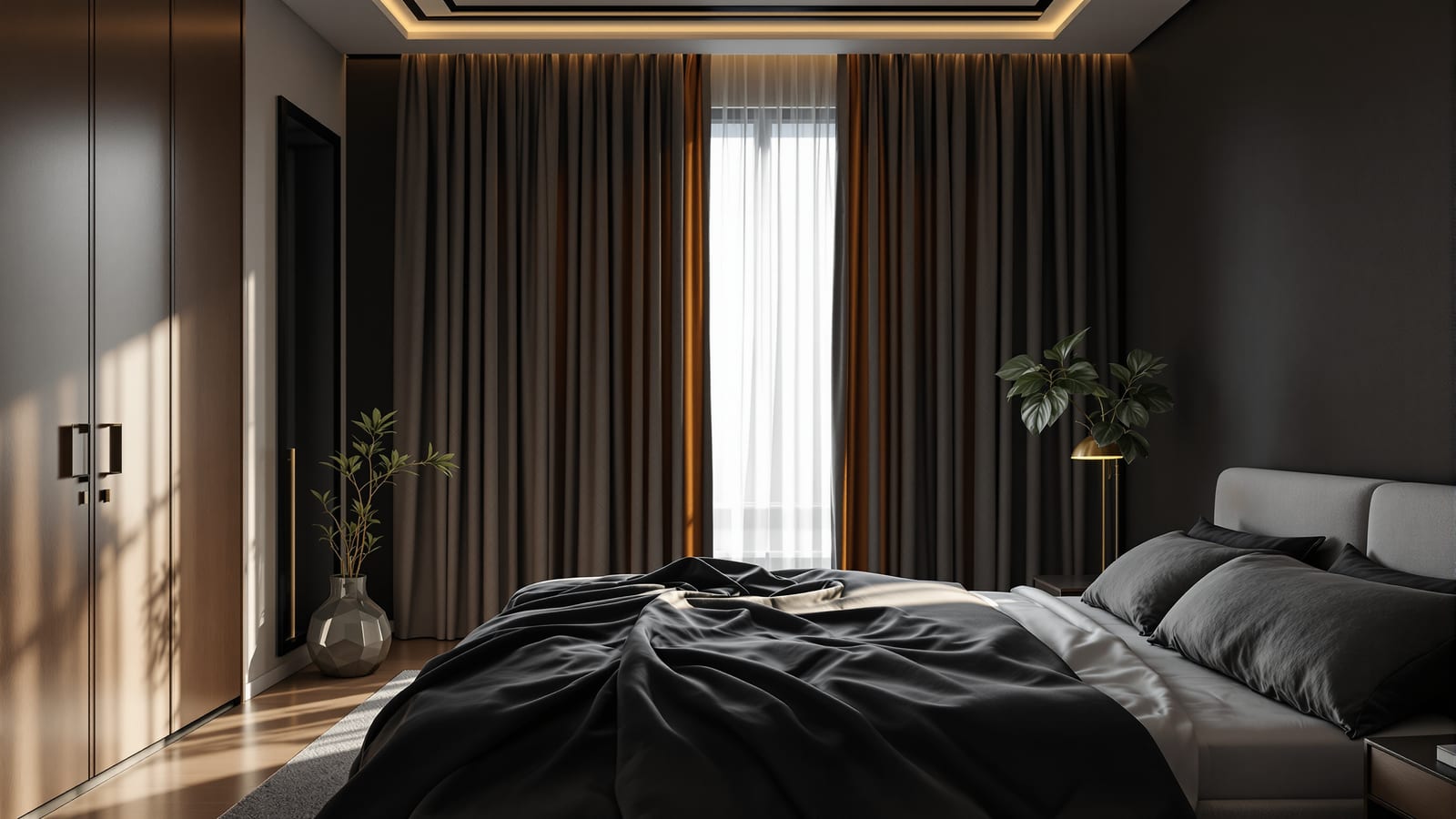
Kids' & Nursery Curtains: Blackout, Safety & Cordless (India 2026)
Why blackout makes naps and early-sun mornings work, the cord-safety rules that genuinely keep a small child safe, and the washable, fade-resistant, grow-with-the-child curtains that earn their place in an Indian child's room.
A child's room is the one window where two jobs collide and both are non-negotiable. The curtain has to make the room dark enough for daytime naps and early-sun mornings, and it has to be safe enough that a baby or toddler can share the room with it unsupervised. In an Indian home, where the sun is up and bright by 5:45 for months and where the afternoon nap is sacred, getting the darkness right is what buys you a sleeping child. And getting the safety right is what stops a curtain cord from becoming the most dangerous object in the room.
This guide treats the child's window as both a sleep instrument and a safety question, in that order of seriousness. It leads with the headline that matters most — cord safety — because no amount of good design forgives a looped cord within a small child's reach.
A child's curtain has two masters: darkness for naps, and a child's safety. You can compromise on the colour, the print and the budget. You cannot compromise on a cord a toddler can reach.
Read this first: cord safety is the headline, not a footnote
Looped curtain and blind cords are a genuine, documented strangulation hazard for young children. A small child can get a looped cord or chain around the neck in seconds, silently, and cannot free themselves. This is not a rare freak event — it is a known, recurring cause of child deaths worldwide, and it happens in ordinary homes with ordinary blinds. Cots, changing tables and any furniture a child can climb make it worse, because they put the child at the height of the cord.
The rule for any room a child sleeps or plays in is simple and absolute:
- Choose cordless, wand-operated, or motorised window treatments. No accessible looped cord, full stop. Cordless blinds, wand-draw curtains and motorised tracks all remove the loop entirely.
- If a cord or chain exists, it must be permanently out of reach — cleated high on the wall, well above where a standing child or a climbing toddler can get to it, and kept that way every single day.
- Keep the cot, bed and climbable furniture away from the window and away from any cord, so a child cannot reach a cord even if one is present.
- Tie cords up high the moment you finish drawing them — a habit, not an afterthought.
This is the one part of this guide you must not treat as optional. A motorised or cordless system costs a little more than a corded blind; in a baby's room that difference is the cheapest insurance you will ever buy. When in doubt, motorise or go cordless and remove the question entirely.
Blackout: why a dark room is the whole point
Children nap during the day, and a daytime nap needs daytime darkness. A room that glows in the afternoon will fight you every time you try to put a baby down. Sleep science is blunt: even modest light reaching a sleeping child suppresses melatonin and shortens deep sleep, and an early Indian sunrise turns an unprotected east-facing nursery into a 5:45 alarm clock the child never set.
So genuine blackout is the foundation of a child's room, exactly as it is in the master bedroom. The blackout curtains guide covers what "blackout" really means; the difference here is that you are buying it for naps as much as for the night.
The surprise most parents hit is that blackout fabric blocks light almost perfectly — the room still glows because of the gaps around it, not the cloth:
| Leak | What causes it | The fix |
|---|---|---|
| Centre gap | Two panels touch but do not overlap | Overlap the panels 8 to 15 cm at the centre |
| Side gaps | Curtain ends flush with the window | Run the track 15 to 20 cm wider each side |
| Top and bottom spill | Light over the rod, high hem | Mount near the ceiling, drop to the floor |
Mount the track wider and higher than the window, overlap the panels at the centre, and run them to the floor. A mid-priced blackout fabric hung this way beats a premium one hung flush. Want to know how dark you will actually get for the fabric you are considering? The Blackout Level Estimator gives you a realistic read before you buy.
Washable, durable fabrics — because kids are kids
A child's room is messy. There will be sticky hands, spit-up, the occasional crayon, and dust that finds its way into every weave. The fabric you choose has to survive being taken down, washed and rehung, repeatedly, without falling apart or fading to nothing.
- Choose washable over dry-clean-only. A machine-washable cotton or poly-cotton blackout-lined panel beats a beautiful velvet you will be afraid to clean. The curtain fabric guide maps which fabrics handle Indian sun, dust and damp.
- Favour fade-resistant face fabrics on bright east and west windows. Children's rooms often get the brightest light in the house, and a cheap dye will streak within a season.
- Sturdy weaves over delicate ones. A curtain a toddler will tug, hide behind and occasionally swing on needs to take the abuse without tearing at the heading.
- Mind the lining. Blackout lining does the darkening; the face fabric can be any calm colour you like. Choose the face for washability and fade-resistance, not because you think a pale colour leaks light — a genuine blackout lining darkens the room whatever the face colour.
A practical alternative on a hot west-facing child's wall is a recessed honeycomb cellular shade behind a single curtain — the honeycomb shades guide explains how the cell structure adds both darkness and real insulation, keeping a nap room cooler.
Fun, but not disposable: design that grows with the child
It is tempting to buy a curtain covered in this year's favourite cartoon. Resist the full commitment. Children's tastes change every couple of years, but a well-made blackout curtain should last far longer than that — and re-curtaining a room every time a phase ends is wasteful and expensive.
The design that lasts is a calm, solid or gently patterned blackout curtain that the room can keep, with the fun delivered in the cheap, changeable layers: cushions, a wall decal, a bedsheet, a sheer with a playful print in front. That way the expensive, hard-working part of the window stays neutral and reusable, while the personality is easy and inexpensive to refresh as the child grows.
- Soft, muted base colours also rest a child better than loud high-contrast prints — the room is for sleeping as much as playing.
- A sheer front layer can carry a child-friendly print and soften daylight, while the blackout behind does the serious work. Two modest layers beat one over-decorated panel.
- Buy the size up where you can. Floor-length curtains and a wider track outlast a child moving from a cot to a bed and rearranging the room.
Flame-aware and low-VOC: the quieter safety layer
Two less-obvious safety questions belong in a child's room. First, flammability: curtains near any flame, heater or, in some homes, a kitchen-adjacent window deserve a flame-aware fabric, and a child's room is a good place to ask the supplier about flame-retardant options rather than assume. Second, off-gassing: brand-new synthetic curtains and some blackout coatings can carry a chemical smell when first hung. For a baby's room in particular, air new curtains out well before the child sleeps with them, and favour fabrics and finishes that are low in volatile compounds where the supplier can confirm it. Neither is a reason for alarm — both are reasons to ask the question and air the room before move-in.
Motorised and cordless options worth the money
In a child's room, motorisation is not a luxury — it is the cleanest way to remove the cord hazard entirely while adding genuine convenience. A motorised blackout curtain has no loop to reach, closes with one tap when the child is in your arms, and can be scheduled.
What to get right:
- No accessible cord is the whole point. A wand-operated track is the simplest cordless route; a motor removes the operation question altogether.
- Quiet operation matters more here than anywhere — you run it in a room where a child is sleeping. Ask to hear the motor before buying.
- Battery or rechargeable motors retrofit any room without breaking walls and recharge every few months; wired motors are maintenance-free but need cabling planned during construction.
- A scheduled close before nap time and a gentle open after are small comforts that make the daily routine easier.
What kids' and nursery curtains cost in India
Prices swing with fabric, fullness, lining, stitching, city and whether you go ready-made or custom, so treat these as honest ranges, not quotes:
- Ready-made blackout panels are the cheapest entry and fine for standard child's windows, though the all-important centre-overlap and sizes are limited.
- Custom curtains are priced by fabric per metre times fullness times drop, plus the blackout lining and stitching; a well-made custom child's window commonly lands in the low-to-mid thousands of rupees.
- A washable face fabric and a second printed sheer add modestly per window and buy you the easy-to-clean, easy-to-refresh setup.
- Cordless or motorised operation adds a per-window cost on top — and in a child's room it is the line item to keep, not cut.
The cost driver people underestimate is fullness and lining, not the print. Size the fabric and get a per-window figure in seconds with the Curtain Cost Calculator.
The child's curtain, in five moves
1. Cordless, wand or motorised only — no looped cord a child can reach, ever. Tie any cord up high and keep the cot away from the window.
2. Make the room genuinely dark for naps: blackout fabric, centre overlap, track wider and higher than the window, floor-length drop.
3. Choose washable, fade-resistant, sturdy fabric the room can survive for years.
4. Keep the blackout layer calm and reusable; deliver the fun in cheap, changeable layers.
5. Air new curtains out, ask about flame-retardant options, and motorise for a quiet, cord-free routine.
Do those five and the child's room becomes what it should be: dark enough to nap in, safe enough to leave a baby in, and easy enough to keep clean and current as the child grows.
Plan your child's room safely with Studio Matrx. Start from the full picture in The Complete Home Curtain & Window Treatment Guide, price the fabric with the Curtain Cost Calculator, and browse the wider cluster of window treatments.
Export this guide
Related Guides — Deep-dive reading
Honeycomb (Cellular) Shades: The Insulating Blind Explained (India 2026)
The pleated blind whose hollow cells trap a layer of still air — for real thermal and acoustic insulation on harsh windows. Single vs double cell, light-filtering vs blackout, top-down/bottom-up and cordless, plus honest Indian costs.
Window TreatmentsCurtain Cost in India (2026): Ready-Made vs Custom & Hidden Costs
What actually drives the price — fabric per metre, fullness, lining, stitching, hardware and city — plus realistic per-window and whole-home ranges, the costs nobody quotes upfront, and how to save without looking cheap.
Window TreatmentsRoman Blinds: The Complete Guide for Indian Homes (2026)
The soft fabric blind that folds up in neat stacks — flat vs hobbled folds, lining and blackout, fabrics, cord vs chain vs motor, costs and cleaning, decoded for Indian rooms.
Window TreatmentsRelated Tools — Try Free
Curtain Cost Calculator
Get the fabric metres you need plus the total curtain cost by window size, fabric, pleat, lining and hardware.
Curtain CalculatorBlackout Level Estimator
Estimate how dark a room will actually get from a fabric, lining and fit — and why edge gaps matter most.
EstimatorWindow Treatment Selector
Curtains, blinds or a layered system? Answer five questions about your room and get a specific recommendation.
Selector