
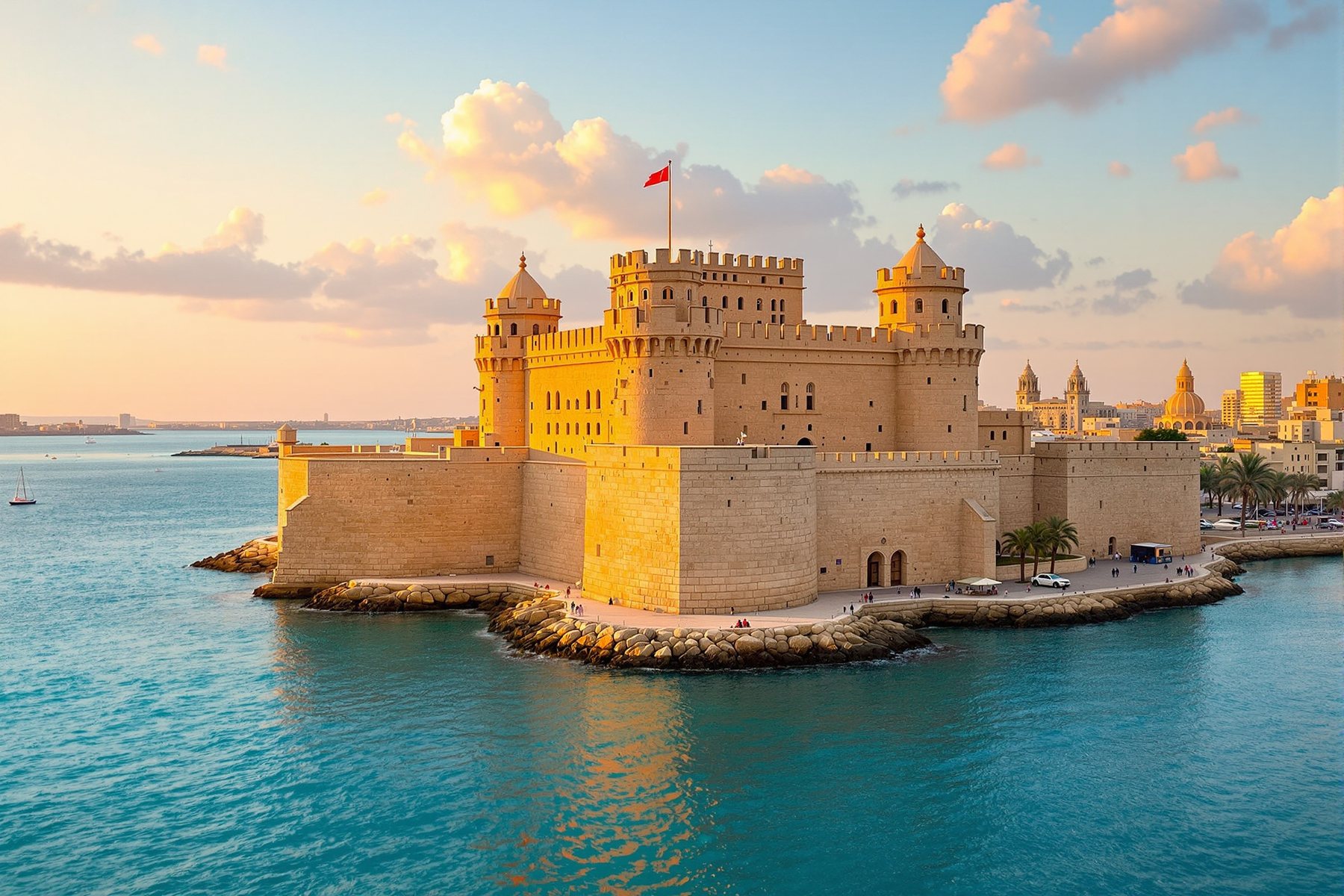
Fort Qaitbey: A Wonder Built on the Grave of a Wonder
How a 15th-century sultan raised a sea-fortress on the exact spot — and partly from the fallen stone — of the Lighthouse of Alexandria, one of the Seven Wonders of the Ancient World, whose drowned remains still lie in the water at its feet.
Most buildings stand on ground. This one stands on a legend. On a low stone point at the mouth of Alexandria's harbour, where the Mediterranean meets the coast of Egypt, sits a pale, four-square fortress: the Citadel of Qaitbay, Fort Qaitbey. It is a fine medieval castle in its own right. But its true wonder is what it is built _on_, and what it is built _from_. For more than a millennium and a half, this exact spot carried the Lighthouse of Alexandria — the Pharos, one of the Seven Wonders of the Ancient World. The earthquakes that finally felled the lighthouse left a heap of colossal stone on the point. And a sultan came, and raised a fortress out of the wreckage of a wonder.
No building in this series sits so deliberately on the grave of a greater one — nor is so literally made from its bones.
This is the twelfth article in our Architectural Wonders series, and it turns the series' recurring theme of _loss_ inside out: here, the loss of one wonder became the raw material of the next.
1. The gate of the harbour
The fort stands on the eastern tip of what was once Pharos Island, guarding the narrow entrance to Alexandria's Eastern Harbour, with the open Mediterranean to the north and the city behind.
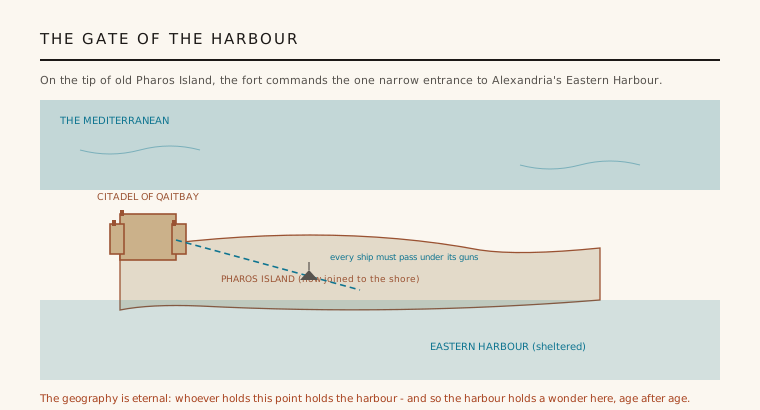
This is the key to everything. The point is the gate of the harbour: whoever holds it controls who enters and who is kept out. That strategic truth does not change with the centuries — and so this small piece of rock has carried a great structure, in one form or another, for over two thousand years. The geography is eternal; only the purpose of the building on it changes.
2. A beacon, then a bastion
Long before the fort, this point carried the most famous tower in the ancient world. The Lighthouse of Alexandria was built under Ptolemy II Philadelphus (around 280 BC), designed by the Greek architect Sostratus of Cnidus, and it rose — by most estimates — over 100 metres in three tapering tiers: a square base, an octagonal middle, and a circular top crowned by a fire whose light, thrown by a great mirror, guided ships safely into harbour. It gave its very name to lighthouses in many languages (a _pharos_), it stood for roughly 1,600 years, and then a series of earthquakes in 1303 and 1323 brought the weakened tower down for good.
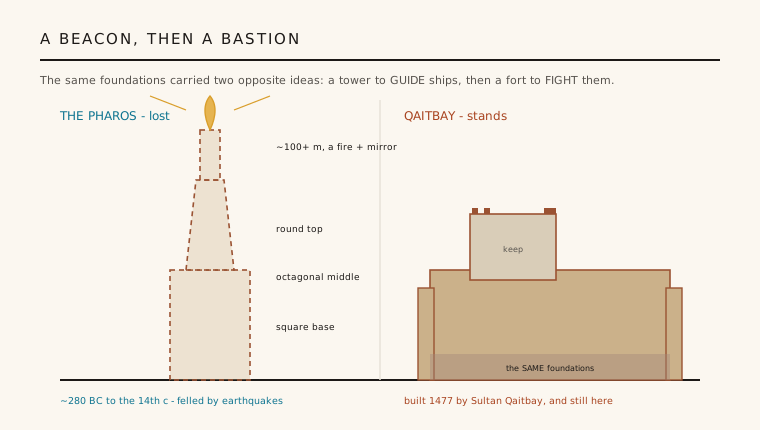
Then, in 1477, the Mamluk Sultan Al-Ashraf Qaitbay came to the ruined point and ordered a fortress built on the lighthouse's foundations. Look at what happened on this one patch of ground: a structure whose purpose was to guide ships became a structure whose purpose was to fight them. A beacon became a bastion. Guidance became defence. The site stayed; the meaning inverted. It is one of the most vivid lessons in all of architecture that a place is not its function — the same ground can serve opposite ends as the world around it changes.
3. Built from the bones of a wonder
And here is the detail that makes Fort Qaitbey unique among everything we have visited. The sultan did not clear the lighthouse's wreckage away. He built with it.
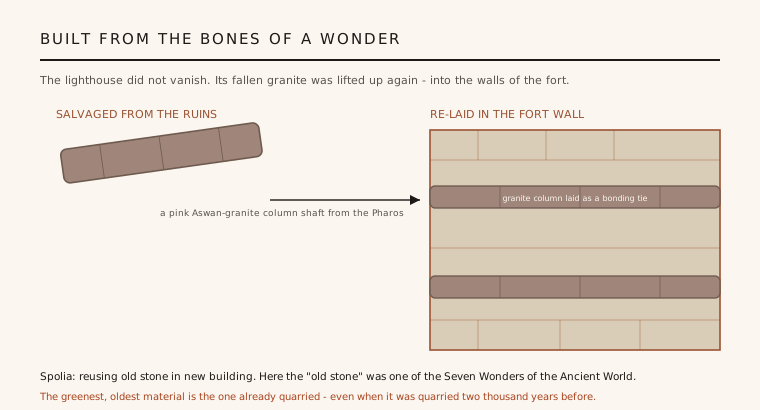
The fallen granite and limestone of the Pharos — including, by tradition, great pink Aswan-granite columns — were lifted and re-laid into the new fort, the huge ancient blocks bound into its foundations and walls. Architects call this spolia: the reuse of older stone in new building. It is a thread we have followed all through this series — Trakai firing its walls from clay, Vilnius reusing a defence tower as a campanile, Thanjavur hauling granite it did not have. But nowhere is it as breathtaking as here, because the "old material" being recycled was one of the Seven Wonders of the Ancient World. The greenest, oldest stone is the one already quarried; at Qaitbey, it had been quarried and carved two thousand years before, for a wonder, and was simply asked to serve again.
4. A place of prayer inside a place of war
The fort Qaitbay raised is a serious piece of military architecture, built around 1477–1480 and costing, it is said, more than a hundred thousand gold dinars — part of a chain of coastal defences against the Ottoman Turks, who were then threatening Egypt.
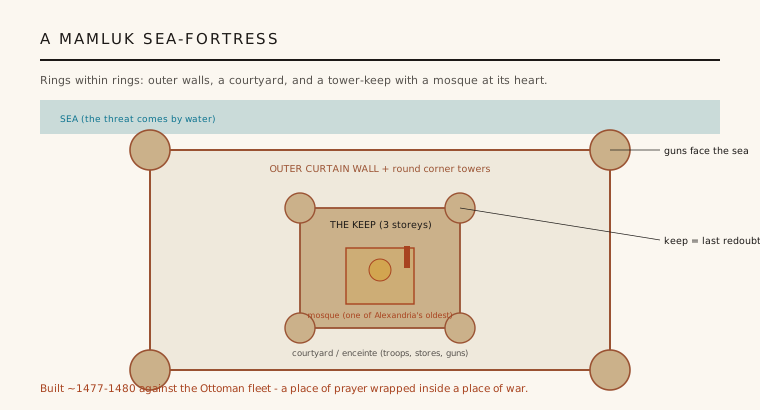
It is a study in concentric defence: an outer ring of curtain walls with round corner towers enclosing a courtyard, and at the heart a powerful three-storey square keep with rounded corners — the last redoubt. And tucked inside that keep is something unexpected and moving: one of the oldest mosques in Alexandria. A place of prayer, wrapped inside a place of war. It is a reminder that even the hardest defensive architecture is built by, and for, people who still need somewhere to be quiet — the fortress and the sanctuary, in this case, are the very same building.
5. The wonder that sank at its feet
The Pharos did not truly vanish. It fell into the sea — and there it has waited.
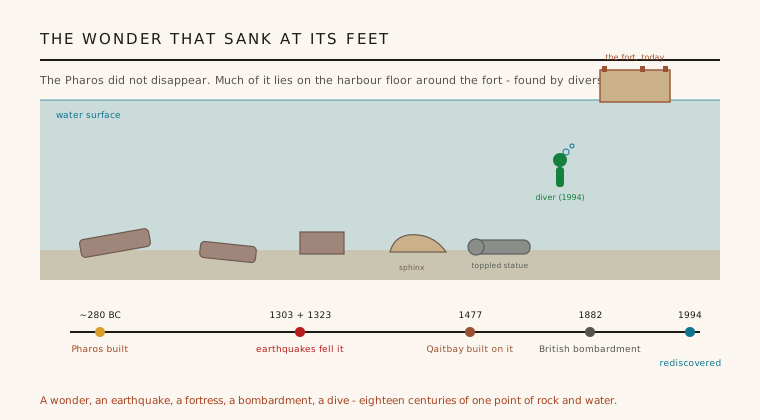
In 1994, a team of French underwater archaeologists led by Jean-Yves Empereur dived into the Eastern Harbour beside the fort and found the seabed strewn with the lighthouse: enormous toppled granite blocks, fallen column shafts, statues and sphinxes, the scattered body of the Pharos lying in the silt, directly below the walls built from its other half. (The fort itself has had its own hard centuries — it was battered in the British bombardment of Alexandria in 1882 and later restored.) So the wonder is, astonishingly, in two places at once: half of it raised into the fort you stand on, half of it drowned on the floor you stand over. Few buildings let you see loss and survival so completely in a single glance.
It is the quiet summary of this whole series. Konark fell and was conserved; Hampi was abandoned; Trakai was rebuilt; Vilnius was reconsecrated. Here at Alexandria, a wonder fell, sank, and was _reused_ — and the lesson is that even ruin is rarely an ending. Stone outlives the building; meaning outlives the stone; and what one age loses, another so often lifts up and makes its own.
6. What a modern architect can learn from Fort Qaitbey
- A place is not its function. The same point was a beacon and then a bastion — guidance, then defence. Sites endure; uses change. Design for the strength of a location, and be ready for it to mean something new in a century you will not see.
- Build from what fell. Spolia is the oldest sustainability there is: the most virtuous material is the one already cut. Reusing the stone of what came before is not poverty or shortcut — it is memory, economy and continuity in one act. (It is the heart of the sustainability argument, made five centuries early.)
- A new building is a memorial whether it means to be or not. Standing on the lighthouse's grave and made of its stone, Qaitbey remembers the Pharos by simply existing. What you build on a charged site will always carry the ghost of what was there.
- Hard architecture still serves soft human needs. A mosque sits inside the war-keep. Even the most defensive, utilitarian building is made for people who pray, rest and gather; never design the function so hard that you forget them.
- Ruin is rarely the end of the story. The Pharos became a fort and a dive site and a legend. Loss, in architecture, is usually a transformation — the materials, the site and the meaning travel on into whatever comes next.
References & further reading
1. Encyclopaedia Britannica — Lighthouse of Alexandria. https://www.britannica.com/topic/lighthouse-of-Alexandria
2. UNESCO / Bibliotheca Alexandrina — Underwater archaeology of the Eastern Harbour, Alexandria. https://www.bibalex.org/
3. Egypt Ministry of Tourism and Antiquities — Citadel of Qaitbay. https://egymonuments.gov.eg/
4. Empereur, J.-Y. — Alexandria Rediscovered (underwater discovery of the Pharos, 1994). https://en.wikipedia.org/wiki/Lighthouse_of_Alexandria
Last verified 2026-06-30. Dates, heights and attributions follow standard historical and archaeological reference sources and are given as widely accepted approximations; the Pharos's design under Ptolemy II, the 1303–1323 earthquakes, the 1477 construction of the fort from the lighthouse's stone, and the 1994 underwater discovery follow the established historical and archaeological record.
Export this guide
Related Guides — Deep-dive reading
The Lighthouse of Alexandria: The Wonder That Became a Word
How Ptolemy's Egypt raised a 100-metre tower of light on the island of Pharos — the tallest building on earth after the Great Pyramid, the model for every lighthouse since, and so famous its island's name became the word for 'lighthouse' itself — which stood 1,600 years, fell to earthquakes, and was reborn as a fort and a field of ruins on the sea floor.
Architectural WondersBrihadeeswara: The Chola Tower That Never Fell
How an 11th-century Tamil emperor raised a 216-foot tower of solid granite — with no mortar, no iron and no machine — and why this colossal corbelled mountain has stood for over a thousand years where Konark's fell. The engineering, the 80-tonne capstone, and the lesson.
Architectural WondersThe Mud Mosques of Timbuktu: The University Made of Earth
On the edge of the Sahara, a city that Europe turned into a byword for the middle of nowhere was in truth one of the great centres of learning in the medieval world — with a university of 25,000 students and libraries of hundreds of thousands of manuscripts. Its three great mosques are built entirely of mud, bristling with wooden beams, and must be re-plastered by the whole community every single year — which is exactly why, after seven centuries, they still stand.
Architectural WondersRelated Tools — Try Free
Architect Fee Calculator
Estimate architect fees based on COA guidelines, project scope, and city.
ArchitectAIRenovation vs New Build Calculator
Compare renovating vs building new interiors city-wise across 13 work scopes with GST and per-sqft rates.
Cost ComparisonHome Building & Interior Cost Calculator — 20 Cities
Construction + interior costs for 20 Indian cities across kitchen, wardrobes, flooring, painting, ceiling.
Cost Calculator