
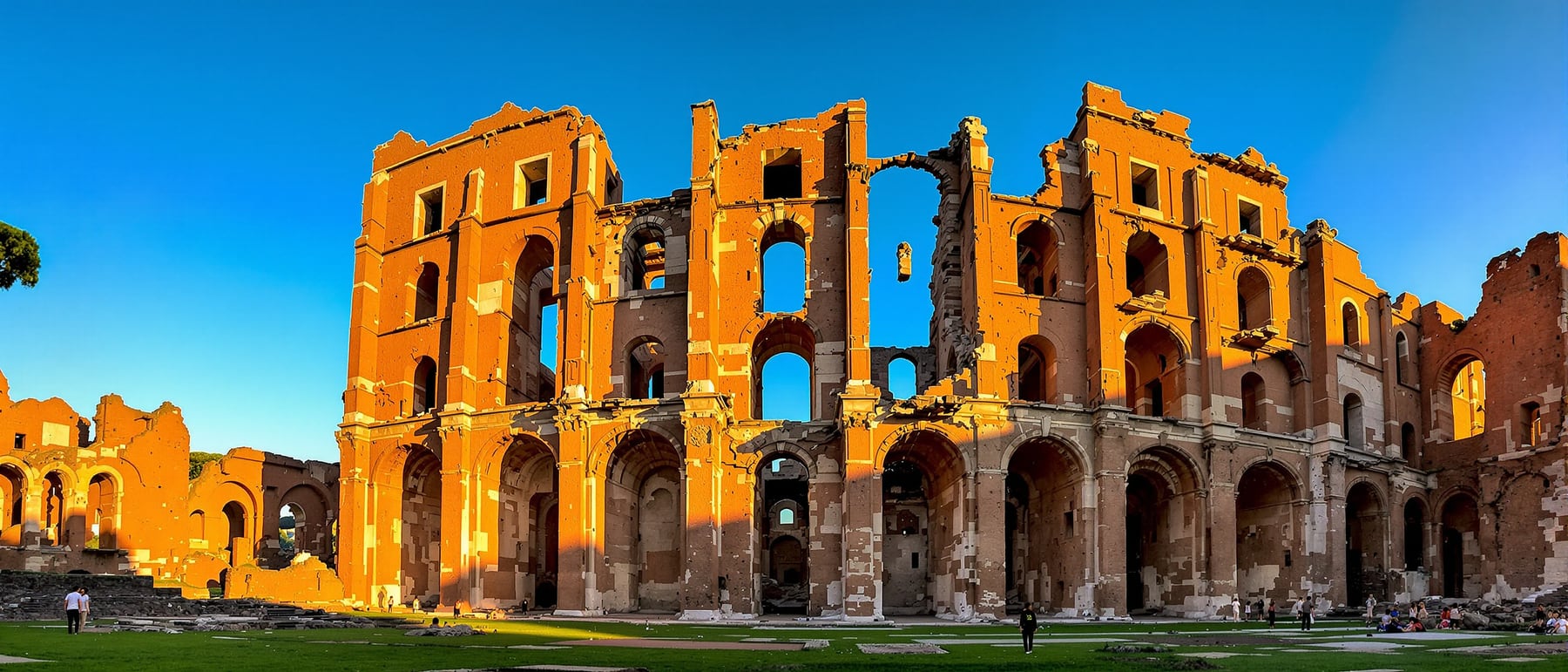
The Baths of Caracalla: A Palace of Pleasure for Everyone
Rome's emperors gave the people spectacle in the Colosseum; here they gave them something they could enjoy every single day. The Baths of Caracalla were a free public pleasure-palace the size of a cathedral — a swimming pool, gym, library, art gallery and social club rolled into one, roofed by concrete vaults so magnificent they became the model for New York's Penn Station. The sixth article in our chapter on the palaces and pleasures of worldly power.
We close our run of three Roman pleasures with the one an ordinary Roman actually knew best. The Colosseum you might visit on a festival; Hadrian's Villa you would never enter at all. But the great public baths you could walk into any afternoon, for free — and most Romans did. If the arena was pleasure as spectacle, and the villa was pleasure as private retreat, the baths were pleasure as everyday life: the warm, sociable, democratic heart of the Roman city. And Caracalla's were among the grandest ever built.
This is the sixty-ninth article in our Architectural Wonders series, and the sixth in our chapter on the great palaces and pleasures of worldly power — the last of three on the pleasures of Rome.
The Baths of Caracalla (properly the Thermae Antoninianae) are, at first glance, "just" a bath-house. But they are one of the most quietly radical buildings in this whole series — for what they offered, for how they worked, and for a legacy that reaches, astonishingly, into the railway stations and civic halls of the modern world. To read them well is to see how Rome turned washing into one of the supreme arts of architecture.
1. The people's palace
Begin with the sheer democratic scale of the thing.
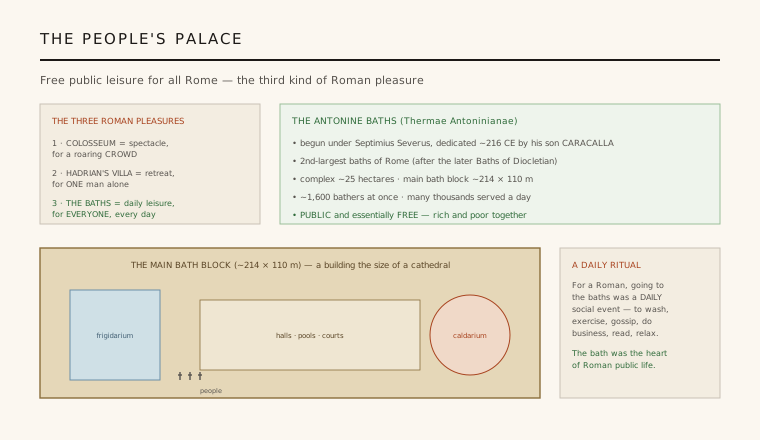
Begun under Septimius Severus and dedicated around 216 CE by his son, the emperor Caracalla (whose full name, Marcus Aurelius Antoninus, gives the baths their proper title, the Thermae Antoninianae), they were the second-largest public baths in all of Rome — surpassed only, a century later, by the Baths of Diocletian. The numbers are staggering: the whole walled complex covered around 25 hectares; the central bath-block alone was roughly 214 by 110 metres, the size of a great cathedral; and it could hold some 1,600 bathers at a time, serving many thousands of Romans every day. But the truly radical thing is who they were for. They were public and essentially free — funded by the emperor and open to rich and poor alike, senator and shopkeeper undressing in the same hall. In a brutally hierarchical society, the baths were something close to a shared, democratic luxury — a palace of pleasure not for one man, but for a whole city. This is the third face of Roman pleasure: after the crowd-spectacle of the Colosseum and the private idyll of Hadrian's Villa, here at last is pleasure for everyone, every day.
2. More than a bath
And "baths" wildly undersells what these buildings actually were.
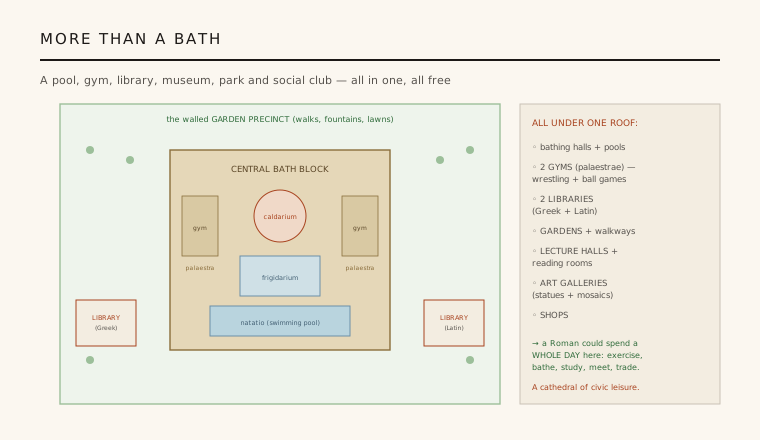
A great Roman thermae was a complete leisure and culture centre. Around and within the bathing halls, Caracalla's baths offered two large exercise courtyards (palaestrae) for wrestling and ball-games; two libraries, one Greek and one Latin; landscaped gardens and shaded walks; lecture halls and reading rooms; art galleries hung with statues and paved with mosaics; and shops. A Roman could arrive in the early afternoon and spend the whole day — working out, bathing, reading a scroll, viewing sculpture, closing a business deal, meeting friends, hearing a philosopher speak. It was, in modern terms, a swimming pool, gym, spa, public library, museum, park and social club all in one free building — a cathedral of civic leisure. No modern city has ever quite matched the ambition: the idea that the state should give every citizen, free of charge, a daily palace in which to exercise the body and the mind together.
3. The bathing ritual
At the building's heart was a precise, almost sacred sequence — a journey the body took through heat and cold.
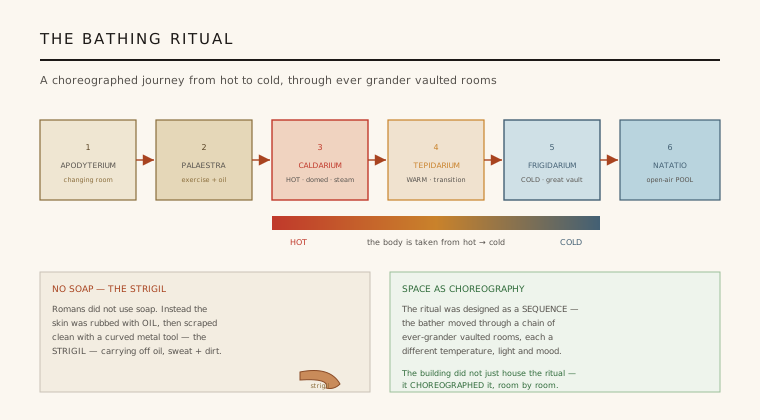
The ritual was choreographed by the architecture itself. A bather undressed in the apodyterium (changing room), then worked up a sweat in the palaestra and was rubbed with oil. Then came the thermal circuit, hot to cold: first the caldarium, a scorching, steamy room beneath a huge domed rotunda (a dome second in size, in Rome, only to the Pantheon), with hot plunge-pools; then the warm tepidarium, an acclimatising room; then the great cold hall, the frigidarium, for a bracing cold plunge to close the pores; and finally the natatio, a vast open-air swimming pool. Romans used no soap: they were oiled, then scraped clean with a curved bronze blade called a strigil, which carried off the oil, sweat and dirt together. What matters, for us, is that the whole experience was a designed sequence — the bather was moved through a chain of rooms of rising grandeur, each a different temperature, light and mood. The building did not merely house the ritual; it staged it, room by room, exactly as a piece of music is scored. This is architecture as experience unfolding in time.
4. Fire and water, below
Now for the secret that makes the baths a true engineering wonder — and forces an honest reckoning. All that warmth and water had to come from somewhere.
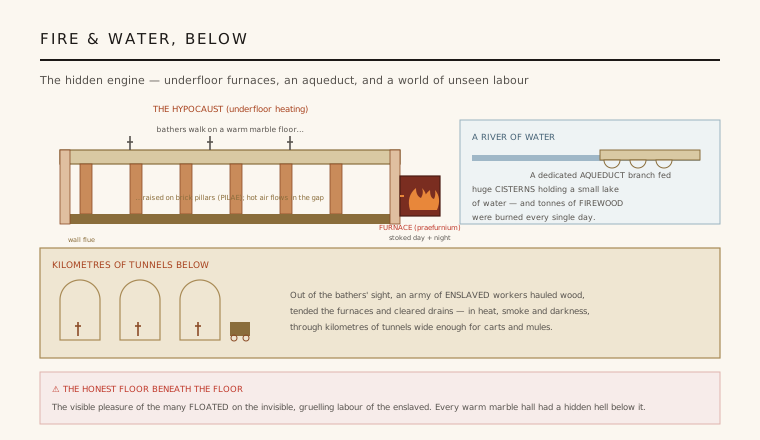
The heating was a marvel called the hypocaust. The floors of the hot rooms were raised on short brick pillars (pilae), leaving a hollow space beneath; wood-fired furnaces, stoked without pause, drove hot air and smoke into that void and up through hollow flues in the walls — so that the floor underfoot and the walls themselves became gentle radiators. Feeding the baths took resources on a civic scale: a dedicated branch of an aqueduct poured a river of water into enormous cisterns, and tonnes of firewood were consumed every single day. And here is the reckoning. Beneath and behind the shining marble halls ran kilometres of service tunnels, wide enough for carts and mules — and through them toiled an army of enslaved workers, hauling wood, feeding the furnaces, clearing the drains, labouring in heat, smoke and darkness entirely out of the bathers' sight. It is the same hard truth we met beneath the Colosseum's sand: the serene, sunlit pleasure of the many floated on the hidden, gruelling labour of the enslaved. Every warm marble floor had, quite literally, a hidden hell stoked beneath it. An honest architect never forgets to ask what — and who — is holding the beautiful surface up.
5. The vault that conquered the world
Finally, the room that made this bath immortal — and the astonishing modern afterlife of its ceiling.
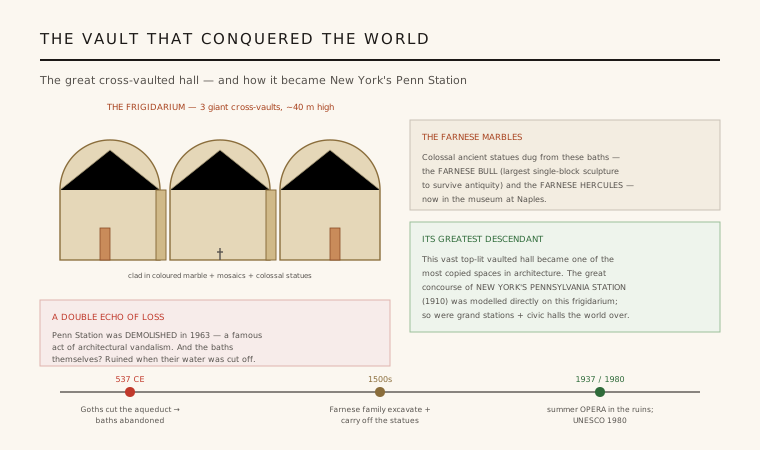
The great cold hall, the frigidarium, was roofed by three colossal concrete cross-vaults (groin vaults) soaring some 40 metres, carried on massive columns and clad in coloured marble, glittering mosaic and colossal statuary — including the celebrated Farnese Bull (the largest single-block sculpture to survive from antiquity) and Farnese Hercules, both later dug from these ruins and carried off to Naples. That vast, top-lit, vaulted public room turned out to be one of the most influential spaces ever built. Its most famous descendant stood, until living memory, an ocean away: the magnificent main concourse of the original Pennsylvania Station in New York (1910), designed by McKim, Mead & White, was modelled directly and deliberately on this very frigidarium — and countless other grand railway stations, banking halls and civic buildings borrowed the same idea. When you stand in a great vaulted public hall almost anywhere in the world, you are standing in the shadow of Caracalla's baths.
And there is a final, double echo of the loss that haunts this series. That American masterpiece, Penn Station, was demolished in 1963 — a notorious act of architectural vandalism whose public outrage helped launch the modern preservation movement. Meanwhile the baths that inspired it had themselves died long before: in 537 CE, during the Gothic War, invaders cut the aqueduct that fed them, and without water the great machine simply stopped. They fell into ruin and were quarried; in the Renaissance the Farnese family dug out their statues; and today the roofless brick colossus hosts summer opera under the stars, and is inscribed by UNESCO (1980). The building modelled on Caracalla's hall was destroyed in our own century; the hall itself was undone fifteen centuries ago by the cutting of a single stream of water. Even the mightiest architecture of pleasure depends, in the end, on something as fragile as a flowing river — and on our willingness to keep it.
6. What a modern architect can learn from the Baths of Caracalla
- The highest luxury is a shared one. The baths' radical idea was to give every citizen, free, a daily palace for body and mind. The most powerful thing architecture can do is take delight and dignity — beautiful space, warmth, culture — and make them public. Ask who gets to enjoy the best rooms you design.
- Design the sequence, not just the rooms. The bathing ritual was a scored journey — hot to cold, small to vast, through spaces of rising grandeur. Great buildings choreograph movement and feeling over time. Think like a composer: what does someone experience first, next, last?
- Reckon honestly with what holds the surface up. The serene marble halls ran on hidden furnaces and enslaved labour. Every beautiful building has an infrastructure and a human cost beneath it — and the honest designer keeps asking what, and who, is out of sight making the pleasure possible.
- Master the vault and you command the public room. Rome's concrete cross-vaults created vast, column-free, top-lit interiors — the ancestor of every great concourse since. The command of structure is what unlocks the grand civic space. Form follows the courage to span.
- Great buildings breed descendants. Caracalla's frigidarium is alive today in a thousand stations and halls that never name it. A truly resolved space becomes a type — a template others reach for instinctively. Solve a room well enough and it outlives you by two thousand years.
- Everything depends on the systems that feed it — protect them. The baths did not fall to fire or war but to a cut aqueduct. The invisible lifelines — water, power, maintenance, care — are as vital as any wall. And Penn Station's loss teaches the harder lesson: what we fail to value and preserve, we lose. Build well; then guard what you have built.
References & further reading
1. UNESCO World Heritage Centre — Historic Centre of Rome (inscribed 1980; includes the Baths of Caracalla). https://whc.unesco.org/en/list/91/
2. World History Encyclopedia — Baths of Caracalla. https://www.worldhistory.org/Baths_of_Caracalla/
3. Encyclopaedia Britannica — Baths of Caracalla. https://www.britannica.com/topic/Baths-of-Caracalla
4. Parco archeologico del Colosseo / Soprintendenza — Terme di Caracalla (official site). https://www.coopculture.it/en/poi/baths-of-caracalla/
5. Smarthistory — Roman baths and the Baths of Caracalla. https://smarthistory.org/baths-of-caracalla/
6. Fikret Yegül — Baths and Bathing in Classical Antiquity (the standard scholarly work). https://www.worldcat.org/title/baths-and-bathing-in-classical-antiquity/oclc/25008379
*Last verified 2026-07-05. Figures follow UNESCO, the World History Encyclopedia, Britannica, the Soprintendenza/Parco archeologico and standard scholarship (incl. Fikret Yegül), and are given as widely cited approximations that vary by source. The Baths of Caracalla (Thermae Antoninianae) are in Rome; begun under Septimius Severus and dedicated c. 216 CE under Caracalla (Marcus Aurelius Antoninus "Antoninus"), with decoration completed under Elagabalus and Severus Alexander. They were the second-largest imperial baths in Rome (after the Baths of Diocletian): the walled precinct covered ~25 ha, the central bath-block ~214 × 110 m, with an estimated capacity of ~1,600 bathers at a time; public and essentially free. The complex was a full leisure/cultural centre: bathing halls, two palaestrae (exercise courts), two libraries (Greek + Latin), gardens, lecture rooms, art galleries and shops. The bathing sequence ran apodyterium → palaestra → caldarium (hot, under a large dome) → tepidarium (warm) → frigidarium (cold hall) → natatio (open-air pool); Romans used oil and a strigil (scraper), not soap. Heating used the hypocaust system (raised floors on pilae, wood-fired furnaces, wall flues); water came via a dedicated aqueduct branch (Aqua Antoniniana/Nova Antoniniana) into large cisterns; extensive underground service tunnels housed the (largely enslaved) support labour and firewood/drainage logistics. The frigidarium was roofed by three large concrete cross- (groin) vaults ~40 m high, richly decorated; colossal sculptures found here include the Farnese Bull and Farnese Hercules (now Naples). INFLUENCE: the frigidarium was the acknowledged model for the main concourse of the original Pennsylvania Station, New York (McKim, Mead & White, 1910; demolished 1963 — a catalyst for the historic-preservation movement), and for many other stations and civic halls. The baths went out of use after the Ostrogoths cut the water supply (Gothic War, c. 537 CE); later quarried, with statues excavated by the Farnese in the 16th century. Since 1937 the ruins have hosted open-air opera (Teatro dell'Opera di Roma summer season). Part of the UNESCO World Heritage Site "Historic Centre of Rome" (1980). This is the sixth article in the "palaces and pleasures of worldly power" chapter of the Architectural Wonders series, and the last of three on the pleasures of Rome.
Export this guide
Related Guides — Deep-dive reading
The Colosseum: The Machine That Fed a City Its Pleasures
Rome's greatest emperors built palaces for themselves; the Flavian emperors did something shrewder — they drained a fallen tyrant's private lake and raised, on the spot, a stupendous arena for fifty thousand ordinary citizens. The largest amphitheatre ever built is a masterpiece of crowd engineering, a hidden stage-machine of lifts and trapdoors, and a place of real, organised killing — all at once. The fourth article in our chapter on the palaces and pleasures of worldly power, and the first on pleasure.
Architectural WondersHadrian's Villa at Tivoli: The Emperor Who Rebuilt the World He Loved
The Roman emperor Hadrian had travelled almost the whole of his vast empire — and then, in the hills outside Rome, he built himself a private pleasure-world the size of a city, where he recreated the places he had loved on his journeys. It is a memory-palace of an entire empire, a laboratory of daring curved concrete a millennium and a half ahead of its time, and a monument quietly shaped by grief. The fifth article in our chapter on the palaces and pleasures of worldly power.
Architectural WondersThe Pantheon: The Dome That Has Never Been Beaten
Nearly nineteen centuries ago the Romans poured a hemisphere of concrete 43 metres across, left a single round hole open to the sky at its summit, and walked away — and it is still, today, the largest unreinforced concrete dome on Earth. A temple to all the gods that became a church, the best-preserved building of ancient Rome, and the ancestor of every great dome from Florence to the United States Capitol.
Architectural WondersRelated Tools — Try Free
False Ceiling Cost Estimator
Live ₹/sqft across 8 ceiling types — POP, gypsum, designer, metal, PVC, wooden — with cove and spot lighting for 20 Indian cities.
Cost CalculatorSwimming Pool Cost Calculator
Estimate a home pool's build cost by type, size and finish, with an indicative range and a build breakdown.
Pool CalculatorWindow Maintenance Cost Calculator
Estimate annual window upkeep by frame material — yearly, per-window and 5-year cost.
Window Calculator