
 Lesson 0.4
Lesson 0.4 · Bringing the Farm to the Building
The Promise & the Hype
An honest ledger that sets the genuine promise of growing food in buildings - fresh, local, resilient, green - squarely against the seductive hype that vertical farms will feed the world, and hands you a way to read any claim critically
Growing food in buildings has a real, genuine promise - and it is wrapped in some of the most seductive hype in the built environment. The skill is telling them apart.
Few ideas in architecture and food are as easy to fall in love with as growing food in buildings - and few are as easy to oversell. The promise is genuinely lovely: fresh food grown and eaten in the same place, cities made more resilient and self-reliant, buildings greened and cooled, communities brought together around growing, and people reconnected to the food they eat. Much of that promise is real, achievable and already happening, especially at the sunlit end of the spectrum. But wrapped around it is a layer of hype so seductive and so widely repeated that it has shaped investment, policy and public imagination out of all proportion to the evidence - above all the claim that high-tech vertical farms will feed the world's cities, end the environmental cost of agriculture, and make farmland and long-distance food transport obsolete. The single most valuable skill this module can give you is the ability to hold both in view: to honour the genuine promise without being swept up in the hype.
This lesson is that honest ledger. It sets the real promise on one side and the over-claims on the other, and shows what divides them - the energy elephant this course has named from the first page, and the hard fact that indoor farming cannot feed a city its staple calories. Then it hands you a practical tool: a short set of questions to ask of any vertical-farming claim, so that when you meet the next glowing render and the next bold statistic, you can read it critically, separate the substance from the story, and reach a clear-eyed judgement. The point is not cynicism - the promise is real - but discernment: keeping what is true and discarding what is sold.
Ledger: PROMISE (fresh/local/resilient/green/community - mostly sun-powered) vs HYPE (vertical farms feed the world - hides energy, local!=green, garnish sold as dinner). Divider = ENERGY ELEPHANT. Read any claim with 5 Qs: light? crop? grid? honest figure? who's selling?
The genuine promise: fresh, local, resilient, green, together
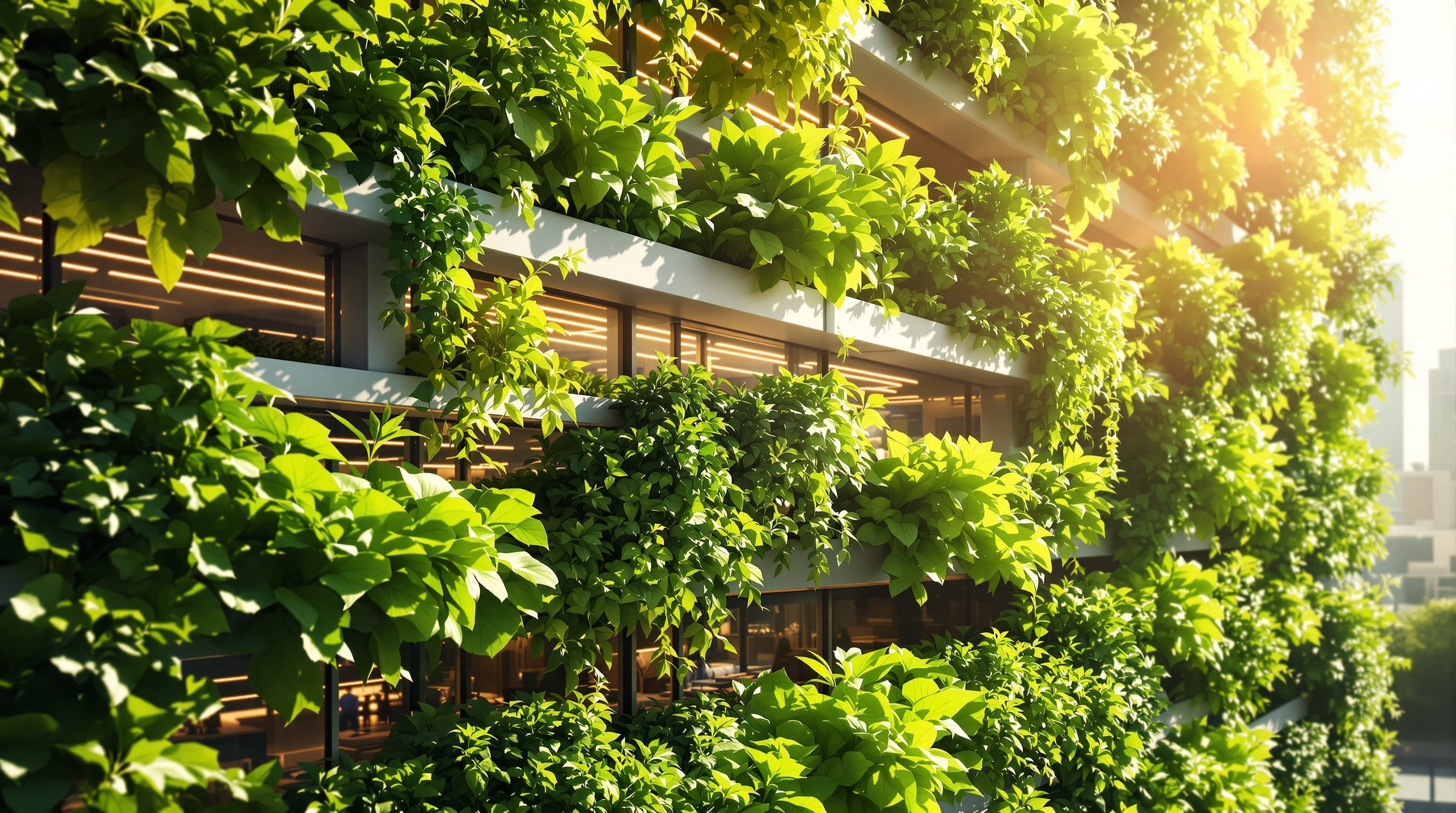
Begin with what is genuinely true and good, because the honest case for building agriculture is strong and deserves to be stated plainly before the hype is stripped away. First, freshness and quality: food grown where it is eaten can be harvested ripe and consumed within hours, at its peak of flavour and nutrition, instead of being picked early and aged in transit - a real, tangible benefit that anyone who has eaten a just-cut salad leaf understands. Second, local resilience and shorter supply chains: growing at least some food in and on city buildings shortens the long, fragile chain between distant farms and urban plates, adding a measure of local self-reliance that matters when shocks - a pandemic, a disaster, a disruption - break the long chains, and speaking directly to food-security concerns that are serious in India and elsewhere. Third, greener, cooler buildings and cities: rooftop farms, edible facades and integrated greenhouses green and shade the building, help cool it and the urban heat island, manage rainwater, support pollinators and biodiversity, and turn dead roof area into living, productive space - genuine environmental and amenity value quite apart from the food.
Fourth, and often underrated, community, wellbeing and reconnection: community gardens and shared growing bring people together, teach skills, improve mental and physical wellbeing, green neighbourhoods and reconnect city-dwellers - especially children - to how food is grown, a cultural and social good that the pure-efficiency framing misses entirely. And fifth, for architecture specifically, the productive, living building is a genuinely inspiring idea: the building not merely as shelter or consumer of resources but as a contributor, growing food, greening the city and connecting people to nature and to each other. All of this is real, and crucially, almost all of it is strongest at the sun-powered end of the spectrum, where the sun does the light-work: rooftop and terrace gardens, edible facades, integrated greenhouses and community plots deliver freshness, greening, resilience and community at modest energy cost and gentle economics. This is the promise worth keeping and building on - and, as the next section shows, it is precisely this genuine promise that the hype borrows its credibility from before stretching it past breaking point.
The hype: "vertical farms will feed the world"
Now the other side of the ledger, and it must be named as plainly as the promise. Around the genuine benefits has grown a layer of hype - amplified by dramatic renders, investment narratives and breathless coverage - that stretches the real promise past the point of truth. Its headline claim, in various forms, is that high-tech indoor vertical farming will feed the world's cities: that stacked farms under LED lights will grow cities' food locally, make distant farmland and long-distance transport obsolete, end the environmental cost of agriculture, and represent simply "the future of food". Supporting claims cluster around it: that vertical farming is *obviously* greener because it is local and cuts food miles; that its astonishing yield per square metre of floor means it can replace vast areas of farmland; that it uses less water and no pesticides and is therefore unambiguously sustainable; that it is on the verge of scaling up to feed millions. These claims are seductive precisely because each contains a grain of truth - indoor farms *are* local, *do* use little water, *can* be pesticide-free, *do* achieve high area-productivity - and because the imagery is beautiful and the story is hopeful.
But the hype commits three recurring errors that the honest ledger must expose. The first is ignoring energy: it quietly leaves out the enormous, unavoidable electricity cost of replacing the sun, treating light as if it were free indoors as it is outdoors - which is the whole problem, examined in the next section. The second is the local-equals-green fallacy: it assumes that because the food travels a short distance it must be low-carbon, when transport is only a small part of food's footprint and the energy burned to grow food indoors frequently swamps the transport it saves, so "local" does not automatically mean "low-carbon", and on a fossil-fuelled grid indoor food can be *worse* than field food shipped across the world. The third is confusing garnish with dinner: it points to impressive yields of leafy greens and implies these scale to feeding cities, when the crops indoor farming can grow are light, fast, high-value, low-calorie greens and herbs, not the grains, pulses, roots and oil crops that actually feed populations. Recognising these three moves - hidden energy, false local-green equivalence, and garnish sold as dinner - is most of what it takes to see through the hype. None of this means the technology is worthless; it means the sweeping claim is false, and the honest response is to keep the real promise and discard the over-reach.
The energy elephant, and what indoor farming cannot feed
At the centre of the ledger stands the one fact that divides promise from hype - the energy elephant this course has named from its first page. A plant grows by capturing light energy and converting it, with water and carbon dioxide, into food; and outdoors, or under glass, that light energy pours down from the sun entirely free. A fully-indoor vertical farm grows plants with no sun at all, so it must supply *every bit* of that light energy with electricity through grow-lights - and then spend more electricity cooling the space (the lights pour out heat), dehumidifying it and running the pumps. This is not a minor overhead; replacing sunlight with electric light to grow food is fundamentally, enormously energy-intensive, and that single fact drives every hard consequence. It makes indoor-farmed food expensive, the power bill dwarfing all other costs, which is why the sector is littered with bankruptcies. It makes indoor farming often no greener, and sometimes far worse, than field or greenhouse growing, because the energy it consumes frequently outweighs the transport it saves - decisively so on a coal-heavy grid like much of India's. And it confines indoor farming to high-value, fast, light, low-calorie crops - leafy greens, herbs, microgreens - whose value can just about carry the power bill.
From this follows the hardest limit of all, and the one the hype most needs you to forget: indoor vertical farming cannot feed a city its staple calories. The foods that actually feed humanity - the grains (rice, wheat, maize), the pulses, the roots and tubers, the oil crops - are calorie-dense staples that require vast areas bathed in cheap, abundant sunlight to grow economically. To produce a meaningful share of a city's calories from these crops under electric light would demand an impossible, ruinous quantity of electricity; it simply cannot be done at any sane cost or carbon. Indoor farms grow garnish, not dinner - the salad and the herbs, never the rice and dal that are the actual meal. This is why "vertical farms will feed the world" is not merely optimistic but categorically wrong about the crops that matter: they can supplement a city's fresh greens, valuably, in the right niches, but they cannot and will not feed it. The honest ledger therefore comes down to this: the promise is real and largely sun-powered; the hype ignores energy and confuses garnish with dinner; and the energy elephant, not the marketing, decides which is which - with any specific energy, yield or cost figure treated as illustrative and left, for any real project, to verified data and qualified specialists.
How to read a vertical-farming claim critically
Turn all of this into a practical tool you can use for the rest of your career: a short set of questions to ask of any vertical-farming or building-agriculture claim, so you can separate substance from story on the spot. First, where does the light come from? This single question - free sun or paid-for electricity - is the most revealing thing you can ask, because it places the claim instantly on the spectrum and exposes whether the energy elephant is in the room. A sunlit rooftop claim and an indoor-farm claim deserve completely different scepticism. Second, what crop is it? A high-value leafy green or herb is exactly what indoor farming can do; a staple grain, pulse or root is exactly what it cannot. If a claim about "feeding the city" rests on lettuce, it is confusing garnish with dinner. Third, what is the electricity source and price where this is built? The same indoor farm can be defensible on cheap, clean, abundant power and indefensible on expensive, coal-heavy power - so a claim that ignores the local grid is ignoring the thing that decides its carbon and its cost, which matters enormously in the Indian context.
Fourth, is the figure honest - per kilogram and full-cycle, or cherry-picked? Beware the favourite trick of quoting yield *per square metre of floor* (which stacking makes look spectacular) while staying silent on energy *per kilogram of food* (which is the number that actually matters); beware comparisons that count the transport saved but not the electricity burned; ask for full life-cycle, per-kilogram figures from independent sources, not a company's headline. Fifth, who is speaking, and are they selling food or selling a story? A grower reporting what a farm actually costs to run, a peer-reviewed study and a start-up pitching investors carry very different biases - follow the money and the motive, not the render. Run a claim through these five questions and its real weight usually becomes clear within a minute. The stance they add up to is neither the techno-utopian's nor the cynic's but the discerning one this whole module has built toward: honour the genuine promise, especially where the sun does the work; strip away the hype; face the energy question first; and reserve indoor farming for the narrow cases that genuinely justify replacing free sunlight with expensive electricity. For any binding decision, the numbers, engineering, economics and food-safety belong with verified data, qualified specialists and the governing codes - but the judgement of promise against hype is yours to make, and now you have the tools to make it well.
The genuine promise
What is really true and good
Fresh local food, local resilience and food security, greener and cooler buildings, community and reconnection, the productive building - real benefits, strongest at the sun-powered end. Champion these. Modules 1.2, 7.1-7.4.
The three hype tricks
How the over-claim works
Hidden energy cost, the local-equals-green fallacy, and garnish (leafy greens) sold as dinner (staple calories). "Vertical farms will feed the world" fails on all three. Modules 9.1, 9.2, 9.3.
The five questions
Reading any claim critically
Where is the light from; what crop; what electricity source and price; is the figure per-kilogram and full-cycle or cherry-picked; is the speaker selling food or a story. Binding numbers and engineering stay with verified data, qualified specialists and the codes. Module 9.1.
Workshop — audit a real vertical-farming claim
The skill of this lesson is critical reading, and it sharpens with use. In this workshop you will take a real marketing or media claim about vertical farming or building agriculture and run it through the honest ledger and the five questions.
Just this lesson, one real claim and a notebook. No site or growing system - this workshop is about critical reading; any binding energy, yield, cost or food-safety numbers for a real project stay with verified data, qualified engineers and specialists and the codes.
Goal: practise separating genuine promise from hype on a real claim
Inputs: one real claim (a company web page, an article headline, an investor pitch, an advertisement) + this lesson
Time: ~40 minutes
- 1Find a claim: pick one real statement about vertical farming or building agriculture that makes a benefit or scale claim - ideally an ambitious one ("feeds the city", "sustainable", "the future of food").
- 2Sort the ledger: list which parts of the claim are genuine promise (fresh, local, greening, community) and which are hype (feeding the world, obviously green, replacing farmland).
- 3Find the energy elephant: identify whether the claim accounts for the electricity that replaces the sun, or quietly ignores it - and note the crop it depends on (garnish or dinner?).
- 4Run the five questions: where is the light from, what crop, what electricity source and price, is the figure honest and full-cycle, and who is speaking and what are they selling?
- 5Write a verdict: two or three sentences judging what in the claim to keep and what to discard, and what independent, full-cycle data you would need to settle it - flagged as your own reasoning, not a specification.
You’ll walk away with
A one-page audit of a real claim: promise-versus-hype ledger, an energy-elephant check, the five questions answered, and a short verdict on what to keep, discard and independently verify. Keep it as a model for reading claims for the rest of the course.
Three altitudes on the same idea
Read the band that fits you — or all three.
You will be pitched building agriculture repeatedly - by clients enchanted by a render, by agtech firms selling a system, by your own enthusiasm for the productive building - and your job is to keep the genuine promise while refusing the hype. The promise is real and mostly sun-powered: freshness, local resilience, greener and cooler buildings, community, the living building as a contributor rather than a consumer - and you should champion it, especially rooftop farms, edible facades and integrated greenhouses that deliver at modest energy cost. The hype - that indoor vertical farms will feed the city, that local automatically means green, that spectacular floor-yields scale to staples - collapses on the energy elephant and the fact that indoor farming grows garnish, not dinner. Carry the five questions into every meeting: where is the light from, what crop, what grid, is the figure honest and full-cycle, and who is selling. Champion the sunlit promise, expose the electric hype, and leave the binding energy, structural, water and food-safety numbers to verified data, qualified engineers and specialists and the codes.
In interiors the promise is intimate and genuine - a herb wall, edible planting, a small growing unit that brings freshness, greenery and a real connection to food into everyday space - and your discipline is to celebrate that honestly without dressing it up as something it is not. A windowsill of herbs harvested into the evening meal, a cafe salad grown on site, a workplace green corner: these deliver freshness, wellbeing, biophilia and reconnection, and they are worth doing. The hype to resist is the glossy indoor-growing unit sold as a self-sufficient farm, or the claim that a lit cabinet of greens is a serious food source - it is a lovely amenity, energy-hungry per kilogram, and no substitute for a meal. Use the five questions on any product a supplier pitches: where is the light from, what crop, what running cost, is the figure honest, who is selling. Celebrate the genuine, human-scale promise, keep expectations honest, and coordinate the binding water, drainage, electrical, weight and food-safety matters with specialists and the codes.
This lesson gives you the single most useful habit in the whole field: holding the promise and the hype in view at once, and knowing what divides them. Learn the genuine promise - fresh local food, resilience and food security, greener and cooler buildings, community and reconnection, the productive living building - and notice it is strongest at the sun-powered end. Learn the hype - above all "vertical farms will feed the world" - and its three recurring tricks: hiding the energy cost, assuming local means low-carbon, and confusing high-value garnish (leafy greens) with the staple calories (grains, pulses, roots) that actually feed cities. Learn the fact that divides them: the energy elephant, and the hard limit that indoor farming grows garnish, not dinner. Then carry the five questions - where is the light from, what crop, what grid, is the figure honest and full-cycle, who is selling - and you can read any claim critically. This discernment, honouring the real promise while seeing through the hype, is exactly what marks out someone who understands the field rather than the marketing."
“Vertical farming is obviously the sustainable future of food - it grows food locally so it cuts the huge carbon cost of transporting food around the world, uses far less water and no pesticides, and produces enormous yields per square metre, so scaling it up will let cities feed themselves and make destructive farmland obsolete.”
Do it yourself
No tools needed — reason it through.
- 1List the genuine promises of growing food in buildings, and note which end of the spectrum each is strongest at.
- 2State the headline hype claim and the three recurring tricks it uses.
- 3Explain the energy elephant and why it divides promise from hype.
- 4Why can indoor vertical farming grow garnish but not dinner - and why does that sink "feeding the world"?
- 5Recite the five questions for reading a vertical-farming claim critically, and apply one to a claim you have seen.
The one line to carry out
Peer-reviewed journals & authoritative standards
- 01Vertical farming — Wikipedia — Vertical farming, 2026.
- 02Food security — Wikipedia — Food security, 2026.
- 03Food miles — Wikipedia — Food miles, 2026.
- 04Life-cycle assessment — Wikipedia — Life-cycle assessment, 2026.
- 05Staple food — Wikipedia — Staple food, 2026.
Module 0 has framed the field: what it is, the landscape, and the promise weighed honestly against the hype. Now the course builds the case properly - the food and city problem, freshness and resilience, and the honest energy question at the heart of it all.
The author
Amogh N P
Architect, interior designer, and creative polymath. Studio Matrx began in his notebooks — his vision of design made honest, useful, and open to everyone. Its Academy is written and taught in his memory, and free, forever.
More about Amogh →