
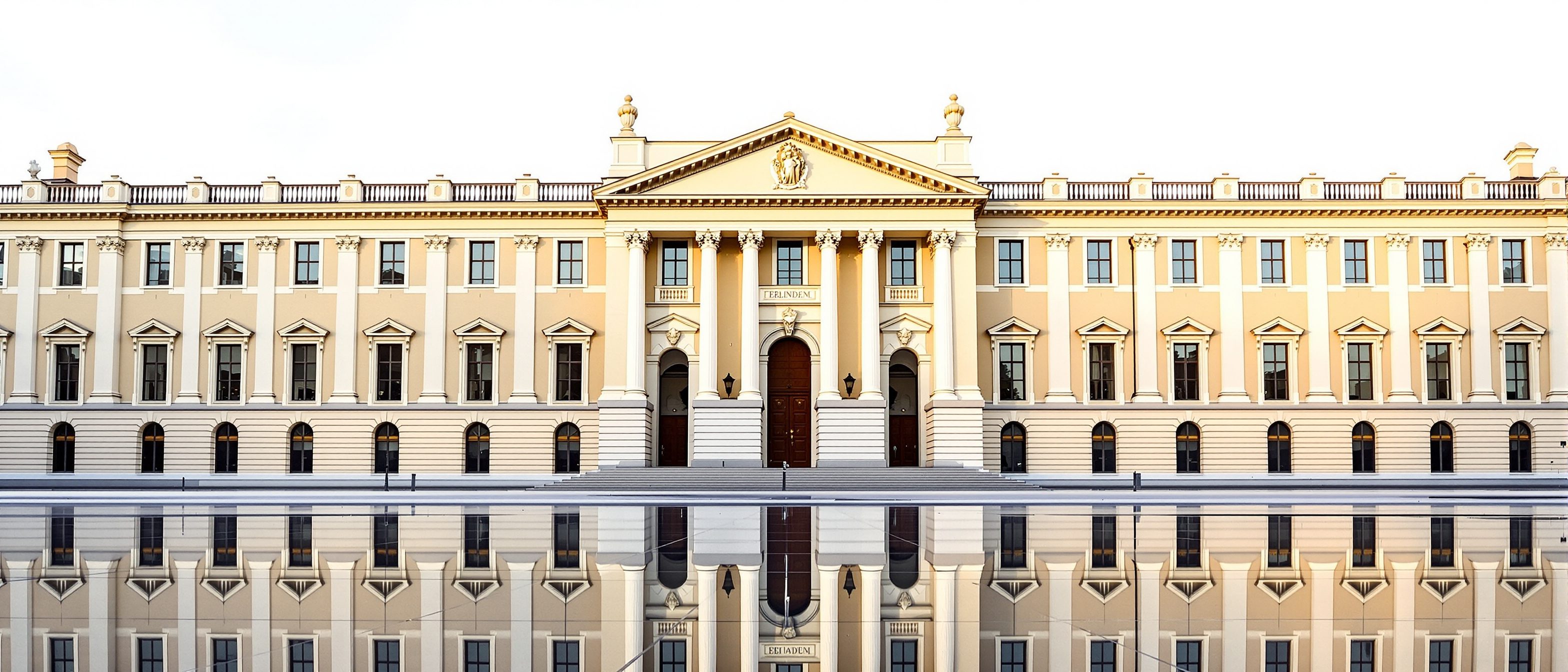
The Principles of Design
Balance, rhythm, proportion, scale, hierarchy — the grammar of composition.
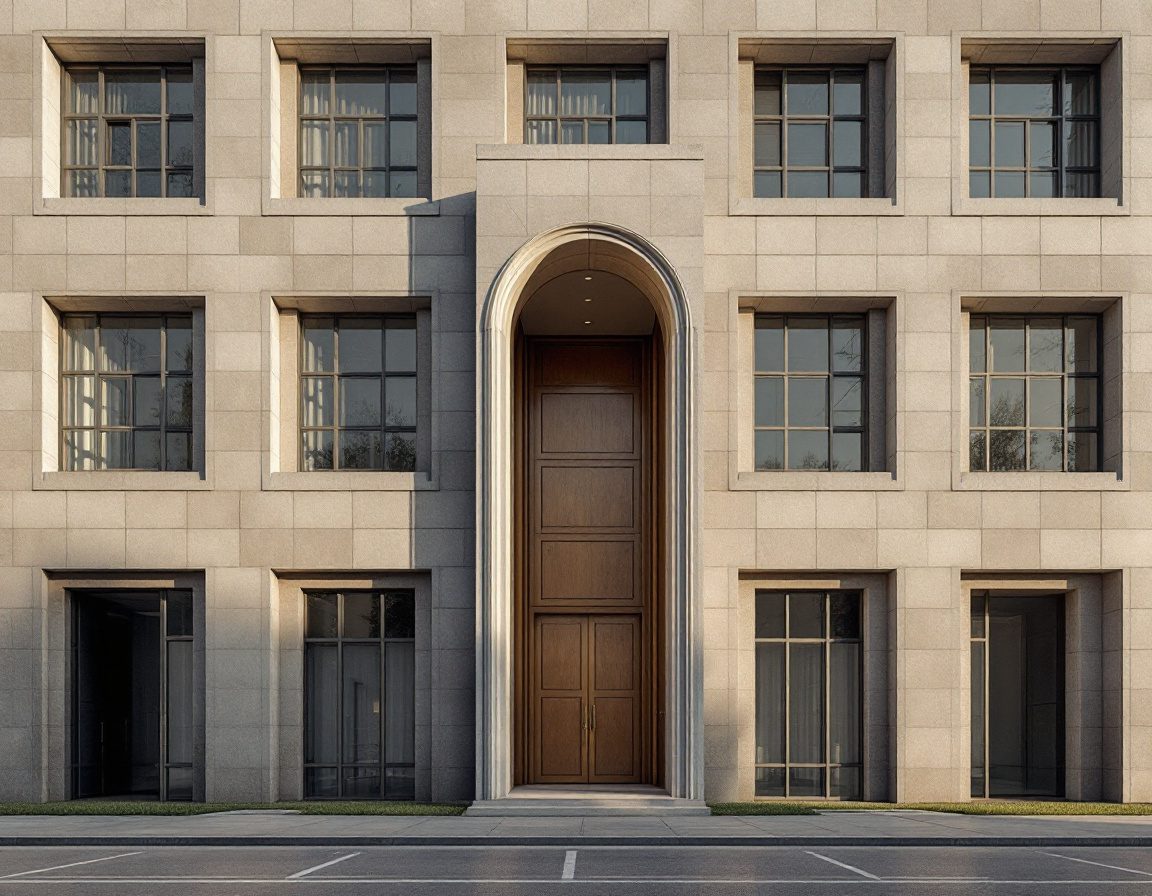
If the elements are the words, the principles are the grammar — what turns a heap of parts into a composition that holds together. Balance, rhythm, proportion, scale and hierarchy are the tools every designer uses to control where the eye goes and how a building feels.
Learning objectives
By the end of this lesson, you will be able to — mapped to the course outcomes for Building Materials & Construction I:
Distinguish symmetrical, asymmetrical and radial balance.
Use rhythm, scale, emphasis and hierarchy in composition.
Explain Ching's ordering principles (axis, symmetry, hierarchy, rhythm, datum, transformation).
Discuss proportion systems — and judge the golden-ratio claims critically.
The principles of composition
Six principles do most of the work. Select one to study it.
Balance
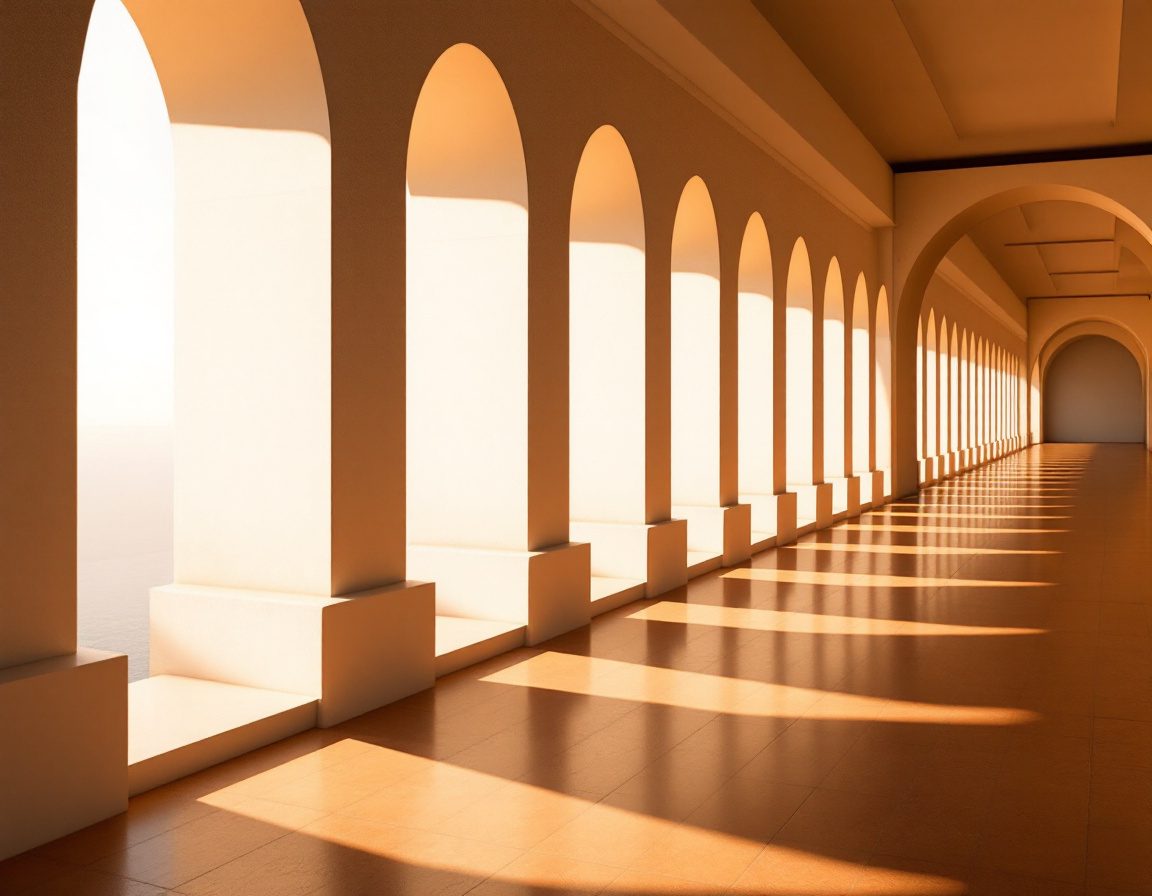
Visual equilibrium — symmetrical (equal weight either side of an axis), asymmetrical (different weights balanced off-centre), or radial (about a centre).[1]
Proportion — and an honest word on the golden ratio
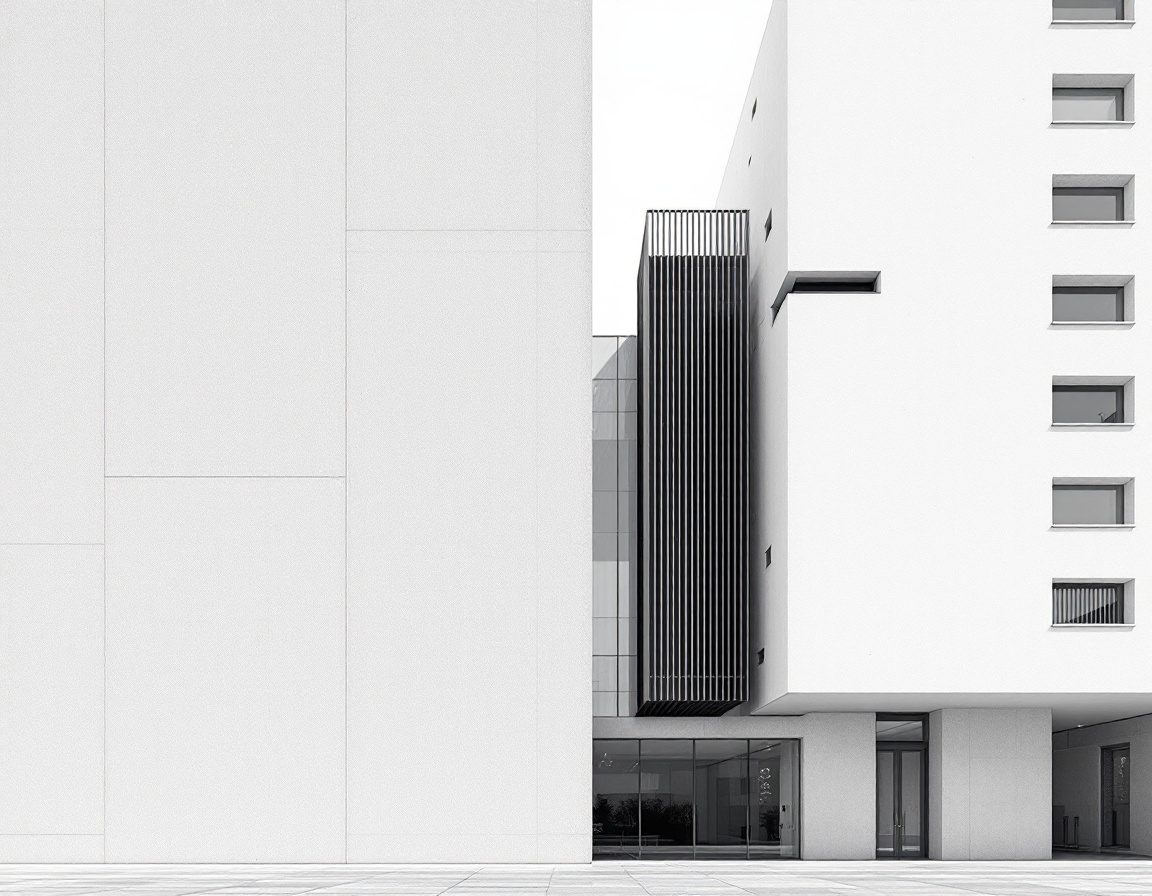
Proportion systems try to make the relationships between parts harmonious — the classical orders, Le Corbusier's Modulor, and most famously the golden ratio (φ ≈ 1.618). But be careful of the legend: the claim that the Parthenon was “designed on the golden ratio” is historically unsupported — it dates only to the 1850s and relies on selectively chosen rectangles. Treat φ as an influential idea, not a universal law.[2]
Ching's ordering principles
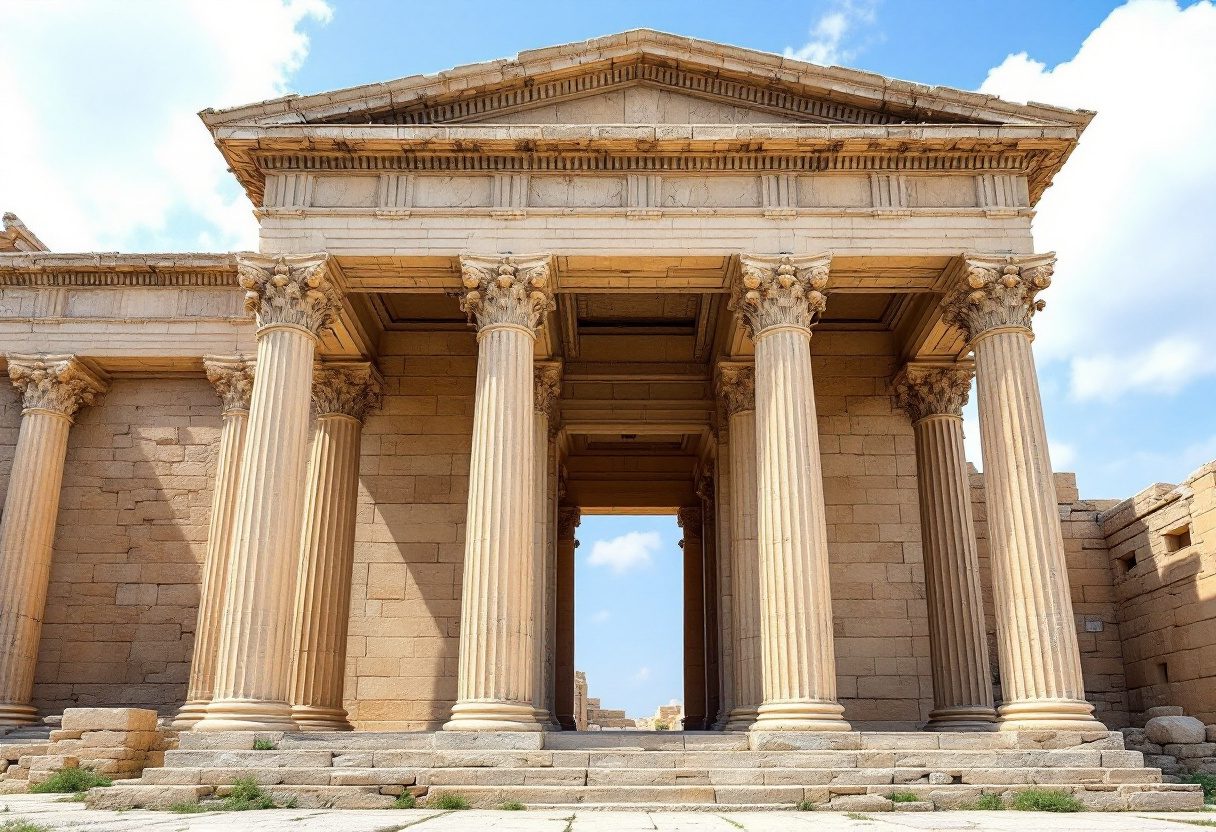
Francis Ching distils the ordering of architectural form into six principles.[1]
A line about which forms are arranged in balance.
Balanced distribution about an axis (bilateral) or centre (radial).
Importance shown by difference in size, shape or placement.
Unifying movement by repetition or alternation.
A line, plane or volume that gathers and organises other forms.
A scheme altered step by step while keeping its identity.
Self-assessment
1. Which balance places equal visual weight either side of a central axis?
2. The golden ratio φ is approximately:
3. “The Parthenon was definitely designed on the golden ratio.” This is:
Recap
References & further reading
- [1]Ching, F.D.K. Architecture: Form, Space and Order (4th ed., Wiley, 2014) — ordering principles and composition. https://www.wiley.com/en-us/Architecture%3A+Form%2C+Space%2C+and+Order%2C+4th+Edition-p-9781118745083
- [2]The golden ratio and Fibonacci — and the myths around them (Parthenon, Great Pyramid). plus.maths.org. https://plus.maths.org/content/myths-maths-golden-ratio
- [3]Principles of design (balance, rhythm, emphasis, unity, contrast). The Getty / design-education references. https://www.getty.edu/education/teachers/building_lessons/principles_design.pdf
- [4]Le Corbusier's Modulor and the classical orders — proportion systems. https://en.wikipedia.org/wiki/Modulor
Further reading
- Ching, F.D.K. (2014). Architecture: Form, Space and Order (4th ed.). Hoboken, NJ: Wiley.
- Le Corbusier (1954). The Modulor. Cambridge, MA: Harvard University Press.
- Unwin, S. (2014). Analysing Architecture (4th ed.). Abingdon: Routledge.
Sources gathered and fact-checked June 2026. Published values vary by source, sample and method — treat as indicative and confirm against the cited standard before structural use.
The author
Amogh N P
Architect, interior designer, and creative polymath. Studio Matrx began in his notebooks — his vision of design made honest, useful, and open to everyone. Its Academy is written and taught in his memory, and free, forever.
More about Amogh →