
B.Arch CurriculumFree, forever
A tribute to Amogh N P
Parametric Architecture & Modelling
Parametric design replaces drawing a single fixed shape with building a SYSTEM of rules and parameters that can generate endless variants — change a number and the whole design updates. This hands-on elective is the tools-and-making companion to computational design. It begins with what parametric design is and where it came from (from Gaudí's hanging chains to today's Grasshopper). It builds the geometric foundations — coordinates, surfaces, Boolean operations, meshing. It teaches the toolkit — Rhino, Grasshopper and its plug-ins. It explores the living edge — kinetic and responsive facades. And it ends where the screen meets the physical world: digital fabrication, where a CNC mill, a laser cutter or a 3D printer turns the model into matter.
Course byAmogh N P· Architect & interior designer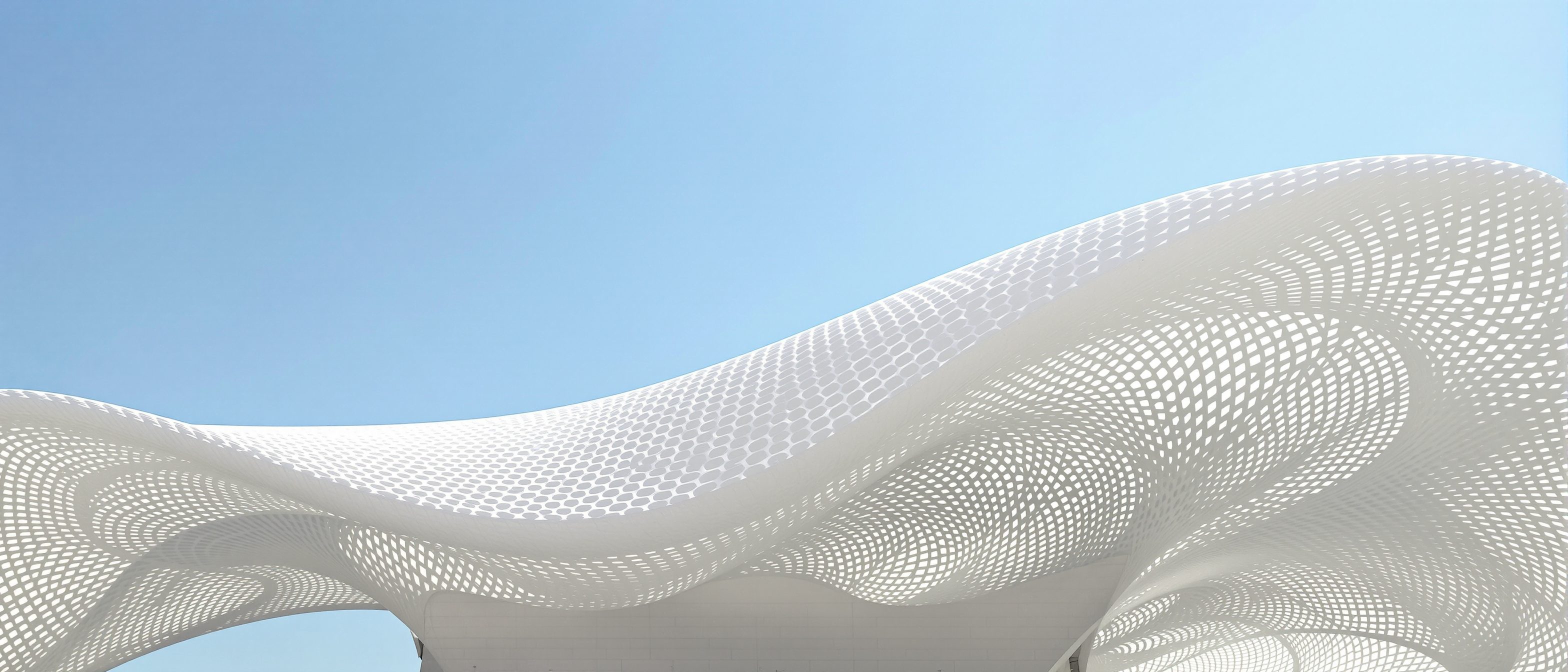
The syllabus
5 units · 5 liveTranscribed from the official B.Arch syllabus. All 5 units are live as full interactive lessons, each with original diagrams, a self-assessment quiz and studio work.
Unit 1 — Elements of Parametric Design
LiveAn introduction to parametric design; its historical development from Gaudí and Otto to digital tools; the structure of parametric design processes; their characteristics; and the main parametric design approaches and patterns.
Unit 2 — Geometric Modelling
LiveThe fundamental concepts of geometric modelling — spatial coordinates, projections, Boolean operations, formal transformations, free-form (NURBS) surface creation, surface development and deformation, discretization and meshing, digital prototyping and geometry reconstruction — applied to parametric architectural geometry.
Unit 3 — Parametric Tools & Techniques
LiveThe tools for designing parametrically — building geometrical relationships among complex shapes, with hands-on techniques that extend the efficiency and productivity of the design process; software such as Rhino, Grasshopper, Kangaroo, LunchBox, Ladybug and Weaverbird.
Unit 4 — Parametric Design & Environment
LiveKinetic design in architecture; responsive façades based on behavioural aspects; and the materials used in parametric design — the living edge where a parametric building moves and responds.
Unit 5 — Digital Fabrication
LiveAdvanced 3D modelling and tools; the manufacturing processes — additive and subtractive; CNC cutting and CNC milling; laser cutting; and 3D printing (SLS and FDM) — turning the digital model into a physical artefact.
Course outcomes
What you will be able to doUse parametric software to generate design variants.
Understand the emergent possibilities in digital design, analysis and fabrication.
Gain awareness of the machines, methods of fabrication and workability with materials.
Correlate the design process with a digital prototype or model attribute.
Develop new ideas in design through parametric and computational means.
Apply geometric modelling and fabrication to realise a parametric design.
The author
Amogh N P
Architect, interior designer, and creative polymath. Studio Matrx began in his notebooks — his vision of design made honest, useful, and open to everyone. Its Academy is written and taught in his memory, and free, forever.
More about Amogh →Design the rules, not the shape.
Parametric design and geometry, the Grasshopper toolkit, kinetic facades and digital fabrication. Work the five units, study the diagrams, then test yourself.
The curriculum is free, forever