
The biggest question on the paper is not a drawing
A3 is worth 30 marks. That is more than A1 or A2, more than any other single question in NATA 2026, and roughly 15% of the entire exam riding on one task. And it is the only question where you do not draw anything — you build. An invigilator hands you a bag of foam shapes and some glue, and you have to make something worth 30 marks out of them.
What actually happens at the desk
The sequence is unusually specific, and knowing it removes most of the panic.
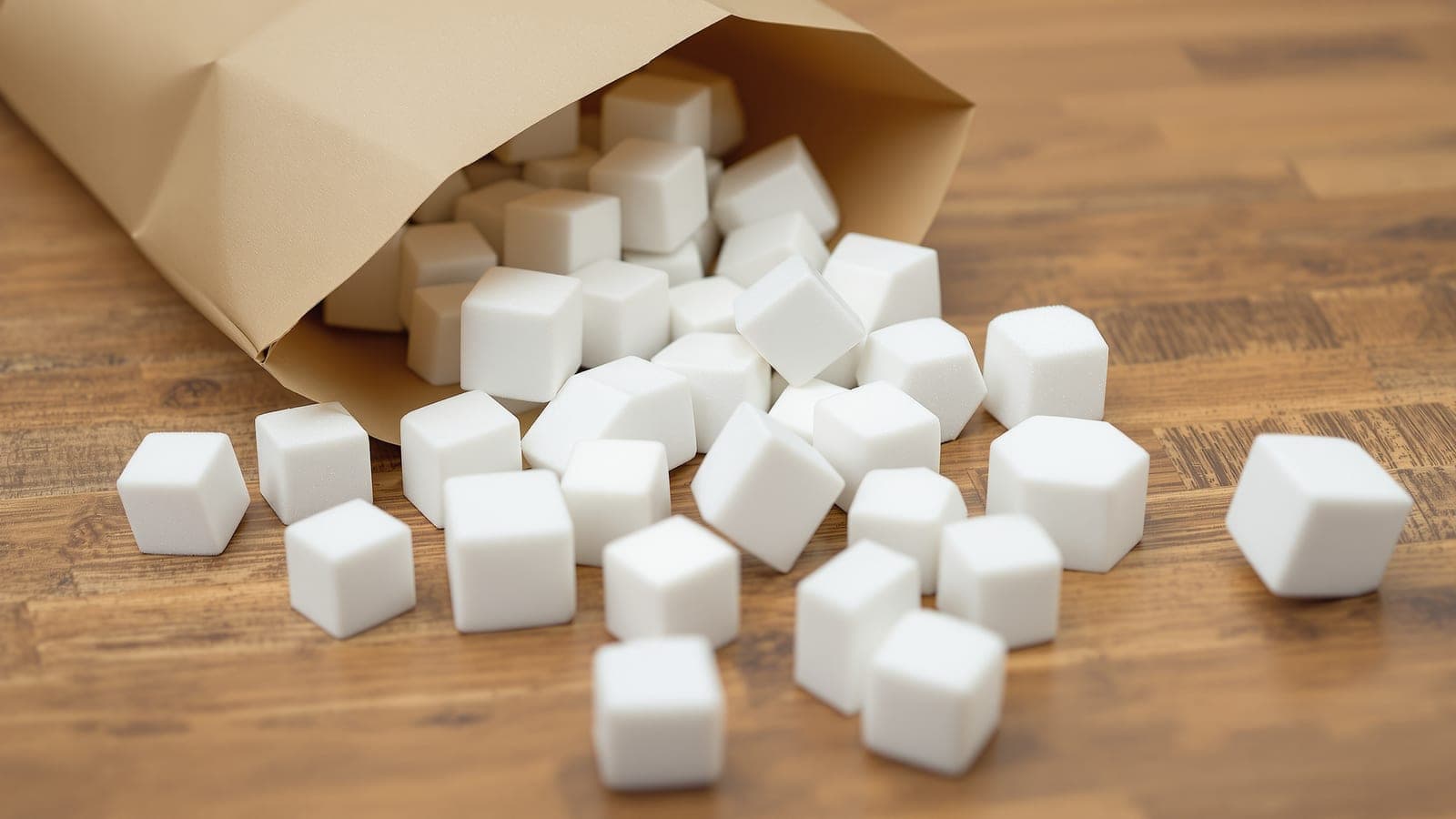
Your A3 question paper is printed with a kit code — D1, D2, D3, and so on. The invigilator reads that code and issues you the matching kit from a set supplied by the Council. Inside is a set of three-dimensional forms made of foam, plus a foam base sheet measuring 15 cm x 20 cm. Glue is provided. You glue the base sheet to the question paper, build your composition on it, and when time is called the model is placed in a shooting kit and photographed in three views — front, oblique-left, oblique-right — with the barcode visible. Those photographs are what gets marked.
Read that again, because two things in it decide how you prepare. The kit is issued to you, not brought by you. And the code means different candidates get different kits.
Why you cannot practise the artefact
Here is the uncomfortable part, and the reason this lesson exists.
You cannot know what is in your kit until it is in your hands. Not roughly, not approximately — you cannot know. The kit code is assigned with the paper. So any preparation built around rehearsing a specific set of shapes is preparation built on a guess.
This matters commercially, because people sell exactly that guess. If you see a product called the NATA foam kit, understand what you are buying: someone's reconstruction of what the kit might contain, based on candidate recollection. It is a proxy. It may be a useful proxy — building anything with foam is better than building nothing — but it is not the thing, and a candidate who has drilled one specific set of shapes into muscle memory may actually be worse off when the bag contains something else.
What you can prepare is the capability: composing with primitive volumes, at speed, on a fixed base, under a brief you read for the first time that morning. That transfers regardless of what is in the bag. The rest of this module is about that capability.
The base is the brief
The one constant you can rely on is the base: 15 cm x 20 cm. That is small. It is roughly a postcard and a half.
That constraint does more work than candidates expect. It means your composition is not free-standing sculpture — it is a composition within a footprint, and the footprint has a long axis and a short axis. It has corners. It has a front, because the photography is directional: front, oblique-left, oblique-right. Nothing photographs your composition from behind.
So a composition that only resolves when seen from one specific angle will lose marks in two of the three views. A composition that ignores the base edges and sprawls to them reads as unresolved. A composition that hugs the centre and leaves the base empty reads as timid. Working the base as a deliberate field — not as a surface you happen to be standing things on — is most of the difference between a middling A3 and a strong one.
It is composition, not construction
The examiner is not marking your gluing. Nobody gets 30 marks for neat joints.
What A3 tests is the thing the whole exam is testing, in three dimensions: can you make deliberate spatial decisions and can you resolve them. Which forms dominate and which subordinate. Where the eye enters. Whether the mass has a centre of gravity that reads. Whether the voids are as considered as the solids — because in a composition of foam blocks, the gaps are doing as much work as the blocks.
This is why A3 rewards architecture students who have never touched a foam kit and punishes candidates who have built twenty of them without thinking about any of this. The skill is transferable from anything that trains three-dimensional composition: model-making, sculpture, even careful observation of buildings. It is not transferable from repetition alone.
The rules behind this
Sourced to the official brochure rather than restated here, so there is one place to correct when the Council revises it.
The A3 foam kit is supplied at the centre. You do not bring one, and you cannot know its contents in advance.
The question paper carries a KIT CODE (D1, D2, D3...) and the invigilator issues the matching kit: a set of 3D forms made of foam plus a 15cm x 20cm foam base sheet. Glue is provided. The finished model is photographed at the centre in three views and uploaded.
Read this carefully: Consequence worth stating plainly: A3 cannot be rehearsed as an artefact, only as a capability. Anyone selling 'the NATA foam kit' is selling a proxy.
Source · verified 2026-07-16
Part A is three questions: A1 Composition and Colour (25), A2 Sketching and Composition in Black and White (25), A3 3D Composition (30).
Eighty marks across three questions means each is worth roughly 13% of the whole exam. There is no salvaging a bad question by volume, the way a 50-question paper allows.
Source · verified 2026-07-16
No official NATA mock test or sample paper exists. COA has published none.
Neither nata.in nor coa.gov.in hosts one, and neither brochure version mentions mocks or sample papers. Every 'NATA sample paper' in circulation is reconstructed by a coaching institute. Official papers are unlikely ever to be released: §12.0 Weeding Out Rules preserves the examination record for only 90 days after results.
Read this carefully: Claims that "COA releases the NATA mock test on nata.in" appear only on coaching sites and could not be verified on either official domain.
Source · verified 2026-07-16
What almost everyone believes
“I should buy a NATA foam kit and practise with the exact shapes that come up.”
There are no exact shapes. The kit is issued at the centre under a code you cannot know in advance, and different candidates get different kits.
Every foam kit on sale is a reconstruction from candidate recollection, not an official product — COA publishes no sample kit, and the examination record is kept for only 90 days (§12.0). Drilling one specific set of forms trains a reflex the exam will not reward, and can leave you slower when the bag contains something unfamiliar. Practise composing with whatever primitive volumes you have; that capability transfers, and a specific shape vocabulary does not.
Depending on how long you have
Foundation
Understand the skill. Months out, or starting from zero.
If the exam is months away, this is the best news in the syllabus: A3 rewards a capability you can genuinely build. Get any primitive volumes — offcut foam, balsa, sugar cubes, cut potatoes, it truly does not matter — and compose with them on a 15 x 20 cm card. Do it weekly. The material is irrelevant; the decision-making is the whole point.
Drill
The practice protocol. What to repeat, how often, how to score it.
Work to the real constraint every time: a 15 x 20 cm base, a fixed set of forms you did not choose, and 30 minutes. Have someone else pick the forms so you cannot pre-plan. Photograph each result from the three exam angles — front, oblique-left, oblique-right — and judge it from the photographs, not from the object in front of you. The photograph is what gets marked, and compositions that look strong in the hand often collapse in a flat frontal view.
Exam-Day
What to actually do under the constraint — 108 seconds, no instruments, one pass.
Spend the first two minutes not touching the glue. Lay the forms out, read the brief, and decide the composition before anything is fixed — glue is irreversible and a bad early commitment costs you the question. Build to the three camera angles. Fill the base deliberately. And finish: an unresolved composition photographed honestly reads worse than a simpler one that is complete.
Try it
Twenty minutes, with whatever is in the room. The point is the decision-making, not the material.
- 01Cut a card to exactly 15 x 20 cm. This is your base for every practice attempt from now on.
- 02Have someone hand you five to eight primitive objects without letting you choose them — blocks, erasers, boxes, anything with a clean volume.
- 03Set a 30-minute timer. Compose on the base without fixing anything for the first three minutes.
- 04Photograph the result from directly in front, then from 45 degrees left, then 45 degrees right.
- 05Judge only the three photographs. Ask where the eye enters, what dominates, and whether the composition survives the flat frontal view. That is what the examiner sees.
The short version
A3 is 30 marks of three-dimensional composition, built from a kit you cannot see in advance, on a base you can rely on, judged from three photographs you can predict. You cannot rehearse the artefact. You can absolutely rehearse the capability — and because most candidates spend their preparation chasing the artefact, the capability is where the marks are.
Next: composing with primitive volumes — what dominance, subordination and void actually look like when the vocabulary is foam blocks.
Questions people actually ask
- Do I need to bring a foam kit to the NATA exam?
- No. The kit is supplied at the centre by the Council. Your question paper carries a kit code and the invigilator issues the matching kit, containing foam forms and a 15 cm x 20 cm foam base sheet. Glue is provided too. Bringing your own materials is not required and instruments are barred.
- Are the NATA foam kits sold online official?
- No. COA publishes no sample kit and no official practice material of any kind. Kits on sale are reconstructions based on candidate recollection. They can be useful for general practice, but they are not the exam kit and no one can tell you what your kit will contain.
- How is the A3 model marked if I cannot take it home?
- The finished model is photographed at the centre in three views — front, oblique-left and oblique-right — with the barcode visible, and those photographs are uploaded. The photographs are what is assessed, which is why practising to those three angles matters more than how the model looks in your hand.
- How many marks is A3 worth?
- Thirty marks, out of 80 for Part A and 200 overall. It is the single highest-value question on the paper — more than A1 or A2, which carry 25 each.