
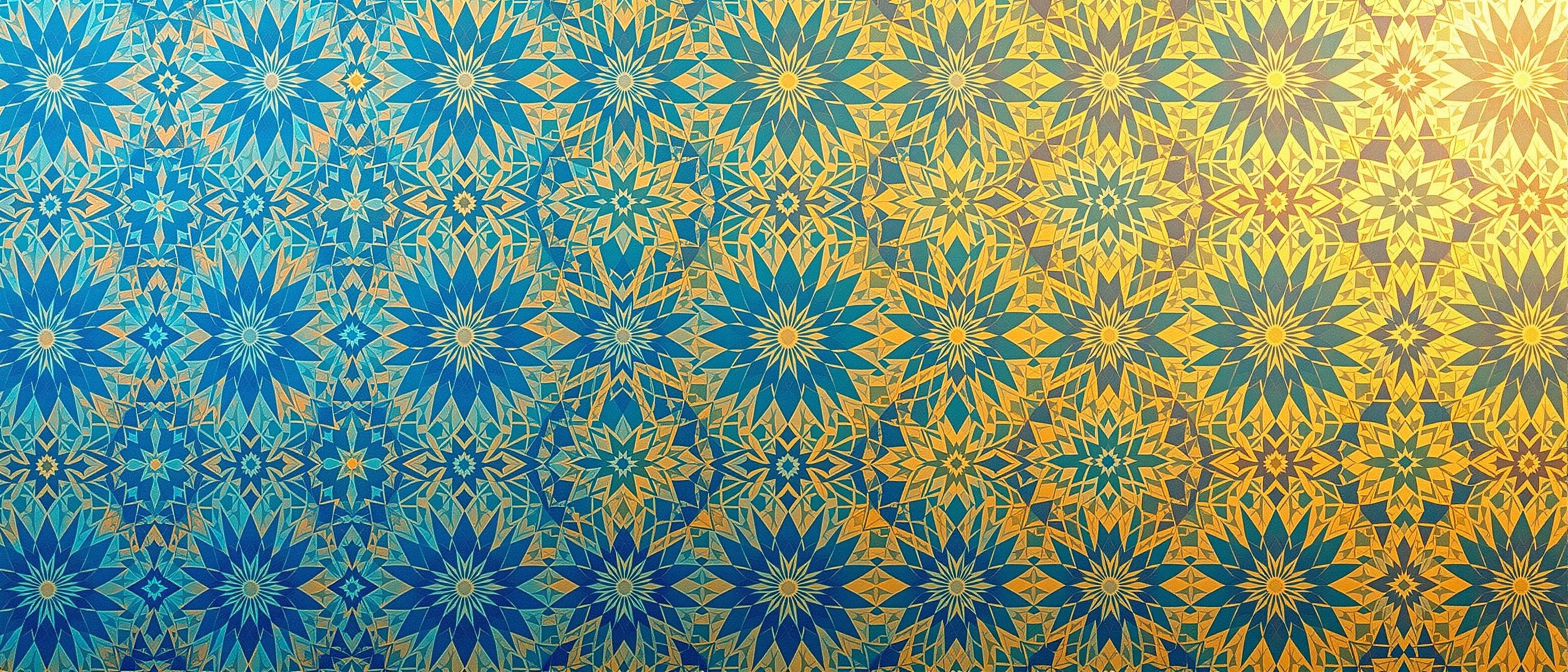
Geometry in Architecture
From the golden ratio to tessellations, conics and the catenary.
Geometry is the bridge from number to form. It hides in the proportions of a facade, the pattern of a screen, the curve of an arch and the code of a parametric model. This lesson tours the most beautiful of it — and is honest about the famous myths along the way.
Learning objectives
By the end of this lesson, you will be able to — mapped to the course outcomes for Building Materials & Construction I:
Explain the golden ratio and Fibonacci — and judge their architectural claims critically.
Recognise symmetry types and the three regular tessellations.
Identify the conic sections and the catenary arch.
See how geometry underpins parametric and computational design.
The golden ratio — honestly
φ ≈ 1.618 is a real and elegant number, and Le Corbusier really did use it. But the claim that the Parthenon or the Pyramids were “designed on the golden ratio” is historically unsupported — a story from the 1850s. Use φ as a tool, not a law. Try dividing a length in golden proportion below.[1]
Divide a length in golden proportion
φ = (1+√5)/2 ≈ 1.618. The larger part relates to the smaller exactly as the whole relates to the larger.
Symmetry, tessellation & curves
From the symmetry of a plan to the tile patterns of a wall and the perfect curve of an arch — geometry at work. Select a theme.
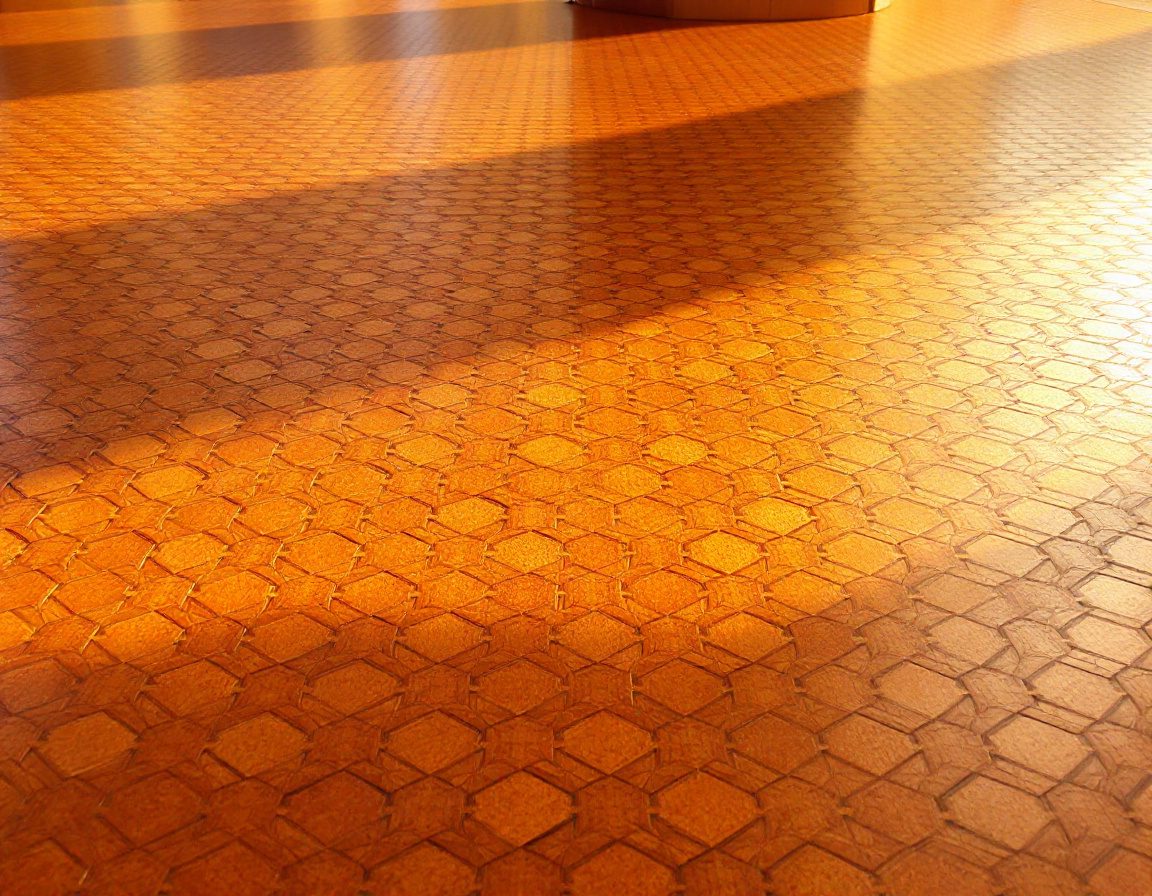
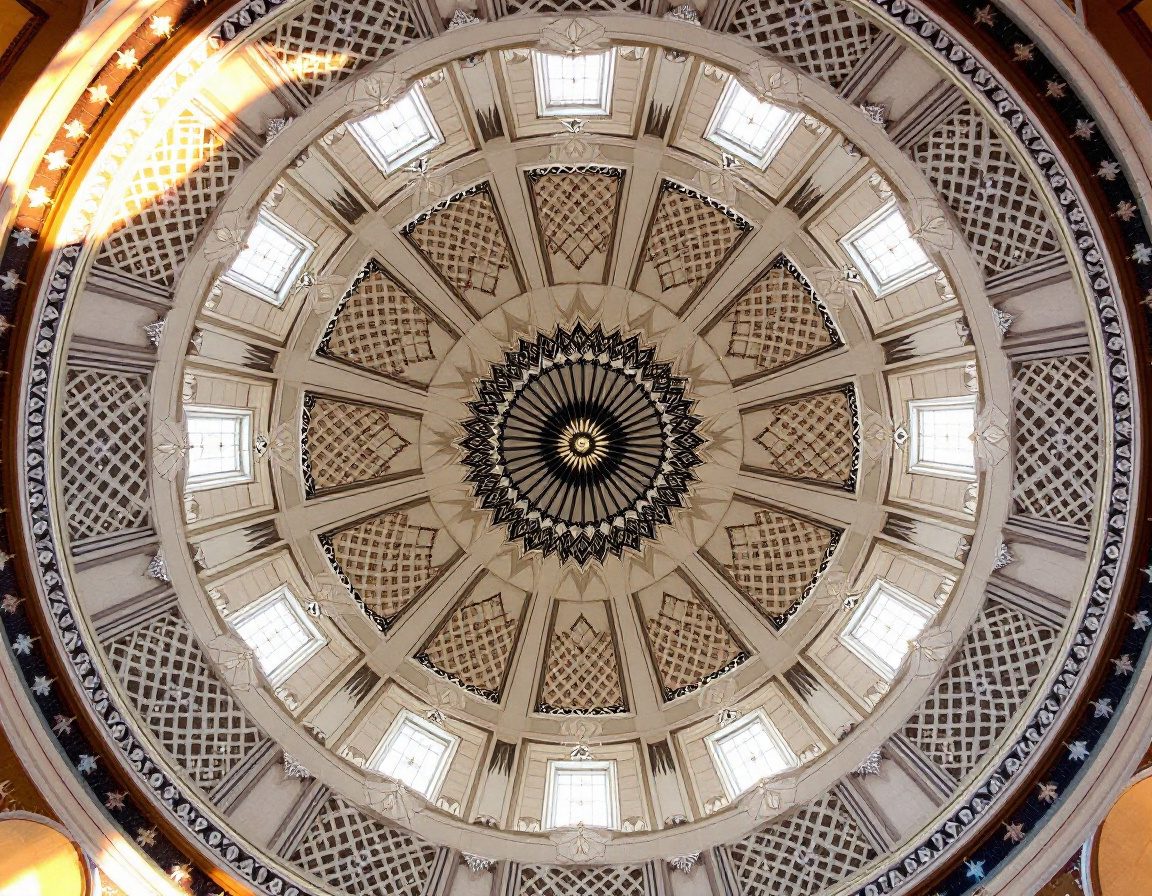
Symmetry & pattern
Reflection, rotation, translation and glide — the four plane isometries — order facades, domes, screens and the 17 wallpaper patterns.[5]

Self-assessment
1. The golden ratio φ is approximately:
2. How many regular polygons tile the plane on their own?
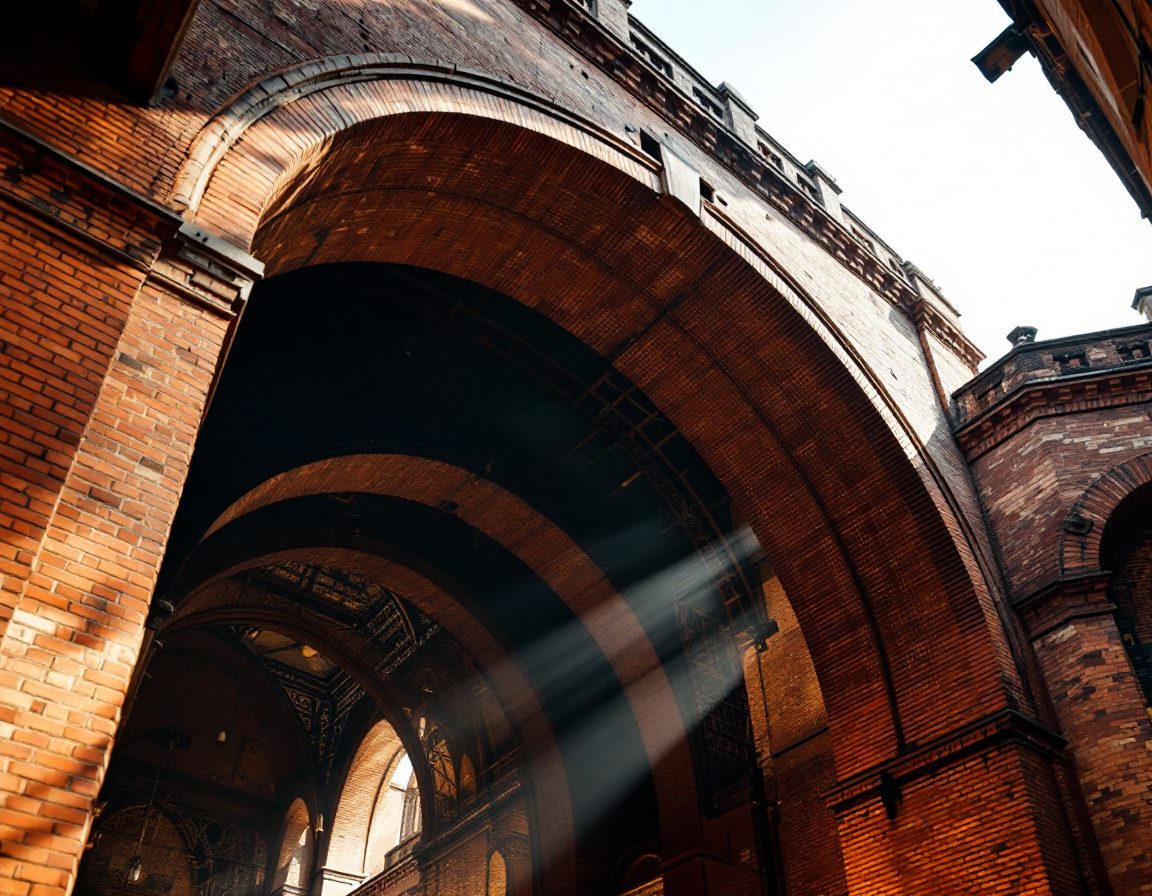
3. The ideal shape for a self-supporting masonry arch is:
Recap
References & further reading
- [1]The golden ratio and Fibonacci, and the myths around them. plus.maths.org. https://plus.maths.org/content/myths-maths-golden-ratio
- [5]Symmetry and the 17 wallpaper groups. Wikipedia. https://en.wikipedia.org/wiki/Wallpaper_group
- [6]Tessellation, regular tilings and Islamic girih (quasicrystalline) patterns. Lu & Steinhardt, Science 2007. https://peterlu.org/research/islamic_tilings
- [7]Conic sections, the catenary and the catenary arch (Hooke, Gaudí, Gateway Arch). Wikipedia. https://en.wikipedia.org/wiki/Catenary_arch
- [8]NURBS geometry and parametric design (Rhino / Grasshopper). Parametric Architecture. https://parametric-architecture.com/what-is-rhinoceros-3d-a-3d-modeling-software-based-on-nurbs-geometry/
Further reading
- Doczi, G. (1981). The Power of Limits: Proportional Harmonies in Nature, Art and Architecture. Boston: Shambhala.
- Williams, K. (ed.). Nexus Network Journal: Architecture and Mathematics. Basel: Birkhäuser/Springer.
- Lawlor, R. Sacred Geometry: Philosophy and Practice. London: Thames & Hudson. (read critically — interpretive)
Sources gathered and fact-checked June 2026. Published values vary by source, sample and method — treat as indicative and confirm against the cited standard before structural use.
The author
Amogh N P
Architect, interior designer, and creative polymath. Studio Matrx began in his notebooks — his vision of design made honest, useful, and open to everyone. Its Academy is written and taught in his memory, and free, forever.
More about Amogh →