
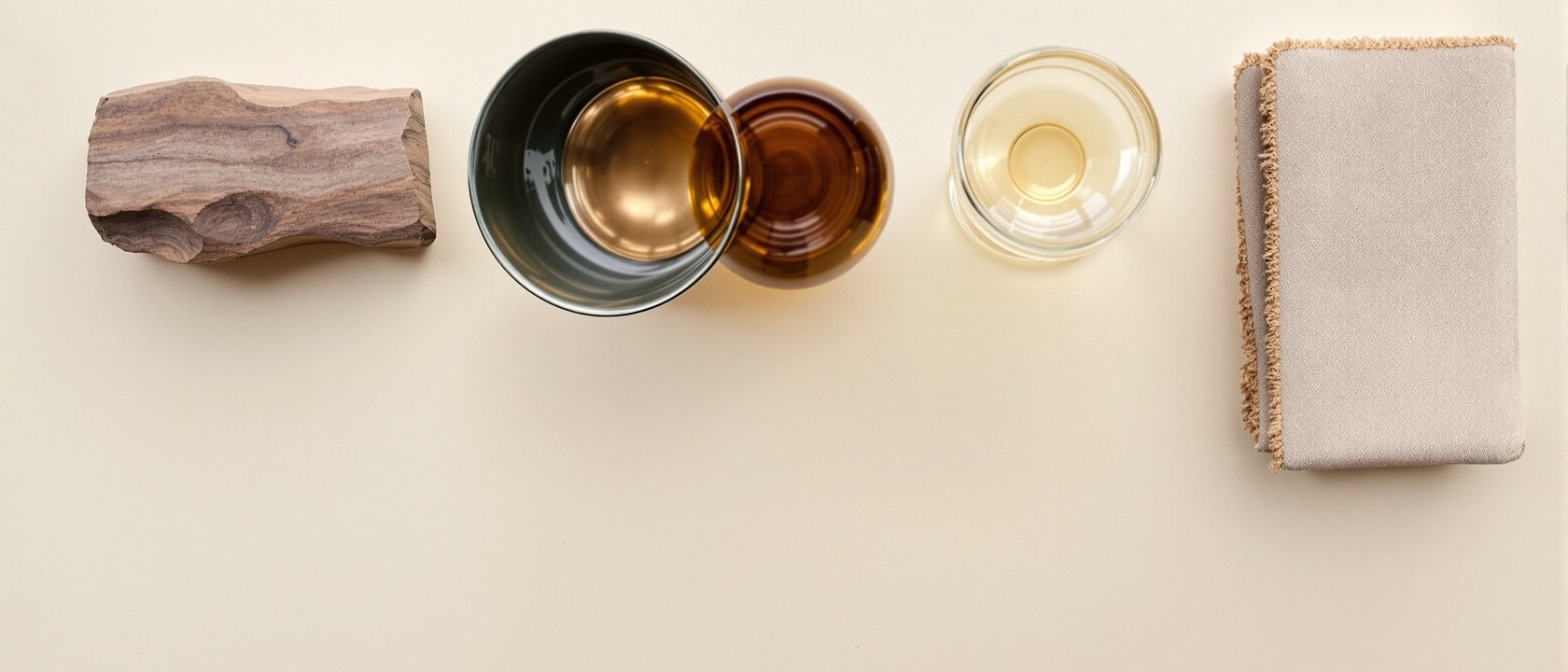
Materials & Techniques
Wood, metal, glass, ceramic and textile — chosen and made well
Accessories are made from a rich material palette — wood, metal, glass, ceramic, textile — each chosen for its real property and feel, not its look alone. Behind each is a technique: glass blown, ceramic fired, metal cast, wood turned, textile woven. ‘Handmade is inferior’ is a myth — India’s brass, pottery, lacquer and handloom are world-class — and so is ‘sustainable looks cheap’: recycled and natural materials can be the most beautiful, and durability is the deepest sustainability.
Learning objectives
By the end of this lesson, you will be able to — mapped to the course outcomes for Lifestyle Accessories Design:
Choose materials — wood, metal, glass, ceramic, textile — for their real properties and feel.
Explain the crafting and manufacturing techniques behind accessory materials.
Apply sustainability to materials and making, and value handmade and recycled work.
The material palette
Accessories draw on a rich material palette — wood warm, metal strong and reflective, glass transparent, ceramic fired, textile soft — each a functional and sensory choice. Behind each material is a technique, and trying the materials hands-on is how their feel is learned.[1, 2]
Chosen for its property
Accessories are made from a rich MATERIAL palette, each chosen for its real PROPERTY and feel. WOOD is warm, workable and alive with grain; METAL (brass, iron, copper, steel) is strong, reflective and can be cast, spun or beaten; GLASS is transparent, luminous and blown or cast; CERAMIC (earthenware, stoneware, porcelain, terracotta) is fired earth, solid and glazeable; TEXTILE is soft, warm and acoustic. Material is a functional and SENSORY choice, not just a look — and mixing a few honest materials in a room gives it depth, where one material alone feels flat.[1, 2]
Craft, machine and India
Accessories are made by hand, machine or both. ‘Handmade is inferior’ is a myth: fine craft is quality, and India’s brass, glass, blue pottery, lacquerware and handloom are world-class design. And material and form are one choice — designed with the grain of the material, not against it.[2, 3]
Handmade is not inferior
Accessories are made by HAND, by MACHINE, or both. 'Handmade or artisan-crafted is inferior or inconsistent' is a MYTH: fine craft is a mark of quality, and the small variation of the handmade is its value, not a flaw. India's artisan accessories are world-class design — Moradabad and Pembarthi BRASS, Firozabad GLASS, Jaipur blue POTTERY and Khurja pottery, Channapatna LACQUER-turned wood, Dhokra cast METAL, and handloom TEXTILES. Machine-making brings consistency and scale; hand-making brings craft, character and livelihoods. A good designer knows and values both.[2, 3]
Sustainability and the maker
Sustainability means recycled, natural and renewable materials and cleaner production — and above all durability, a well-made object kept for decades. ‘Sustainable looks cheap’ is a myth. It is also social: fair work for the makers, and supporting living crafts.[4]
Recycled, natural, lasting
SUSTAINABILITY is a real design responsibility in accessories. It means choosing RECYCLED materials (recycled glass, reclaimed wood, low-impact metal), NATURAL and renewable ones (natural fibre, responsibly-sourced wood, clay), and production that wastes and pollutes less. 'Sustainable or recycled materials look cheap' is a MYTH — they can be the most beautiful and characterful of all. And the deepest sustainability is DURABILITY: a well-made object kept and loved for decades beats a stream of throwaways. Design for long life, repair and honest material, not disposability.[4]
At a glance
| Aspect | The fact | The folklore |
|---|---|---|
| Material is chosen for | Its real property and feel — a functional, sensory choice | Its look alone |
| A room's materials | A few honest materials mixed — depth | One material everywhere — flat |
| Handmade / artisan work | A mark of quality; variation is its value | Inferior and inconsistent |
| Sustainable & recycled materials | Can be the most beautiful and durable | Look cheap |
| The deepest sustainability | DURABILITY — a well-made object kept for decades | Recyclable throwaways |
| Material and form are | One choice — designed together | Separate — pick a shape, then a material |
Key terms
The range of accessory materials — wood, metal, glass, ceramic, textile — each with a real property and feel; a few honest materials mixed give a room depth.
The craft behind each material — glass blown/cast, ceramic thrown/fired, metal cast/spun/beaten, wood turned/carved, textile woven/dyed — which a designer must understand to specify well.
Objects made by hand, whose fine craft is a mark of quality and whose small variation is its value — not inferior to machine-made; India's brass, pottery, lacquer and handloom among the world's best.
Choosing recycled, natural and renewable materials and cleaner production, and designing for durability, repair and long life rather than disposability.
The social side of sustainability — fair work and pay for the makers, and supporting living craft traditions rather than exploiting or erasing them.
The principle that a shape and its material are one choice — glass wants to flow, metal to be strong and fine, wood to run with its grain — designed with the material, not against it.
Study task
Pick three accessories made of different materials — say a brass object, a glass or ceramic piece, and a textile. For each, name its real property and feel and the technique that made it (turned, cast, blown, fired, woven), and judge its quality honestly. Find one handmade Indian craft accessory — Moradabad brass, Firozabad glass, Jaipur blue pottery, Channapatna lacquer, Dhokra casting or a handloom textile — and note what its making gives it that a machine-made version would not. Finally, assess one accessory for sustainability: its material, how it is made, and above all whether it is built to last. The goal is to read material, making and sustainability in real objects.
Self-assessment
1. How is an accessory's material chosen?
2. Is handmade or artisan-crafted work inferior?
3. Do sustainable and recycled materials look cheap?
4. How are an accessory's material and form related?
Recap
References & further reading
- [1]Materials and design for products and accessories — properties, selection and making (Michael Ashby & Kara Johnson, Materials and Design: The Art and Science of Material Selection in Product Design). https://www.elsevier.com/
- [2]Crafting and manufacturing techniques for decorative accessories — glass, ceramic, metal, wood and textile (Treena Crochet & David Vleck, Designer's Guide to Decorative Accessories; craft references). https://www.pearson.com/
- [3]Indian craft accessories — brass (Moradabad, Pembarthi), glass (Firozabad), blue pottery (Jaipur), lacquerware (Channapatna), Dhokra casting and handloom textiles. https://www.indianculture.gov.in/
- [4]Sustainability in materials and production — recycled, natural and durable materials, and ethical making (sustainable-design references; Ashby, Materials and the Environment). https://www.elsevier.com/
Further reading
- Michael Ashby & Kara Johnson, Materials and Design.
- Treena Crochet & David Vleck, Designer's Guide to Decorative Accessories.
- Karl T. Ulrich & Steven D. Eppinger, Product Design and Development.
Sources gathered and fact-checked June 2026. Published values vary by source, sample and method — treat as indicative and confirm against the cited standard before structural use.
The author
Amogh N P
Architect, interior designer, and creative polymath. Studio Matrx began in his notebooks — his vision of design made honest, useful, and open to everyone. Its Academy is written and taught in his memory, and free, forever.
More about Amogh →