
Concept Development & Ideation
From the user's need to a tested prototype
An accessory design begins with the user — their need, life and taste — not the designer’s whim. To design for a user you must know them: research the target demographic with genuine curiosity. Concepts are fed by wide inspiration gathered from the world, brought together on a mood board. And ideation is a loop — concept, sketch, prototype, test, refine — where a prototype tests the object in three dimensions and the hand, until it is genuinely resolved.
Learning objectives
By the end of this lesson, you will be able to — mapped to the course outcomes for Lifestyle Accessories Design:
Generate accessory concepts from the user's needs and preferences.
Use research to gather inspiration and understand the target user.
Develop and test concepts through mood boards, sketches and prototypes.
Start with the user
A design begins with the user — ‘a designer just makes what they find beautiful’ is a myth. To design for a user you must know them: research the target demographic — how they live, what they value, own, lack and can spend — with genuine curiosity, not projected taste.[1, 2]
Their need, not your whim
An accessory design begins with the USER — their need, their life, their taste — not with the designer's whim. 'A designer just makes what they find beautiful' is a MYTH: the first question is who this is for and what they need or want, because an object that answers a real user is used and loved, and a self-indulgent one is not. Even a purely decorative accessory serves a user's desire for beauty, mood or meaning. Designing from the user's need and preference (the course's own words) is the honest start of the work.[1, 2]
Inspiration and the mood board
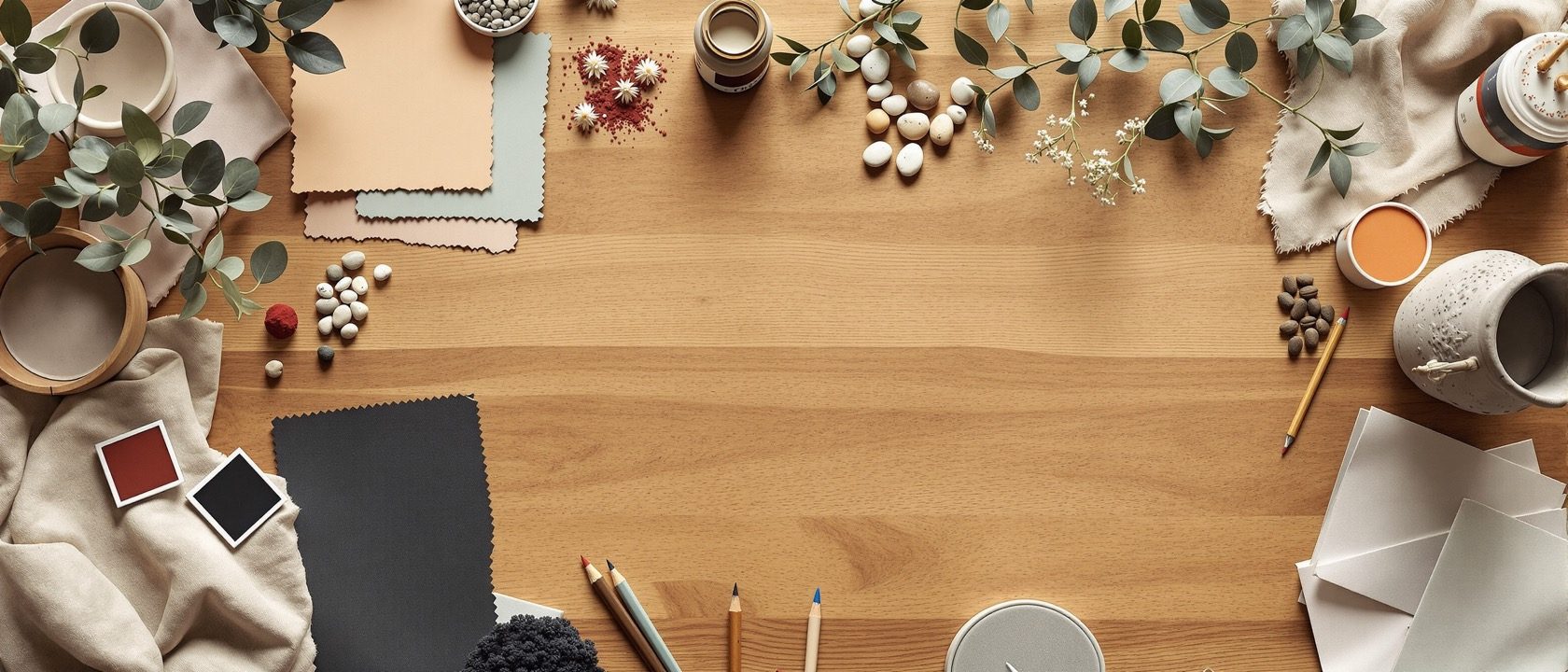
Concepts are fed by wide research and inspiration — nature, materials, craft, culture, art — deliberate magpie work, not waiting for genius or copying products. A mood board gathers it into one edited visual field, so a concept’s feel and direction can be seen and shared before anything is made.[1]
Research the world
Concepts are fed by RESEARCH and INSPIRATION — not waiting for a bolt of genius. A designer gathers references widely: nature, materials, other cultures, history, art, the way objects are used, and the qualities they want the object to have. This is deliberate, magpie work: collecting colours, textures, forms and ideas that resonate with the brief. The richer and more honest the gathering — and the more it comes from the world rather than from copying other products — the more original and rooted the concept that grows from it.[1]
Sketch, prototype, iterate
From the mood board come sketches and prototypes: a prototype tests the object in three dimensions and the hand, where a drawing cannot. Ideation is a loop — concept, sketch, prototype, test, refine — and iterating until the object is resolved, not stopping at the first pleasing sketch, is what makes it real.[2, 3]
Think by making
From the mood board come SKETCHES and PROTOTYPES. Sketching tests many forms fast on paper; a PROTOTYPE — a rough model in card, clay, foam or the real material — tests the object in three dimensions and in the hand, where drawings cannot. Designers think by MAKING: a weak idea is exposed the moment it is built, and the feel, scale and balance of an accessory can only be judged in the real. The rougher, earlier and cheaper the prototype, the more freely it can be judged and changed.[2, 3]
At a glance
| Aspect | The fact | The folklore |
|---|---|---|
| A design begins with | The USER'S need and preference | The designer's whim |
| Knowing the user means | Researching the target — who they are, how they live | Assuming your taste is theirs |
| Inspiration comes from | Wide research of the world — nature, craft, culture | Copying other products |
| A mood board is | An edited visual field that sets feel and direction | A random scrapbook |
| A prototype tests | The object in three dimensions and the hand | Nothing — a sketch is enough |
| Ideation is | A loop — concept, sketch, prototype, test, refine | One idea, done |
Key terms
Beginning an accessory design from the user's need, life and taste rather than the designer's whim — because an object that answers a real user is used and loved.
Studying who the accessory is for — how they live, what they value, own, lack and can spend — through observation, conversation and market study, not projecting your own taste.
Deliberately collecting references — colours, textures, forms, ideas from nature, craft, culture and art — that resonate with the brief, rather than copying other products.
An edited visual field of colours, materials, textures and images that captures the feel and direction of a concept, to be seen and shared before anything is made.
A rough model in card, clay, foam or the real material that tests an accessory in three dimensions and in the hand, where a drawing cannot — made rough, early and cheap.
The cycle of concept, sketch, prototype, test and refine, repeated until the object is genuinely resolved — not stopping at the first pleasing sketch.
Study task
Begin designing an accessory of your choice, from the user. First define a real target user — who they are, how they live, what they need or lack — and write a one-line brief for them. Gather inspiration widely (nature, craft, culture, materials) and assemble a small, edited mood board that captures the feel and direction. Then sketch several forms fast, choose one, and make a rough prototype in card, clay or foam to test it in three dimensions. Note what the prototype reveals that the sketch did not, and one change you would make in the next iteration. The goal is a concept driven by a real user and tested by making, not a pretty drawing.
Self-assessment
1. Where does an accessory design begin?
2. What does 'understanding the target demographic' mean?
3. What is a mood board for?
4. Why prototype an accessory?
Recap
References & further reading
- [1]Concept development, inspiration and mood boards in design (Laura Slack, What is Product Design?; design-process references). https://www.rotovision.com/
- [2]User-centred design and understanding the target user (Karl T. Ulrich & Steven D. Eppinger, Product Design and Development; user-research references). https://www.mheducation.com/
- [3]Prototyping and iteration — thinking by making and testing (Ulrich & Eppinger; product-design practice). https://www.mheducation.com/
Further reading
- Laura Slack, What is Product Design?
- Karl T. Ulrich & Steven D. Eppinger, Product Design and Development.
- William Lidwell, Kritina Holden & Jill Butler, Universal Principles of Design.
Sources gathered and fact-checked June 2026. Published values vary by source, sample and method — treat as indicative and confirm against the cited standard before structural use.
The author
Amogh N P
Architect, interior designer, and creative polymath. Studio Matrx began in his notebooks — his vision of design made honest, useful, and open to everyone. Its Academy is written and taught in his memory, and free, forever.
More about Amogh →