
Human Factors: Designing for the Body
Fit the tool to the person, and to the range — and forgive error
Human factors (ergonomics) is fitting a product to human abilities and limits — and its guiding rule is that you fit the tool to the person, never expect the person to contort to the tool, because the human is part of the system. You size a product with anthropometry for the range of real people, not a mythical average — reach for the small, clear for the tall, adjust for all. And because humans err, a good product prevents the wrong action where it can and forgives it where it can’t.
Learning objectives
By the end of this lesson, you will be able to — mapped to the course outcomes for Product Design:
Define human factors and explain the human as part of the product-and-person system.
Use anthropometry to design for the range of users — reach, grip, force — not the average.
Design to prevent and forgive human error, for performance and reliability.
Fit the tool to the person
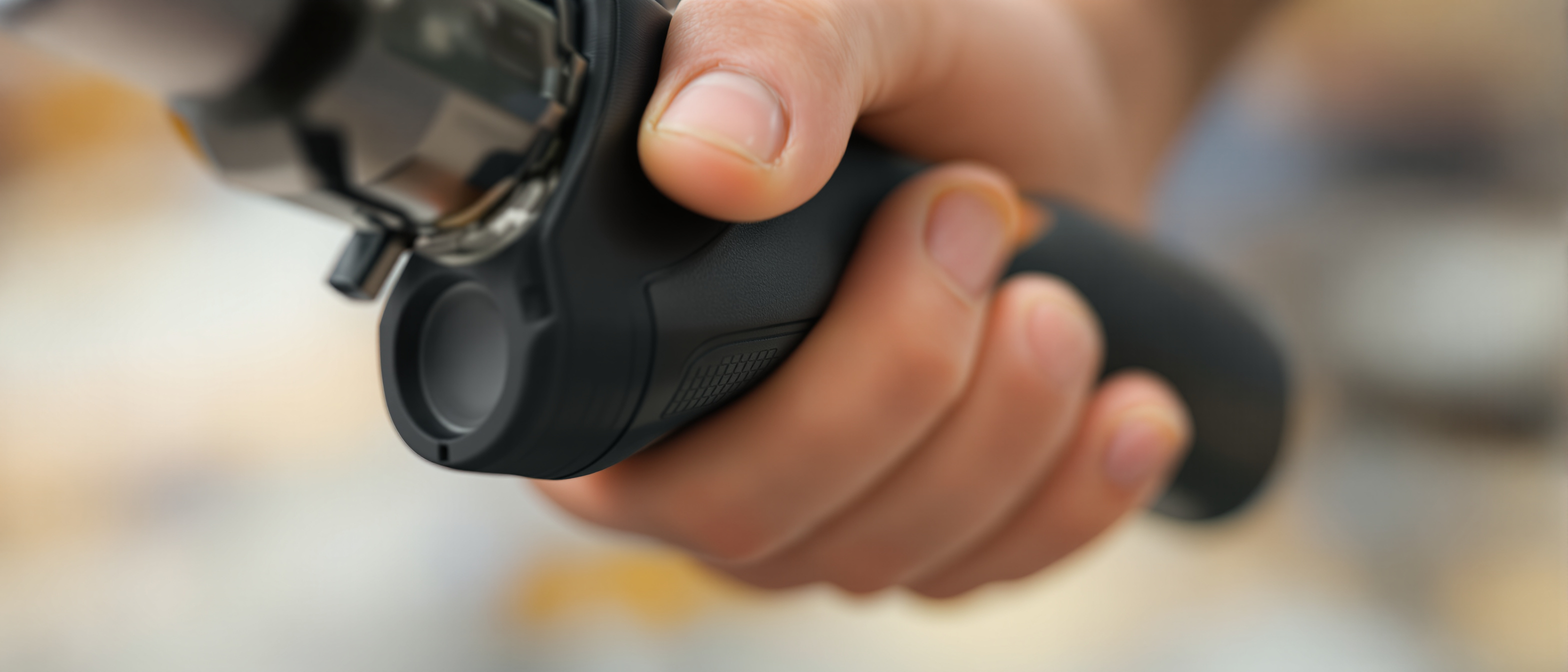
Human factors fits products to human abilities and limits — physical, perceptual, mental. You fit the tool to the person, never the reverse; the product-and-person are one system, and a design that ignores this strains, confuses or injures.[1, 2]
Fit the tool to the person
HUMAN FACTORS (ergonomics) is the study and application of how products fit human abilities and LIMITS — physical (reach, force, size), perceptual (what we can see and hear) and mental (what we can attend to and remember). Its guiding rule is that you FIT THE TOOL TO THE PERSON, never expect the person to contort to the tool. The product-and-person are one SYSTEM (the man-machine system); a design that ignores human factors produces objects that strain, confuse or injure — however clever they look.[1, 2]
Design for the range
Applied anthropometry sizes a product for the range of real people, not the average — almost no one is average on every dimension. Reach for the small, clear for the tall, and make it adjustable; use Indian data for India.[2, 3]
Not the average user
APPLIED ANTHROPOMETRY sizes a product from body-measurement data — but for the RANGE of real people, not a single 'average'. 'Design for the average user' is a MYTH (the space-planning lesson again): almost no one is average on every dimension, so an object sized for the mean fits nobody well. The rule is REACH for the small (controls a short person can reach), CLEAR for the tall (space a tall person needs), and make it ADJUSTABLE where you can — a chair height, a strap, a grip that suits many hands.[2, 3]
Humans err — forgive it
People will slip and mis-handle — that’s human. A good product makes the right action easy and the dangerous one hard (constraints), and forgives the mistake (fail-safes). ‘The user made a mistake’ is not a design conclusion.[1, 4]
Design for the mistake
People WILL slip, mis-read, forget a step and mis-handle a tool — that is human, not stupid. A good product is designed for the ERROR: it makes the right action easy and the wrong or dangerous action HARD (a constraint that only lets a plug go in the right way), and where a mistake still happens, it FORGIVES it (a guard, an undo, a fail-safe). 'The user made a mistake' is not a design conclusion; the honest one is 'the design allowed the mistake', and the fix is in the product.[1, 4]
At a glance
| Aspect | The fact | The folklore |
|---|---|---|
| Human factors fits | The tool to the PERSON — the human is part of the system | The person to the tool |
| Anthropometry designs for | The RANGE — reach for the small, clear for the tall, adjustable | The 'average' user |
| The 'average user' | A myth — almost no one is average on every dimension | Who you design for |
| Anthropometric data is | Population-specific — use Indian data for India | The same everywhere |
| When a user errs | The DESIGN allowed it — prevent and forgive the error | The user's fault |
| Reliability comes from | Constraints (prevent) plus fail-safes (forgive) | Expecting a perfect user |
Key terms
Fitting a product to human abilities and limits (physical, perceptual, mental) — you fit the tool to the person, never the reverse; the human is part of the system.
The product and the person understood as one loop — information in (perceive), processing (decide), control out (act) — whose performance depends on the fit.
Sizing a product from body data for the RANGE of real people — reach for the small, clear for the tall, adjustable — not a mythical average; population-specific.
The rule that almost no one is average on every dimension, so an object sized for the mean fits nobody well — reach, clear and adjust for the spread of users.
Designing so mistakes are prevented (constraints, mapping) where possible and forgiven (guards, undo, fail-safes) where not — the design owns the error, not the user.
Prevention (a shape that only fits one way, an interlock) plus forgiveness (a fuse, a reversible step) that build reliability into the human-plus-product system.
Study task
Take one hand tool or control you use — a peeler, a door handle, a remote — and audit its human factors. Does it fit the hand, or must you contort to use it? Check its sizing against the range of users: could a small child or an older person with a weaker grip use it, and is anything adjustable? Then find one way it could cause an error, and redesign it to prevent the wrong action (a constraint so it only works one way) and to forgive a slip that still happens (a guard, a reversible step). Note where Indian anthropometric data would change your sizing. The test is a tool fitted to real, fallible people — not an average, careful one.
Self-assessment
1. What is the guiding rule of human factors?
2. Who does anthropometry design a product for?
3. When a user makes a mistake with a product, what's the honest design conclusion?
4. How does a product build in reliability?
5. Why should an Indian product use Indian anthropometric data?
Recap
References & further reading
- [1]Human factors and ergonomics — fitting products to human abilities and limits, the man-machine system, performance, reliability and error (human-factors texts; Time-Saver Standards). https://www.moma.org/
- [2]Applied anthropometry for product design — designing for the range of users, reach, grip and force (Julius Panero & Martin Zelnik, Human Dimension & Interior Space). https://www.wiley.com/
- [3]Indian anthropometric data — population-specific body dimensions for design in India (Debkumar Chakrabarti, Indian Anthropometric Dimensions, NID). https://www.nid.edu/
- [4]Error and human-centred design — designing to prevent and forgive human error (Donald Norman, The Design of Everyday Things). https://mitpress.mit.edu/
Further reading
- Julius Panero & Martin Zelnik, Human Dimension & Interior Space.
- Debkumar Chakrabarti, Indian Anthropometric Dimensions (NID).
- Donald Norman, The Design of Everyday Things.
Sources gathered and fact-checked June 2026. Published values vary by source, sample and method — treat as indicative and confirm against the cited standard before structural use.
The author
Amogh N P
Architect, interior designer, and creative polymath. Studio Matrx began in his notebooks — his vision of design made honest, useful, and open to everyone. Its Academy is written and taught in his memory, and free, forever.
More about Amogh →