
 Lesson 6.1
Lesson 6.1 · Lighting and Acoustics
Daylight: The First and Best Light
Why every good room begins with the sun, and how orientation, depth and glare decide whether daylight blesses a space or punishes it.
Stand in any room at 10 in the morning and ask one question: where is the light coming from?
Before a single lamp is chosen, before a switch is wired, the sun has already decided whether your room feels alive or tired. Daylight is the first light any space receives and, handled well, the best light it will ever have. It costs nothing, it shifts beautifully through the day, and it does something no LED can: it tells your body what time it is. The trouble is that daylight is not one thing. The soft, steady glow on a north wall and the hard low blaze of a west window in May are both daylight, yet they ask for completely opposite designs. This lesson is about learning to read the sun before you fight it.
A simple room plan in section with a window on the left: draw an arrow from the window head bouncing off a light shelf onto the ceiling and deep into the room, and a dotted line on the floor marking '2.5 x head height' where the light fades. Add a tiny sun with N, E, S, W labels in a corner.
The four lights: how orientation changes everything
The single most important fact about a window is which way it faces. The same 1.2 m opening behaves like four different windows depending on the wall it sits in.
North light is the quiet hero. In India it never receives direct sun, so it gives a soft, even, glare-free glow that stays remarkably steady all day and across seasons. This is why artists and tailors crave it and why it is ideal for a study, a home office, a reading nook or any task that demands calm, shadow-free light.
East light is the gentle morning gift. The early sun slants in low and warm, then leaves by midday, so an east room wakes brightly and cools off later. Wonderful for bedrooms, breakfast corners and kitchens.
South light is strong but obedient. The sun rides high in the south, so a horizontal projection above the window, a chajja or overhang, blocks the steep midday rays while still letting in plenty of daylight. South glazing is generous and, crucially, easy to shade.
West light is the hard one. The afternoon sun drops low and drives straight under any overhang, flooding the room with hot, blinding, late-day glare. A west face bakes. Here you fight back with vertical shading, deep reveals, jaali screens, planting or simply smaller, higher openings. Treat west as the orientation that needs the most discipline.
How much glass, and how deep the light reaches
Two rough numbers will save you from gloomy rooms.
First, how much glass. A simple gauge is the window-to-floor-area ratio: the area of glazing divided by the floor area. Aim for roughly 10% to 20% for a well-lit habitable room. The National Building Code (NBC) asks for a minimum window opening for light and ventilation, commonly read as around one-tenth of the floor area, so 10% is a floor, not a target. A 12 sq m bedroom therefore wants somewhere between 1.2 sq m and 2.4 sq m of actual glass.
Second, and just as important, how deep the light reaches. Daylight from a side window penetrates usefully only to about 2 to 2.5 times the head height of the window, measured from the floor to the top of the glass. So a window whose head sits at 2.1 m lights the first 4 to 5 m of a room well, and the back beyond that goes dim no matter how wide the window is. This is why deep rooms feel gloomy at the rear and why you cannot fix a deep dark room simply by making one window wider. You either bring the head of the window higher, add light from another wall, or bring light in from above.
Pulling light deeper and washing it across the room
Once you know light fades fast with depth, the craft becomes pushing it further in and spreading it gently.
A light shelf is a horizontal projection placed across a window at roughly door height. It shades the lower glass from harsh direct sun and, with a pale or reflective top surface, bounces light off itself onto the ceiling, which then washes deeper into the room. It is one of the most elegant tools in the daylight kit.
Deep reveals and splayed jambs matter more than people think. Instead of a window cut square through a thick wall, splay the sides and sill outward at an angle and paint them a light colour. The angled, bright reveal softens the brutal jump from dark wall to bright sky and throws light sideways into the room rather than letting it pour straight through.
Light-coloured surfaces near the opening do quiet, free work. A pale wall beside a window, a light floor, a white sill or a reflective ceiling all act as second-hand light sources, catching daylight and re-throwing it. The closer a bright surface is to the window, the more daylight it harvests and redistributes.
Top-light, courtyards and the Indian repertoire
When a room is too deep for side windows, or hemmed in by neighbours, light has to come from above or from within the plan.
A clerestory is a band of high windows set near the ceiling, often above eye level or above a lower roof. Because the light enters high, it reaches far across the room and washes the back wall and ceiling, exactly where side windows fail. It also gives privacy and lets hot air escape.
Skylights drop daylight straight down into the heart of a plan, lighting stairwells, bathrooms and the centre of deep rooms that have no outside wall. In our climate, keep skylights modest, shaded or north-facing, and detail them carefully, because an unshaded skylight is a heat trap and a glare source by noon.
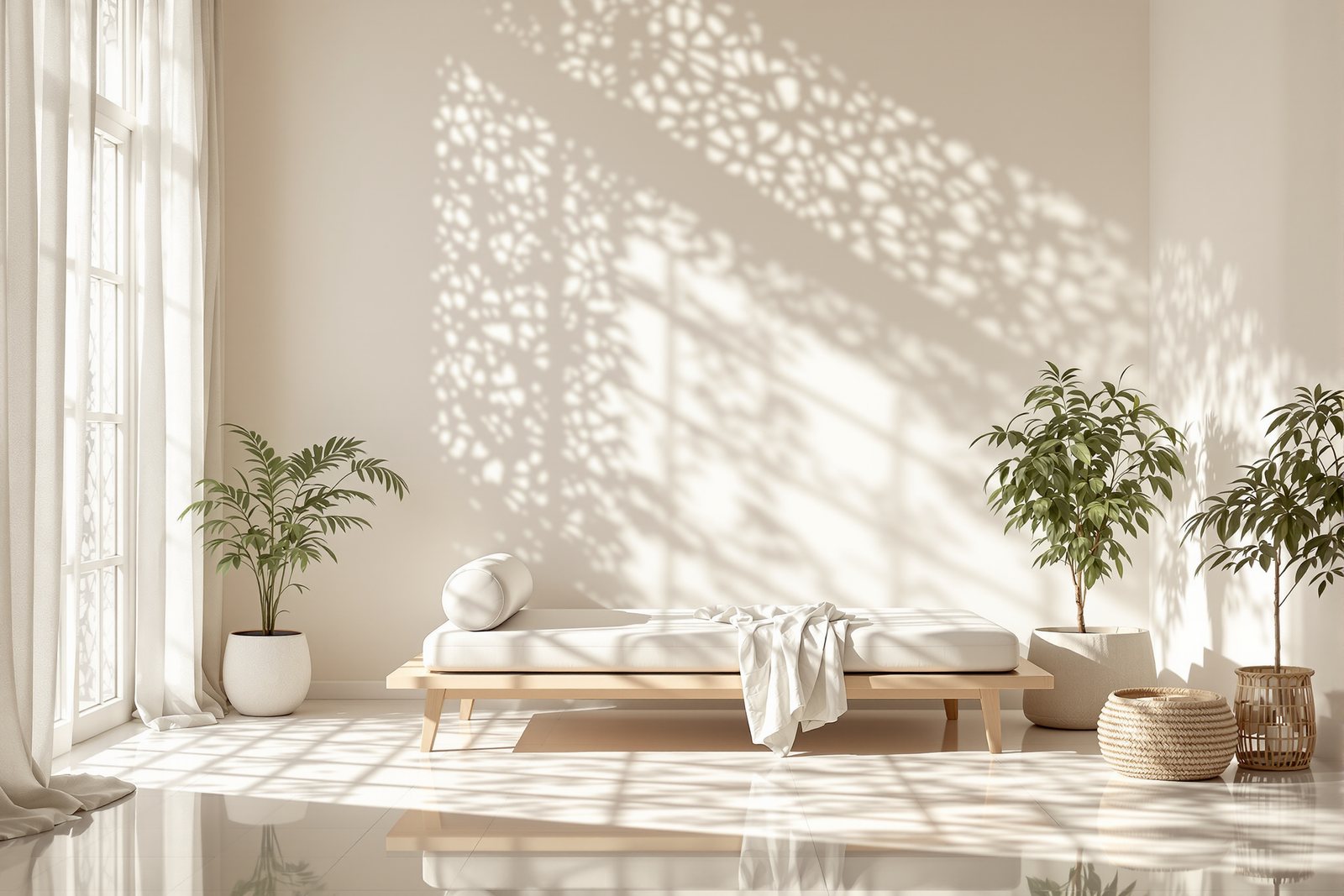
The Indian tradition has answered all of this for centuries. The courtyard, the central open well, brings even, protected daylight and air into the deepest part of a house while keeping the harsh sun off the rooms around it. The jaali, a perforated stone or lattice screen, breaks blazing direct sun into a soft, dappled, glare-free wash, cuts heat and gives privacy all at once. Reach for these first; they are climate-tested daylight machines.
Glare, contrast, and designing with the changing day
Daylight can be plentiful and still feel awful. The usual culprit is glare, the discomfort of a very bright patch sitting in a much darker field. A single bright window punched into a dark wall is the classic offender: your eye is torn between the dazzling sky and the gloomy surround, and the room feels both bright and unpleasant.
The fix is contrast, not quantity. Bring light from two sides of a room where you can, so neither window has to be a lone blazing hole. Where you have only one window, wash the wall around it with light, paint adjacent surfaces pale, splay the reveals, so the jump from window to wall is gentle rather than violent. Sheer curtains, jaali and light shelves all soften the source itself.
Finally, remember that daylight is never still. It swings from warm low east light at dawn to cool overhead light at noon to amber west glare at dusk, and its angle shifts through the seasons. This is not a problem to defeat; it is the gift. Design with the daily and seasonal movement, place the morning room to the east, the steady workroom to the north, the shaded living space away from the western blaze, and the building quietly keeps time with the sun.
Want a quick gut-check on whether a room has enough glass? Use the daylight-factor checker: type in the room's floor area and the window glass area, and it reads back your window-to-floor ratio with a green, amber or red verdict against the healthy daylight range.
Hands-on
Ratio is only half the story — daylight from a side window reaches usefully to about 2–2.5× its head height, so a deep room can pass this check and still go gloomy at the back. Raise the head, add a clerestory, or light it from two sides.
Three altitudes on the same idea
Read the band that fits you — or all three.
When you walk a flat or plan a renovation, check orientation before anything else. Put your study or work desk against a north window for steady, glare-free light. Keep the harsh west rooms for things you use less in the afternoon, or shade them hard with deep curtains, planting or jaali. If a room feels dim at the back, you almost certainly cannot fix it with a wider window, so think about a high clerestory, a skylight or borrowing light from another wall before you reach for more lamps.
Make daylight a design driver, not an afterthought. Zone the plan by orientation: tasks to the north and east, buffers and services to the west. Check the 2-to-2.5x-head-height rule against every deep room early, while you can still move walls or raise window heads. Specify light shelves and splayed reveals where depth fights you, and detail shading per facade, horizontal chajja for south, vertical fins or jaali for west. Run the window-to-floor ratio room by room and document it against NBC minimums in your drawings.
Train your eye on real rooms. Carry a tape and a compass app: note which way each window faces, measure the head height, and predict how far back the light should reach, then look and check yourself. Sketch the same room at 9 am, noon and 5 pm and watch the light move. Learn the four orientations cold, because in studio crits the first thing a sharp examiner asks is, quite simply, where the light comes from, and you want the answer on the tip of your tongue.
“A bigger window always means a brighter room, so if a space feels dark you just need more or wider glass.”
2 to 2.5 times the window's head height, so beyond that depth a room stays dim however wide the glass. Worse, one huge bright window in a dark wall causes glare, not comfort. To brighten the rear you must raise the window head, add a second light source, or bring light from above with a clerestory or skylight.Run the method yourself
Daylight only makes sense when you measure it in a real room. Pick one room you can stand in right now and work through these steps.
- 1Find which way the main window faces using a compass app, then name its light: north (steady), east (morning), south (high, shadeable) or west (harsh afternoon). Note whether the room's use suits that light.
- 2Measure the head height of the window, floor to the top of the glass, in millimetres. Multiply by
2.5, then pace out that distance into the room. Everything beyond that line is the zone that will go gloomy on a grey monsoon afternoon. - 3Measure the room's floor area and the glass area of all its windows, then open the daylight-factor checker, enter both numbers, and read the green, amber or red verdict against the healthy
10-to-20%range. - 4At three times in one day, around
9 am, noon and5 pm, photograph the room from the same spot without lights on. Compare the three: notice how the bright patch moves, where glare appears, and where the room never quite lights up. - 5Pick one weakness you found and name a fix from this lesson: a light shelf, a splayed pale reveal, a lighter wall near the window, a clerestory, a skylight, or jaali to break a western blaze.
Read the sun first, then design the room
2 to 2.5 times the window head, so deep rooms need light shelves, higher heads, top-light or a second source. Its comfort is governed by contrast, so you wash walls and bring light from two sides to kill glare. And its gift is change: when you place rooms to match the sun's daily journey, the building keeps time on its own, free of charge, all year.10-20%, NBC sets a minimum) gauges quantity; and side light reaches usefully only 2-2.5x the window head height. Pull it deeper with light shelves, splayed reveals, light surfaces, clerestories, skylights, courtyards and jaali, and tame glare by washing walls and lighting from two sides.But the sun sets, the monsoon greys over, and tasks still need doing. That is where the next lesson begins. Having mastered the free light, we turn to the light you control completely, electric light, and how to layer it, tame its glare and choose the LED, in _Electric Light: Layers, Glare and the LED_.
The author
Amogh N P
Architect, interior designer, and creative polymath. Studio Matrx began in his notebooks — his vision of design made honest, useful, and open to everyone. Its Academy is written and taught in his memory, and free, forever.
More about Amogh →