
 Lesson 10.2
Lesson 10.2 · Special Cases & the Bigger Picture
Heritage & Old Buildings
A genuinely old building was built to a different logic - breathing walls, lime, timber that moves - and renovating it well means repairing rather than replacing, choosing reversible over permanent, and learning that way of building before imposing a modern one
An old building is not a badly-built new one - it is a different way of building, and the damage is usually done by people trying to 'fix' it with modern materials.
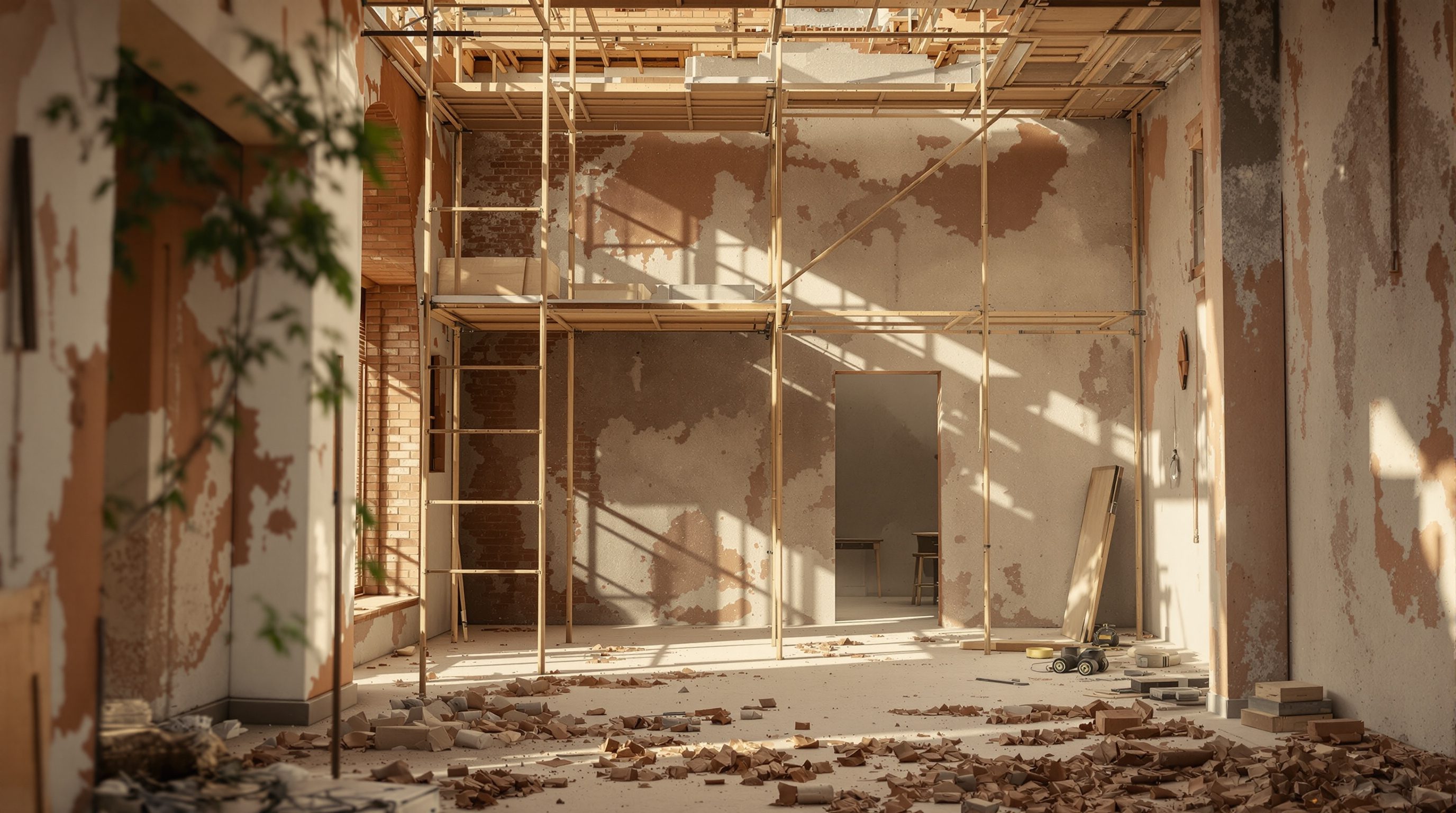
Walk into a house that is a hundred years old and it is tempting to see a list of deficiencies: walls that are damp, plaster that is soft, timber that has moved, no damp-proof course, no insulation, none of the sealed, waterproof modern materials we now take for granted. The crucial insight of old-building renovation is that this is the wrong frame entirely. A genuinely old building was not built badly; it was built to a completely different logic - one that managed moisture, movement and weather not by sealing everything out with impermeable barriers, but by letting the building breathe, absorbing and releasing moisture through soft, permeable materials like lime mortar, lime plaster and natural stone, with timber that was allowed to move and details that shed water by design.
That difference is not academic. Most of the serious damage done to old buildings is inflicted by well-meaning people applying modern assumptions to them: sealing a breathing wall with cement render and plastic paint, which traps moisture and rots the wall from within; replacing soft lime mortar with hard cement that cracks the stone; injecting and tanking to stop 'rising damp' that was never really the problem. Renovating an old building well therefore begins with humility and diagnosis: learn how this building was meant to work, respect that logic, repair rather than replace wherever you can, keep your interventions reversible, and - where the building is listed or protected, or simply precious - bring in genuine conservation expertise before you touch it. This is the same diagnose-before-you-cut discipline as the rest of the course, applied to a patient whose physiology is old and easily misread.
An old building is a different species, not a broken version of a new one. Learn its language before you speak.
Old buildings breathe - and sealing them does the damage
The single most important thing to understand about a traditional building is that it manages water by breathing, not by sealing. Built of solid stone or brick walls bedded in lime mortar, finished with lime plaster and limewash, an old wall is permeable: it readily absorbs moisture - from rain, from the ground, from humid air - and just as readily lets it evaporate back out through both faces. The wall is usually damp to some degree and perfectly happy that way, because moisture never accumulates; it comes in and goes out in a constant, gentle exchange. Lime is also soft and flexible, so it accommodates the small movements an old building makes and even self-heals fine cracks. This is a coherent, durable system that has kept such buildings standing for centuries.
The damage comes when someone applies the modern, sealed logic to this breathing fabric. Cement render and modern plastic (acrylic) masonry paints are impermeable: slap them onto a lime wall and you block the evaporation path. The moisture the wall naturally absorbs can no longer escape, so it accumulates, driving damp inwards, carrying dissolved salts that crystallise and blow the plaster, and spalling the face off brick and stone as trapped water freezes or salts expand. Hard cement pointing on soft old masonry is worse still: being stronger than the stone, it forces any movement and moisture to the stone instead of the sacrificial mortar joint, and the stone faces erode while the cement stands proud. The 'repair' actively destroys the wall.
The rule that follows is to repair like with like: lime mortar, lime plaster and limewash on a lime building; breathable finishes throughout; and a deep suspicion of any product that promises to 'seal' or 'waterproof' an old wall. Damp in an old building is usually a breathability or a water-shedding problem - a blocked gutter, cement render, raised external ground, a cracked downpipe - not a case for injected chemical damp-proof courses and tanking, which often make a misdiagnosed problem worse. Diagnose the actual path of the water, restore the building's ability to breathe and shed water, and the damp usually resolves. Where you are unsure, an old-building surveyor or conservation specialist - not a generic damp-proofing salesperson - is the person to call.
Old walls breathe: lime in, lime out. Cement render + plastic paint = sealed wall = trapped damp, salts, decay. Repair like with like.
Repair, don't replace - and keep it reversible
Conservation practice follows a clear hierarchy of intervention, and internalising it is most of what separates sympathetic old-building work from the quiet vandalism that passes for 'doing it up'. The order is: maintain, then repair, then replace only the decayed part like-for-like, and only as a last resort replace or alter - always doing the *least* that solves the problem and preserving as much of the original fabric as possible. The reasoning is that the original material is the building's authenticity and, very often, its durability: the handmade brick, the seasoned old-growth timber, the hand-cut stone and the historic joinery are usually better and longer-lasting than their modern replacements, and once gone they cannot be recovered. A building that has been gradually stripped of its original fabric and re-skinned in new materials has lost the very thing that made it worth keeping.
In practice this means mending rather than ripping out. A rotten window is repaired by splicing in new timber where the decay is and keeping the sound original, not by throwing the whole window in a skip and fitting uPVC. A section of failed lime plaster is cut back to sound material and patched in matching lime, not hacked off wholesale. A cracked or settled wall is understood and stabilised, not demolished. Timber is a special case: old structural timber is often remarkably sound and was selected and seasoned in ways modern softwood is not, so it is repaired by resin or timber splicing and by removing the cause of any decay (usually a leak or trapped damp), not casually replaced.
The second principle is reversibility: where you must add or change something, do it in a way that could later be undone without damaging the historic fabric, and ideally so that new work is legible as new rather than faked-up old. A reversible intervention respects the fact that you are a temporary custodian of a building that will outlast you, and that future owners (and conservation knowledge) may want to put things back. Fix a new service run in a removable chase rather than cut it into historic stone; add a structure that stands independently rather than bolting into ancient timber; choose a modern insulation approach that can be removed. Repair over replace, reversible over permanent, least over most - these are the instincts that let an old building survive another century rather than being loved to death.
Listed, protected and precious - know the rules before you touch
Some old buildings are not merely old but legally protected, and changing them without consent can be a criminal offence as well as an act of cultural loss - so establishing a building's status is one of the first things you do, before you design anything. Different countries protect heritage in different ways. In the United Kingdom, buildings of special interest are listed (Grade I, II* and II), and almost any alteration - inside or out - needs listed building consent from the local authority, over and above ordinary planning permission; unauthorised work is an offence. In India, centrally and state-protected monuments fall under the Archaeological Survey of India and state archaeology departments, while many cities (Mumbai, Delhi, Kolkata, Ahmedabad and others) maintain heritage precincts and graded heritage lists administered by heritage conservation committees, with Grade I, II and III controls on what may be altered. The common thread worldwide is that protection narrows what you may do and adds a consent process - and it often protects interiors, settings and specific features, not just the facade.
Because these regimes are specialised, varied and binding, this is firmly territory the course defers to the experts and the authorities: a conservation architect or accredited conservation specialist, the relevant heritage or planning authority, and where needed a lawyer. Their job is to establish exactly what is protected and to what grade, what consents your proposal needs, and how to design alterations that the authority will accept. Attempting protected work without this is how people end up prosecuted, forced to reinstate at vast cost, or responsible for destroying something irreplaceable.
Even when a building carries no legal protection, treat genuine age and character as a kind of informal heritage worth the same care. An unlisted 1920s house or a vernacular courtyard home in a small town has a coherence and a craft that a careless renovation can erase forever and a sympathetic one can celebrate. The mindset is custodial: find out what is protected and get the consents where it is; and where it is not, still ask what is worth keeping and repair it on its own terms. Module 7.3 develops conserving character and detail; here the addition is simply that the law and specialist advice come first for anything that might be protected.
Listed / graded / protected? Consent FIRST, conservation architect FIRST. Unauthorised work can be a crime, not just a mistake.
Comfort and services in an old building - sensitively
Old buildings can and should be made comfortable to live in, but the upgrades - insulation, heating and cooling, rewiring, new plumbing, better glazing - must be done in a way that respects the breathing fabric, or they cause exactly the damage this lesson warns against. The governing principle is to improve comfort without stopping the building from breathing and without destroying historic fabric, which often means choosing different solutions from those you would use in a modern house.
Insulation is the subtlest. Wrapping a solid breathing wall in ordinary impermeable insulation can trap moisture within it and cause interstitial condensation and decay, so old-building practice uses breathable (vapour-open) insulation - materials like wood-fibre, hemp, or appropriate lime-based systems - and designs the build-up so the wall can still dry. Getting this wrong is a known cause of serious hidden damage, so it is worth specialist input rather than a standard cavity-fill approach. Draught-proofing, heavy curtains, secondary glazing behind retained historic windows, and insulating the loft (easy and low-risk) often deliver most of the comfort gain with least risk to the fabric.
Services need the same care. Rewiring an old building - frequently necessary for safety, since old wiring is a real fire risk - must be done by a licensed electrician, but routed thoughtfully to avoid cutting historic plaster, timber and stone, using existing voids, surface conduit in sympathetic positions, or reversible chases. New plumbing and heating should be planned to minimise damage and remain maintainable. And where the building is protected, even these functional upgrades may need consent and must follow the conservation officer's guidance. As always, the dangerous and binding specifics - electrical work, structural repair, damp diagnosis, protected-building consents - belong to licensed trades and accredited specialists. The homeowner's and designer's job is to understand the breathing logic well enough to commission sensitive upgrades and to refuse the sealed, fabric-destroying 'modernisation' that wrecks so many old homes. Comfort and conservation are not enemies; achieved sensitively, a well-repaired old building is a wonderful place to live.
Breathability - lime, not cement
Mortar, plaster, render and paint on a traditional wall
Use compatible breathable materials; never seal a breathing wall with cement or plastic paint. Diagnose damp by its path, not by a damp-proofing sales pitch. Modules 1 & 6.
Listed / graded / protected status
Whether consent is needed to alter the building
Establish the building's status first. Protected work needs consent (e.g. listed building consent; India's graded heritage controls) and can be a criminal offence without it. Verify with the heritage/planning authority + a conservation architect.
Conservation hierarchy & reversibility
How much to intervene and how
Maintain, repair, replace like-for-like, alter last - and keep interventions reversible. Do the least that works; preserve original fabric.
Sensitive services & insulation
Rewiring, plumbing, heating, insulation in historic fabric
Use licensed trades; route to avoid damaging historic material; use vapour-open insulation. Protected buildings may need consent for these too.
Workshop — read an old building on its own terms
Find a genuinely old building you can examine - your own, a family home, a temple, a heritage-precinct street - and practise reading it as a breathing, historic fabric rather than a run-down modern one. The aim is to learn its logic before imagining any change.
Eyes, a notebook and a camera. This is sympathetic diagnosis, not conservation work or a legal status check - an accredited conservation specialist and the heritage authority give the binding answers.
Goal: a sympathetic diagnostic read of an old building
Inputs: an old building you can observe + this lesson + a notebook and camera
Time: ~45 minutes
- 1Date and type it: roughly how old is the building, and is it traditional breathing construction (solid walls, lime mortar and plaster, timber, limewash) or later sealed construction? Note the clues - soft plaster, wide mortar joints, limewash, timber floors.
- 2Find the breathing - and the harm: look for where someone has already sealed the fabric - cement render, plastic paint, hard cement pointing - and note any damp, blown plaster, salt staining or spalling nearby. Connect the two: is the damage where the sealing is?
- 3Trace the water: where should rain shed off this building - gutters, downpipes, overhangs, ground levels - and where is it failing (blocked gutter, raised ground, cracked pipe)? Old-building damp is usually a water-shedding problem, not 'rising damp'.
- 4Check the status question: is this building (or its area) listed, graded or in a heritage precinct? Note where you would check and that consent and a conservation architect come first for anything protected - do not assume.
- 5Apply the hierarchy to one element: pick one tired feature (a window, a patch of plaster, a floor) and write how you would MAINTAIN, REPAIR and only then REPLACE-like-for-like it - and what the destructive 'rip it out and modernise' version would lose.
- 6Write a one-paragraph custodian's note: what kind of building this is, the one piece of past 'modernisation' most worth reversing, and the one repair most worth doing - each flagged for whether it needs a conservation specialist or consent.
You’ll walk away with
A one-page custodian's read: the building's age and construction logic, a map of where it has been harmfully sealed and where water is mismanaged, the conservation hierarchy applied to one element, and a note on protected status - with specialist/consent needs flagged.
Three altitudes on the same idea
Read the band that fits you — or all three.
Heritage and old-building work is a specialism within architecture, and the first professional duty is to establish status and fabric before proposing change. Find out whether the building is listed, graded or in a protected precinct, what consents any alteration needs, and engage a conservation architect or accredited specialist where it is protected. Design to the conservation hierarchy - maintain, repair, replace like-for-like, alter only as a last resort and reversibly - and specify breathable, compatible materials (lime, not cement; vapour-open insulation) worked out with an old-building surveyor or engineer. Structural repair of historic fabric, damp diagnosis and protected-building consents are all specialist, binding matters; your role is to lead the team that gets them right, not to improvise.
An old building rewards interior work that celebrates its character and punishes work that fights its physiology. Your instinct to keep and restore original plaster, joinery, floors and features is exactly right, and conserving character is core craft (Module 7.3). The discipline to add is technical: specify breathable finishes (limewash and mineral paints, not plastic emulsion on lime plaster), avoid sealing old walls, and keep interventions reversible so the fabric survives you. Where the building is protected, even interior changes may need consent and should follow the conservation officer's guidance. Bring in the conservation specialist for anything touching protected or fragile historic fabric, and let the building's existing character lead the scheme.
Old buildings are the best teachers of why renovation is diagnosis before change - because their logic is invisible until you learn it. Train yourself to recognise traditional, breathable construction (lime mortar and plaster, solid walls, timber that moves) and to see how different it is from sealed modern building. Understand why cement render and plastic paint destroy a lime wall, why repair beats replacement, and why reversibility matters when you are a temporary custodian of something older than you. You are not expected to carry out conservation work or navigate listing law; you are expected to respect the old logic, recognise when specialist help is needed, and never impose modern assumptions on a building built to different rules.
“An old house is just a run-down house with outdated, poor-quality construction. The sensible thing is to modernise it properly - seal and waterproof the damp old walls with cement render and good weatherproof paint, rip out the tired old windows and soft plaster, and bring it up to modern standards.”
Do it yourself
No tools needed - reason it through for an old building you know.
- 1Explain what it means to say an old building 'breathes', and why cement render and plastic paint damage it.
- 2State the conservation hierarchy in order and explain why repair is preferred over replacement.
- 3What does 'reversibility' mean in old-building work, and why does it matter for a custodian?
- 4Why is diagnosing the path of water usually more useful than treating 'rising damp' in an old building?
- 5Name two things this lesson defers to a conservation specialist or the heritage authority, and why.
The one line to carry out
Peer-reviewed journals & authoritative standards
- 01Architectural conservation — Wikipedia — Architectural conservation, 2026.
- 02Historic preservation and listing — Wikipedia — Historic preservation, 2026.
- 03Building restoration — Wikipedia — Building restoration, 2026.
- 04Plaster and lime finishes — Wikipedia — Plaster, 2026.
- 05Vernacular architecture — Wikipedia — Vernacular architecture, 2026.
Repairing and reusing an existing building rather than demolishing it is not only respectful of history - it is one of the most powerful things you can do for the planet. Next we reframe renovation itself as the great sustainability opportunity: the green retrofit.
The author
Amogh N P
Architect, interior designer, and creative polymath. Studio Matrx began in his notebooks — his vision of design made honest, useful, and open to everyone. Its Academy is written and taught in his memory, and free, forever.
More about Amogh →