
 Lesson 6.4
Lesson 6.4 · Services & Comfort Upgrades
Damp-Proofing & Weather Protection
Damp is never the real problem - it is the visible symptom of water getting in where it should not, so the only cure that lasts is to diagnose the cause with a professional and stop the water, not paint over the stain
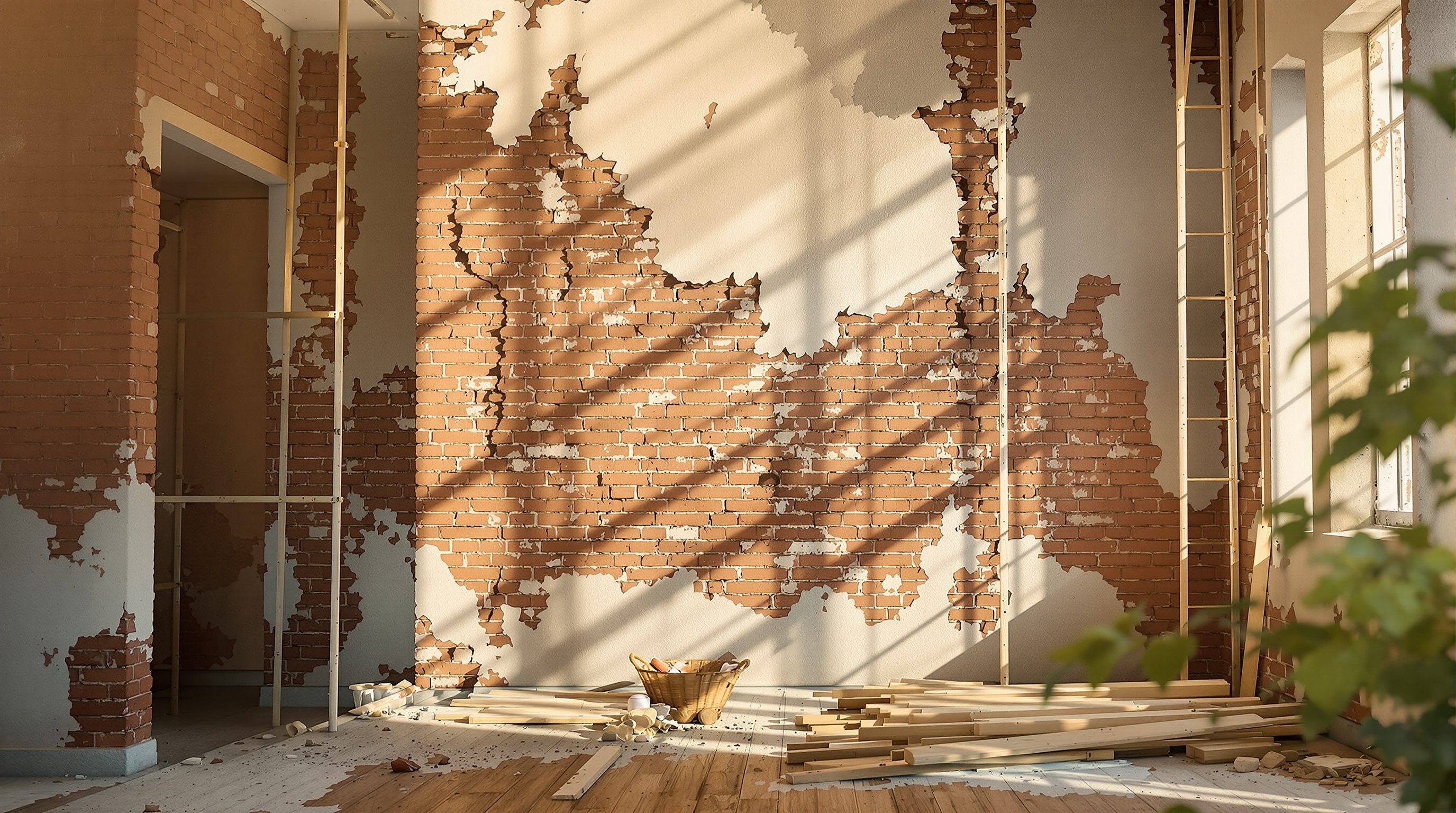
The stain on the wall is not the problem - it is the building telling you where water is getting in. Paint over it and you have only hidden the messenger.
Damp is the great destroyer of renovations, and almost every failed attempt to cure it fails for the same reason: it treats the symptom instead of the cause. A patch of damp, a bloom of mould, a flaking paint, a white crust of salt - these are not the problem. They are the visible sign that water is getting into the fabric from somewhere, and until you find and stop that somewhere, every coat of waterproof paint, every replastered wall, every fresh finish is simply a countdown to the stain coming back. This is the course's central discipline - diagnose before you change - applied to its most stubborn and most commonly botched subject.
That is why this lesson insists, more firmly than any other, on getting the diagnosis right first, and usually with professional help, because the three main kinds of damp look similar on the surface but have completely different cures. Rising damp climbs from the ground through a wall with no barrier; penetrating damp comes sideways through a defect - a crack, a failed terrace, bad flashing, a leaking pipe; and condensation forms when warm, moist indoor air meets a cold surface and has nowhere to go. Apply the rising-damp cure to a condensation problem, or waterproof over penetrating damp without fixing the crack, and you waste money and make things worse by trapping moisture. So this lesson teaches you to think like a damp detective and then to act correctly: diagnose the cause (with a surveyor or engineer for anything serious or structural), then waterproof the roof and terrace, treat the damp at its source, drain water away from the building, and ready the home for the monsoon. Find the cause; stop the water; only then make good.
The stain is the messenger, not the message. Diagnose the damp, stop the water at source, let it dry - THEN finish. Never the reverse.
Fix the cause, not the symptom - the three damps
The first and most important skill in dealing with damp is refusing to treat what you can see until you understand what is causing it, because the visible damp is only the exit wound - the entry is elsewhere. The single commonest and costliest mistake in renovation is to replaster or apply a waterproof coating over a damp patch, achieve a few months of clean wall, and then watch the damp return, often worse, because the water was never stopped and has now been trapped behind the new layer. So the rule is absolute: diagnose the cause first. For anything significant, recurring, or possibly structural, that diagnosis should come from a surveyor or engineer, not a guess and not a contractor keen to sell a treatment.
There are three main kinds of damp, and telling them apart is most of the cure. Rising damp is ground moisture drawn up into a wall that lacks an effective damp-proof barrier; it typically shows as a tide-mark of damp and salts low on the wall, fading out above, and it is driven by the continuous supply of moisture from the soil. Penetrating damp comes through the building envelope sideways or downwards via a defect - a crack in the wall, a failed terrace or roof, a blocked or leaking gutter, bad flashing around a junction, or a leaking pipe - and it tends to appear near that defect, often worse after rain. Condensation is different in kind: the water is not coming from outside at all but from warm, humid indoor air (from cooking, bathing, breathing) meeting a cold surface and condensing, showing as mould in cold corners, behind furniture, and in poorly ventilated rooms.
> Same stain, three different causes, three different cures. Guess wrong and you pay twice.
Each has its own cure, which is why the diagnosis matters so much: rising damp needs a barrier reinstated; penetrating damp needs the defect repaired; condensation needs ventilation and warmth, not waterproofing at all. Often the signs overlap or more than one is present, and salts left behind (efflorescence) or long-standing damp can mimic or mask the real cause - which is exactly why a professional diagnosis is worth its modest cost on any serious case. Hold the discipline: identify which damp you have, confirm it with the right expert, and fix the cause. Everything in the rest of this lesson assumes you have done that first.
Rising (from ground, tide-mark low) / Penetrating (through a defect, worse after rain) / Condensation (indoor air on cold surface). Different cures. Diagnose first.
Waterproofing the roof, terrace and walls
Once the cause is understood, the largest source of penetrating damp in most buildings - and especially in India - is the roof or flat terrace, so waterproofing it well is the keystone of weather protection. A flat terrace is a horizontal surface that must shed water reliably for decades under sun, rain and thermal movement, and it fails in predictable places: a waterproofing layer that has cracked or debonded, a slope too flat to drain so water ponds, a blocked or badly placed outlet, a parapet junction where the waterproofing was not turned up and sealed, or cracks opened by thermal expansion. The principle of a sound terrace is simple even though the execution is specialist: a continuous, unbroken waterproof layer, laid to a fall so water runs to outlets rather than ponding, turned up at every upstand and parapet, and protected from the sun and foot traffic that degrade it.
The systems used to achieve this are many - liquid-applied membranes, sheet membranes, integral treatments, traditional lime-and-brickbat coba in some contexts - and which is right depends on the building, the budget and the climate; that choice and its installation are for a waterproofing specialist, because a waterproofing system is only as good as its weakest detail, and the details (junctions, upstands, outlets, penetrations) are exactly where amateur work fails. The same logic applies to walls: external walls facing driving rain may need a water-repellent treatment or render repair, cracks must be properly sealed rather than skimmed over, and window and door junctions need sound flashing and sealing so rain cannot track in.
The renovator's contribution is to recognise the terrace and roof as the priority, to insist the waterproofing is done as a proper system with every detail addressed rather than a cheap coat of something, and to build in the conditions that keep it working: adequate falls, clear and maintained outlets, and protection of the membrane. It is worth remembering that waterproofing has a service life and needs maintenance - clearing outlets, checking junctions, renewing coatings - so a renovation should leave it accessible and the owner informed. Treat any membrane type, thickness or warranty figure you encounter as illustrative, as of 2026; the specification, system choice and installation belong to the waterproofing specialist, and getting the terrace right is the highest-value weather-protection move a renovation can make.
Treating rising and penetrating damp at source
With the roof handled, the damp that attacks walls from the ground and through defects needs treating at its source - and here the diagnosis from the first section directly dictates the action. Rising damp, where it is genuinely present, is caused by the absence or failure of a damp-proof course (DPC) - the horizontal barrier near the base of a wall that is meant to stop ground moisture climbing. The cure is to reinstate an effective barrier, commonly by injecting a chemical DPC into the wall or, in some cases, inserting a physical one, together with removing the contaminated, salt-laden plaster and replacing it with an appropriate breathable or salt-resistant system once the wall can dry. This is specialist work: the diagnosis that it truly is rising damp (and not penetrating damp or a leak masquerading as it), and the method of treatment, are for a damp specialist or engineer, because rising-damp treatment is also one of the most over-sold and misdiagnosed services in the trade.
Penetrating damp is, in a sense, simpler in principle because it has a findable cause: there is a defect letting water in, and the cure is to find and repair that defect - seal the crack properly, fix the failed flashing, repair the terrace or gutter, mend the leaking pipe. The discipline is to trace the water back to its entry point rather than treating where it emerges, since penetrating damp often appears some distance from the actual defect as water tracks along a path inside the fabric. Once the defect is repaired and the wall has dried, the finish can be made good. Condensation, to complete the trio, is treated not by any waterproofing but by the opposite approach - improving ventilation (the vented extracts of the previous lesson), reducing indoor moisture at source, and keeping surfaces warmer so air does not condense on them - which is why misdiagnosing condensation as penetrating damp and sealing the wall makes it worse.
Across all three, two cautions matter. First, let the wall dry after the source is fixed before sealing it up with a new finish, or you trap residual moisture. Second, salts (efflorescence) left by evaporating water can keep drawing moisture and spoiling finishes even after the source is cured, so contaminated plaster often has to be removed. None of this is a paint-tin fix, and all of the binding diagnosis and treatment - is it rising, penetrating or condensation; what DPC method; how to treat the wall - should be led by a surveyor, engineer or damp specialist. Your job is to hold the discipline that the cause is fixed first, and to refuse the tempting shortcut of finishing over damp that has not been stopped.
Drainage around the building and monsoon protection
The last and most under-appreciated layer of weather protection is what happens outside and around the building, because a great deal of damp is simply water that was allowed to collect against the walls instead of being led away - and this is doubly true where a monsoon dumps a season's rain in weeks. Water should always be kept moving off and away from the building. Off the terrace, through clear outlets and sound downpipes; off the walls, shed by chajjas, hoods and overhangs that throw rain clear of windows and wall faces (a deep chajja is weather protection, not just shade); and away from the base of the building, across ground that slopes away from the walls into surface drains, so rainwater never ponds against the plinth and soaks into the foundation zone.
Several common failures let water linger exactly where it does most harm. Ground that slopes towards the building, or a paved area that drains back against the wall, feeds rising and penetrating damp at the base. Blocked or broken rainwater goods - a choked outlet, a cracked downpipe, a missing gutter - send water cascading down a wall face instead of away. A low or bridged plinth, or soil and paving built up above the damp-proof course, lets ground moisture bypass the barrier entirely. And planting or earth piled against a wall keeps it permanently wet. The renovator's job is to look for these and correct them: restore falls away from the building, clear and repair the drainage, keep ground levels below the DPC, and make sure every path for water leads away, not in.
Monsoon protection is this same logic intensified and made seasonal. Before the rains, outlets and downpipes should be cleared, terrace waterproofing and parapet junctions checked, cracks sealed, and drainage around the building confirmed to run freely - a modest annual ritual that prevents most monsoon damp disasters. This is where weather protection meets maintenance: a building is not waterproofed once and forgotten but kept weathertight through simple, regular attention, and a renovation should leave the drainage sound, accessible and the owner aware of the seasonal checks. The binding specifics - drainage design where it is significant, any work touching foundations or structure, and the diagnosis of serious or structural damp - remain with the engineer and the relevant specialist. But the governing idea is within every renovator's reach and ties the whole lesson together: keep water moving off the roof, off the walls, and away from the building - fix the cause, shed the water, and the damp has nowhere to start.
Water off the terrace -> down a clear pipe -> across a chajja -> ground sloping AWAY. Keep levels below the DPC. Clear the drains before the monsoon.
Diagnosing the cause of damp
Identifying rising vs penetrating vs condensation
Serious, recurring or structural damp should be diagnosed by a surveyor, engineer or damp specialist before any treatment. Misdiagnosis wastes money and traps moisture; this is the cause-first discipline made binding.
Waterproofing systems and terraces
Membrane choice, falls, junctions and installation
A waterproofing system is only as good as its details (upstands, outlets, parapet junctions). System choice and installation are for a waterproofing specialist. Any membrane type or figure here is illustrative, as of 2026.
DPC and rising-damp treatment
Reinstating a damp-proof barrier
Whether it is truly rising damp and how to treat it (injected or physical DPC, plaster replacement) is specialist work - and one of the most over-sold services, so get an independent professional diagnosis.
Drainage, foundations and structure
Ground drainage and anything structural
Significant drainage design, any work near foundations, and structural damp or movement are the engineer's. Keep ground levels below the DPC and water draining away, but defer the binding design.
Workshop - play damp detective, then plan the cure
Damp is cured by diagnosis, not decoration. In this workshop you will investigate a real instance of damp (or weather vulnerability) like a detective, reason towards its likely cause, and plan a cause-first cure and weather-protection checklist - flagging what needs a professional.
Eyes, a notebook and a phone camera, ideally observed across wet and dry weather. No invasive testing or treatment - serious diagnosis and all treatment are the professional's.
Goal: a cause-first damp diagnosis and weather-protection plan
Inputs: a building with damp or weather issues, this lesson, a notebook
Time: ~50 minutes
- 1Observe the symptom carefully: where exactly is the damp or staining, how high, what shape, is there mould or a salt crust, and when is it worst (after rain, in winter, always)? Photograph and describe it without yet deciding the cause.
- 2Reason towards the cause: using the three damps, argue which is most likely - low tide-mark with salts suggests rising; worse-after-rain near a defect suggests penetrating; mould in cold corners of a humid, poorly-ventilated room suggests condensation. Note what a professional would need to confirm it.
- 3Trace the water: for penetrating or rising damp, hunt upstream for the entry - a terrace or parapet above, a crack, a failed gutter or downpipe, a leaking pipe, ground sloping towards the wall, or levels built up over the DPC.
- 4Check the weather envelope and drainage: walk the outside - terrace falls and outlets, downpipes, chajjas and overhangs, ground slope around the building, plinth height vs DPC - and list every place water is allowed to linger or run the wrong way.
- 5Plan the cure and the boundary: write a cause-first plan (fix the source -> let it dry -> make good appropriately) plus a monsoon-readiness checklist, and state clearly that diagnosis of serious damp, waterproofing systems, DPC treatment and any structural or drainage design are for a surveyor, engineer and waterproofing specialist.
You’ll walk away with
A one-page damp-and-weather report: a careful description of the symptom, a reasoned (provisional) diagnosis of which damp it is, the traced likely source, a weather-envelope and drainage check, and a cause-first cure plus monsoon checklist - explicitly flagging what must be confirmed and carried out by professionals.
Three altitudes on the same idea
Read the band that fits you — or all three.
Damp and weather protection are where detailing discipline earns its keep - the building keeps water out through correct junctions, falls and barriers, and fails at the details. On a renovation, lead with diagnosis: insist on a surveyor's or engineer's assessment of any serious, recurring or structural damp before any treatment is specified, because misdiagnosis wastes money and traps moisture. Then detail the weather line as a continuous system - terrace waterproofing turned up at parapets and laid to falls, sound flashings, chajjas and overhangs, DPC continuity, and ground that drains away below the DPC. Coordinate waterproofing and drainage with structure and services, and specify systems a specialist installs with every detail addressed. Drainage design of significance, anything touching foundations, and the damp diagnosis itself are the engineer's and specialist's; you hold the cause-first discipline and the continuity of the weather envelope.
Your finishes are the first casualty of damp, so protect them by refusing to work over an un-diagnosed cause. The most important thing you can do is resist the pressure to replaster, tile or paint over a damp patch before its cause is found and fixed - a beautiful finish over unstopped damp fails within months and discredits the whole job. Insist the cause is diagnosed (rising, penetrating or condensation) by the right professional, the source cured, and the wall allowed to dry before you make good, using breathable or salt-resistant systems where a specialist advises. On the comfort side, you directly address condensation through ventilation and warmth in the rooms you design. Leave waterproofing systems, DPC treatment, drainage and structural damp diagnosis to specialists and engineers - you safeguard the finishes by enforcing the right sequence.
Learn damp as a detective problem, not a decorating one: the stain is a symptom, and the discipline is to find the cause before touching the surface. Understand the three damps - rising (from the ground, no barrier), penetrating (through a defect), condensation (indoor air on a cold surface) - because they look alike but have opposite cures, and applying the wrong one wastes money and traps moisture. Grasp the weather-protection logic: a continuous waterproof layer to falls on the terrace, water shed off walls by chajjas, and ground draining away below the DPC, all kept working by seasonal maintenance before the monsoon. You are not expected to diagnose structural damp or specify a waterproofing system - that is the surveyor's, engineer's and specialist's work, always deferred - but you are expected to hold the cause-first discipline that saves every renovation that takes it seriously.
“There's a damp patch, so I'll scrape it back, apply some waterproof paint or replaster it, and repaint - the wall will look clean and the problem is sorted.”
Do it yourself
No tools needed - reason it through.
- 1Explain why treating a damp patch with waterproof paint or new plaster usually fails, in terms of symptom versus cause.
- 2Describe the three kinds of damp and the distinct cure each one needs.
- 3What are the principles of a sound terrace waterproofing system, and why do such systems usually fail at the details?
- 4How does drainage around a building, and ground level relative to the DPC, contribute to damp - and how do you correct it?
- 5What belongs to the surveyor, engineer or waterproofing specialist in dealing with damp, and what is the renovator's own discipline?
The one line to carry out
Peer-reviewed journals & authoritative standards
- 01Damp (structural) — Wikipedia - Damp (structural), 2026.
- 02Rising damp — Wikipedia - Rising damp, 2026.
- 03Damp proofing — Wikipedia - Damp proofing, 2026.
- 04Waterproofing — Wikipedia - Waterproofing, 2026.
- 05Efflorescence — Wikipedia - Efflorescence, 2026.
That completes the services and comfort a renovation quietly puts right for decades - wiring, water, comfort and weather protection. With the building sound, dry and comfortable beneath the surface, the course turns next to what you see and touch: materials, finishes and the character worth keeping.
The author
Amogh N P
Architect, interior designer, and creative polymath. Studio Matrx began in his notebooks — his vision of design made honest, useful, and open to everyone. Its Academy is written and taught in his memory, and free, forever.
More about Amogh →