
Dravidian Architecture — Cholas & Pandyas
The age of the towering vimana — and the rise of the gopuram.
With the Pallava grammar in place, the Cholas raised the Dravidian temple to imperial scale — and in doing so pushed the vimana to a height never matched. Then the centre of gravity moved outward: as enclosures and ritual multiplied, the gateway gopuram overtook the sanctum tower, and the temple swelled into a walled city. This single shift — vimana to gopuram — is the most important idea in South Indian architecture, and the heart of this course.
Learning objectives
By the end of this lesson, you will be able to — mapped to the course outcomes for History of Architecture I:
Describe the Chola achievement of the great towering vimana.
Read the Brihadeeswara Temple as an engineered monument of its age.
Explain the shift of emphasis from the vimana to the gopuram.
Account for the growing complexity of the temple plan under ritual demands.
The Chola vimana — Brihadeeswara
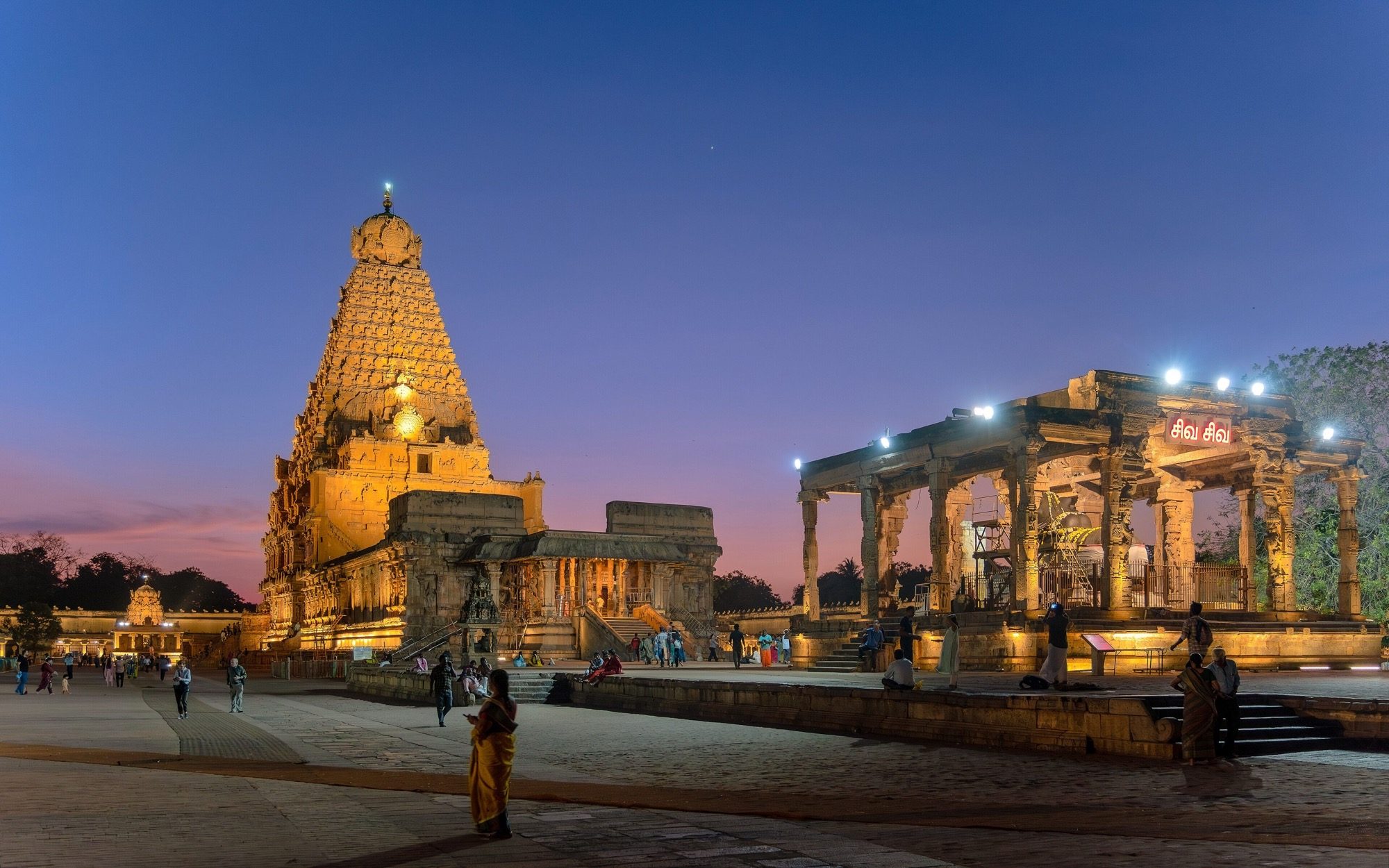
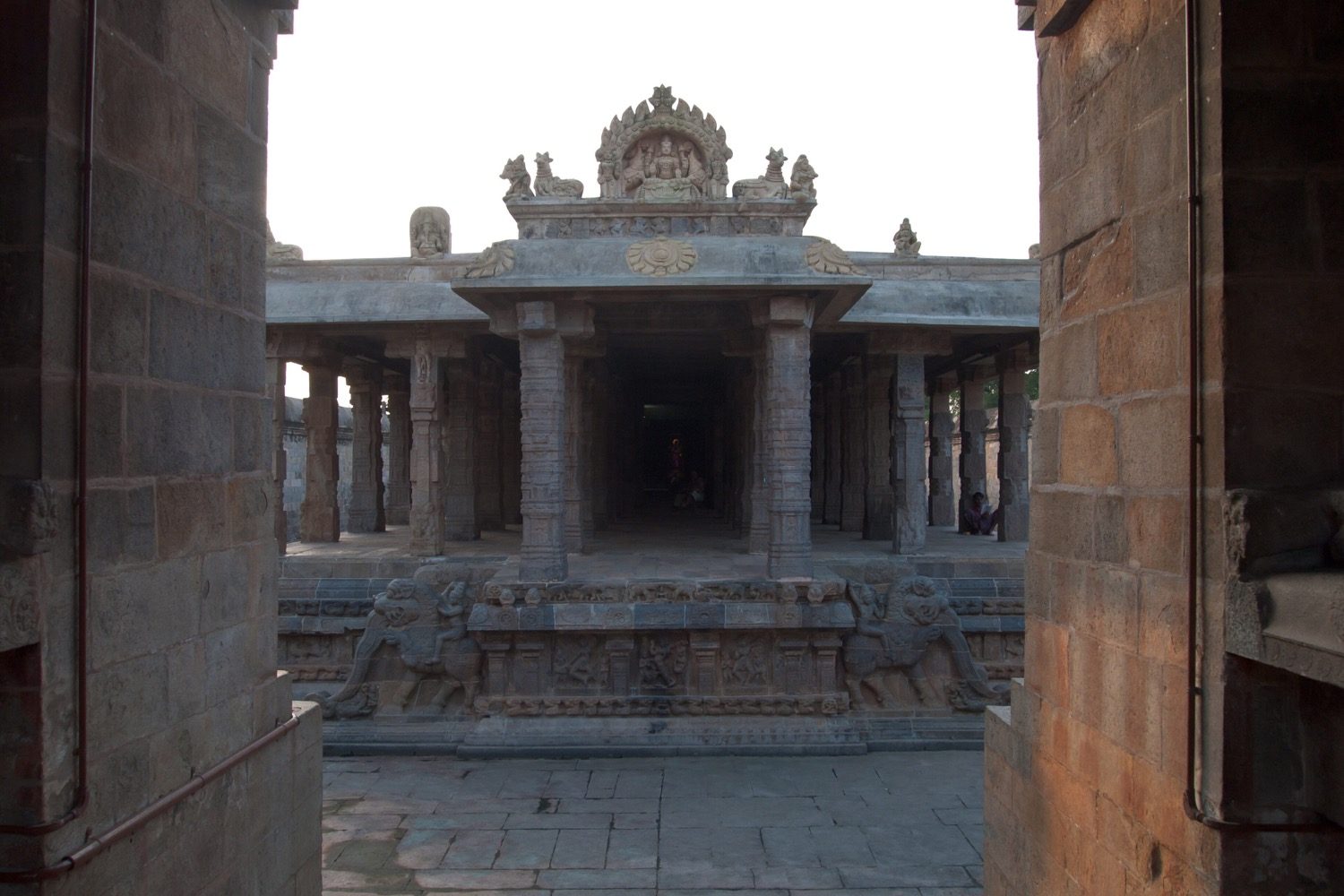
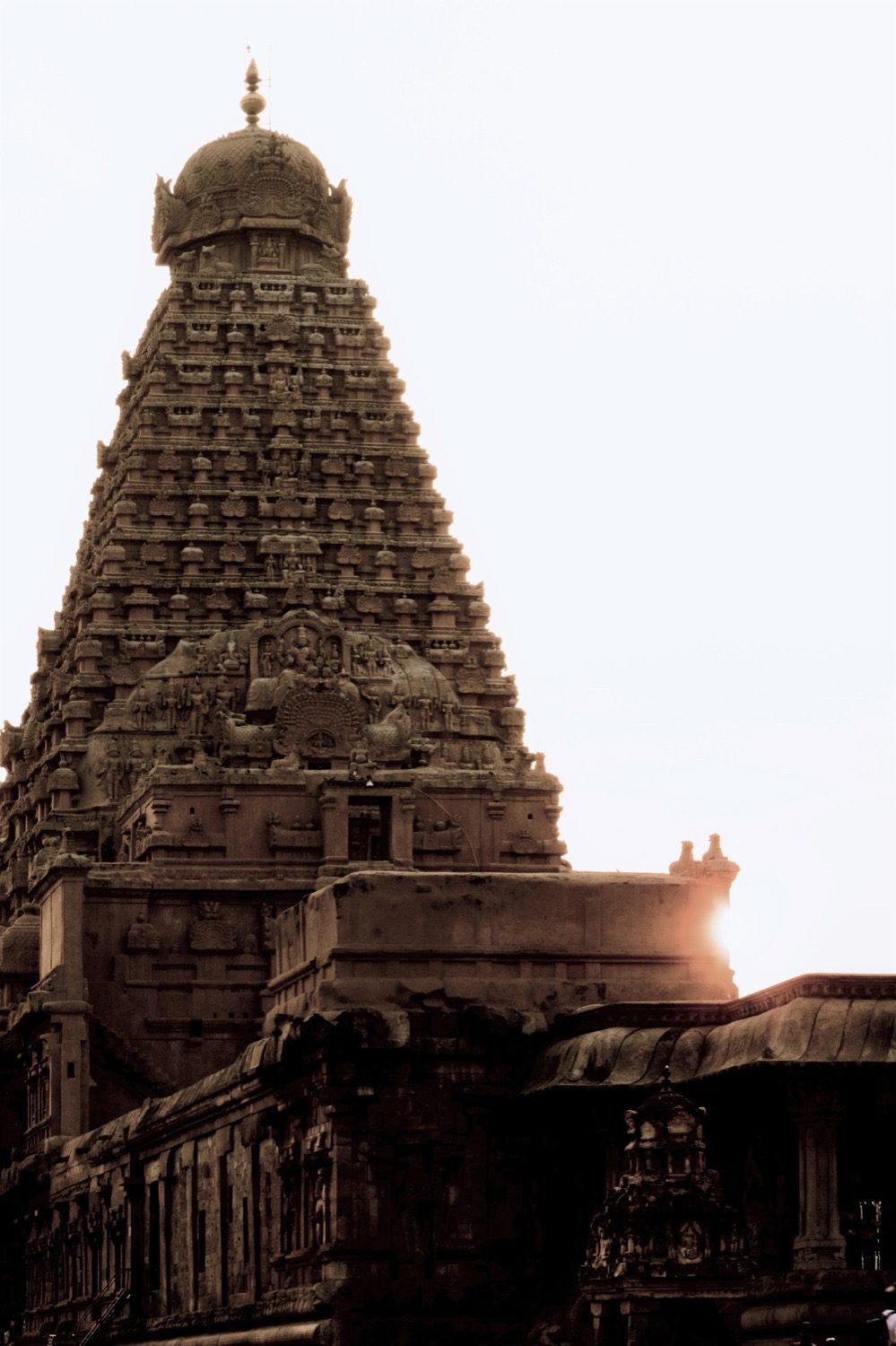
Rajaraja Chola I's great temple at Thanjavur carries a vimana of about 66 metres in thirteen diminishing storeys (talas), crowned by a single carved cap-stone — for centuries the tallest temple tower in India and the supreme statement of the vimana-dominant temple. Nearby, the Airavatesvara at Darasuram shows the other Chola gift: not scale but refinement — a front mandapa shaped as a stone chariot, with musical steps.[1, 3]
The shift — from vimana to gopuram
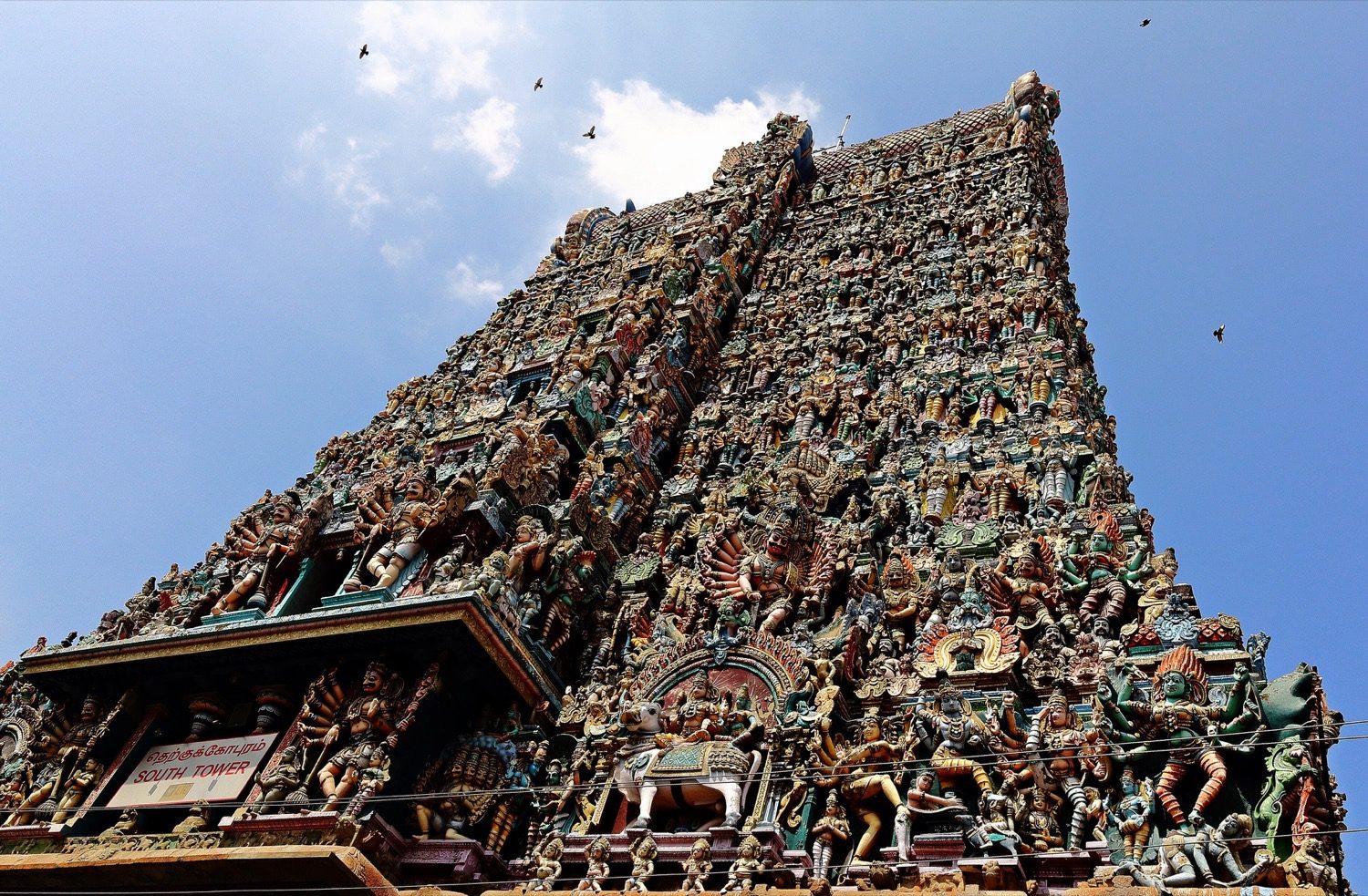
After the Cholas, dynasties enlarged temples with outer enclosures rather than taller sanctums. The Pandyas and their successors lavished height on the gopuram gateways instead of the central vimana — so the entrance became the temple's tallest, most visible element. Read a Chola temple from afar and one tower rises over the sanctum; read a later one and a ring of tall gateways surrounds a low core.[3, 5]
Ritual & the temple-city
Worship grew complex — a goddess (amman) shrine beside the god's, sacred tanks, festival halls, processional streets. The plan answered with concentric prakaras pierced by ever-taller gopurams, until the temple became a walled city, as at the Meenakshi Amman Temple, Madurai and the Andal Temple at Srivilliputhur. Explore the four moves below.
| Aspect | Chola | Pandya & later |
|---|---|---|
| Tallest element | Chola: the central vimana | Pandya/later: the gateway gopuram |
| Reads from afar as | one soaring tower over the sanctum | a ring of tall gateways around a low core |
| Plan | compact, vimana-centred | sprawling, concentric enclosures |
| Driver | royal monument, imperial scale | ritual growth, processions, amman shrine |
| Example | Brihadeeswara, Thanjavur | Meenakshi Amman, Madurai |
Study task
On one sheet, sketch the Brihadeeswara vimana and a tall Madurai gopuram side by side at the same height of paper. Annotate which is the sanctum tower and which the gateway, and write three sentences on why the emphasis shifted from one to the other.
Self-assessment
1. The Brihadeeswara Temple at Thanjavur is famous for its —
2. Over time, the tallest part of the South Indian temple shifted from the vimana to the —
3. The growth of a separate amman (goddess) shrine, tanks and processional halls led to —
Recap
References & further reading
- [1]UNESCO World Heritage Centre — Great Living Chola Temples (inscribed 1987, extended 2004). https://whc.unesco.org/en/list/250
- [2]Francis D.K. Ching et al., A Global History of Architecture. Wiley, 2007.
- [3]Percy Brown, Indian Architecture (Buddhist and Hindu Period). Taraporevala & Sons, 1983.
- [4]Satish Grover, The Architecture of India (Buddhist and Hindu). Vikas Publishing, 1981.
- [5]K.A. Nilakanta Sastri, A History of South India: From Prehistoric Times to the Fall of Vijayanagar. Oxford University Press, 2007.
Further reading
- Percy Brown, Indian Architecture (Buddhist and Hindu Period).
- George Michell, The Hindu Temple: An Introduction to its Meaning and Forms.
- Vidya Dehejia, Indian Art. Phaidon.
Sources gathered and fact-checked June 2026. Published values vary by source, sample and method — treat as indicative and confirm against the cited standard before structural use.
The author
Amogh N P
Architect, interior designer, and creative polymath. Studio Matrx began in his notebooks — his vision of design made honest, useful, and open to everyone. Its Academy is written and taught in his memory, and free, forever.
More about Amogh →