
Vijayanagara & Nayak Styles
The pillared hall, the yali pier and the temple as a city.
The Dravidian temple reached its final form under Vijayanagara and the Nayaks who followed. Building slowed on the sanctum and surged on everything around it — vast pillared mandapas, the composite yali pier where sculpture all but swallows structure, separate goddess shrines, and ring upon ring of prakara walls and towering gopurams. The temple finished its long journey from a single cell to a walled city.
Learning objectives
By the end of this lesson, you will be able to — mapped to the course outcomes for History of Architecture I:
Describe the pillared mandapa types Vijayanagara added to the temple.
Explain the composite yali pier and the kalyana mandapa.
Read a Nayak temple city as concentric prakaras and gopuram rings.
Account for the thousand-pillared mandapa and pillared processional corridors.
Vijayanagara — the hall multiplies
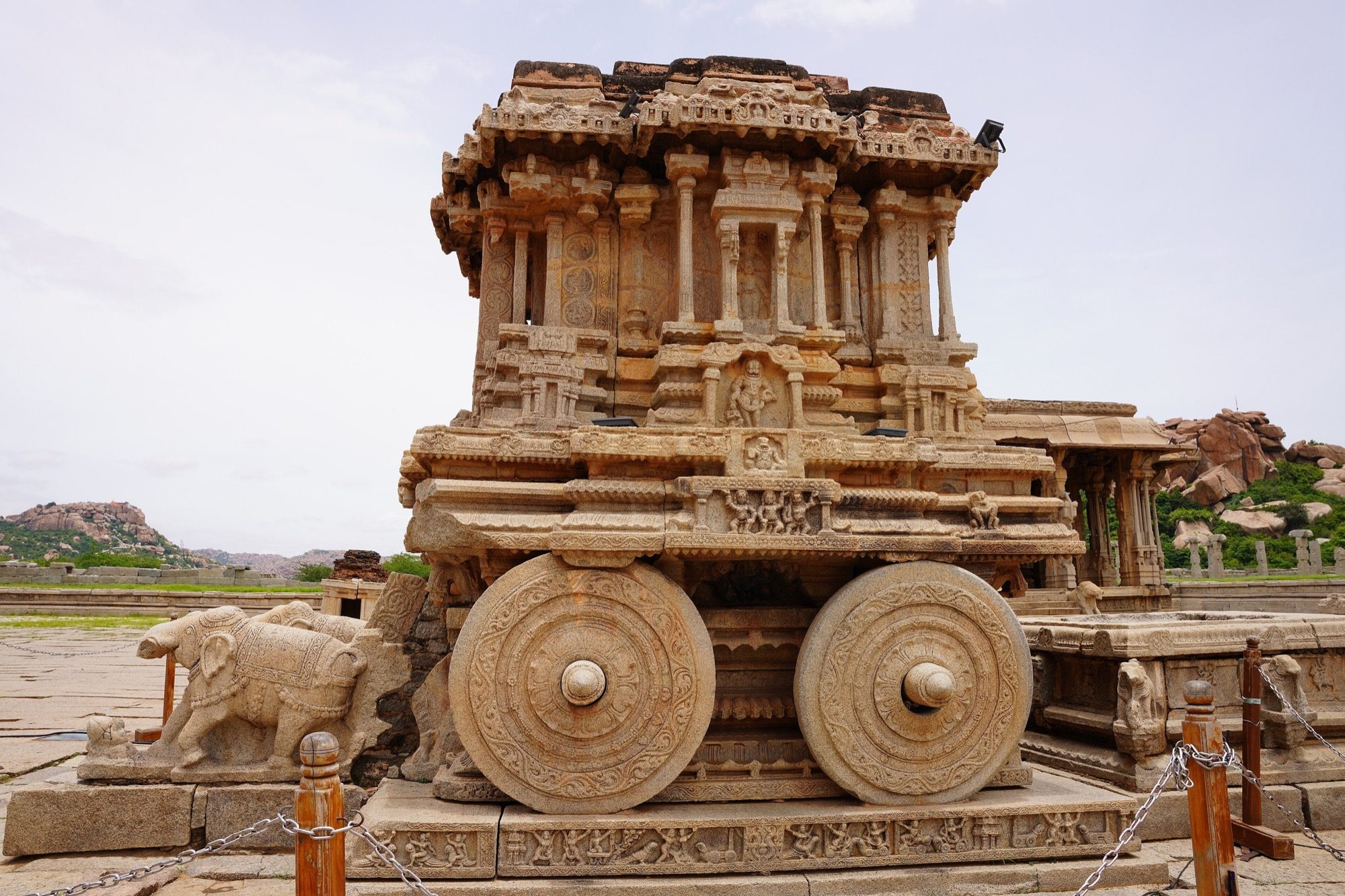
Vijayanagara enriched the temple with great open pillared halls — the kalyana mandapa for the ritual marriage of the deities, and the hundred- and thousand-pillared mandapas. The Vitthala Temple at Hampi, with its musical pillars and famous stone chariot, is the showpiece.[1, 3] The syllabus also names the Someshwara Temple at Kolar, Karnataka, for its added mandapas.
The yali pier — sculpture as structure
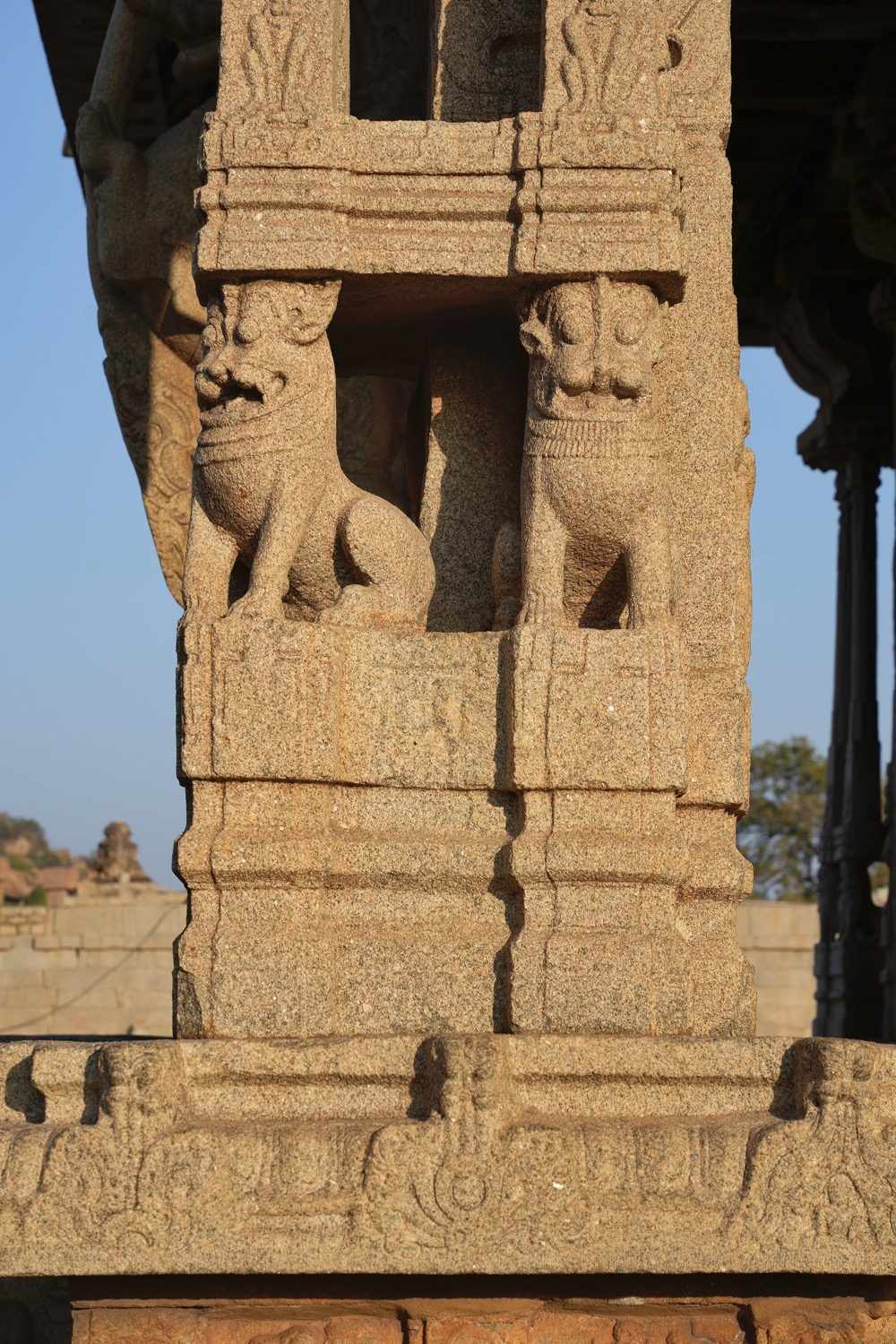
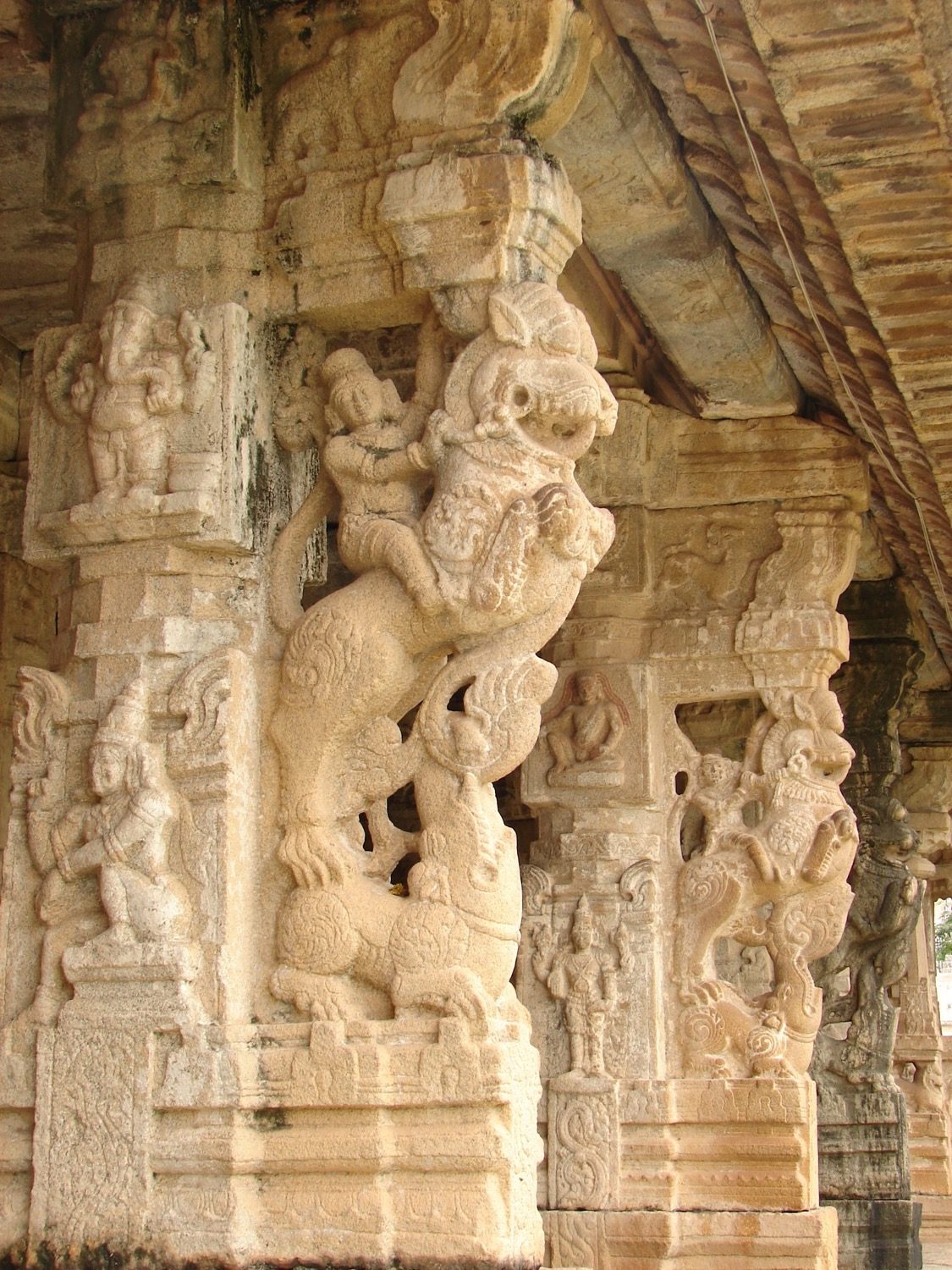
The plain shaft gave way to the composite pier — a cluster of colonnettes carrying a rearing yali (a leonine mythical beast) or a horse-and-rider, carved almost free of the stone. Structure became a frame for sculpture.[3, 4]
The Nayak temple-city
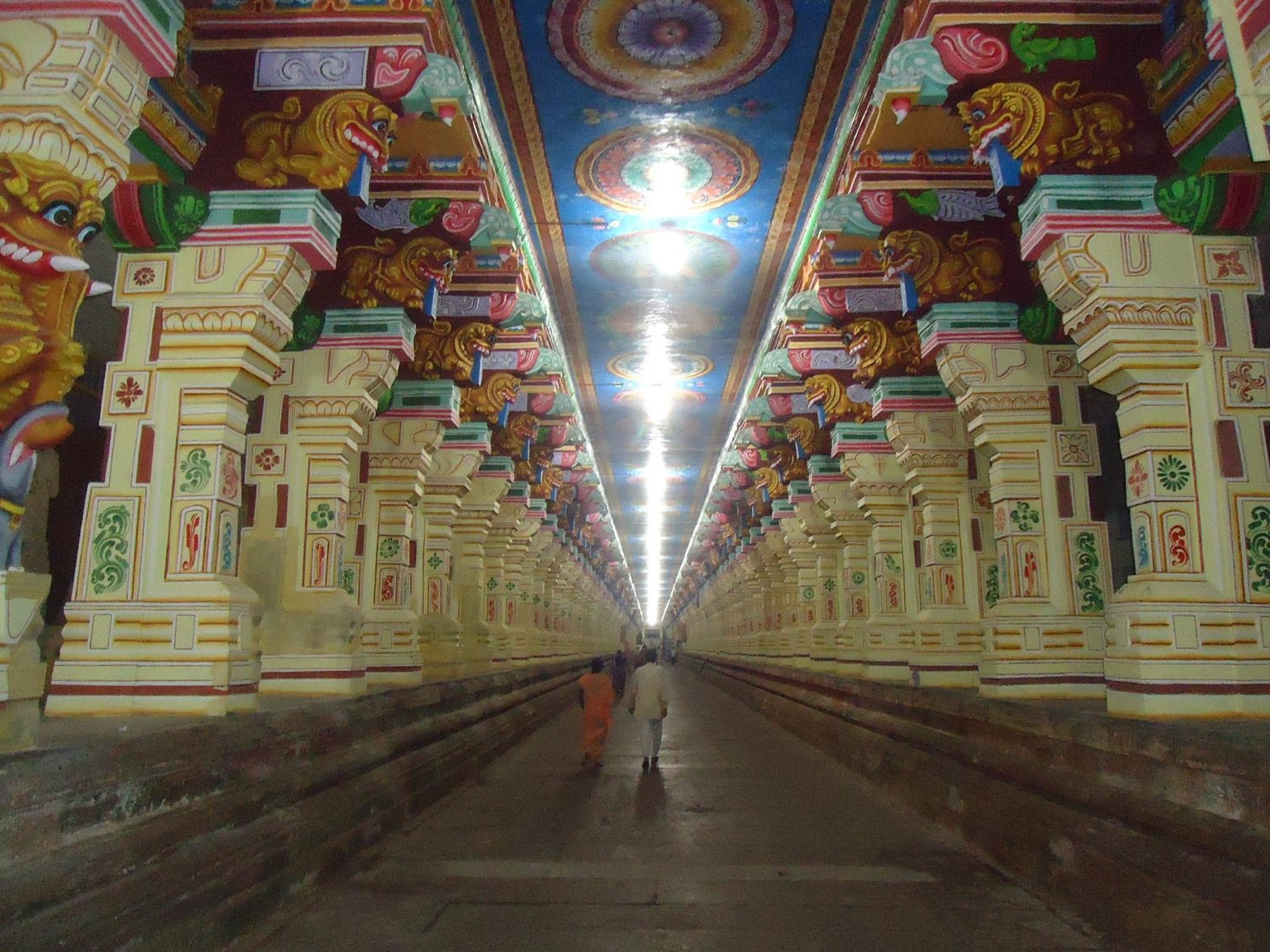
The Nayaks completed the temple city: several concentric prakaras, each pierced by towering gopurams on the cardinal axes, linked by long pillared corridors, with the thousand-pillared mandapa as a climax — Madurai is the great example.[3, 5] Explore the contributions, then compare the two phases.
| Aspect | Vijayanagara | Nayak |
|---|---|---|
| Chief contribution | Vijayanagara: pillared mandapas & yali piers | Nayak: the completed temple city |
| Pillar | composite pier, rearing yali | long ranges of pillars — corridors & 1000-pillar halls |
| New ritual space | kalyana mandapa, amman shrine | processional streets, festival mandapas |
| Scale move | richer halls within the temple | outer prakaras & ever-taller gopurams |
| Showpiece | Vitthala Temple, Hampi | Meenakshi temple city, Madurai |
Study task
Draw a schematic plan of a temple city with three concentric prakaras, marking a gopuram at the middle of each side, the central sanctum and amman shrine, a tank and a thousand-pillared hall. In two lines, explain how this plan grew out of the Chola temple of Unit IV.
Self-assessment
1. The kalyana mandapa in a Vijayanagara temple was used for —
2. A 'yali pier' is —
3. The Nayak contribution to the South Indian temple is best summed up as —
Recap
References & further reading
- [1]UNESCO World Heritage Centre — Group of Monuments at Hampi (inscribed 1986). https://whc.unesco.org/en/list/241
- [2]Francis D.K. Ching et al., A Global History of Architecture. Wiley, 2007.
- [3]Percy Brown, Indian Architecture (Buddhist and Hindu Period). Taraporevala & Sons, 1983.
- [4]George Michell, Architecture and Art of Southern India: Vijayanagara and the Successor States. Cambridge University Press, 1995.
- [5]K.A. Nilakanta Sastri, A History of South India. Oxford University Press, 2007.
Further reading
- George Michell, Architecture and Art of Southern India: Vijayanagara and the Successor States.
- Percy Brown, Indian Architecture (Buddhist and Hindu Period).
- John M. Fritz & George Michell, Hampi Vijayanagara.
Sources gathered and fact-checked June 2026. Published values vary by source, sample and method — treat as indicative and confirm against the cited standard before structural use.
The author
Amogh N P
Architect, interior designer, and creative polymath. Studio Matrx began in his notebooks — his vision of design made honest, useful, and open to everyone. Its Academy is written and taught in his memory, and free, forever.
More about Amogh →