
Buddhist Architecture
The stupa, the chaitya and the vihara — India's first great religious building.
Buddhism gave India its first great architecture in durable form. Where earlier building was mostly timber and brick that has perished, the Buddhist age left us stone — the relic mound or stupa, the rock-cut prayer hall or chaitya, and the monastery or vihara — together with Asoka's polished pillars and the Greek-touched sculpture of Gandhara. These are the building blocks every later Indian style would build upon.
Learning objectives
By the end of this lesson, you will be able to — mapped to the course outcomes for History of Architecture I:
Distinguish Hinayana and Mahayana phases and how each shaped building form.
Name and explain every part of a stupa, from the anda to the chhatra.
Compare the chaitya prayer-hall with the vihara monastery in plan and use.
Account for the Hellenistic influence visible in Gandhara at sites like Takht-i-Bahi.
The stupa — a relic mound
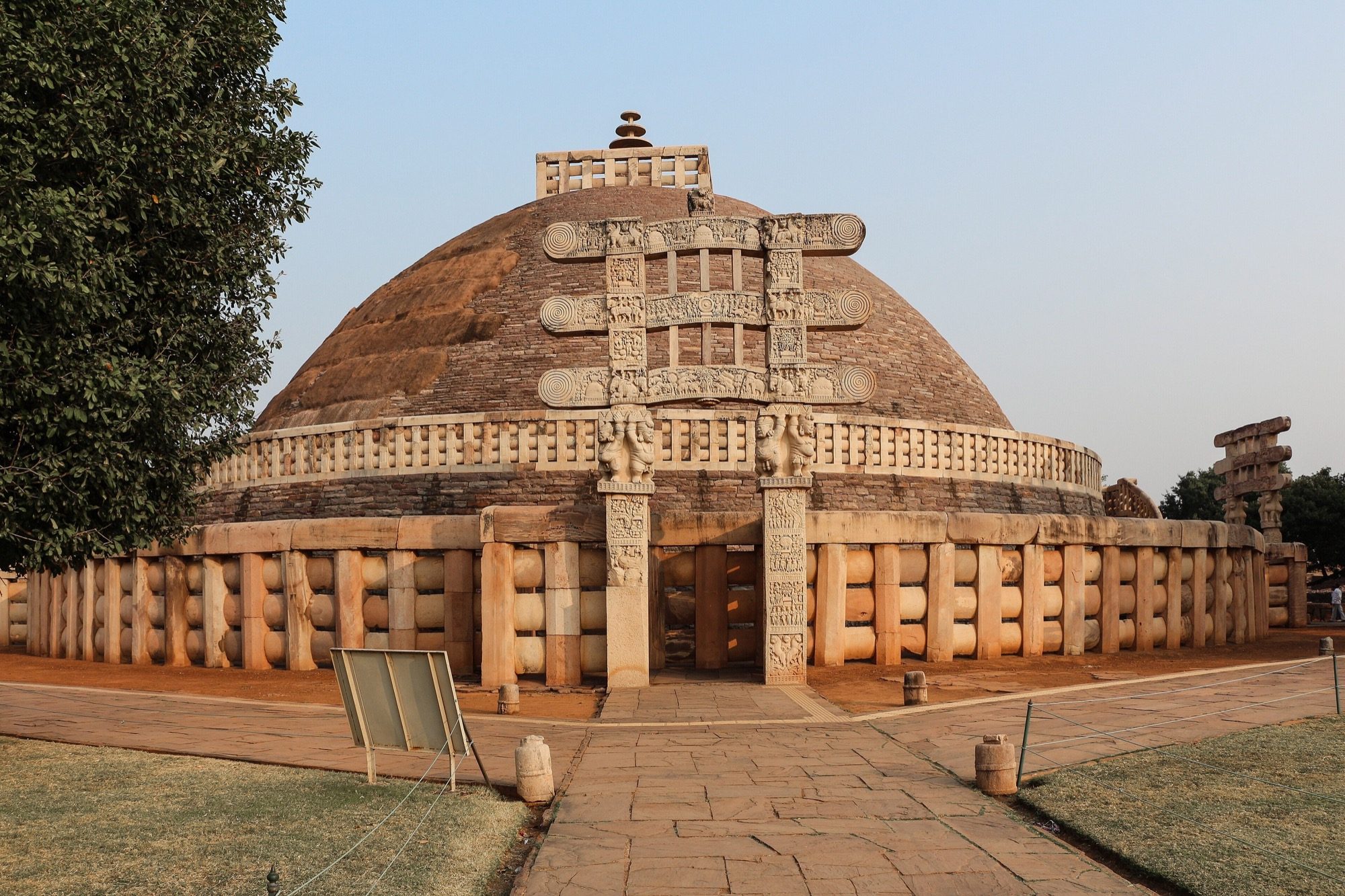
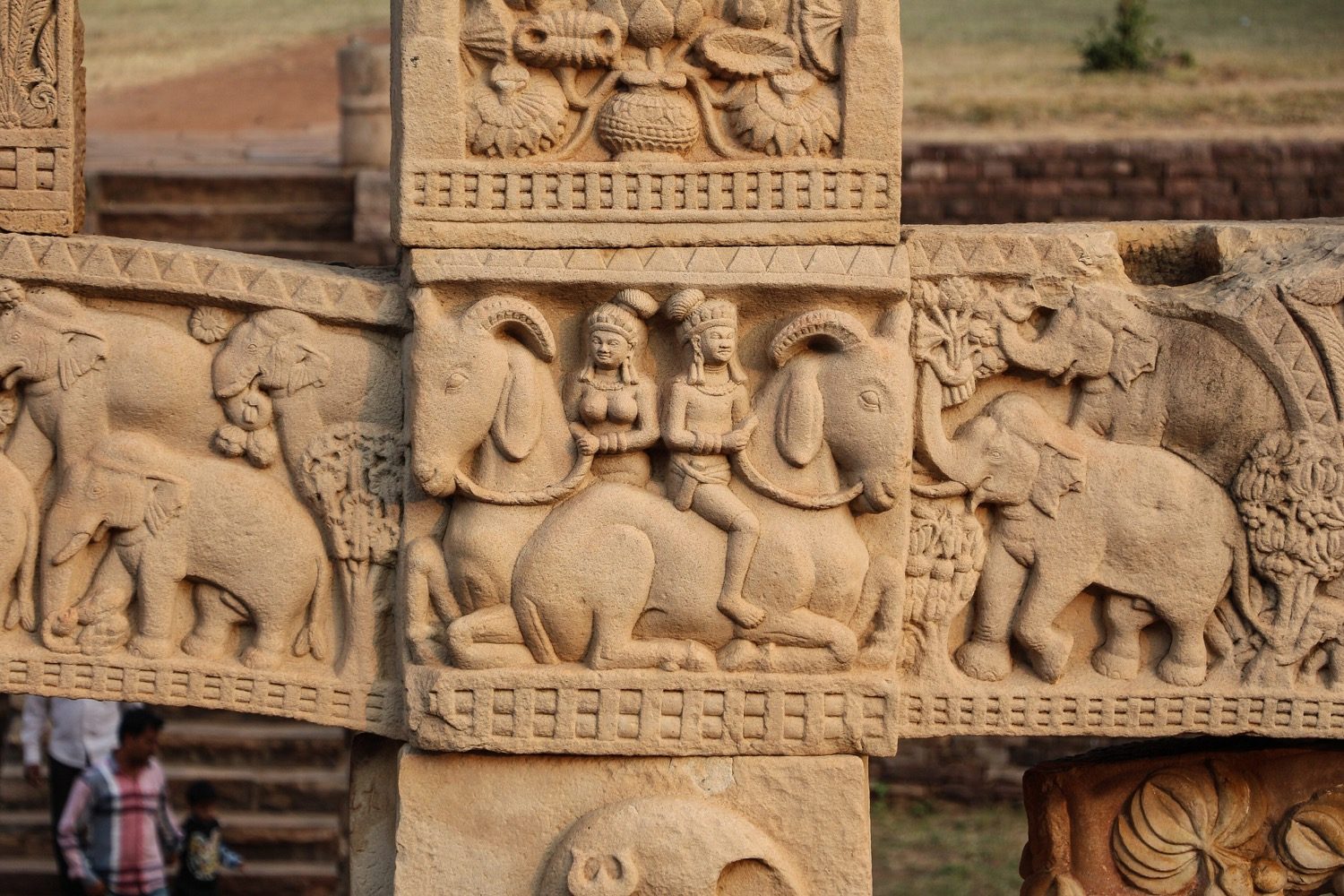
A stupa is solid, not hollow: a hemispherical dome (anda) over relics, crowned by a railed harmika and a mast (yashti) of tiered umbrellas (chhatra). A railing (vedika) and carved gateways (torana) enclose the circumambulation path (pradakshina). The Great Stupa at Sanchi — begun under Asoka and enlarged later — is the finest survivor.[1, 3]
Chaitya & vihara — rock-cut architecture
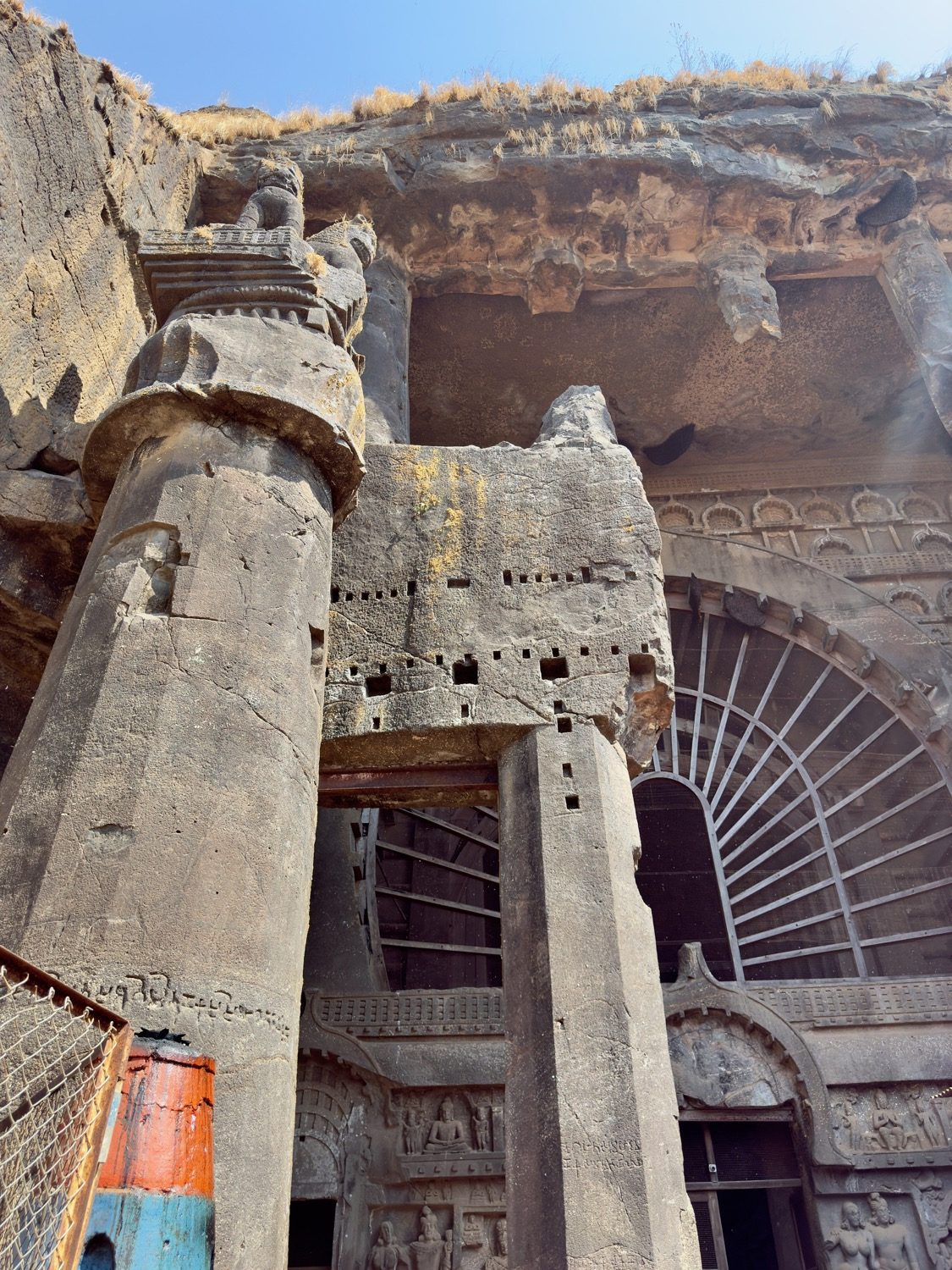
Cut into the living rock of the Western and Eastern Ghats, the chaitya is a long apsidal prayer hall, barrel-vaulted, ending in a votive stupa — Karli is the grandest. The vihara is the monastery: a pillared hall ringed by monks' cells, as at Nasik and the Rani Gumpha at Udayagiri. They were carved top-down, finished surface-first — building by subtraction.[3, 4]
The Buddhist building types
Select a type to see what it was for and how it was built.
Stupa — a relic mound
A solid hemispherical dome (anda) over relics of the Buddha, crowned by a railed harmika and a mast (yashti) carrying tiered umbrellas (chhatra). A railing (vedika) and gateways (torana) enclose the circumambulation path (pradakshina). The Great Stupa at Sanchi is the finest surviving example.[1, 3]
| Aspect | Chaitya | Vihara |
|---|---|---|
| Purpose | Chaitya: congregational worship | Vihara: monks' living quarters |
| Plan | long apsidal hall + stupa at the end | square hall ringed by small cells |
| Roof | barrel vault, ribbed | flat; pillared central hall |
| Focus | a votive stupa to circumambulate | a shrine/Buddha image (later phase) |
| Example | Karli chaitya | Nasik & Udayagiri viharas |
Study task
Draw a labelled section and front elevation of the Sanchi stupa, naming the anda, medhi, harmika, yashti, chhatra, vedika and torana. Beside it, sketch the chaitya hall at Karli in plan and explain in one line why its plan is apsidal.
Self-assessment
1. Which part of a stupa is the solid hemispherical dome over the relics?
2. A chaitya hall is essentially —
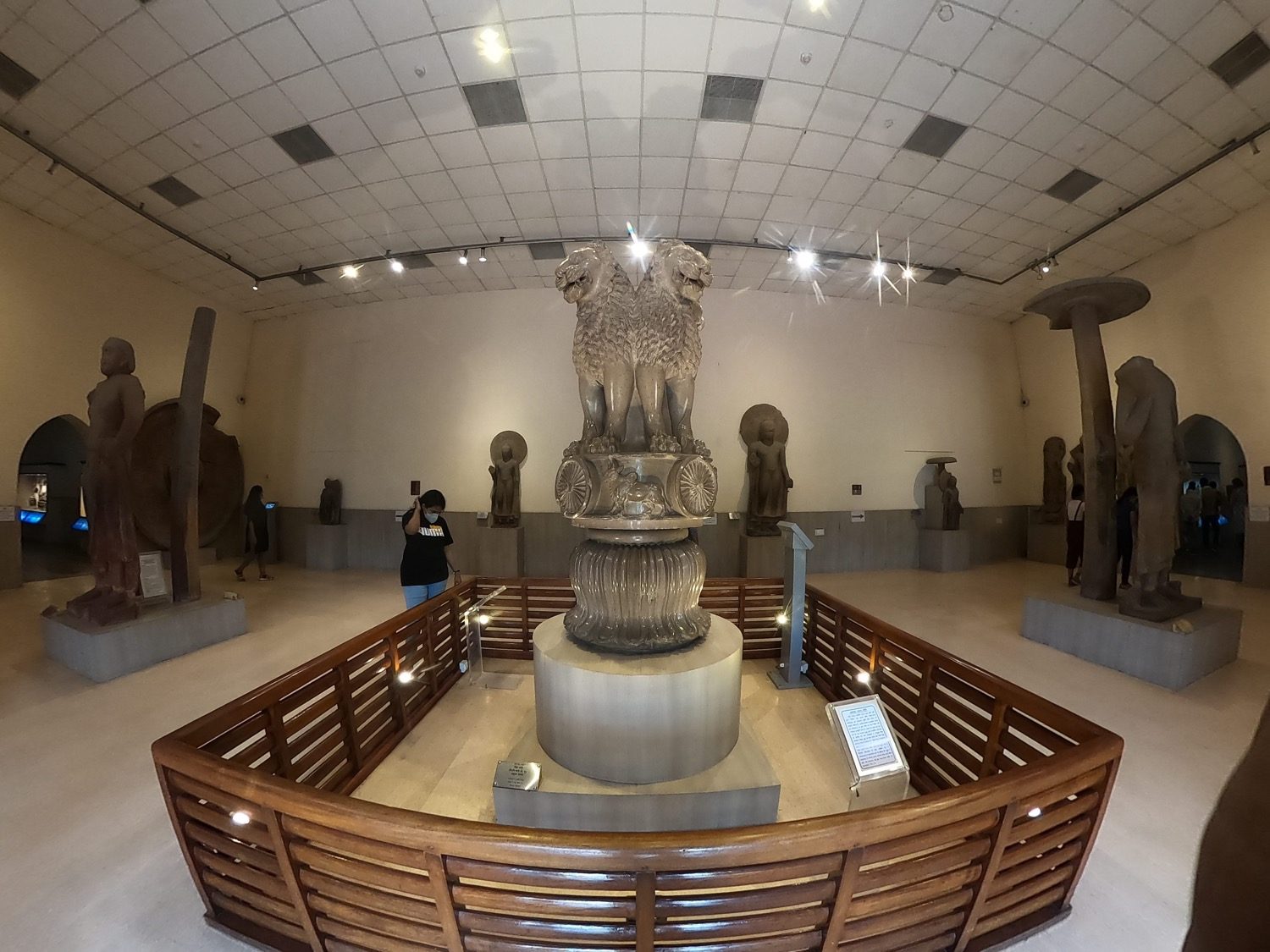
3. The Lion Capital at Sarnath originally crowned —
Recap
References & further reading
- [1]UNESCO World Heritage Centre — Buddhist Monuments at Sanchi (inscribed 1989). https://whc.unesco.org/en/list/524
- [2]Francis D.K. Ching et al., A Global History of Architecture. Wiley, 2007.
- [3]Percy Brown, Indian Architecture (Buddhist and Hindu Period). Taraporevala & Sons, 1983.
- [4]Satish Grover, The Architecture of India (Buddhist and Hindu). Vikas Publishing, 1981.
- [5]Christopher Tadgell, The History of Architecture in India. Longman, 1990.
- [6]UNESCO World Heritage Centre — Buddhist Ruins of Takht-i-Bahi and Sahr-i-Bahlol (inscribed 1980). https://whc.unesco.org/en/list/140
Further reading
- Percy Brown, Indian Architecture (Buddhist and Hindu Period) — the standard reference for this unit.
- Susan Huntington, The Art of Ancient India: Buddhist, Hindu, Jain. Weatherhill.
- Christopher Tadgell, The History of Architecture in India. Penguin Books India.
Sources gathered and fact-checked June 2026. Published values vary by source, sample and method — treat as indicative and confirm against the cited standard before structural use.
The author
Amogh N P
Architect, interior designer, and creative polymath. Studio Matrx began in his notebooks — his vision of design made honest, useful, and open to everyone. Its Academy is written and taught in his memory, and free, forever.
More about Amogh →