
The Beginning of Architecture
From the first shelter to the first cities — the Indus Valley and West Asia.
Architecture has no single birthday — it begins the moment people stop sheltering in what they find and start shaping where they live. This unit follows that shift: from the cave and the hunting camp, to the first villages, to the world's earliest planned cities in the Indus Valley and the monumental mud-brick of Mesopotamia and Persia. We read history not to copy old forms, but to understand the forces — climate, material, belief and technology — that still shape every building.
Learning objectives
By the end of this lesson, you will be able to — mapped to the course outcomes for History of Architecture I:
Explain why the history of architecture matters to a designer working today.
Outline how shelter developed across the Old, Middle and New Stone Ages.
Describe the planned form of an Indus Valley city — grid, drainage, citadel and Great Bath.
Compare the building character of the Indus, Sumerian and Persian cultures.
Why an architect studies history
Every building is an answer to a question its age was asking — how to keep out the rain, honour a god, hold a city together. History is the record of those answers and why they worked. It trains the eye to read a building's logic, gives a designer a library of tested ideas, and guards against repeating old mistakes. Across the Old, Middle and New Stone Ages, shelter moved from natural caves to built huts, and finally — once farming let people settle — to permanent mud-brick villages such as Çatalhöyük.[2]
The first cities — the Indus Valley
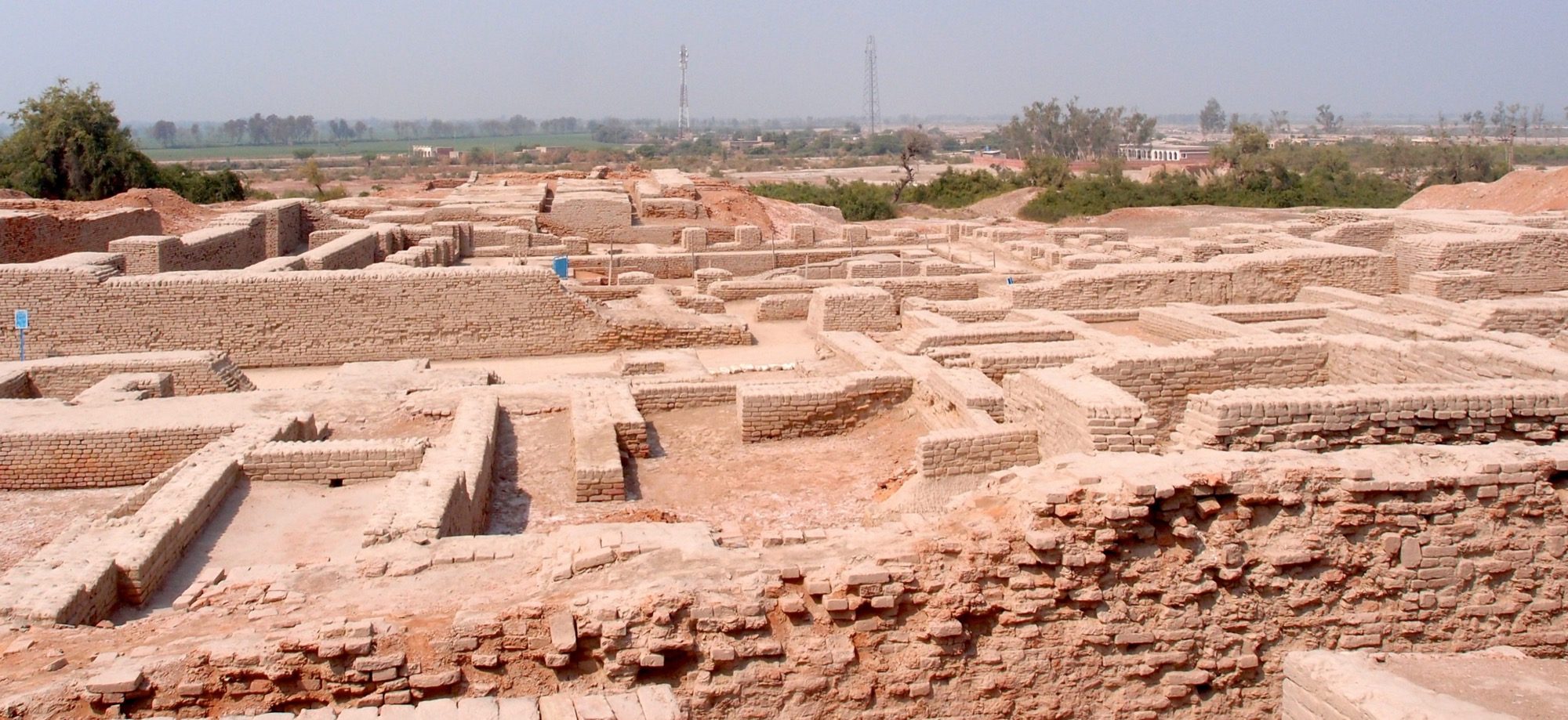
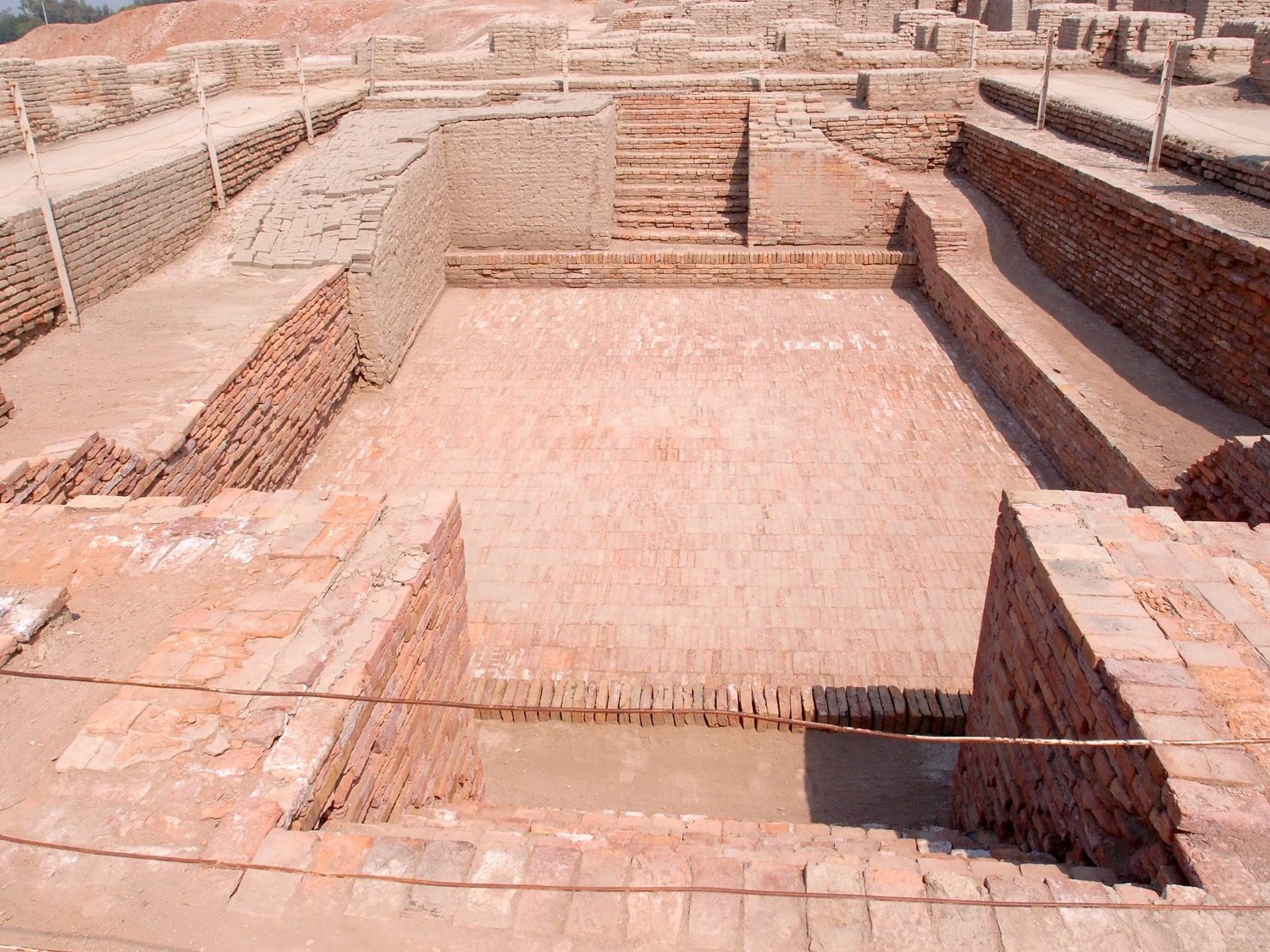
Harappa and Mohenjo-Daro are the earliest planned cities we know — laid out on a grid, zoned into a raised citadel and a lower town, built of standardised kiln-fired brick, and served by a city-wide network of covered street drains. The Great Bath at Mohenjo-Daro is among the earliest public water structures anywhere.[1, 5] A useful caution: we still cannot read the Indus script, so much about how these cities were governed remains genuinely unknown — beware confident stories.
West Asia — Mesopotamia & Persia
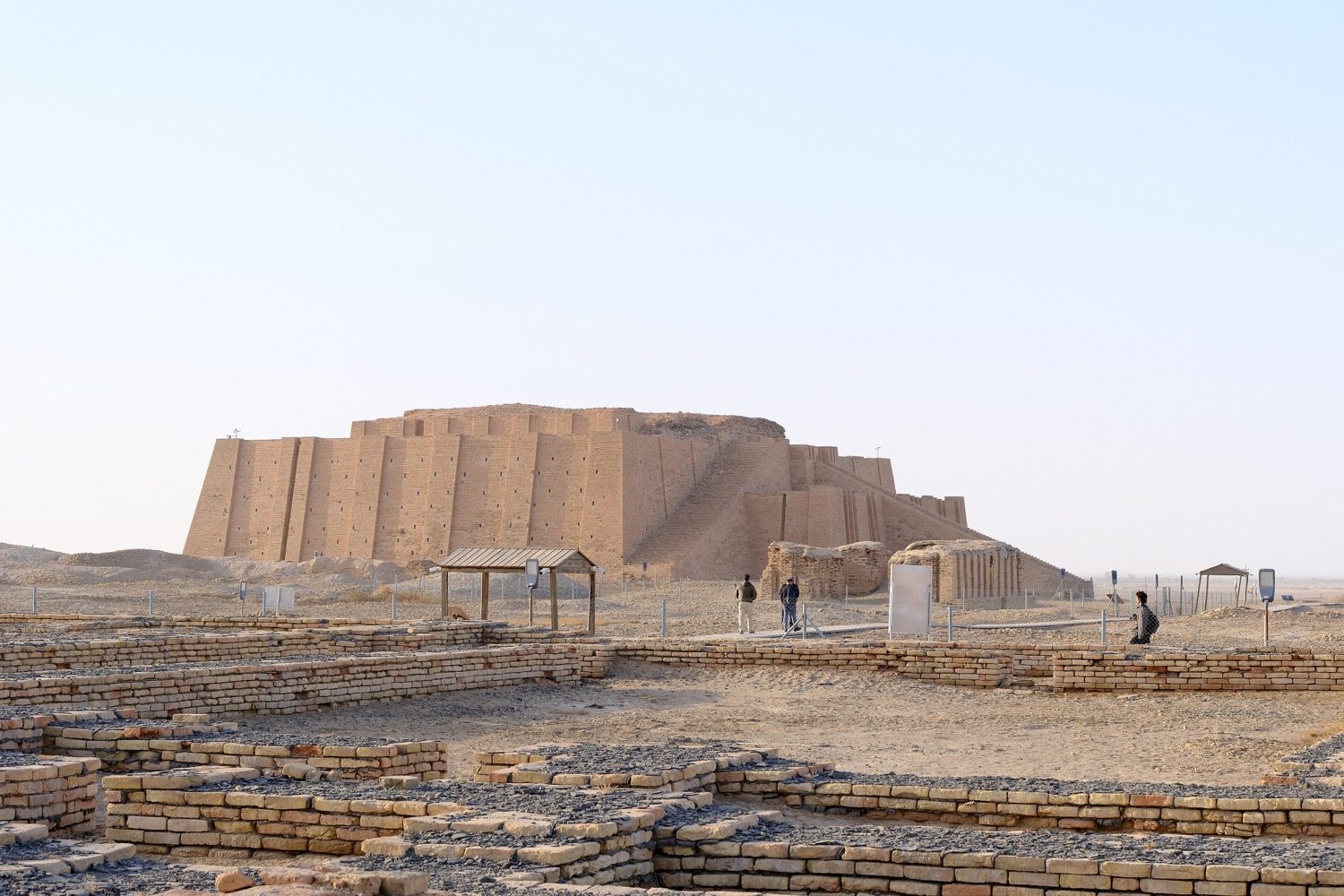
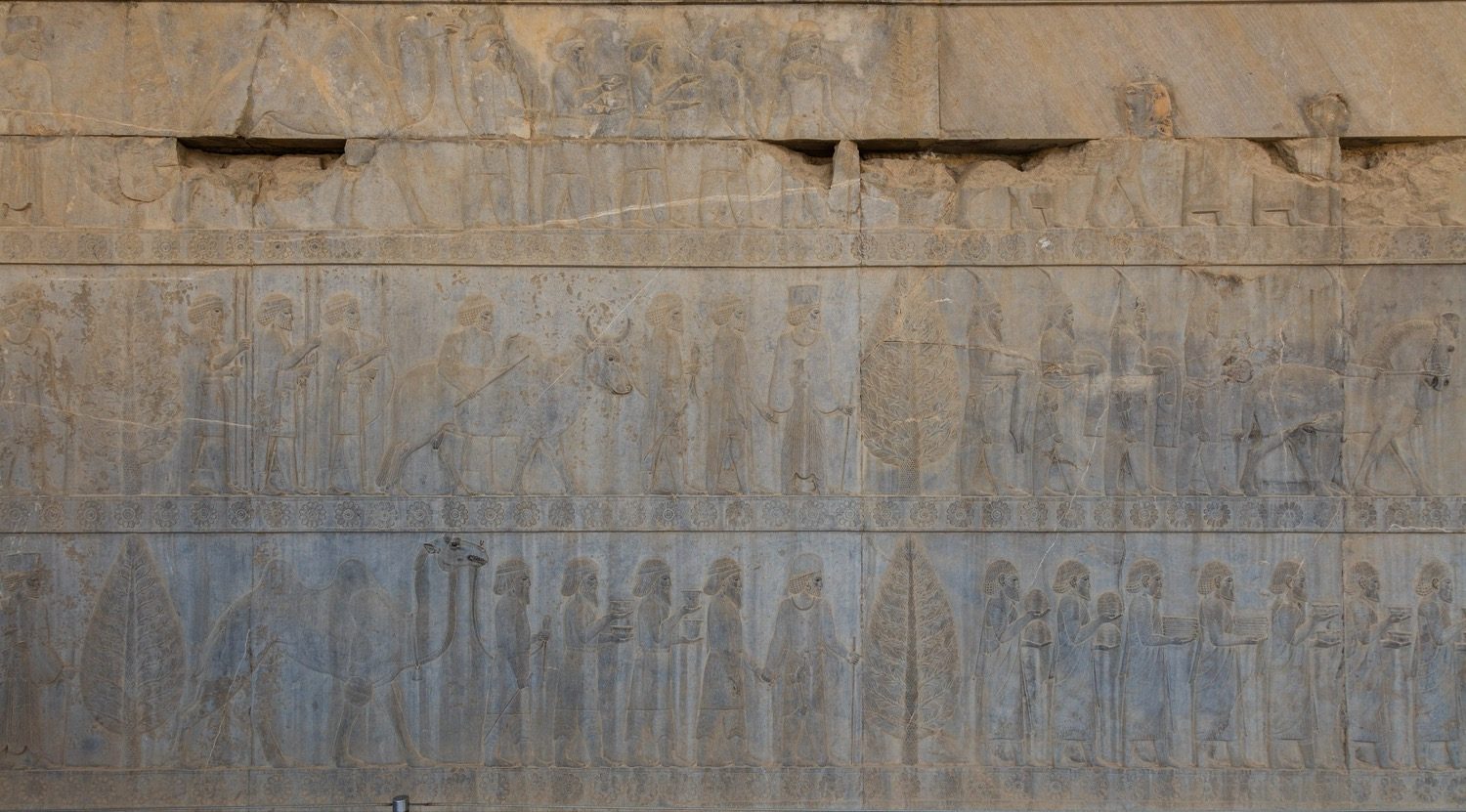
With little stone or timber, the river civilisations of Mesopotamia built in sun-dried mud brick, saving kiln-fired and glazed brick for facings. Their great monument is the ziggurat — a solid stepped platform that lifts a small shrine toward the heavens, like the Ziggurat at Ur built under Ur-Nammu. Later the Achaemenid Persians gathered ideas from across their empire into the columned palace — the apadana hall of Persepolis, with the Palace of Sargon II at Khorsabad before it.[2, 6]
Three early civilisations, compared
Pick a culture to see how it built.
Harappa & Mohenjo-Daro (c. 2600–1900 BCE)
The earliest planned cities — a raised citadel to the west, a gridded lower town, standardised kiln-fired brick (ratio 1:2:4), and the world's first city-wide covered drainage. The Great Bath at Mohenjo-Daro is among the earliest known public water structures.[5, 1]
| Aspect | Indus Valley | Mesopotamia & Persia |
|---|---|---|
| Main material | kiln-fired & sun-dried brick | sun-dried mud brick, glazed brick facing |
| City form | rectilinear grid, zoned, citadel + lower town | temple/palace precinct dominant |
| Signature monument | Great Bath, granary, citadel | ziggurat, palace, apadana hall |
| Water & sanitation | covered street drains, wells, bath | canal irrigation, less domestic drainage |
| What survives | street plans, foundations, seals | ziggurat cores, palace terraces, reliefs |
Study task
Re-draw the plan of Mohenjo-Daro from memory at a small scale, labelling the citadel, lower town, Great Bath and main drains. Then, in two or three sentences, explain one thing the Indus builders did that a modern Indian town still struggles with.
Self-assessment
1. What makes the Indus Valley cities historically remarkable?
2. A ziggurat is best described as a —
3. The apadana — a hall of many slender columns — belongs to which tradition?
Recap
References & further reading
- [1]UNESCO World Heritage Centre — Archaeological Ruins at Moenjodaro (inscribed 1980). https://whc.unesco.org/en/list/138
- [2]Francis D.K. Ching, Mark Jarzombek & Vikramaditya Prakash, A Global History of Architecture. Hoboken: John Wiley & Sons, 2007.
- [3]Percy Brown, Indian Architecture (Buddhist and Hindu Period). Bombay: Taraporevala & Sons, 1983.
- [4]Satish Grover, The Architecture of India (Buddhist and Hindu). New Delhi: Vikas Publishing, 1981.
- [5]Jonathan Mark Kenoyer, Ancient Cities of the Indus Valley Civilization. Oxford University Press, 1998.
- [6]Christopher Tadgell, The History of Architecture in India. London: Longman, 1990.
Further reading
- Banister Fletcher, A History of Architecture. London: Royal Institute of British Architects / Architectural Press.
- Spiro Kostof, A History of Architecture: Settings and Rituals. Oxford University Press.
- D.K. Ching, A Global History of Architecture — for the West Asian and prehistoric chapters.
Sources gathered and fact-checked June 2026. Published values vary by source, sample and method — treat as indicative and confirm against the cited standard before structural use.
The author
Amogh N P
Architect, interior designer, and creative polymath. Studio Matrx began in his notebooks — his vision of design made honest, useful, and open to everyone. Its Academy is written and taught in his memory, and free, forever.
More about Amogh →