
History, Culture, Style & Function
Reading what a building is, and what it did
The first two of the five aspects read what a building is and what it did. Read its history and cultural impact from archives, the fabric itself and oral history — a building is a document of its time, and it often dates itself if you learn to read its fabric. Then read its style, which places it in the history of architecture, and its function, which explains why its form takes the shape it does. Together, style and function are the interpretive heart of the study.
Learning objectives
By the end of this lesson, you will be able to — mapped to the course outcomes for Field Study & Documentation:
Research a building's history and cultural impact through archives, fabric and oral history.
Identify a building's architectural style and period from its features.
Read how a building's form served its function.
History & cultural impact
Read a building’s history — when and why built, by and for whom, how changed — from archives, the fabric and oral history, and read its cultural impact. A building often dates itself: changes in material, blocked openings and seams reveal its phases.[1, 2]
A building is a document of its time
Aspect one is a building's HISTORY and CULTURAL IMPACT. Read its history — WHEN and WHY it was built, WHO used it, HOW it changed over time — from three sources: ARCHIVES (old records, maps, photographs, drawings), the FABRIC itself (which shows additions, repairs and phases if you look), and ORAL HISTORY (the memories of people who know it). And read its CULTURAL role — how the building reflected the values of its makers and shaped the life around it. A building is a document of its time; this aspect gives the whole study depth beyond geometry.[1, 2]
Five-aspect explorer · the lenses of a documentation study
1 · History & Cultural Impact
- Look for:
- When and why it was built, who used it, how it changed, and its role in its community and culture
- How to record:
- Archival research, old maps and photographs, dating the fabric, and oral history from people who know the building
In short · A building is a document of its time — read its story from records, from the fabric, and from the people.
The five aspects are lenses on one building — together they turn a survey into an understanding.
Style & function
Style places a building in the history of architecture, read from its features — rich and layered in India. Function explains why its form takes the shape it does: a courtyard cools and gives privacy, a temple sequences a journey. Together they answer what a building is and why.[2, 3]
Naming the building in history
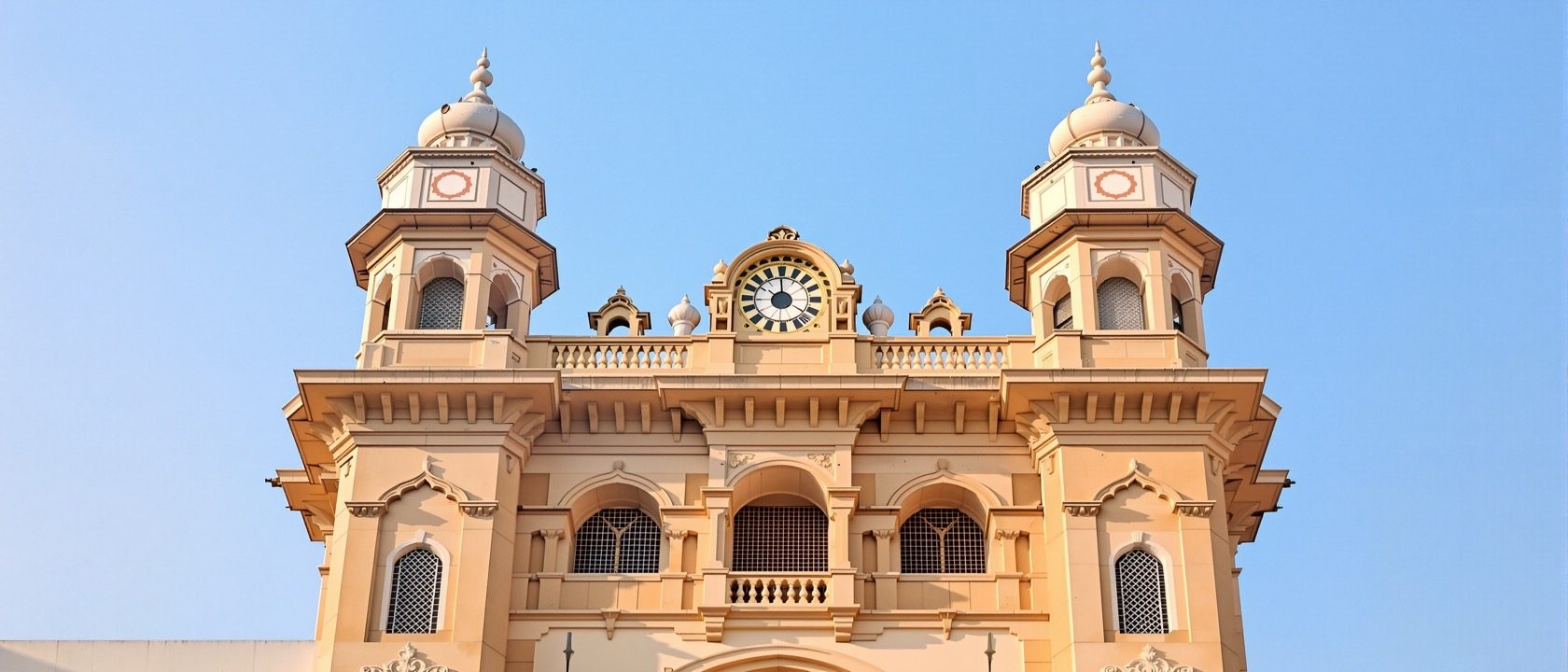
Aspect two begins with STYLE — the architectural language and PERIOD a building belongs to, read from its features: its proportions, its columns and arches, its roof, its ornament and its plan type. Identifying style places a building in the history of architecture and connects it to others of its kind. In India this is rich and layered — vernacular regional traditions, temple and mosque architecture, colonial and Indo-Saracenic, Art Deco, the Modern — and a building may mix several. Reading style is learning the vocabulary of architecture by seeing it in the real, not the textbook.[2, 3]
At a glance
| Aspect | The fact | The folklore |
|---|---|---|
| A building's history is read from | Archives, the fabric itself, and oral history | A single plaque or guess |
| Cultural impact means | How it reflected and shaped the life around it | Nothing measurable |
| The fabric shows | Phases, additions and repairs — the building dates itself | Only the final state |
| Style places a building | In the history of architecture, by its features | By its age alone |
| Function explains | Why the form takes its shape — use, climate, culture | Nothing; form is arbitrary |
| Style and function together | Answer WHAT a building is and WHY | Are separate from the drawings |
Key terms
Reading when and why a building was built, who used it and how it changed, and its role in its community — from archives, the fabric and oral history.
Interpreting the physical building as evidence — changes in material, blocked openings and seams reveal phases of building and alteration, helping date and reconstruct its story.
The memories of people who know a building — a source for its use, changes and meaning that archives and fabric alone cannot give.
The language and period a building belongs to, read from its proportions, elements, roof, ornament and plan — placing it in the history of architecture.
What a building was for and how its form served that use, climate and culture — explaining why it takes the shape it does.
The reading that a courtyard cools and gives privacy, a temple sequences a journey, a haveli separates public and family life — form following use.
Study task
For your chosen building, work the first two aspects. Research its history from three sources — archives (old maps, photographs, records), the fabric (look for phases, additions, blocked openings), and oral history (someone who knows it) — and note its cultural role. Then identify its style from its features, placing it in architecture’s history, and read its function — what it was for, and how its form served that use, climate and culture. Use the five-aspect explorer to guide what to look for. Write a short paragraph answering what the building is and why it takes its shape. The goal is to read a building’s story and meaning, not just its geometry.
Self-assessment
1. From what sources do you read a building's history?
2. How can a building 'tell its own age'?
3. What does identifying a building's STYLE do?
4. What does reading a building's FUNCTION explain?
Recap
References & further reading
- [1]Researching and dating historic buildings — archives, reading the fabric and oral history (Historic England, Understanding Historic Buildings; building-history references). https://historicengland.org.uk/
- [2]Architectural style, form and function — reading what a building is and how form serves use (Francis D.K. Ching, Architecture: Form, Space, and Order; A History of Architecture, Sir Banister Fletcher). https://www.wiley.com/
- [3]Indian architectural styles and traditions — vernacular, temple and mosque, colonial, Indo-Saracenic, Art Deco and Modern (Indian architectural-history references). https://www.intach.org/
Further reading
- Francis D.K. Ching, Architecture: Form, Space, and Order.
- Sir Banister Fletcher, A History of Architecture.
- Historic England, Understanding Historic Buildings.
Sources gathered and fact-checked June 2026. Published values vary by source, sample and method — treat as indicative and confirm against the cited standard before structural use.
The author
Amogh N P
Architect, interior designer, and creative polymath. Studio Matrx began in his notebooks — his vision of design made honest, useful, and open to everyone. Its Academy is written and taught in his memory, and free, forever.
More about Amogh →