
Movement joints, tolerances & buildability
The building never stops moving and is never built to the millimetre. A facade that ignores either tears itself apart - so the last act of detailing is designing for movement and reconciling the tolerances.
Lesson byAmogh N P· Architect & interior designer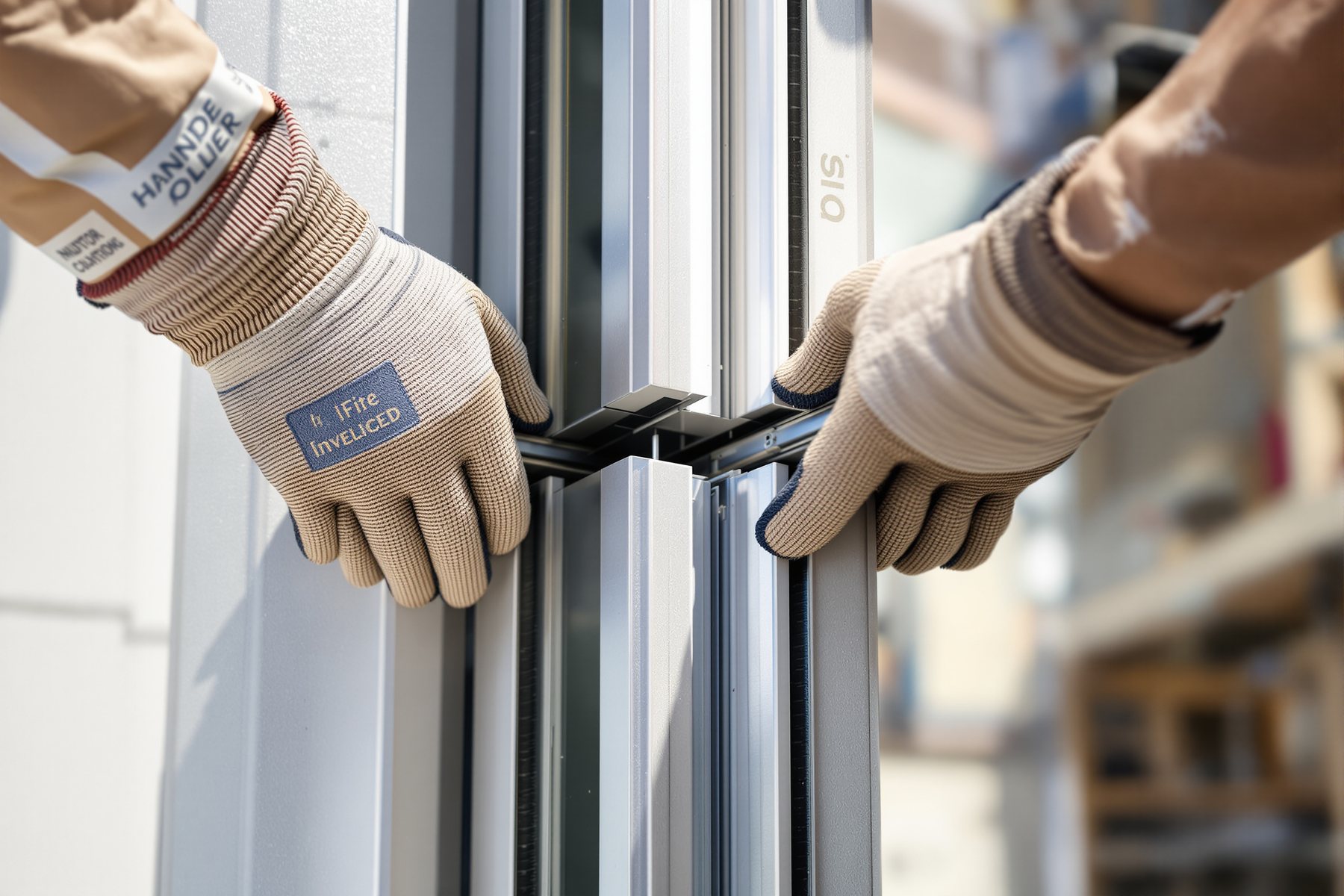
A 6-metre aluminium mullion in Delhi grows and shrinks by about 6 millimetres a day. Pin both ends and you don't get a facade - you get a buckled, leaking one.
Two uncomfortable truths sit under every facade detail. First, nothing holds still: aluminium expands and contracts daily by millimetres, the building leans in the wind, the structure swells and shrinks, and in an earthquake the floors slide past each other. Second, nothing is built to the millimetre: the concrete frame arrives rough, out by tens of millimetres, while the aluminium skin is machined to a couple. A facade that pretends the building is rigid and perfectly built tears its seals, cracks its glass and pops its panels. So the final act of detailing is the most quietly clever: designing joints that let everything move, and connections that reconcile a precise skin with an imprecise frame. This is buildability made real.
Movement, tolerance and the bracket that reconciles them
Thermal, building and seismic - the facade must absorb all three without tearing
A facade has to accommodate three families of movement, and each needs room in the joints.
Thermal movement is the daily one. Aluminium has a high coefficient of thermal expansion (~23 x 10^-6 /K), so a long mullion in a place with a big diurnal swing - Delhi, Jaipur, Nagpur - grows and shrinks measurably every day. Pin a panel rigidly at both ends and that movement has nowhere to go but into the seals and the glass. Building movement is the slower, structural one: the frame deflects under wind, the slabs creep and shrink, and tall buildings sway - all of which changes the gaps the facade spans. Seismic movement is the violent one: in an earthquake the floors displace horizontally relative to each other (inter-storey drift), and the facade must either flex with that drift or be designed to slide, so the skin doesn't shatter and fall - a life-safety requirement under IS 1893.
The answer to all three is the same idea: joints that open, close and slide, sized to the calculated movement, sealed by gaskets and sealants chosen for their movement capability - not a rigid wall pretending the building is still.
A facade is a set of small movements stacked: every stack joint, every gasket, every slip connection is room you deliberately left for the building to breathe.
A skin built to +/-2 mm meets a frame built to +/-25 mm - the bracket is the negotiator
Here is the gap nobody outside the industry sees. A concrete frame is built to a construction tolerance of roughly +/-25 mm - that's normal, acceptable site work. An aluminium curtain wall is fabricated to a manufacturing tolerance of about +/-2 mm - precise, factory work. Bolt the precise thing directly to the imprecise thing and it simply won't fit: the panels won't line up, the joints won't close, the glass plane won't be flat.
The reconciliation is the adjustable bracket. Every facade bracket provides three-way adjustment - in/out, up/down, and side-to-side - typically giving +/-25-40 mm of take-up, exactly enough to absorb the frame's tolerance while letting the installer set each panel to the precise survey grid. The bracket is where +/-25 mm becomes +/-2 mm. This is also why facades are surveyed before installation: you measure the as-built frame, then use the bracket adjustment to hang a precise skin off an imprecise structure. Understanding this gap is understanding why facades are detailed the way they are - the adjustable connection is the single most important reason a curtain wall can exist at all.
If it can't be built by a real crew in real conditions, it isn't a detail - it's a defect
Movement and tolerance both serve a bigger master: buildability. A detail that is theoretically perfect but needs a dry day, a third hand, sub-millimetre accuracy or a seal applied from a position no one can reach will be compromised on site - and a compromised facade detail leaks.
Buildable detailing means designing for how it actually goes up: the installation sequence (can each panel be set and fixed before the next blocks access?), the tolerances the crew can realistically hit, the access (can the sealant be reached and tooled?), and the forgiveness in the connection (does the bracket give the installer room to correct as they go?). It also means honouring the stack joint - the horizontal joint between unitized panels that opens and closes as the building moves, sized so it never closes solid (panels crashing) or opens past the gasket's reach (a leak).
In Indian conditions this matters doubly. Monsoon site work means details get built wet; variable site labour means tolerances are real; and the diurnal swing means thermal movement is not theoretical. The most elegant detail in the set is worth nothing if the crew can't build it the way you drew it - so the final question on every detail is the plainest one: can this actually be built, and will it still perform when it is?
Movement and tolerance shape what your facade can look like. Tight, continuous lines and minimal joints fight the building's need to move and the frame's roughness - somewhere the wall must breathe, and a joint you refuse to express will express itself as a crack. Accept and design the stack joint and movement joint as part of the architecture, not a blemish. And remember the survey-and-adjust reality: a facade hung off a real concrete frame needs bracket room you must leave in the section. The cleanest elevation is the one whose joints were planned, not hidden until they failed.
Calculate the movement - thermal (alpha x L x dT), structural deflection and seismic inter-storey drift (from the structural engineer's IS 1893 analysis) - and size every joint and gasket to accommodate the sum, with margin. Specify the bracket's three-way adjustment to swallow the frame's +/-25 mm tolerance, and specify the survey-then-set installation method. Choose sealants by movement-accommodation factor, not just adhesion. And pressure-test buildability: walk the installation sequence, confirm every seal is reachable, and reject any detail that needs a tolerance the site cannot deliver.
Two ideas make sense of facade installation. First, the brackets are how the rough frame and the precise skin meet - that's why you survey the as-built structure and then adjust each bracket in three directions to set the panel to the grid. Use the adjustment; don't force a panel. Second, the joints are deliberate room for movement, so never pack a stack joint solid or over-fill a movement joint with rigid sealant - it has to open and close. The detail works because it can move and because the bracket let you correct the frame's roughness; defeat either and the facade fights the building and loses.
IS 1893 (Part 1): 2016
Seismic - inter-storey drift
Sets the seismic design and the inter-storey drift the facade must accommodate (the structural engineer derives the drift; the facade must absorb it). It gives the building's drift limit, not how to detail the joint that survives it - that is the facade engineer's job.
IS 875 (Part 3): 2015
Wind - building deflection / sway
Gives the wind loads that drive structural deflection and sway, which change the gaps the facade spans. It sizes the load, not the movement joint; you translate the resulting deflection into joint capacity.
CWCT Standard (UK)
Movement accommodation & tolerances
Sets out facade movement accommodation, construction tolerances and the survey-and-adjust philosophy on premium projects - the benchmark for how much movement and tolerance a system must absorb, though specific joint sizing is still per-project engineering.
ASTM C1401 / sealant movement class
Structural & movement-joint sealants
Guidance for structural-sealant glazing and sealant movement-accommodation factors (e.g. a +/-25% or +/-50% class sealant) - how you pick a sealant that survives the joint's calculated movement. It rates the sealant, not your joint design.
“A well-built facade is rigid and gap-free - movement joints and bracket slop are signs of sloppy work, and the tighter and stiffer you fix everything, the better.”
The opposite is true. A facade must move - aluminium expands daily, the building sways and an earthquake slides the floors past each other - so movement joints, compression gaskets and adjustable brackets are deliberate engineering, not sloppiness. Pin a facade rigidly and the daily thermal cycle alone will tear its seals and crack its glass. And the bracket's adjustment isn't slop - it's the only way a +/-2 mm skin can be hung off a +/-25 mm frame. The joints and the adjustment are exactly what make the facade durable and buildable.
Worked example - thermal movement and tolerance take-up on a mullion
Two numbers turn movement and tolerance from words into a sized joint: how far the mullion moves with temperature, and whether the bracket can swallow the frame's roughness. Let's calculate both for an Indian curtain wall.
The given data, a calculator, and the coefficient-of-expansion and tolerance vocabulary from Module 4.
GIVEN - a vertical aluminium curtain-wall mullion, one storey:

  Mullion / panel length   L     = 6.0 m  (6000 mm)
  Aluminium expansion coef alpha = 23 x 10^-6 /K
  Install temperature            = 25 C
  Service temp range       Tmin..Tmax = 5 C .. 70 C  (surface, dark frame, Delhi sun)
  Frame construction tol         = +/-25 mm
  Skin fabrication tol           = +/-2 mm
  Bracket 3-way adjustment       = +/-30 mm

  Thermal movement:  dL = alpha x L x dT
- 1Find the worst-case temperature swing from install. Heating: 70 - 25 = +45 K. Cooling: 5 - 25 = -20 K. The dark aluminium surface in Delhi sun reaching 70 C is realistic, so design to the +45 K expansion case (the larger of the two).
- 2Thermal movement of the mullion: dL = alpha x L x dT = 23 x 10^-6 x 6000 mm x 45 K = 6.2 mm of expansion over one 6 m length. Over the full height of a tall facade, these add up at every stack joint - which is why each stack joint must carry this movement, not the whole wall at one place.
- 3Size the stack joint (the horizontal movement joint between unitized panels) to take this plus a safety margin: it must accommodate roughly 6-7 mm of closure without the panels crashing solid, and stay sealed by a gasket whose movement range covers it. Specify a joint and gasket that never close to zero and never open past the gasket's reach - typically a designed nominal joint of ~15-20 mm with the movement within its range.
- 4Check the sealant class: a movement of ~6 mm in a ~15 mm joint is about +/-40% of the joint width, so you need a high-movement sealant (e.g. a +/-50% movement-accommodation class), not a cheap +/-25% one that would tear. Pick the sealant by its movement class, not just its adhesion.
- 5Now the tolerance reconciliation: the frame can be out by +/-25 mm, and the bracket gives +/-30 mm of three-way adjustment. Since 30 > 25, the bracket can absorb the worst-case frame error and still set the +/-2 mm skin to the survey grid - the reconciliation works, with 5 mm of margin to spare.
- 6Decide: the detail needs a stack joint sized for ~6.2 mm thermal movement with a +/-50%-class sealant, and a +/-30 mm three-way adjustable bracket that swallows the +/-25 mm frame tolerance. Sign it off: the wall can move daily without tearing, and the precise skin can be hung off the rough frame. Had the bracket offered only +/-20 mm, it could not absorb a +/-25 mm frame error - the panels wouldn't fit, and the detail would fail before it's even built.
You’ll walk away with
A sized movement-and-tolerance verdict - ~6.2 mm of thermal movement carried by a +/-50%-class stack joint, and a +/-30 mm bracket that reconciles a +/-25 mm frame with a +/-2 mm skin - the exact two-number check that makes a curtain wall both move-tolerant and buildable.
Two ways to see movement and tolerance in the wild.
- 01On a curtain wall, find the horizontal stack joints between panels and notice they're a deliberate, consistent gap - that gap is the room left for thermal and building movement, not a fabrication error.
- 02Watch (or imagine) a facade going up: the crew surveys the concrete frame first, then adjusts each bracket. That survey-then-adjust step is the +/-25 mm frame being reconciled to the +/-2 mm skin in real time.
The building never holds still and is never built to the millimetre, so the last act of detailing is designing for both. Joints sized to thermal, building and seismic movement let the facade breathe and survive an earthquake; adjustable brackets reconcile a +/-2 mm skin with a +/-25 mm frame; and every detail must pass the plainest test - can a real crew build it, and will it still perform? Movement, tolerance and buildability are where good detailing becomes a facade that lasts.
A facade must absorb three movements - thermal (alpha x L x dT; ~6 mm on a 6 m Delhi mullion), building (deflection, creep, sway) and seismic (inter-storey drift, IS 1893) - through joints sized to the sum and sealants chosen by movement class. It must also reconcile a +/-2 mm fabricated skin with a +/-25 mm concrete frame via three-way adjustable brackets (~+/-30 mm), set by survey-then-adjust. And every detail must be buildable: sequenceable, reachable, and within the tolerances a real crew can hit.
Why do facades need movement joints?
Because everything in and around a facade moves. Aluminium expands and contracts daily with temperature (a 6 m mullion in Delhi moves about 6 mm a day), the building deflects under wind, the structure creeps and shrinks, and in an earthquake the floors slide past each other (inter-storey drift). Movement joints - including the horizontal stack joints between unitized panels - are deliberately sized gaps, sealed by movement-capable gaskets and sealants, that let all this happen without tearing the seals or cracking the glass. Pin a facade rigidly and the daily thermal cycle alone will damage it.
How is a precise facade skin fixed to a rough concrete frame?
Through adjustable brackets. A concrete frame is built to a construction tolerance of about plus-or-minus 25 mm, while an aluminium curtain wall is fabricated to about plus-or-minus 2 mm. The facade brackets provide three-way adjustment (in/out, up/down, side-to-side), typically around plus-or-minus 25 to 40 mm, which absorbs the frame's roughness and lets the installer set each precise panel to a surveyed grid. The frame is surveyed as-built first, then the brackets are adjusted to reconcile the two - which is why the adjustable connection is what makes a curtain wall possible at all.
What does buildability mean in facade detailing?
It means a detail can actually be built by a real crew, in real site conditions, to tolerances they can realistically achieve - and will still perform afterwards. A buildable detail has a workable installation sequence (each panel can be set and fixed before access is blocked), reachable seals that can be applied and tooled, forgiving adjustable connections, and movement joints that work. A detail that needs a dry day, sub-millimetre accuracy or a seal applied from an unreachable position will be compromised on site and leak - so buildability is the final test every facade detail must pass.
Peer-reviewed journals & authoritative standards
- 01Bedon, C. et al. Performance of structural glass facades under extreme loads - design methods, existing research, current issues and trends. Construction and Building Materials, 163. — Construction and Building Materials (Elsevier), 2018.
- 02Su, Z. et al. Multi-Disciplinary Characteristics of Double-Skin Facades for Computational Modeling Perspective and Practical Design Considerations. Buildings, 12(10):1576. — Buildings (MDPI), 2022.
- 03Review on Glass Curtain Walls under Different Dynamic Mechanical Loads: Regulations, Experimental Methods and Numerical Tools. IntechOpen. — IntechOpen (peer-reviewed chapter), 2023.
The author
Amogh N P
Architect, interior designer, and creative polymath. Studio Matrx began in his notebooks — his vision of design made honest, useful, and open to everyone. Its Academy is written and taught in his memory, and free, forever.
More about Amogh →_That completes detailing and interfaces - the typical section, the slab-parapet-base junctions, the openings, and the movement and tolerances that hold it all together. Next, the course turns to the most consequential failure mode of all: fire on the facade, and the codes and barriers that contain it._