
ACP/cladding fire: the Grenfell lessons
On 14 June 2017, a kitchen fire in a London tower killed 72 people - because someone had wrapped the building in a material with a core that burns like solid fuel. Every facade engineer must know exactly why.
Lesson byAmogh N P· Architect & interior designer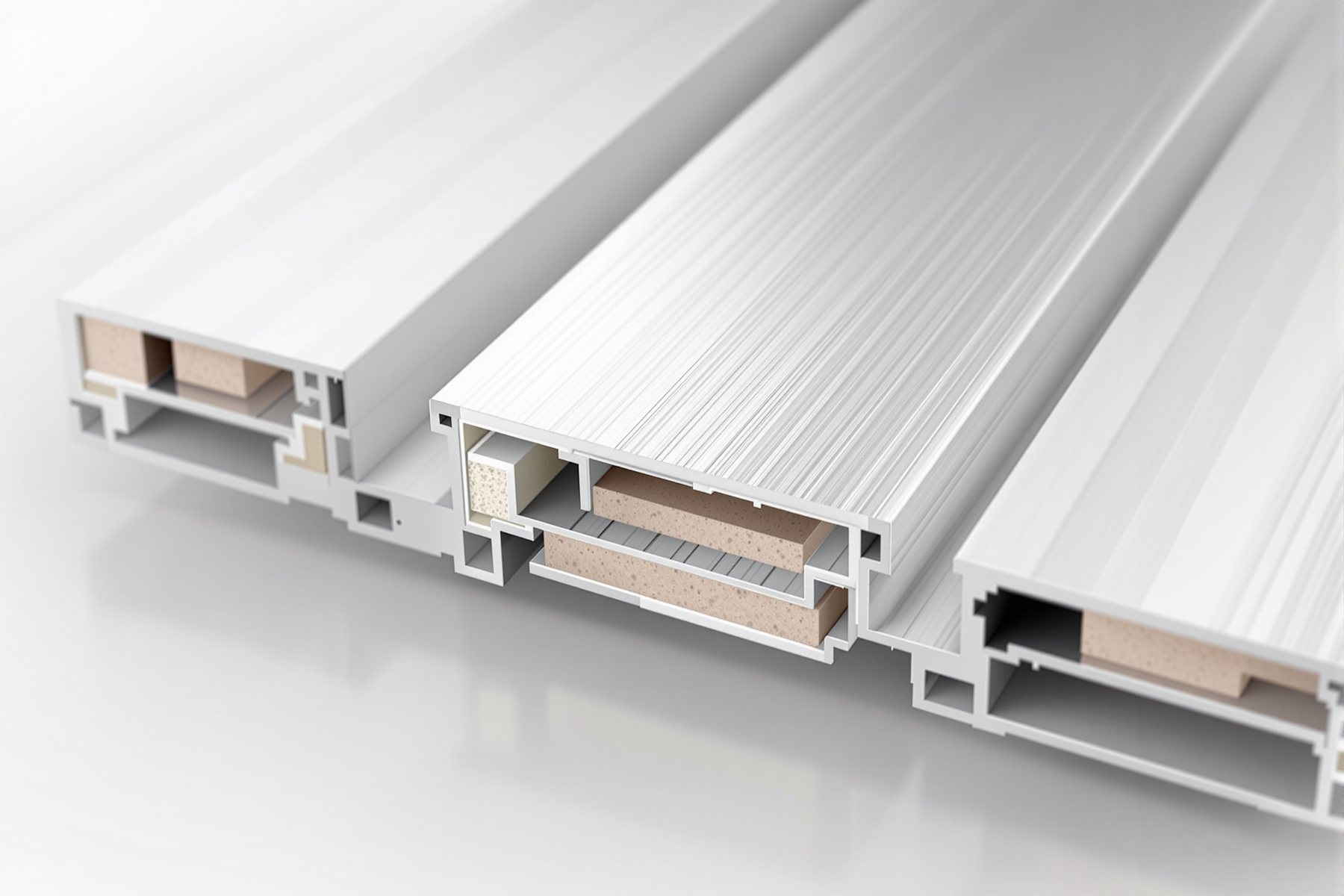
The panels that turned a single-flat fire into a 72-death disaster looked identical to the safe ones - the difference was 3 millimetres of plastic in the middle.
An aluminium composite panel (ACP, or ACM) is two thin aluminium skins bonded either side of a core. The skins are non-combustible. The core decides everything. At Grenfell Tower, the core was **polyethylene** - essentially solid candle wax in sheet form - and when fire from a fourth-floor flat reached it, the cladding ignited and carried flame up the full 24 storeys in minutes. Seventy-two people died. The panels looked like any other ACP. The catastrophe was hidden in the middle layer. For a facade engineer, no piece of knowledge is more important than the difference between an ACP core that is a decorative skin and one that is solid fuel.
What burned, and why - the core is everything
PE, FR and A2: same panel, completely different fire behaviour
An ACP is sold in three core grades, and they are not interchangeable.
PE (polyethylene) core: a thermoplastic polymer with a calorific value comparable to heating oil. It melts, drips flaming, and burns fiercely - this is the Grenfell material, now banned on tall buildings across the UK and EU. FR (fire-retardant) core: PE heavily loaded with mineral fillers (typically ~30% polymer, ~70% mineral) to slow ignition - better than PE, but still contains significant combustible polymer and has performed poorly in full-scale tests; treat it with deep suspicion on tall residential buildings. A2 (limited-combustibility, mineral) core: a core that is >=90% mineral with minimal organic content, achieving Euroclass A2-s1,d0 - effectively non-combustible. This is the only category appropriate for tall buildings.
The killer detail is that the three look identical from the street and on a cut sample can be hard to tell apart. The core grade lives in the specification and the supplier's certificate - and on too many buildings, a safe spec was substituted for a cheaper, combustible one during procurement. Know what is actually installed, not what was drawn.
EN 13501 Euroclasses: A1, A2, B...F - and why only A1/A2 belong on a tower
Materials are graded for reaction to fire under EN 13501-1, on a ladder from A1 (non-combustible - stone, glass, steel, mineral wool) through A2 (limited combustibility), then B, C, D, E (increasingly combustible), to F (untested/worst). Two suffixes refine it: s for smoke (s1 = little, s3 = lots) and d for flaming droplets (d0 = none, d2 = lots) - so the full class for good mineral-cored ACP reads A2-s1,d0: limited combustibility, low smoke, no flaming droplets.
Grenfell's PE-cored ACM was around Class B or worse - combustible. The post-Grenfell rule across the UK and much of Europe is blunt and correct: on buildings above a height threshold, external-wall materials must be A2-s1,d0 or A1 - the limited-combustibility line. India's NBC 2016 has historically lacked an equally hard, height-linked combustibility limit, which is precisely the gap a serious facade engineer closes by specifying A2/A1 cores voluntarily on every tall project, regardless of what the local code strictly demands.
BS 8414 + BR 135: the only honest way to assess a whole facade
A panel's reaction-to-fire class tells you about the material. It does not tell you how the whole assembled facade - panel, cavity, insulation, fixings, cavity barriers - behaves in a real fire. For that, there is BS 8414: a full-scale test that builds a 8-9 m high corner of the actual facade build-up over a combustion chamber simulating a flat fire, and measures temperatures and fire spread up the rig. The result is judged against the BR 135 performance criteria (limits on temperature rise at defined heights and times, and on mechanical failure / falling debris).
The Grenfell lesson here is brutal: components that individually held certificates were assembled into a system nobody had fire-tested as a whole. A facade is a system, not a surface - and it must be fire-tested as one. For a facade engineer the rule is to prefer A1/A2 materials and a full-scale BS 8414 (or equivalent) test of the actual build-up, never a paper assembly of separately-certified parts. The two approaches - non-combustible materials and a system test - are belt and braces, and on a tall building you want both.
If you take one rule from this course, take this: never specify a combustible-cored ACP (PE or FR) on a building people sleep in or cannot quickly evacuate. The visual difference between A2 and PE cladding is zero; the safety difference is total. Write A2-s1,d0 or A1 into the specification, and protect that spec through value-engineering - the substitution of a cheaper combustible core for a safe one, late and quietly, is exactly how Grenfell happened. Beauty is never a reason to put solid fuel on a wall.
Own the combustibility line. Specify the core grade by its Euroclass (A2-s1,d0 / A1), demand the actual product certificate for what is delivered, and reconcile delivered material against the spec - substitution is the failure mode. Where the build-up is novel or the materials are not all A1/A2, require a full-scale BS 8414 test of the real assembly judged to BR 135, not a desktop study stitched from separate certificates. And remember Module 8.1: even A2 cladding still needs cavity barriers and perimeter fire-stopping - material class alone does not contain a fire.
You may be the last person who can catch a deadly substitution. When ACP arrives, the core grade is on the label and the certificate - PE, FR or A2/A1. If the delivered panels do not match the specified core, stop and escalate; that mismatch is not a paperwork detail, it is potentially the Grenfell mistake repeating. Keep the certificates with the delivery records. The panel that looks identical to the safe one may be the one that burns.
EN 13501-1
Reaction-to-fire class
Euroclass A1/A2/B...F with s (smoke) and d (droplet) suffixes - the material classification that defines A2-s1,d0 as the limited-combustibility benchmark; a material class, not a whole-system result.
BS 8414-1/-2 & BR 135
Full-scale facade fire test
Builds and burns a real ~8 m facade corner; judged to BR 135 criteria. Tests the assembled system - the only way to catch the gap between certified parts and a deadly whole, the core Grenfell failing.
NBC 2016 Part 4 (India)
Fire & life safety
Governs Indian facade fire safety but, as of 2026, lacks the hard, height-linked A2/A1 combustibility limit of post-Grenfell UK/EU rules - so engineers specify limited-combustibility cores voluntarily on tall projects.
“FR (fire-retardant) core ACP is fire-safe and fine for tall buildings - it has 'fire' in the name.”
FR-core ACP still contains a large fraction of combustible polyethylene (often around 30%), just loaded with mineral filler to delay ignition. It has performed poorly in full-scale BS 8414 tests and has been involved in real high-rise fires. The name promises more than the material delivers. For tall buildings the only appropriate cores are limited-combustibility A2-s1,d0 or non-combustible A1 - mineral, not filled plastic. FR is a marketing category, not a safety guarantee.
Worked example - reading an ACP fire spec & a BS 8414 result
A facade engineer must be able to judge an ACP submittal in seconds and read a BS 8414 report without being fooled. Let us work a realistic specification check for a 60 m residential tower.
The ACP suppliers' Euroclass certificates (EN 13501-1) and the BS 8414 / BR 135 test reports for the actual build-up; the building height and its combustibility threshold.
GIVEN three ACP submittals for a 60 m residential tower (above the typical 18 m combustibility threshold):

  PANEL A : core = PE,  Euroclass = B-s2,d0, calorific ~35 MJ/kg
  PANEL B : core = FR,  Euroclass = B-s1,d0, ~30% polymer
  PANEL C : core = mineral, Euroclass = A2-s1,d0, ~5% organic

  REQUIREMENT: building > 18 m -> external wall must be A2-s1,d0 or A1.
  TEST EVIDENCE: BS 8414 report judged to BR 135.
- 1Reject Panel A immediately: PE core, Euroclass B = combustible, high calorific value. This is essentially the Grenfell material - non-compliant and dangerous on any tall residential building. No further analysis needed.
- 2Reject Panel B with reasons: 'FR' core but still Class B and ~30% combustible polymer. It fails the A2-s1,d0 requirement and has a poor full-scale-test history. The 'FR' label does not make it limited-combustibility - the Euroclass does, and B is not good enough.
- 3Accept Panel C, then verify: A2-s1,d0, ~5% organic - this meets the limited-combustibility requirement. But do not stop at the panel: ask for the BS 8414 test of the full build-up (this panel + the actual cavity, insulation and barriers) judged to BR 135.
- 4Read the BS 8414 result honestly: confirm the temperature rise at the measured height/time stayed within BR 135 limits AND that there was no mechanical failure / falling flaming debris. A pass on temperature but a fail on debris is still a fail. Confirm the tested build-up matches what will be installed.
- 5Lock the substitution gate: write into the procurement that delivered panels must carry the A2-s1,d0 certificate matching the BS 8414-tested system, and that any change requires re-testing - closing the exact gap (a safe spec quietly swapped for a cheaper combustible one) that the Grenfell Inquiry identified.
You’ll walk away with
A defensible ACP selection: PE and FR cores rejected by Euroclass, the A2-s1,d0 panel accepted only with a matching BS 8414 / BR 135 system test, and a substitution gate that keeps the safe spec on the building. The judgement that prevents a Grenfell.
Two reflections to make the lesson stick.
- 01Look up the cladding spec of any tall residential tower you can find publicly and ask the one question that matters: what is the core grade - PE, FR, or A2/A1? If it is PE or FR, you are looking at a known risk.
- 02Find a description of a post-Grenfell cladding-remediation programme (UK, UAE or Australia) and note the scale and cost of stripping combustible panels off existing towers - the price of getting the core wrong once.
An ACP's two aluminium skins are non-combustible; the core decides whether the panel is a finish or solid fuel. PE burns like wax (the Grenfell core), FR still contains a large combustible fraction, and only A2-s1,d0 / A1 mineral cores belong on tall buildings. Specify the core by Euroclass, test the whole assembly with BS 8414 to BR 135, and guard the spec against substitution - because the panels look identical and the difference is fatal.
ACP cores: PE (thermoplastic, Grenfell material, banned tall), FR (~30% polymer, Class B, poor full-scale record), A2/A1 (mineral, limited/non-combustible - the only tall-building choice). EN 13501 grades reaction-to-fire A1-F with s (smoke) and d (droplet) suffixes; A2-s1,d0 is the line. BS 8414 + BR 135 test the assembled system, not the panel. Guard against late substitution - that is how Grenfell happened.
What kind of cladding was on Grenfell Tower and why did it burn?
Grenfell was reclad with aluminium composite panels (ACM) with a polyethylene (PE) core - two thin aluminium skins bonded either side of a sheet of thermoplastic polymer with a calorific value comparable to heating oil. When fire from a fourth-floor flat reached the cladding, the PE core ignited, melted and burned fiercely, and combined with combustible insulation and an unbarriered cavity to carry flame up all 24 storeys in minutes, killing 72 people. The aluminium skins were non-combustible; the plastic core was the fuel.
What is the difference between PE, FR and A2 ACP cores?
PE is a pure polyethylene core - highly combustible, the Grenfell material, now banned on tall buildings in the UK and EU. FR ('fire-retardant') is PE loaded with mineral filler (often ~70% mineral, ~30% polymer) - better but still significantly combustible, typically Euroclass B, with a poor full-scale-test record. A2 is a mineral core (>=90% mineral, minimal organic) achieving Euroclass A2-s1,d0 - limited combustibility, effectively non-combustible, and the only category appropriate for tall buildings.
What is a BS 8414 facade fire test?
BS 8414 is a full-scale fire test that builds a roughly 8-9 m high corner of the real facade build-up - cladding, cavity, insulation, fixings and cavity barriers - over a combustion chamber simulating a flat fire, and measures temperature rise and fire spread up the rig. The result is judged against the BR 135 performance criteria (limits on temperature at defined heights/times and on mechanical failure or falling debris). It tests the assembled system rather than a single panel, which is the only honest way to assess a ventilated facade's fire behaviour.
Peer-reviewed journals & authoritative standards
- 01McKenna, S.T. et al. Fire behaviour of modern facade materials - understanding the Grenfell Tower fire. Journal of Hazardous Materials, 368. — Journal of Hazardous Materials (Elsevier), 2019.
- 02Yuen, A.C.Y. et al. Evaluating the fire risk associated with cladding panels: an overview of fire incidents, policies, and future perspective in fire standards. Fire and Materials, 45(5). — Fire and Materials (Wiley), 2021.
- 03Preliminary Study on Measures to Improve Fire Safety in Existing High-Rise Residential Buildings with Combustible Facades. Buildings, 16(6):1196. — Buildings (MDPI), 2026.
The author
Amogh N P
Architect, interior designer, and creative polymath. Studio Matrx began in his notebooks — his vision of design made honest, useful, and open to everyone. Its Academy is written and taught in his memory, and free, forever.
More about Amogh →_Materials and system tests stop the facade burning. But fire safety on the skin is also written into the building code itself - the NBC's fire provisions, safety glazing and fall protection. The code, next._