
Lesson 14Module 3 · Design application
Speculative Drawing: Thinking on Paper
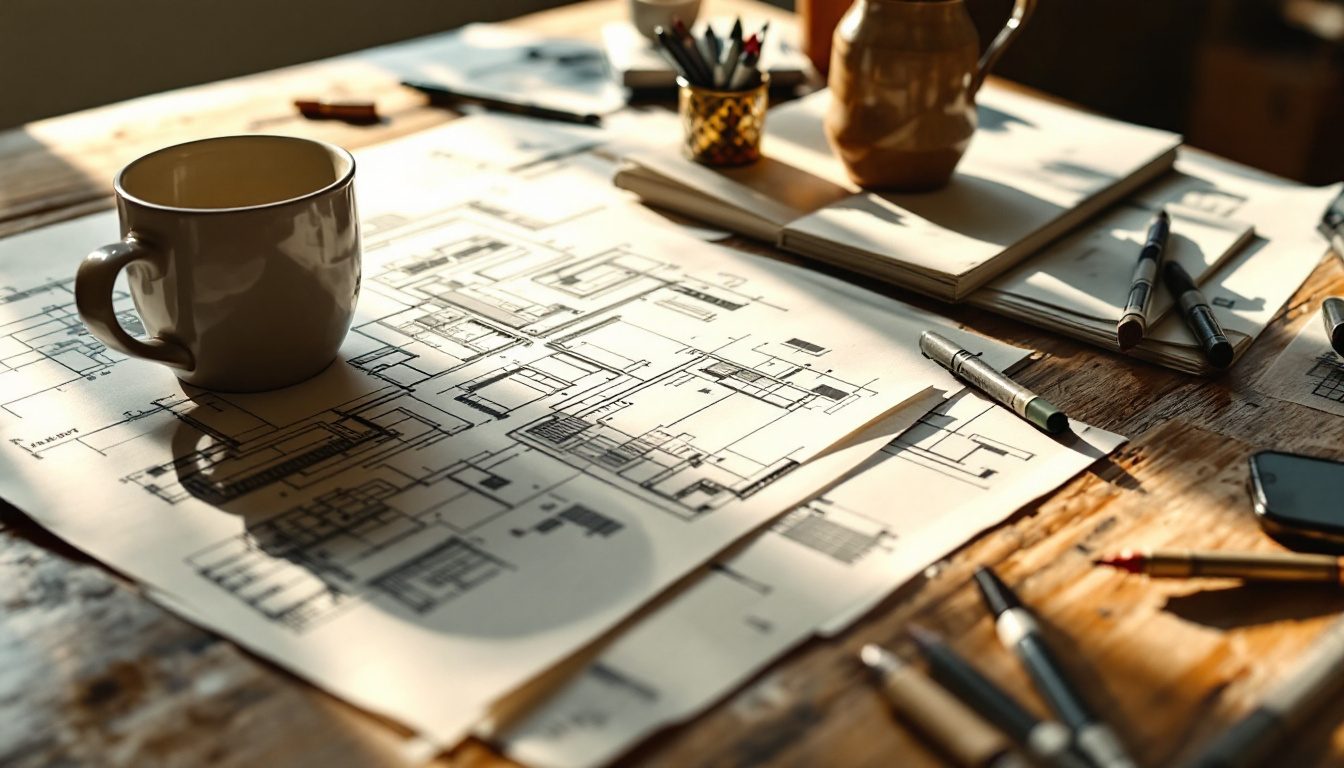
Working in series, overlaying trace
3 hours studioByAmogh N P· Architect & interior designer
Learning objectives
By the end of this lesson, students will be able to:
- Use rapid, low-stakes sketching to generate and test multiple design ideas rather than perfecting one.
- Practise productive habits of design sketching: working in series, overlaying trace, tolerating ambiguity, and exploiting accidents.
- Switch fluidly between drawing systems mid-thought — plan to axon to perspective — as the idea demands.
- Maintain a visible trail of thinking that can be reviewed and resumed.


Key concepts
- Speculative drawing is cheap experimentation: ten loose options outperform one polished guess.
- Trace-paper overlays as design memory: each layer keeps what works and revises what does not.
- Ambiguity as fuel — a wobbly line can suggest three ideas a precise line cannot.
- Quantity breeds quality: deferring judgment during generation, applying it during selection.
In-class activities & exercises
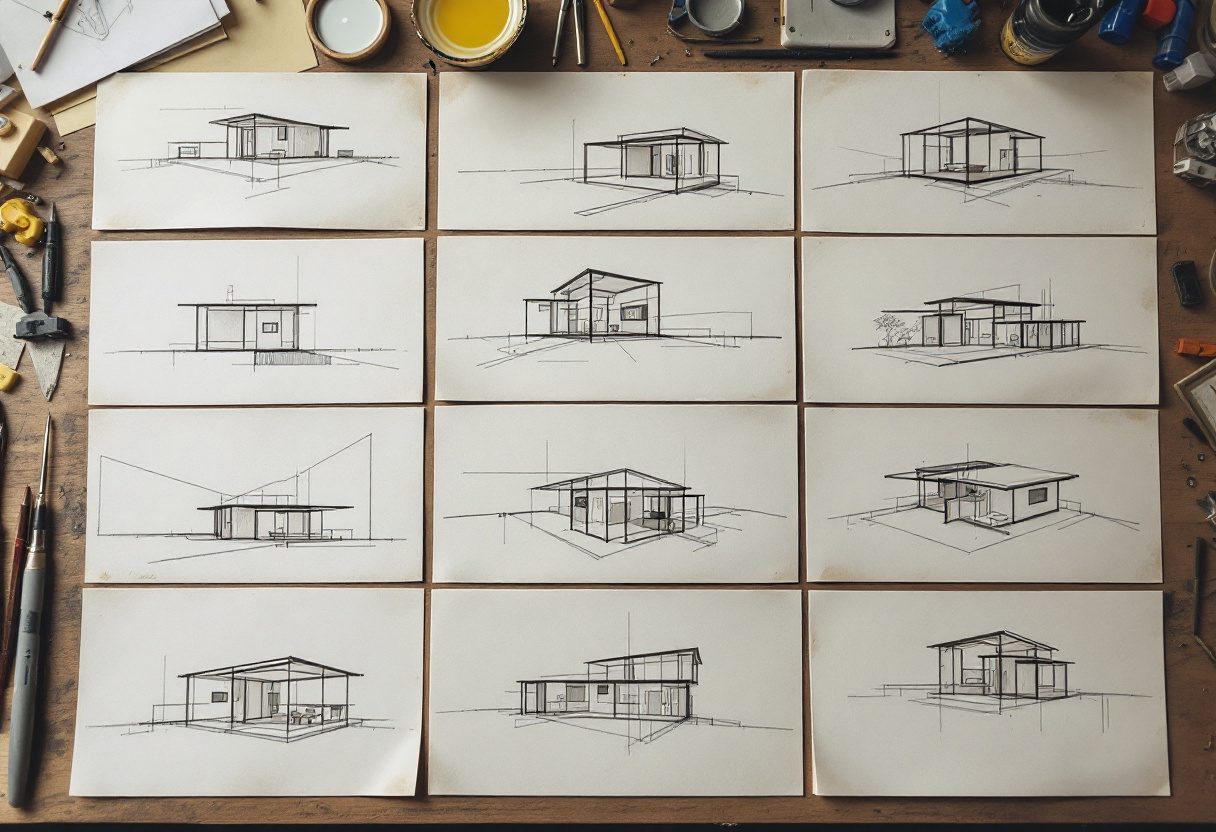
Idea sprints (40 min)A one-room reading pavilion for a park; students must produce twelve thumbnail options in forty minutes, no erasing allowed.
Overlay evolution (50 min)Pick the strongest thumbnail and develop it through four trace overlays, each changing exactly one thing.
System switching (40 min)Express the current scheme in three systems on one sheet — plan diagram, quick axon, eye-level sketch.
Accident harvest (30 min)Students exchange a 'failed' sketch with a partner who must find and develop an idea hidden inside it.
Worked example sketches
How the technique looks in practice — loose, hand-drawn examples. Scroll to watch each one draw in; click to zoom.
Homework / studio assignment
Continue the pavilion: one more overlay generation (four sheets) plus a half-page note on which decisions survived and why.
Assessment
Assessed on quantity, variety, and visible evolution across overlays — not on rendering quality.
A
The author
Amogh N P
Architect, interior designer, and creative polymath. Studio Matrx began in his notebooks — his vision of design made honest, useful, and open to everyone. Its Academy is written and taught in his memory, and free, forever.
More about Amogh →