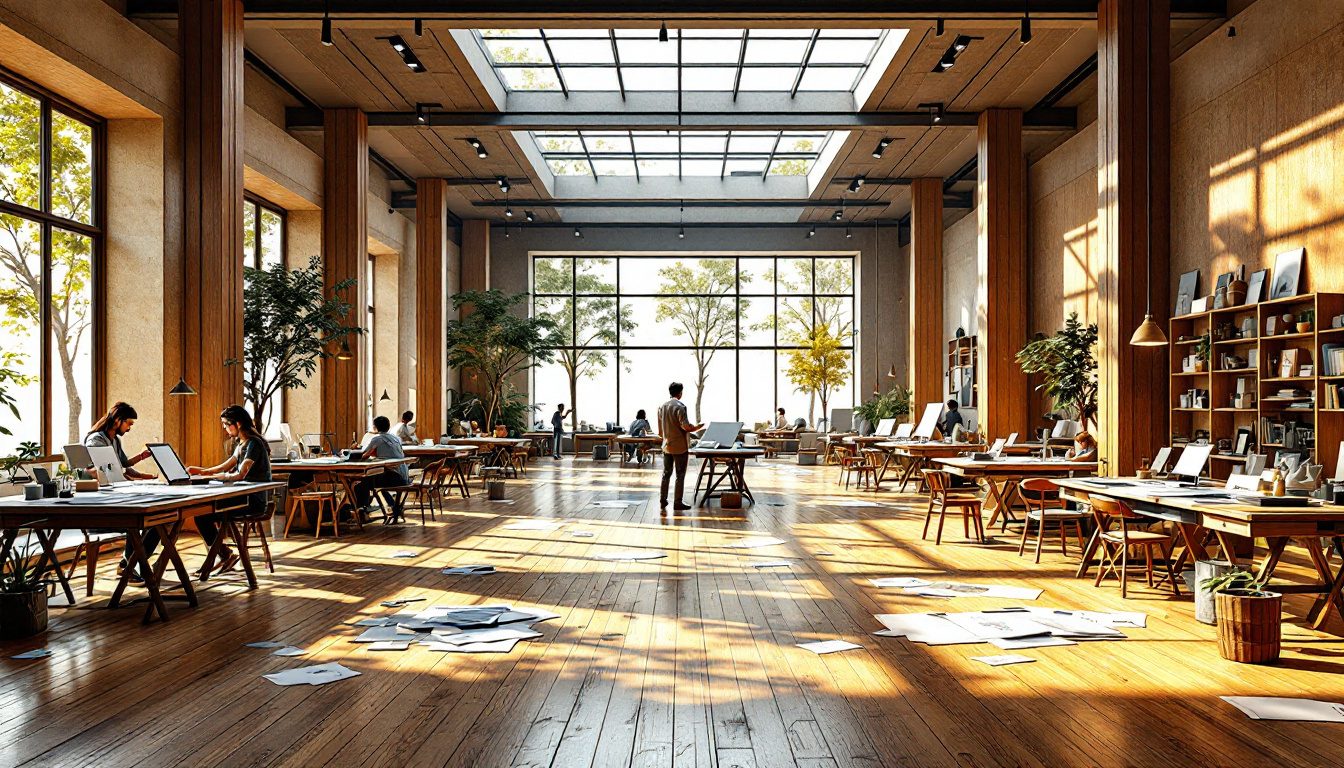
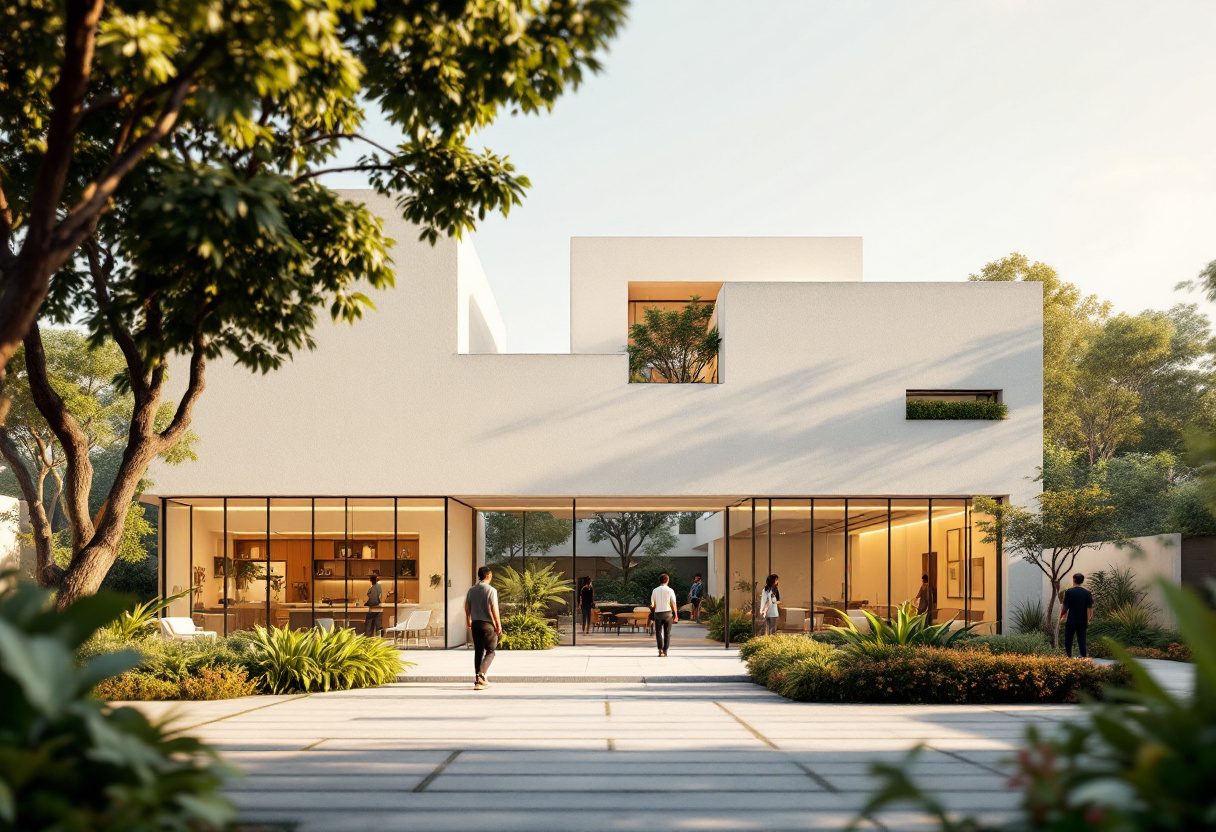
By the end of this lesson, students will be able to:
Cast plausible shade and shadow within a perspective view using a chosen sun direction.
Add reflections in glass, water, and polished floors with simple mirroring logic.
Populate drawings with correctly scaled people (eyes on the horizon for standing figures) and appropriate activity.
Indicate landscape, vehicles, and neighbouring buildings economically so context supports, not smothers, the design.
DiagramThe heads-on-horizon rule with figures at 2 m, 10 m, and 50 m.
DiagramReflection construction for glass, water, and polished floor.
DiagramA sheet of figures, trees, and vehicles to trace and adapt.
PhotoA bare perspective vs. the same view with shadow, people, and planting.
ReferenceA sunlit street — shadow, people and context to render.
Key concepts
Entourage exists to give scale, life, and use — every added figure should answer 'who is here and what are they doing?'
The standing-figure rule: in eye-level perspective, all standing heads sit near the horizon line regardless of distance.
Reflection as mirrored geometry: equal distances across the reflecting plane, softened and darkened.
Hierarchy of finish: the design is rendered most; context is rendered least.
In-class activities & exercises
Shadow-in-perspective workshop (45 min)Casting sun shadows of a canopy and a freestanding wall inside a two-point view.
Figure drills (40 min)Twenty quick people at varied distances placed correctly on a provided perspective street.
Reflection studies (40 min)A glazed façade and a wet pavement added to the Lesson 12 café sketch.
Full dress (45 min)Students take one earlier perspective and complete it with shadow, people, planting, and sky as a finished scene.
Worked example sketches
How the technique looks in practice — loose, hand-drawn examples. Scroll to watch each one draw in; click to zoom.
DiagramA street view fully dressed — shadow, people, planting and sky.
DiagramEntourage figures at 2 m, 10 m and 50 m, heads on the horizon.
DiagramA glazed façade and wet pavement with mirrored reflections.
DiagramA canopy and wall casting consistent sun shadows in two-point.
Homework / studio assignment
Finish the 'full dress' drawing to presentation quality on A3.
Assessment
Rubric on scale credibility of figures, shadow consistency, and overall hierarchy of finish. End-of-module review: full drawing-systems portfolio (Lessons 7–13).
A
The author
Amogh N P
Architect, interior designer, and creative polymath. Studio Matrx began in his notebooks — his vision of design made honest, useful, and open to everyone. Its Academy is written and taught in his memory, and free, forever.