
Lesson 15Module 3 · Design application
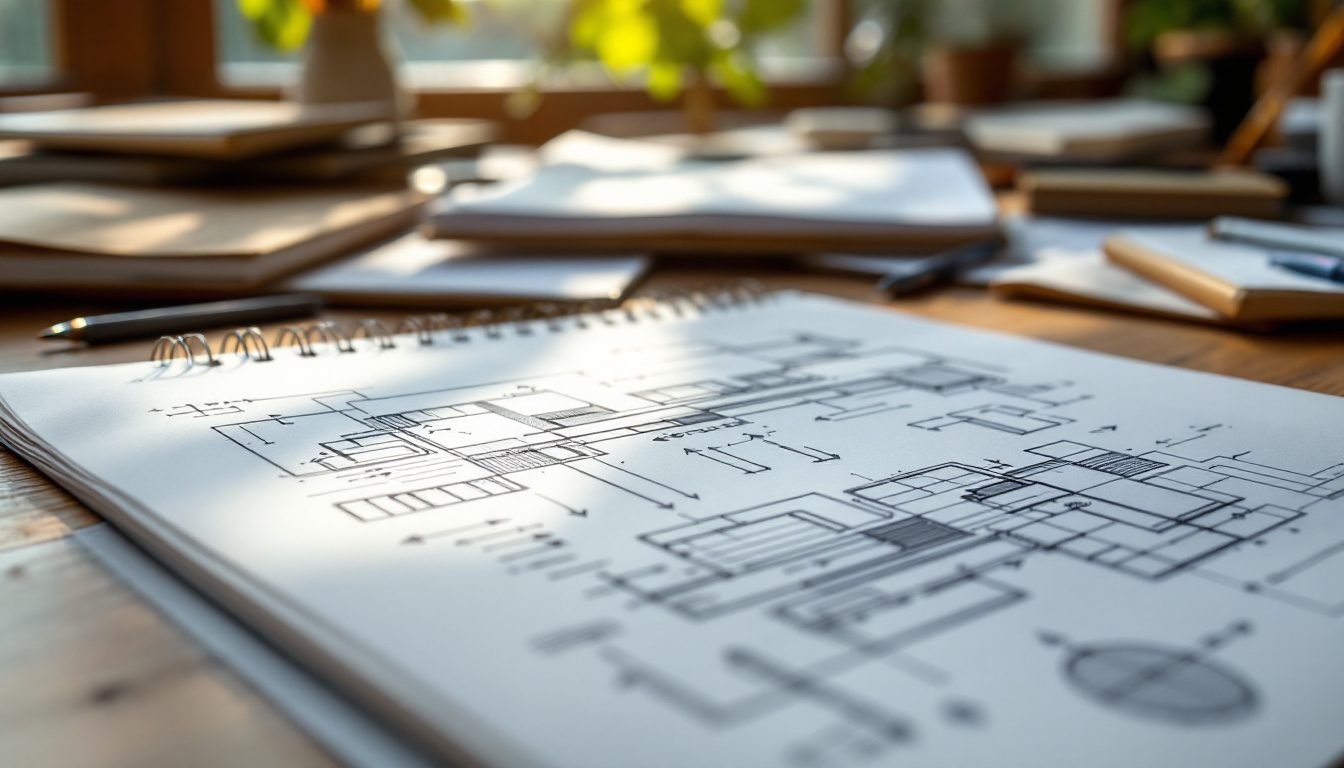
Diagramming: Drawing Ideas, Not Objects
Parti, circulation, and the power of omission
3 hours studioByAmogh N P· Architect & interior designer
Learning objectives
By the end of this lesson, students will be able to:
- Distinguish diagram types — bubble/adjacency, circulation, zoning, parti, site-forces, and process diagrams — and the question each answers.
- Abstract a real building into a parti diagram capturing its organizing idea in a few strokes.
- Build a consistent graphic vocabulary: arrows, weights, fills, and symbols that mean the same thing across a project.
- Use diagrams to analyse precedents and to develop the ongoing pavilion design.
Key concepts
- A diagram deliberately omits: its power comes from what it leaves out.
- Analysis vs. generation: diagrams that explain an existing building vs. diagrams that propose a new one.
- Notation discipline: a legend turns scribbles into an argument.
- Layered diagrams: separating structure, circulation, light, and use, then superimposing to find conflicts and synergies.
In-class activities & exercises
Diagram taxonomy (30 min)Walk-through with a worksheet matching diagrams to the questions they answer.
Precedent autopsy (50 min)From photographs and a plan of a well-known local building, students extract parti, circulation, and zoning diagrams.
Bubble-to-plan (40 min)Converting a room-adjacency bubble diagram for a small clinic into a rough zoned plan.
Pavilion diagrams (40 min)Students diagram their Lesson 14 scheme — site forces, circulation, and a one-stroke parti — and pin up beside the sketches.
Worked example sketches
How the technique looks in practice — loose, hand-drawn examples. Scroll to watch each one draw in; click to zoom.
Homework / studio assignment
A single A4 'idea sheet' for your pavilion: parti, circulation, and light diagrams with a shared legend.
Assessment
Rubric on abstraction (did the diagram omit enough?), notational consistency, and the explanatory power of the parti.
A
The author
Amogh N P
Architect, interior designer, and creative polymath. Studio Matrx began in his notebooks — his vision of design made honest, useful, and open to everyone. Its Academy is written and taught in his memory, and free, forever.
More about Amogh →