By the end of this lesson, students will be able to:
Deploy at least six depth cues: overlap, relative size, vertical position, atmospheric perspective, texture gradient, and convergence.
Compose a spatial drawing with distinct foreground, middle ground, and background.
Use line weight and value contrast to push elements back or pull them forward.
Sketch an interior and a street scene that read convincingly as inhabitable space.
DiagramSix panels isolating each depth cue on one simple scene.
DiagramAn interior sketch flat vs. layered into fore/middle/background.
DiagramHow value range compresses with distance.
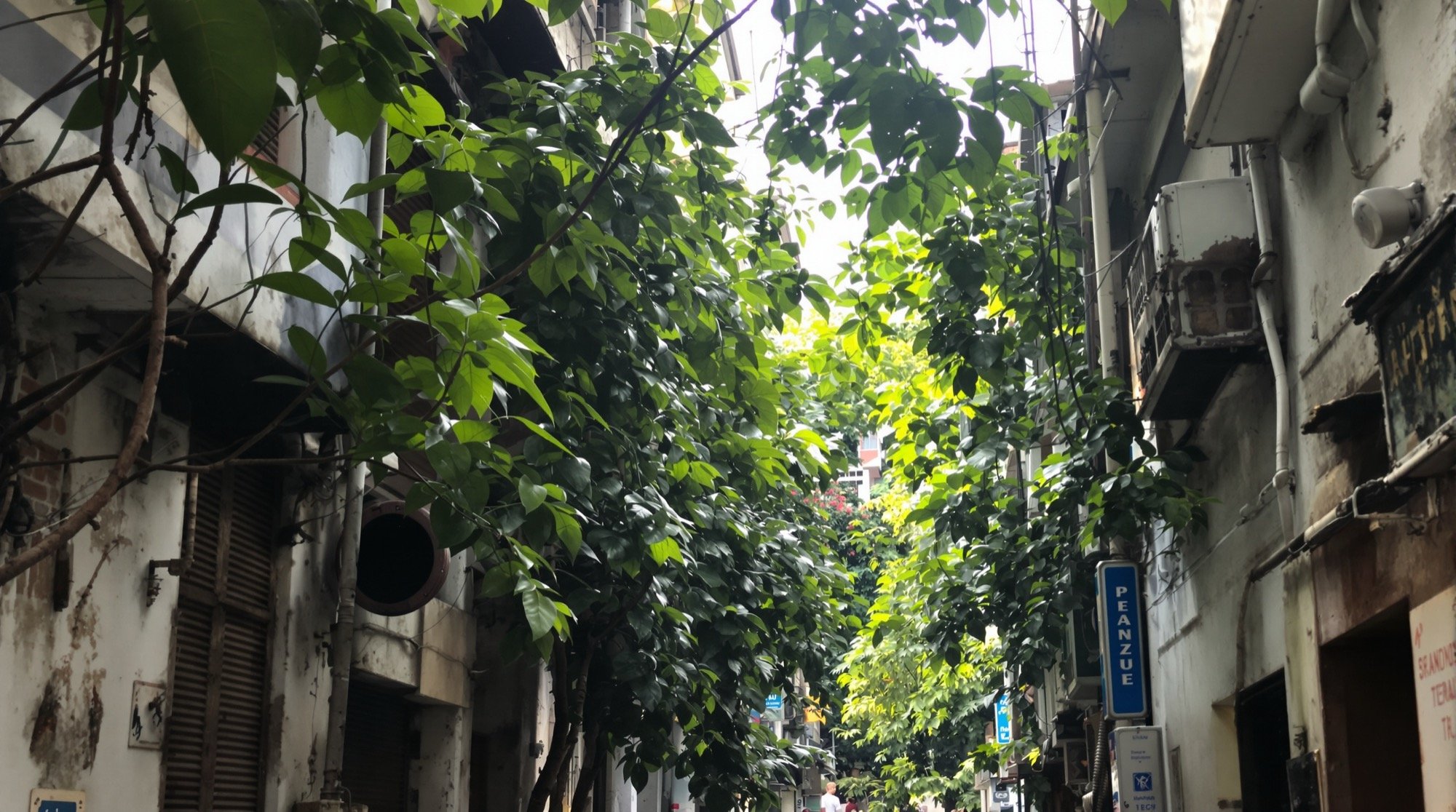
PhotoA street with overlay arrows marking overlap, size diminution, and convergence.
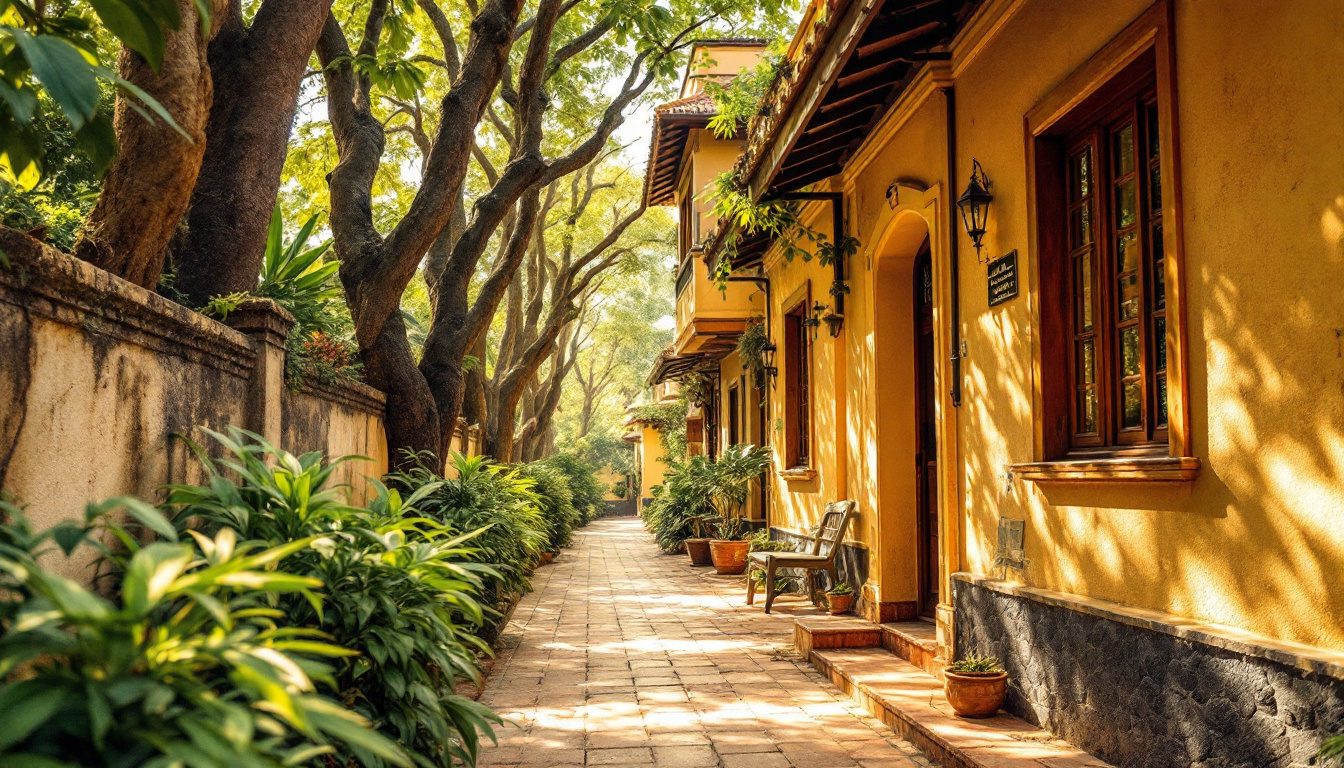
ReferenceA lane receding into depth — read the cues.
Interactive · stack the cues
Depth is assembled from cues
Turn each cue on or off and watch the flat row of blocks gain (or lose) depth. The more cues agree, the more convincing the space.
Cues agreeing — the blocks recede.
Key concepts
Depth is an illusion assembled from cues; the more cues agree, the stronger the space.
Atmospheric perspective: contrast and detail fade with distance.
The picture plane as a window: framing decisions shape spatial drama.
Layering a scene: foreground anchors, middle-ground subject, background context.
In-class activities & exercises
Cue isolation drills (40 min)Six thumbnail sketches of the same corridor, each exaggerating a single depth cue.
Interior study (50 min)The studio or library interior, composed with deliberate fore/middle/background layers.
Street sketch on location (60 min)A nearby lane, applying at least four cues consciously and listing them in the margin.
Group review (30 min)Peers guess which cues each drawing relies on.
Worked example sketches
How the technique looks in practice — loose, hand-drawn examples. Scroll to watch each one draw in; click to zoom.
DiagramA neighbourhood lane sketched with five depth cues working together.
DiagramA library interior layered into foreground, middle and background.
DiagramA courtyard view — atmospheric fade softening the far wall.
DiagramA railway platform receding to a single vanishing point.
Homework / studio assignment
One street scene from your neighbourhood at A4, with a margin note identifying every depth cue used.
Assessment
Rubric on spatial conviction, number and correctness of cues, and compositional layering. End-of-module portfolio check: Lessons 3–6 sheets reviewed together.
A
The author
Amogh N P
Architect, interior designer, and creative polymath. Studio Matrx began in his notebooks — his vision of design made honest, useful, and open to everyone. Its Academy is written and taught in his memory, and free, forever.