
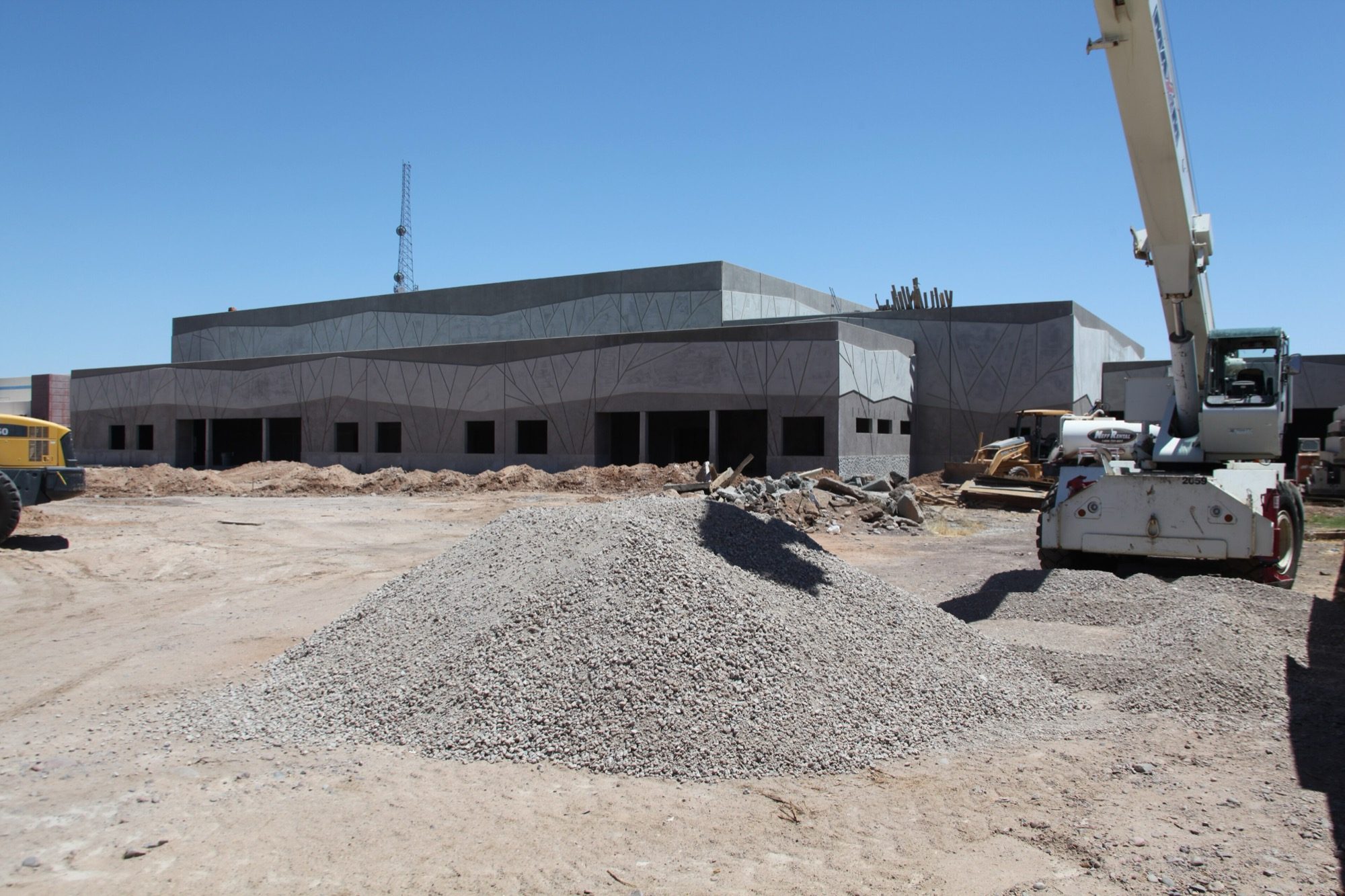
Introduction to Structures
The great structural systems — and how a building carries itself to the ground.
Before a building is beautiful it must stand up. A structure has three jobs: to carry its loads safely (strength), without sagging or swaying too much (stiffness), and without tipping or sliding (stability). This unit introduces the great systems that do this work — and the one rule they all obey: a continuous load path to the ground.
Learning objectives
By the end of this lesson, you will be able to — mapped to the course outcomes for Concept of Building Structures:
Explain what a structure must do — carry load safely, stiffly and stably to the ground.
Distinguish load-bearing, framed (RCC), and steel-framed structures.
Trace the load path through each system and see why it must stay continuous.
Match a structural system to a building's height, span and context.
The structural systems
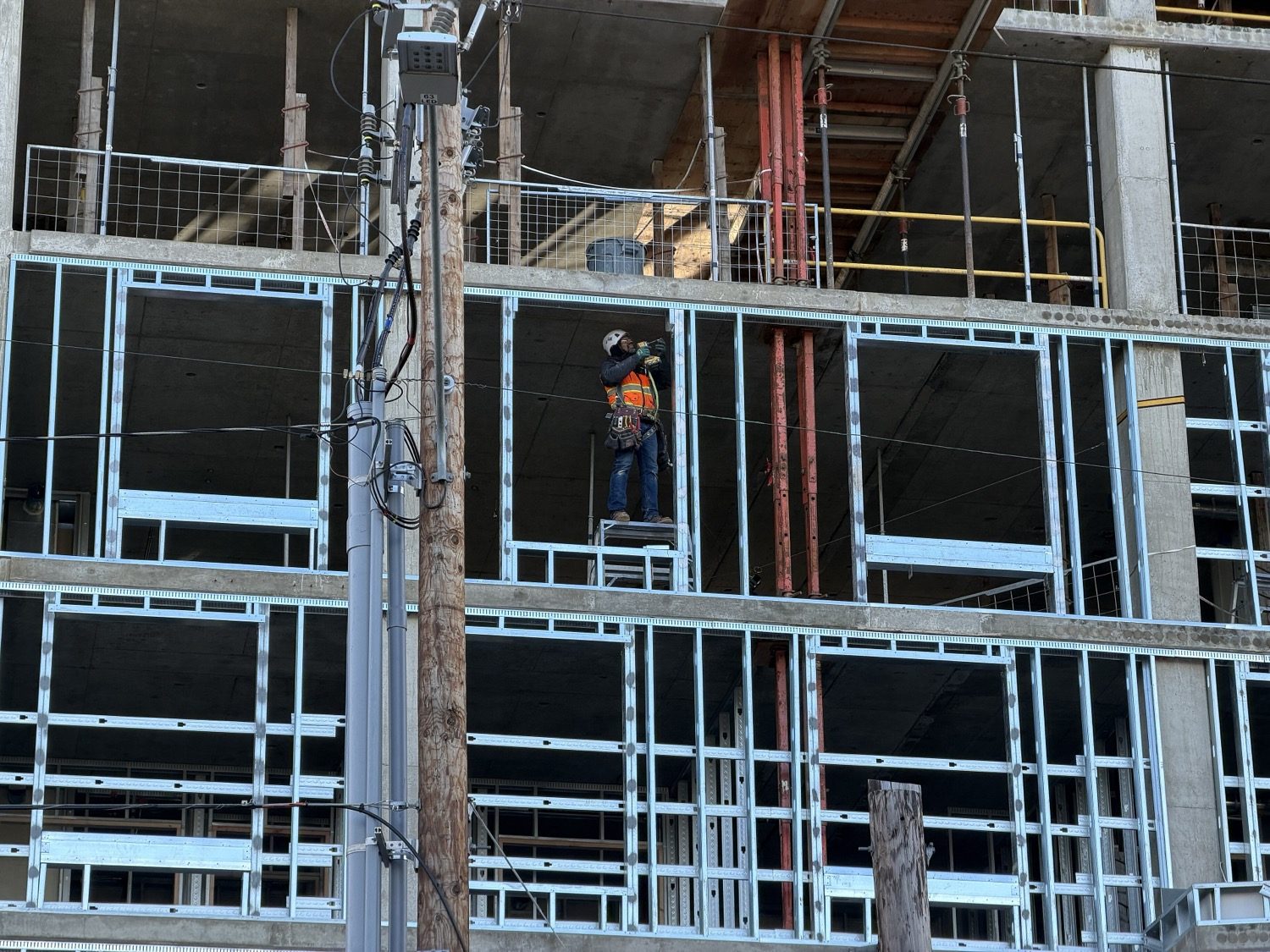
An architect should know four families: load-bearing masonry (walls carry the load), the framed RCC structure (a column-and-beam skeleton does, with infill walls), the steel frame (light, fast, tall), and long-span systems (trusses, space frames, shells) for column-free halls. Pick one.
The load path
Whatever the system, load must travel an unbroken path: from where it lands, through the structure, into the foundation, and finally the soil — load → slab → beam → column → footing → soil. Break the path anywhere and the building fails.[6]
Load-bearing vs framed
| Aspect | Load-bearing | Framed (RCC / steel) |
|---|---|---|
| What carries load | the walls | columns & beams (frame) |
| Walls | structural, thick | infill, thin & constant |
| Economical height | up to ~3 storeys | multi-storey / high-rise |
| Planning freedom | low — walls fixed | high — open, flexible plans |
| Governing IS code | IS 1905 (masonry) | IS 456 (RCC) / IS 800 (steel) |
Study task
Pick a building you know. Sketch it and label its structural system, then draw arrows tracing the load path from roof to soil. In two lines, say why that system suits the building's height and use.
Self-assessment
1. In a framed (RCC) structure, what carries the building's load to the foundation?
2. The load path in any system must be —
3. Which system is most appropriate for a column-free 100 m exhibition hall?
Recap
References & further reading
- [1]B.C. Punmia, Ashok K. Jain & Arun K. Jain, Comprehensive RCC Designs. New Delhi: Laxmi Publications.
- [2]IS 456:2000 — Plain and Reinforced Concrete — Code of Practice. Bureau of Indian Standards. https://law.resource.org/pub/in/bis/S03/is.456.2000.pdf
- [3]IS 800:2007 — General Construction in Steel — Code of Practice. Bureau of Indian Standards. https://archive.org/details/gov.in.is.800.2007
- [4]IS 1905:1987 — Code of Practice for Structural Use of Unreinforced Masonry. BIS.
- [5]S. Ramamrutham, Theory of Structures. New Delhi: Dhanpat Rai & Sons.
- [6]Mario Salvadori, Why Buildings Stand Up: The Strength of Architecture. New York: W.W. Norton.
Further reading
- Mario Salvadori, Why Buildings Stand Up — the classic introduction for architects.
- B.C. Punmia, Strength of Materials and Theory of Structures (Vol. I).
- Angus J. Macdonald, Structure and Architecture. Routledge.
Sources gathered and fact-checked June 2026. Published values vary by source, sample and method — treat as indicative and confirm against the cited standard before structural use.
The author
Amogh N P
Architect, interior designer, and creative polymath. Studio Matrx began in his notebooks — his vision of design made honest, useful, and open to everyone. Its Academy is written and taught in his memory, and free, forever.
More about Amogh →