
Drainage & Sanitation
Taking the water back down — and keeping the smell out.
What goes up must come down, and in a tall building the falling waste creates pressures of its own that can suck a toilet's water seal dry and let sewer gas into the rooms. Learn the drainage systems and why tall stacks must be vented — then the sustainable layer that large developments now require: on-site treatment, greywater reuse and rainwater harvesting.
Learning objectives
By the end of this lesson, you will be able to — mapped to the course outcomes for Building Services for Special Buildings:
Compare the one-pipe, two-pipe and single-stack drainage systems.
Explain venting and anti-siphonage and why tall stacks need them.
Apply on-site sewage treatment and greywater reuse.
Apply rainwater harvesting and solid-waste handling.
Drainage & venting
Drainage runs in stacks (two-pipe, one-pipe, single-stack), and tall stacks must be vented so falling waste cannot siphon the trap seals.[4]
One pipe, two, or a stack
Drainage is carried in stacks, arranged three ways. The TWO-PIPE system runs SOIL (WC) and WASTE (basin, sink, bath) in separate stacks, each vented — the safest and most pipework. The ONE-PIPE system combines soil and waste into one stack WITH a separate anti-siphonage vent. The SINGLE-STACK system combines them WITHOUT a dedicated vent, relying on careful sizing — the common high-rise compromise (often partially ventilated).[4]
Treat, recycle, harvest
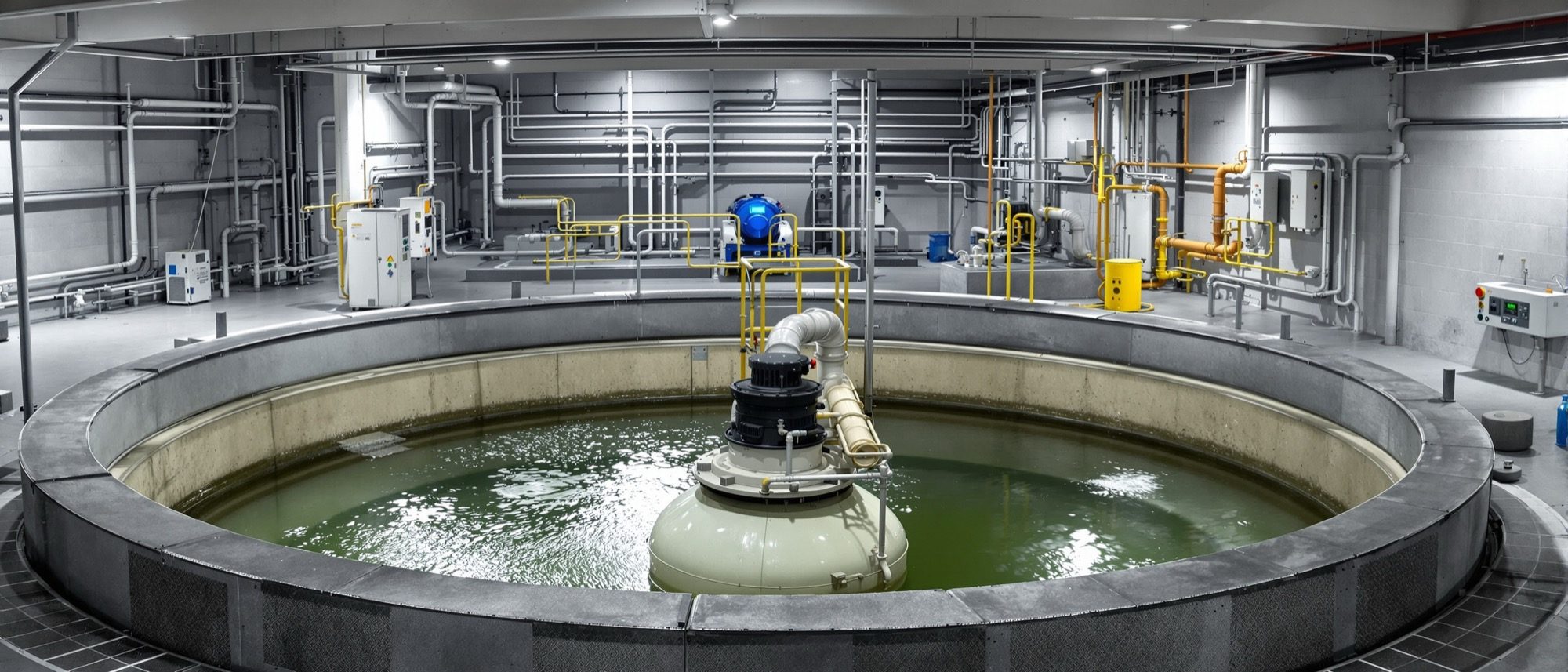
Large developments treat sewage on site, recycle greywater and harvest rainwater — turning supply and drainage into one closed loop.[1]
Treat and reuse
Large developments treat and reuse water on site. A SEWAGE TREATMENT PLANT (STP) — mandatory above state-set thresholds — treats the building's sewage so the effluent can be REUSED for flushing and landscape. GREYWATER (from basins, baths and laundry) is recycled separately to flushing or irrigation, cutting fresh-water demand substantially. Solid waste is handled by REFUSE CHUTES and segregated waste rooms in tall residential towers.[1]
At a glance
| Aspect | One | The other |
|---|---|---|
| Pipework | Two-pipe: separate soil & waste (safest) | Single-stack: combined, minimal (compromise) |
| Venting | One-pipe: combined + anti-siphon vent | Single-stack: relies on careful sizing |
| The danger | Falling waste siphons the trap seal | Venting equalises pressure, keeps the seal |
| Reuse | STP: treats sewage for flush/landscape | Greywater: recycled to flushing/irrigation |
| Rainwater | Drainage: carries runoff away | Harvesting: catches it (mandatory, large plots) |
Key terms
Separate soil and waste stacks, each vented — safest, most pipework.
Soil and waste combined in one stack with a separate anti-siphonage vent.
Soil and waste in one stack without a dedicated vent — the high-rise compromise.
The ~50 mm of water in a fixture trap that blocks sewer gas from entering.
Vent pipes that equalise stack pressure so trap seals are not siphoned out.
On-site plant treating a development's sewage so effluent can be reused.
Water from basins, baths and laundry, recycled to flushing or irrigation.
Catching roof/surface runoff to recharge groundwater or reuse — mandatory for large plots.
Studio task
For a residential tower, choose a drainage system and show its soil, waste and vent stacks in a typical-floor plan — then add the STP, greywater line and rainwater-harvesting tank that close the water loop.
Self-assessment
1. Tall drainage stacks must be vented because falling waste —
2. The two-pipe drainage system —
3. For large Indian developments, rainwater harvesting is —
Recap
References & further reading
- [1]CPHEEO — Manual on Sewerage and Sewage Treatment. MoHUA, Government of India.
- [4]National Building Code of India 2016, Part 9 — Plumbing Services (drainage, venting). BIS.
Further reading
- S. C. Rangwala, Water Supply and Sanitary Engineering. Charotar.
- CPHEEO Manual on Sewerage and Sewage Treatment. MoHUA.
- NBC 2016 Part 9 — Plumbing Services. BIS.
Sources gathered and fact-checked June 2026. Published values vary by source, sample and method — treat as indicative and confirm against the cited standard before structural use.
The author
Amogh N P
Architect, interior designer, and creative polymath. Studio Matrx began in his notebooks — his vision of design made honest, useful, and open to everyone. Its Academy is written and taught in his memory, and free, forever.
More about Amogh →