
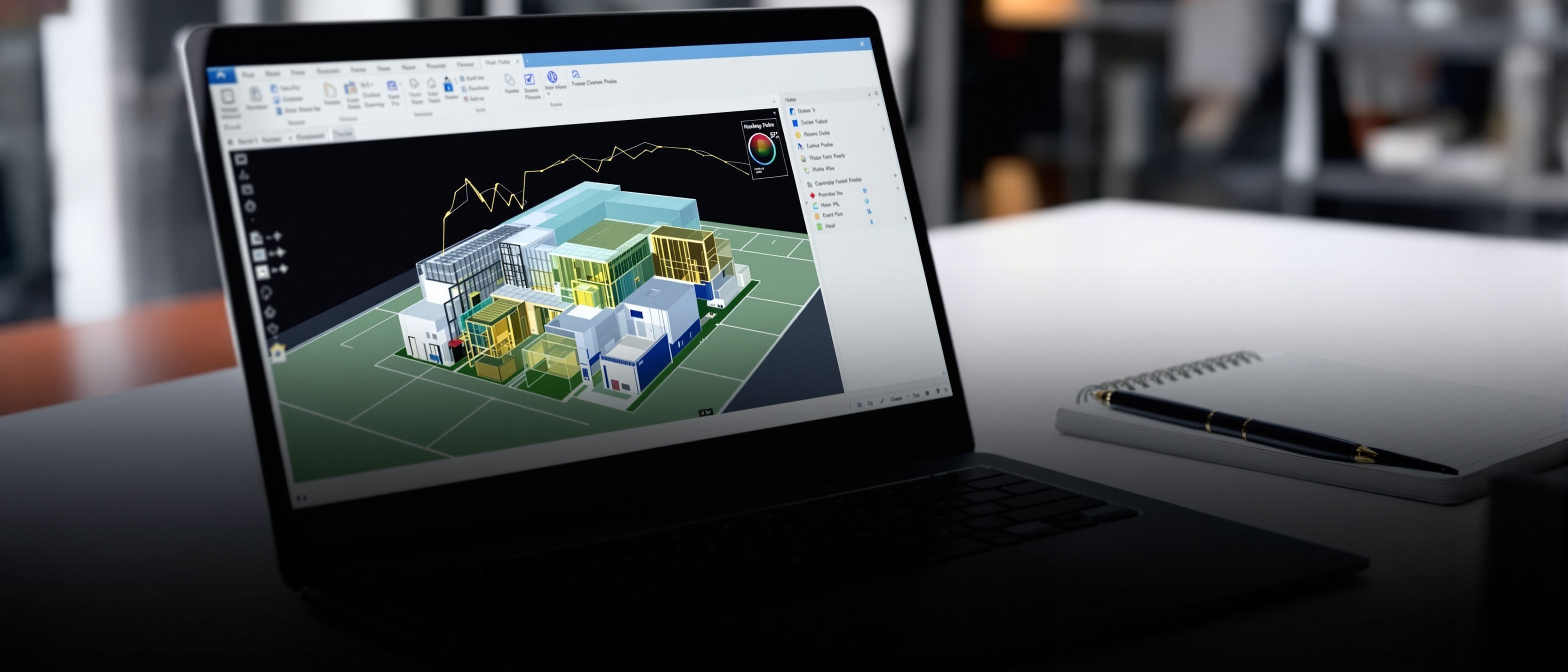
Performance & Data Files
The weather file that drives every simulation.
A simulation is only as good as the weather you feed it. Learn how performance analysis grows from a BIM model; the weather data files every simulation needs — the EPW file, the Typical Meteorological Year (TMY) it is built from, and IMD data for Indian sites; and the pipeline from a model plus a weather file, through an analysis engine, to a result. Get the weather file right, and everything downstream becomes possible.
Learning objectives
By the end of this lesson, you will be able to — mapped to the course outcomes for Building Performance Analysis:
Explain building performance analysis and how it grows from a BIM model.
Describe the EPW, TMY and IMD weather data files.
Trace the simulation pipeline from model and weather file to result.
Explain why the weather file is the foundation of every simulation.
Analysis & the weather file
Performance analysis simulates a design's behaviour and grows from a BIM model; every simulation begins with a weather file (EPW), built from a Typical Meteorological Year — and the file must match the site's climate.[1, 2]
Simulate, don't guess
BUILDING PERFORMANCE ANALYSIS asks how a design will actually behave — its daylight, energy, comfort and airflow — by SIMULATING it before it is built, rather than guessing. It grows naturally out of a BUILDING INFORMATION MODEL: the geometry, orientation, materials and openings already in the model become the inputs to an analysis, so the same model can be OPTIMISED and its performance VISUALISED. MISCONCEPTION→correct: 'simulation is for engineers, after design' — early simulation is for the ARCHITECT, because the cheap, high-impact decisions (form, orientation, glazing) are made early.[1]
The simulation pipeline
Every analysis follows the same pipeline — model + weather + assumptions → engine → results → design change; the engine is rigorous, but the inputs are where error enters.[1, 3]
Model + weather → result
Every analysis follows the same PIPELINE: a MODEL (geometry, materials, openings, often from BIM) + a WEATHER FILE + assumptions (schedules, loads, system) → an ANALYSIS ENGINE (which solves the physics) → RESULTS (illuminance, energy use, airflow) → interpretation and a design change. Understanding the pipeline tells you where error enters — a wrong weather file, a careless material, an unrealistic schedule — and where the leverage is. The engine is reliable; the inputs are where judgment lives.[1, 3]
At a glance
| Aspect | Detail | Note |
|---|---|---|
| Approach | Guess the performance | Simulate it (analysis) |
| Weather file | EPW (8,760 hours) | Built from a TMY |
| Indian data | IMD + international TMY | Match the site's climate |
| Pipeline | Model + weather → engine | → results → design change |
| Reliability | Engine: rigorous | Inputs: where error enters |
Key terms
Simulating a design's daylight, energy, comfort and airflow before it is built.
EnergyPlus Weather — 8,760 hours of climate data for one location.
Typical Meteorological Year — a synthetic 'typical' year from many years of records.
India Meteorological Department — the source of Indian weather data.
Model + weather + assumptions → engine → results → design change.
An engine computes precise nonsense from bad inputs — precision ≠ accuracy.
Studio task
Find the EPW weather file for your city (or the nearest one) and note what it contains and where the data comes from. Then sketch the simulation pipeline for a daylight study of a classroom, labelling each input — and write one sentence on what would go wrong if you used a weather file from a different climate zone.
Self-assessment
1. An EPW weather file contains —
2. A Typical Meteorological Year (TMY) is —
3. 'Garbage in, garbage out' in simulation means —
Recap
References & further reading
- [1]Autodesk / building-performance-analysis guides — BPA from BIM, design optimisation and visualisation.
- [2]EnergyPlus weather-data documentation + the EPW/TMY format; IMD / ISHRAE Indian weather data.
- [3]ASHRAE / IBPSA building-simulation guidance — the simulation workflow and input reliability.
Further reading
- Hensen & Lamberts (eds.) — Building Performance Simulation for Design and Operation.
- EnergyPlus Documentation — Auxiliary Programs / Weather (EPW).
- Autodesk — Building Performance Analysis material.
Sources gathered and fact-checked June 2026. Published values vary by source, sample and method — treat as indicative and confirm against the cited standard before structural use.
The author
Amogh N P
Architect, interior designer, and creative polymath. Studio Matrx began in his notebooks — his vision of design made honest, useful, and open to everyone. Its Academy is written and taught in his memory, and free, forever.
More about Amogh →