
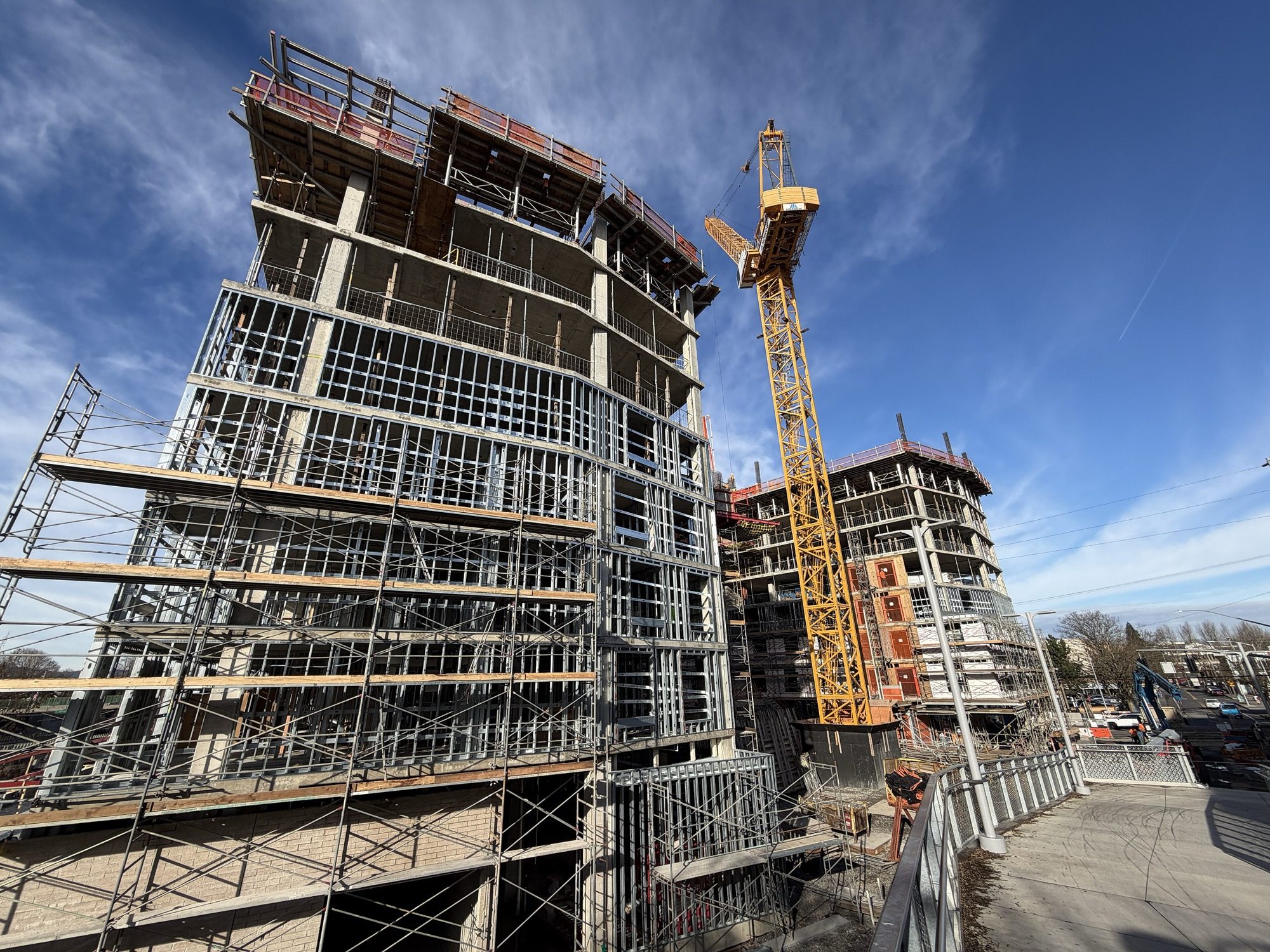
Steel Columns & Joints
The stanchion, its base, and how beams meet it.
A steel column — a stanchion — carries the building down to the foundation. This unit covers the column types, the bases that pass the load to concrete, the joints where beams meet columns, and the pre-engineered building, where factory-made tapered frames bolt together into a long-span shed.
Learning objectives
By the end of this lesson, you will be able to — mapped to the course outcomes for Building Materials & Construction III:
Distinguish single, built-up, box and tube steel columns.
Detail a slab base and a gusseted base with anchor bolts.
Distinguish simple (shear) from moment (rigid) beam-to-column joints.
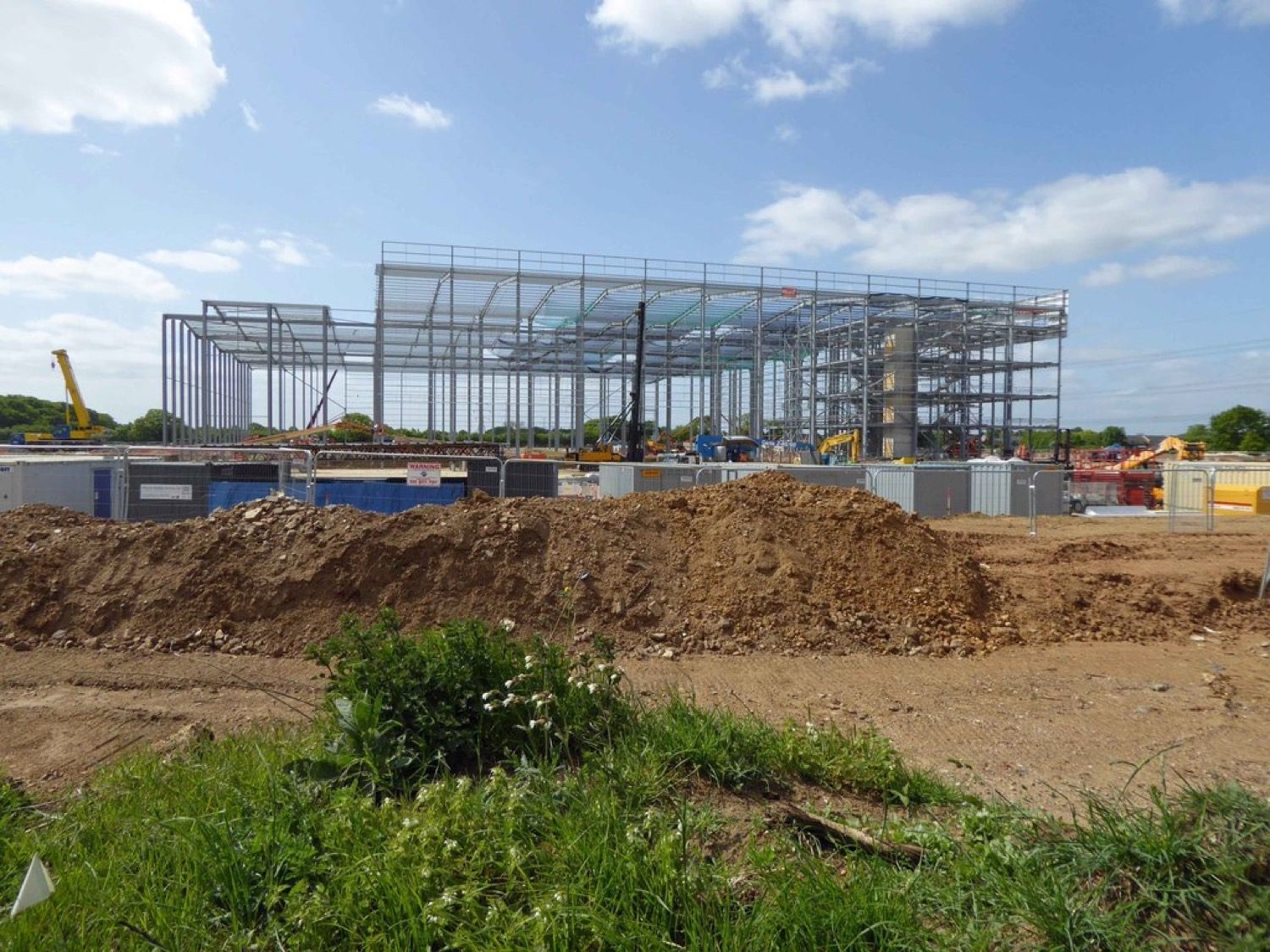
Explain why steel suits the pre-engineered building.
Columns, bases, joints & the PEB
Columns may be single rolled, built-up (laced or battened), box or tube. They land on a slab or gusseted base fixed by anchor bolts. Beams meet them by simple (shear) or moment (rigid) joints; and the PEB exploits steel's strength-to-weight for long, fast, efficient spans.[1, 2]
Single to built-up
A steel column may be a single rolled section (ISHB/ISWB) for light–medium loads; a built-up column of two channels or angles laced (diagonal flats) or battened (horizontal plates) for larger loads; a welded box; or a hollow tube. Lacing and battening tie the parts to act as one.[1]
Bases & joints
| Aspect | One | The other |
|---|---|---|
| Base — load | Slab base: light axial load | Gusseted base: heavy load &/or moment |
| Built-up column tie | Lacing: diagonal flats (truss action) | Battening: horizontal plates (frame action) |
| Joint type | Simple: shear only, rotates | Moment: shear + bending, rigid |
| Column form | Single rolled: light–medium | Built-up / box / tube: heavy / both-axis |
| PEB frame | Tapered built-up I-sections | Cold-formed Z/C secondary members |
Key terms
A steel column.
Two members tied by diagonal flats (lacing) or horizontal plates (battening) to act as one.
A single thick base plate for a light axially-loaded column.
A base with gusset plates and angles for heavy loads and/or moment.
Bolts cast in the concrete pedestal that fix the column base against uplift.
Transfers shear only, allowing rotation — the beam acts as simply supported.
Transfers shear and bending — rigid, for continuous-frame action.
Pre-Engineered Building — factory-made tapered bolted steel frames for long-span sheds.
Drafting task
Draw a slab base and a gusseted base for a steel column, showing the base plate, gusset plates/angles and the holding-down bolts into the concrete pedestal. Then say in two lines why a PEB uses tapered built-up frames rather than constant-depth rolled sections.
Self-assessment
1. A gusseted base is chosen over a slab base when the column carries —
2. A simple (shear) beam-to-column connection transfers —
3. A pre-engineered building's primary frames are typically —
Recap
References & further reading
- [1]IS 800:2007 — General Construction in Steel: Code of Practice. Bureau of Indian Standards.
- [2]N. Subramanian, Design of Steel Structures. Oxford University Press.
- [3]S.K. Duggal, Limit State Design of Steel Structures. McGraw-Hill Education.
Further reading
- N. Subramanian, Design of Steel Structures. Oxford University Press.
- S.K. Duggal, Limit State Design of Steel Structures.
- B.C. Punmia, Building Construction. Laxmi Publications.
Sources gathered and fact-checked June 2026. Published values vary by source, sample and method — treat as indicative and confirm against the cited standard before structural use.
The author
Amogh N P
Architect, interior designer, and creative polymath. Studio Matrx began in his notebooks — his vision of design made honest, useful, and open to everyone. Its Academy is written and taught in his memory, and free, forever.
More about Amogh →