
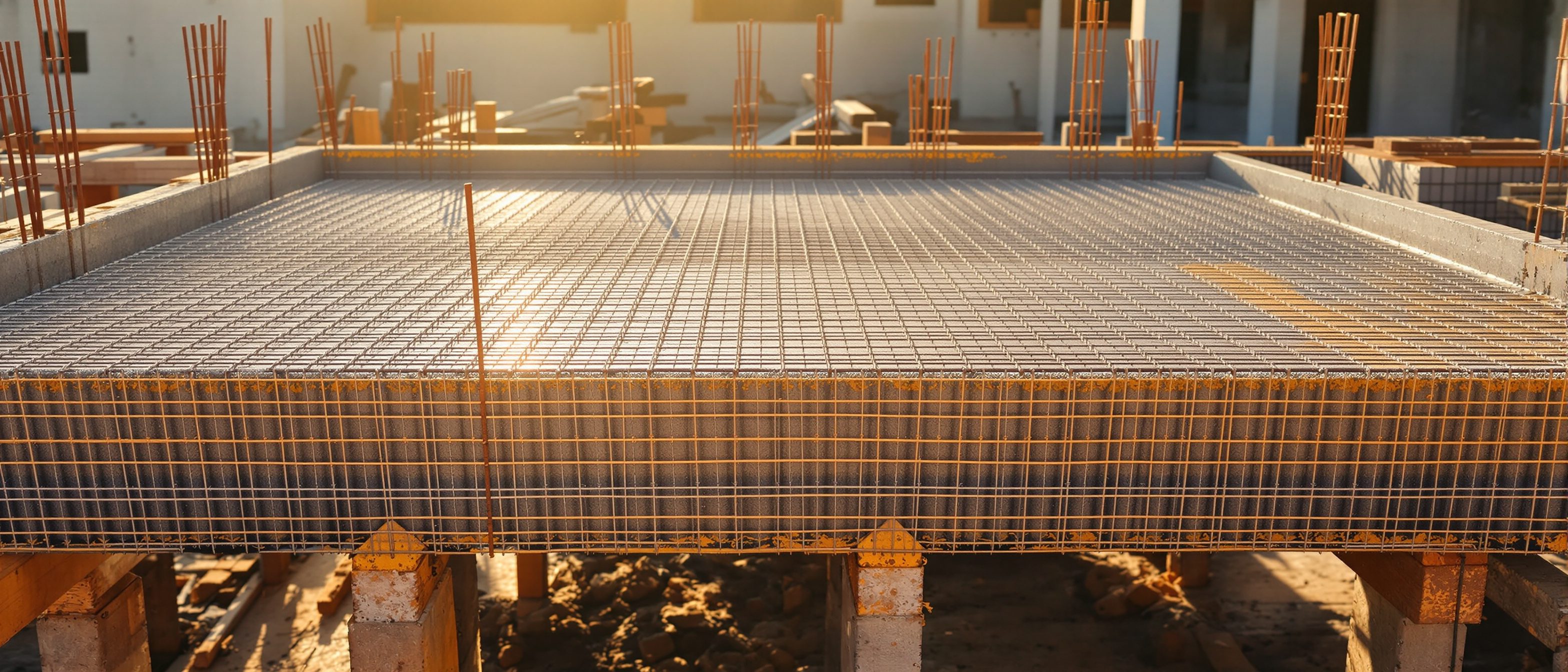
RCC Beams & Slabs
The floors — where tension goes to the bottom.
Beams and slabs make the floors — and the rule that governs them is simple: tension goes to the bottom of a sagging member. This lesson details the beam's bars and stirrups, the difference between singly and doubly reinforced sections, and one-way versus two-way slabs.
Learning objectives
By the end of this lesson you will be able to — mapped to the course outcomes for Building Materials & Construction II:
Explain why a beam's main bars run along the bottom, and what stirrups do.
Distinguish singly and doubly reinforced beams.
Tell a one-way slab from a two-way slab and reinforce each.
Read a beam section and a slab reinforcement layout.
Inside a beam
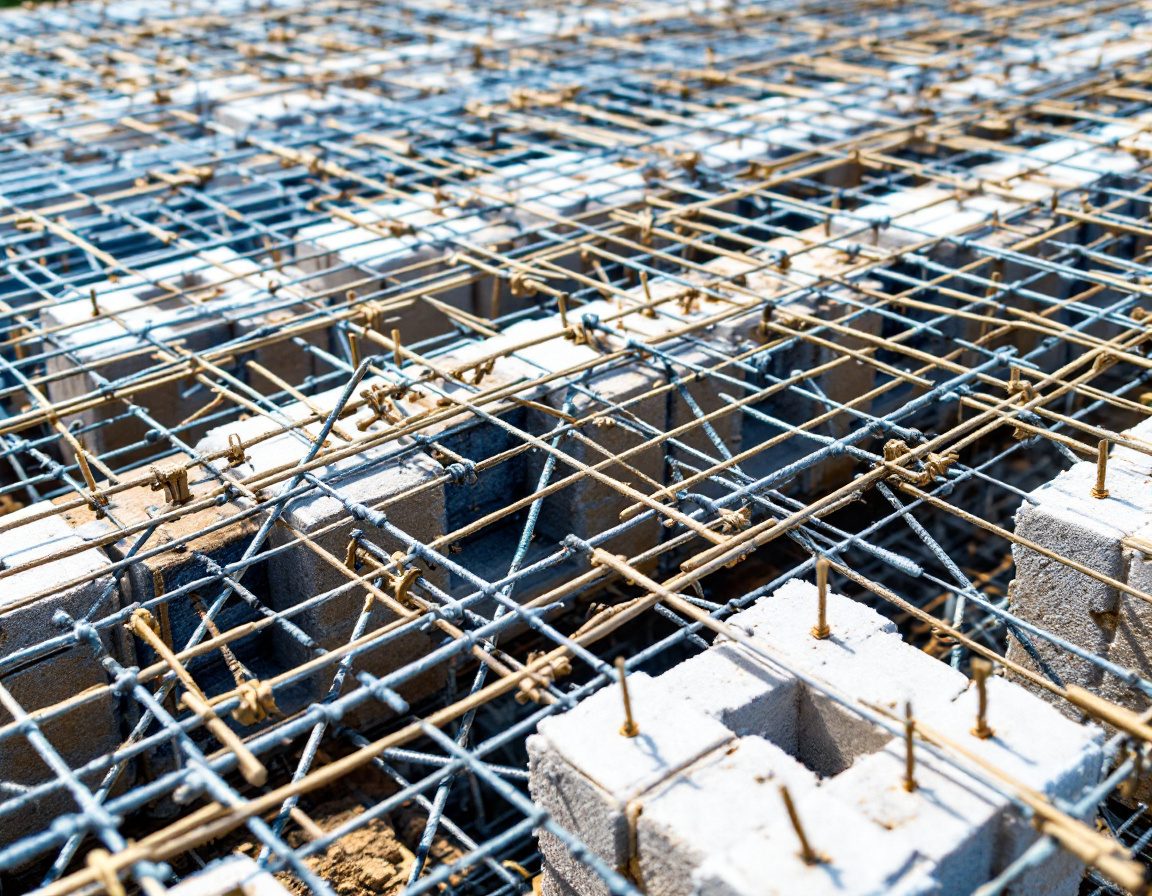
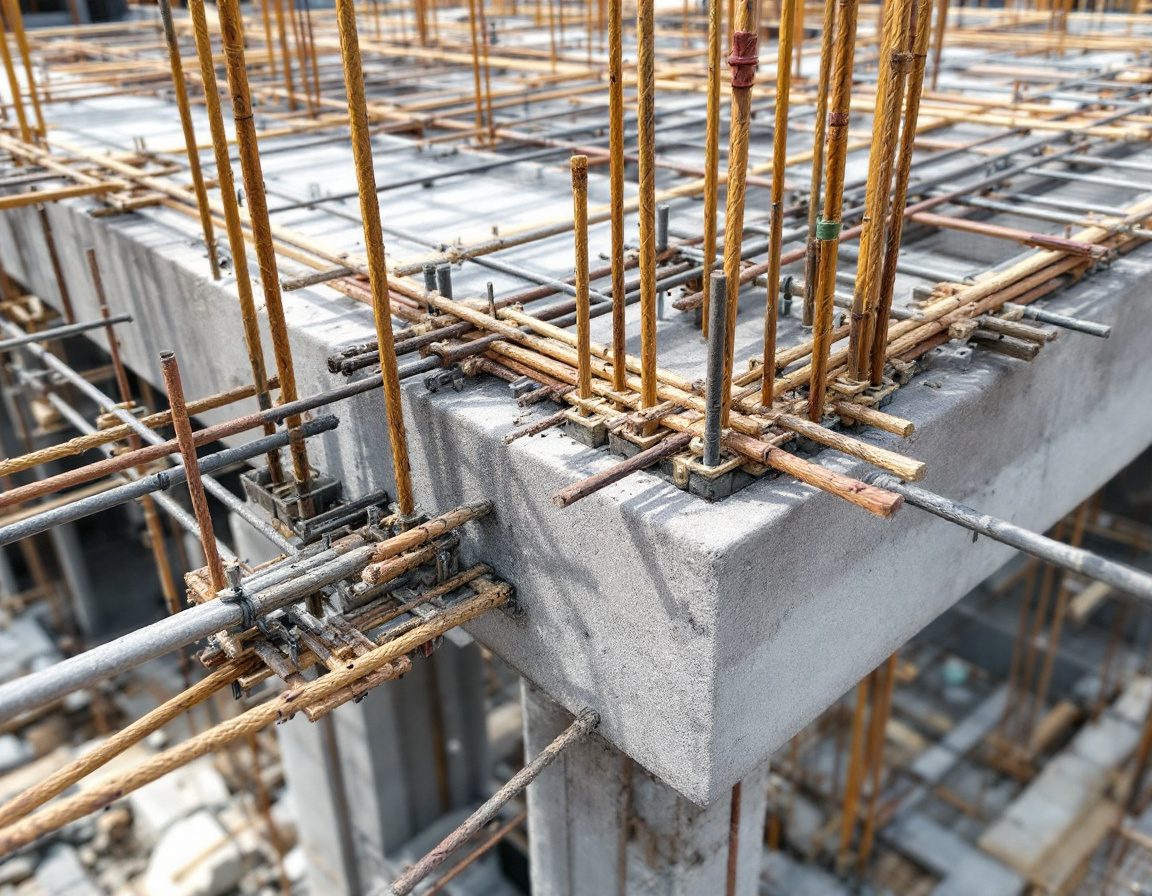
A sagging beam carries its main bars along the bottom; stirrups resist shear and are closer near the supports. Select a topic.[1]
Tension at the bottom
A simply-supported beam SAGS, so it is squeezed on top and pulled apart at the BOTTOM. The main (tension) bars therefore run along the bottom, anchored into the supports. Over a continuous support the beam HOGS, so there the tension — and the main bars — move to the top.[1]
One-way & two-way slabs
A slab's supports and proportions decide which way it bends — and which way its main bars run.[2]
| Aspect | One-way slab | Two-way slab |
|---|---|---|
| Supported on | Two opposite sides | All four sides |
| Span ratio (long ÷ short) | Greater than 2 | 2 or less |
| Bends | One direction | Both directions |
| Main bars | Short span; distribution bars cross | Both directions |
The drawings on site
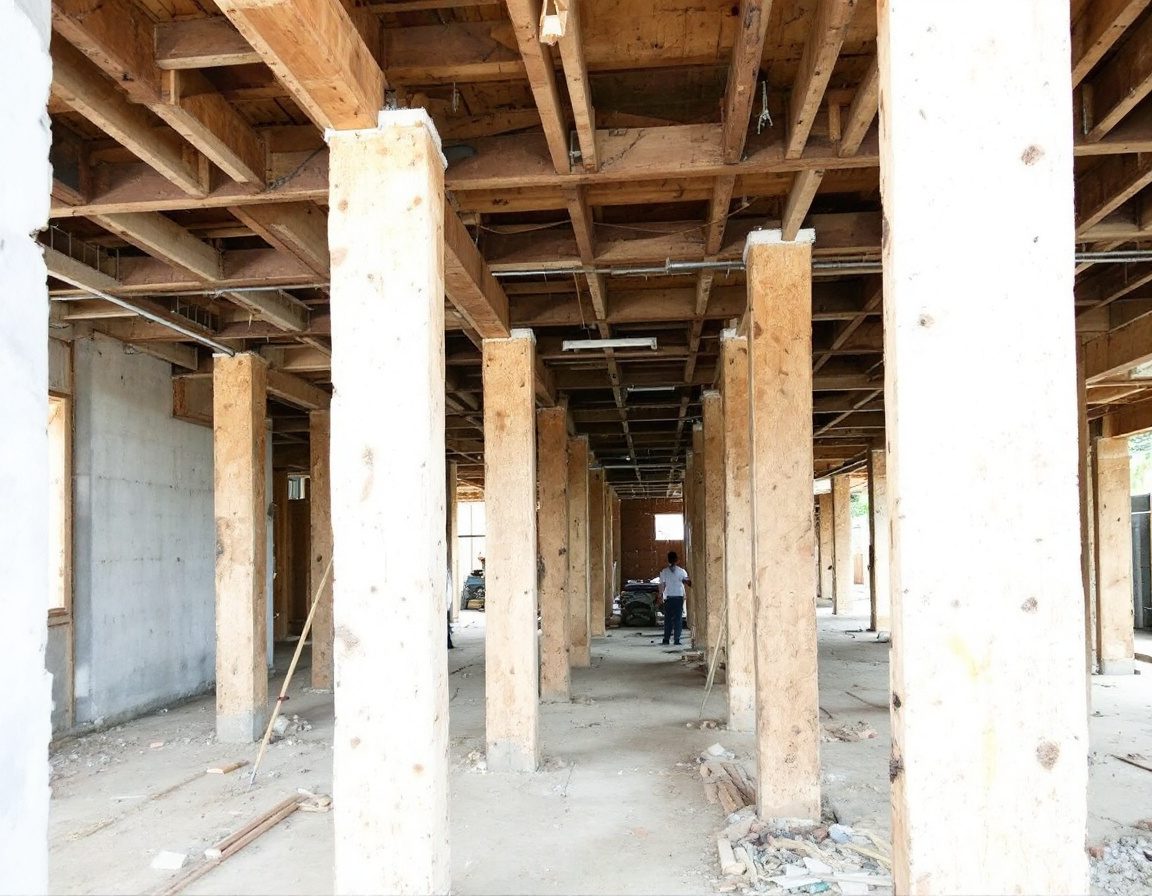
The GA shows which slabs span which way and where the beams are; the detailed beam section shows the bars, stirrups and cover the steel-fixer needs.[3]
Self-assessment
1. In a simply-supported beam, the main tension bars run along the:
2. Stirrups in a beam are spaced closer near the supports because:
3. A slab supported on all four sides with a span ratio of 1.5 is:
Recap
References & further reading
- [1]Beam reinforcement details — main bars, stirrups, bent-up bars, singly vs doubly reinforced. Civil Engineer DK. https://civilengineerdk.com/beam-reinforcement-details/
- [2]One-way vs two-way slab — the span-ratio rule and reinforcement direction (IS 456). Civiconcepts. https://civiconcepts.com/blog/difference-between-one-way-slab-and-two-way-slab
- [3]IS 456:2000 — design and detailing of beams and slabs (min steel, spacing). BIS. https://law.resource.org/pub/in/bis/S03/is.456.2000.pdf
Further reading
- BIS (2000). IS 456: Plain and Reinforced Concrete — Code of Practice. New Delhi: BIS.
- BIS (1987). SP 34: Handbook on Concrete Reinforcement and Detailing. New Delhi: BIS — beam and slab detailing.
- Pillai, S.U. & Menon, D. (2017). Reinforced Concrete Design (3rd ed.). New Delhi: McGraw-Hill Education.
Sources gathered and fact-checked June 2026. Published values vary by source, sample and method — treat as indicative and confirm against the cited standard before structural use.
The author
Amogh N P
Architect, interior designer, and creative polymath. Studio Matrx began in his notebooks — his vision of design made honest, useful, and open to everyone. Its Academy is written and taught in his memory, and free, forever.
More about Amogh →