
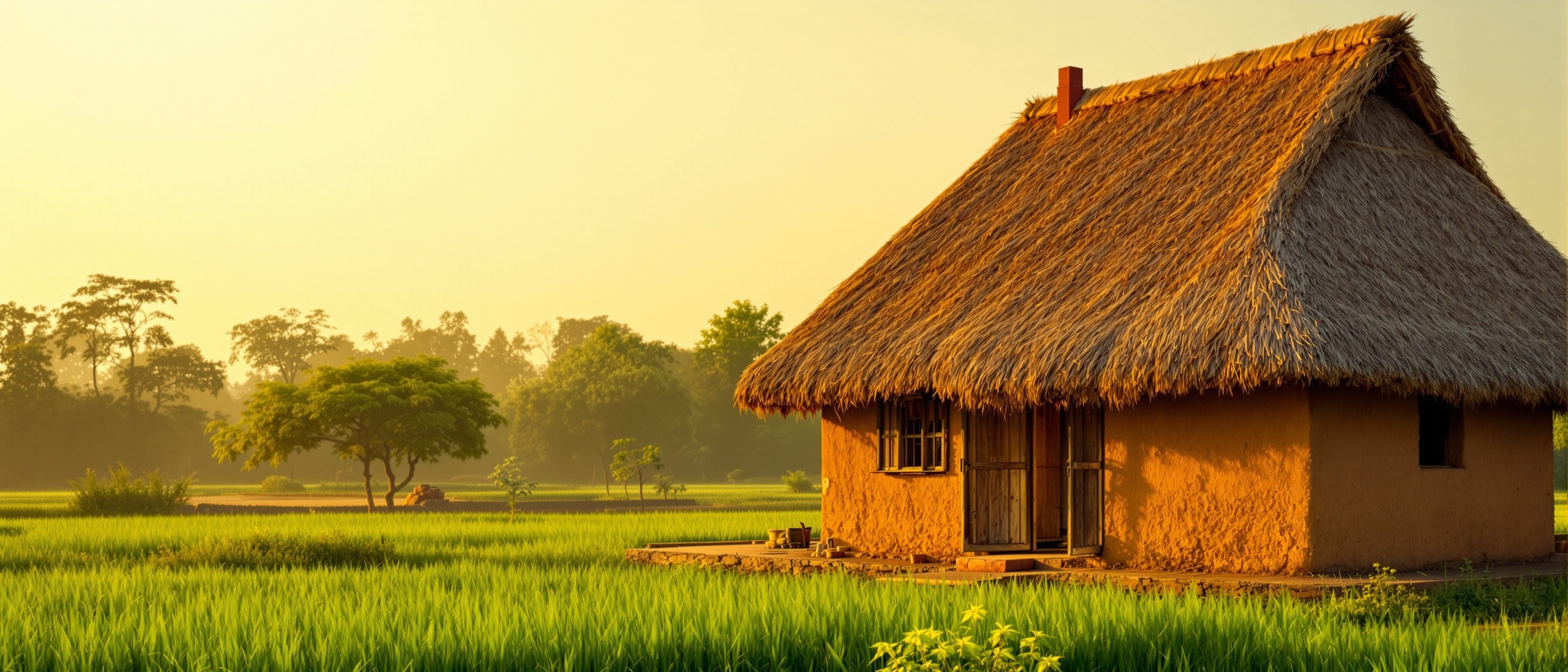
Traditional Rural Materials
Thatch, clay tiles and straw — building with what the land gives.
For most of history, a house was built from whatever the land around it offered — grass, leaf, clay, straw, stone, earth. These rural materials are local, renewable and shaped to the climate. This lesson looks at how India roofs and walls itself traditionally: thatch and the clay tiles that replaced it, and straw — an old material with a surprisingly modern superpower.
Learning objectives
By the end of this lesson, you will be able to — mapped to the course outcomes for Building Materials & Construction I:
Explain why rural builders favour local, renewable, climate-responsive materials.
Describe how a thatch roof sheds rain and why it must be steeply pitched.
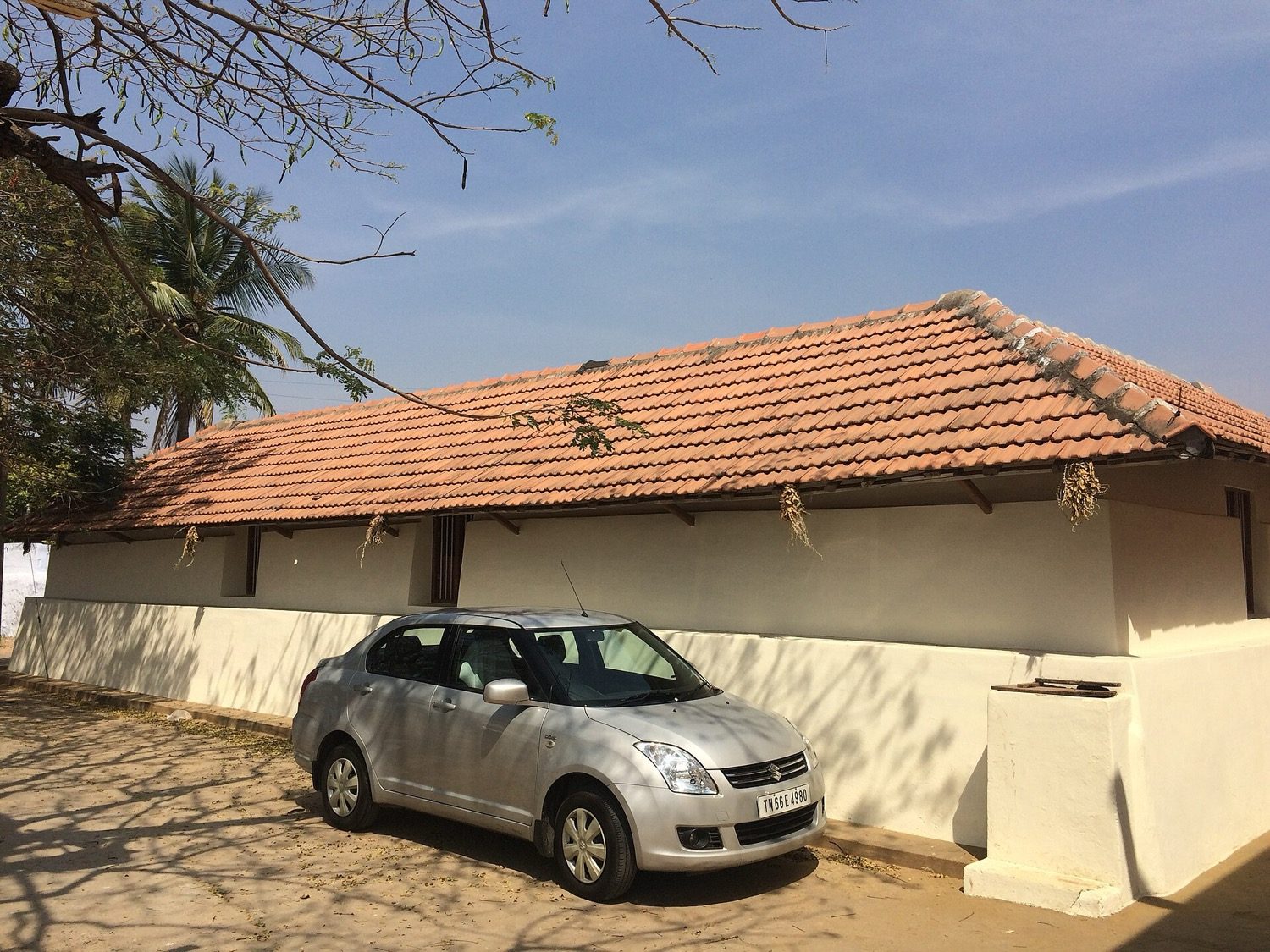
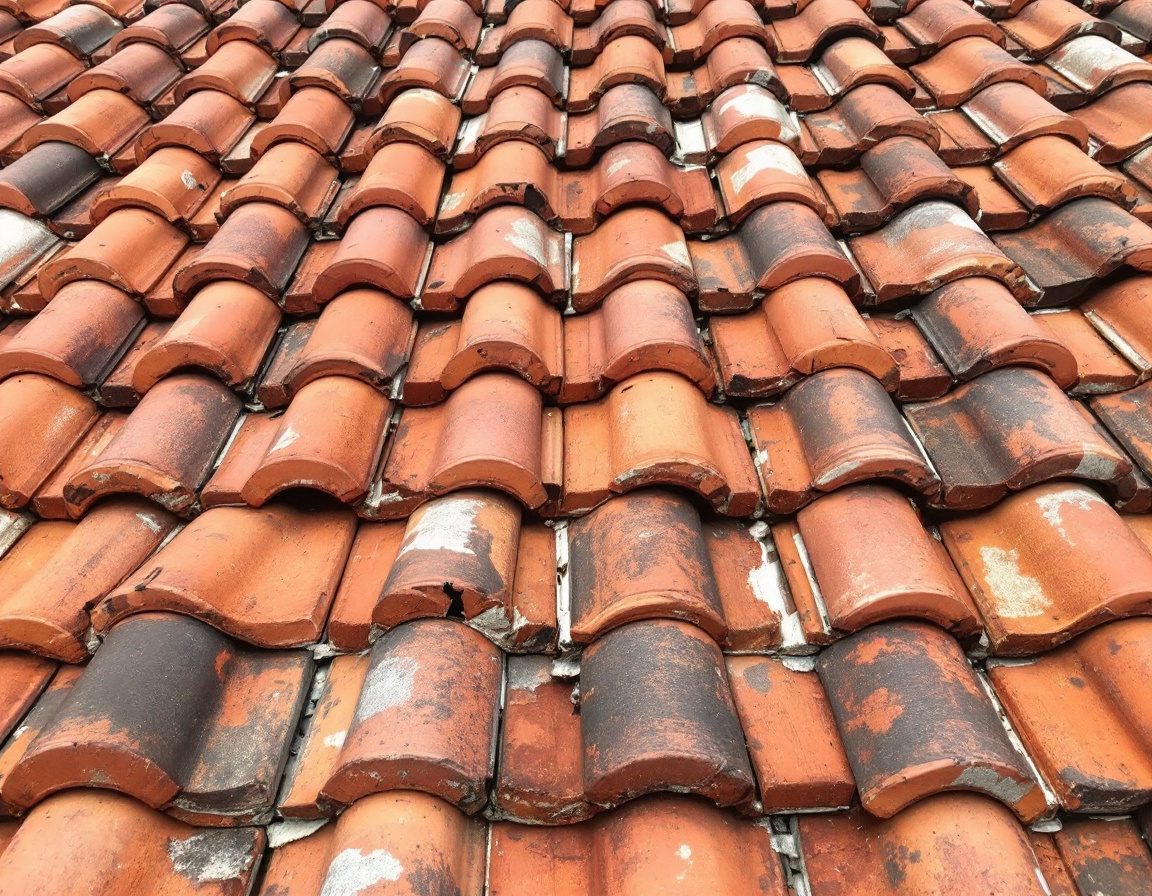
Compare the Mangalore tile and the country pot tile and how each is laid.
Weigh the insulation, fire and moisture behaviour of thatch and straw-bale walls.
Roofing with what grows nearby
Three traditional coverings, from the oldest to the most refined. Select one to study it.
Thatch
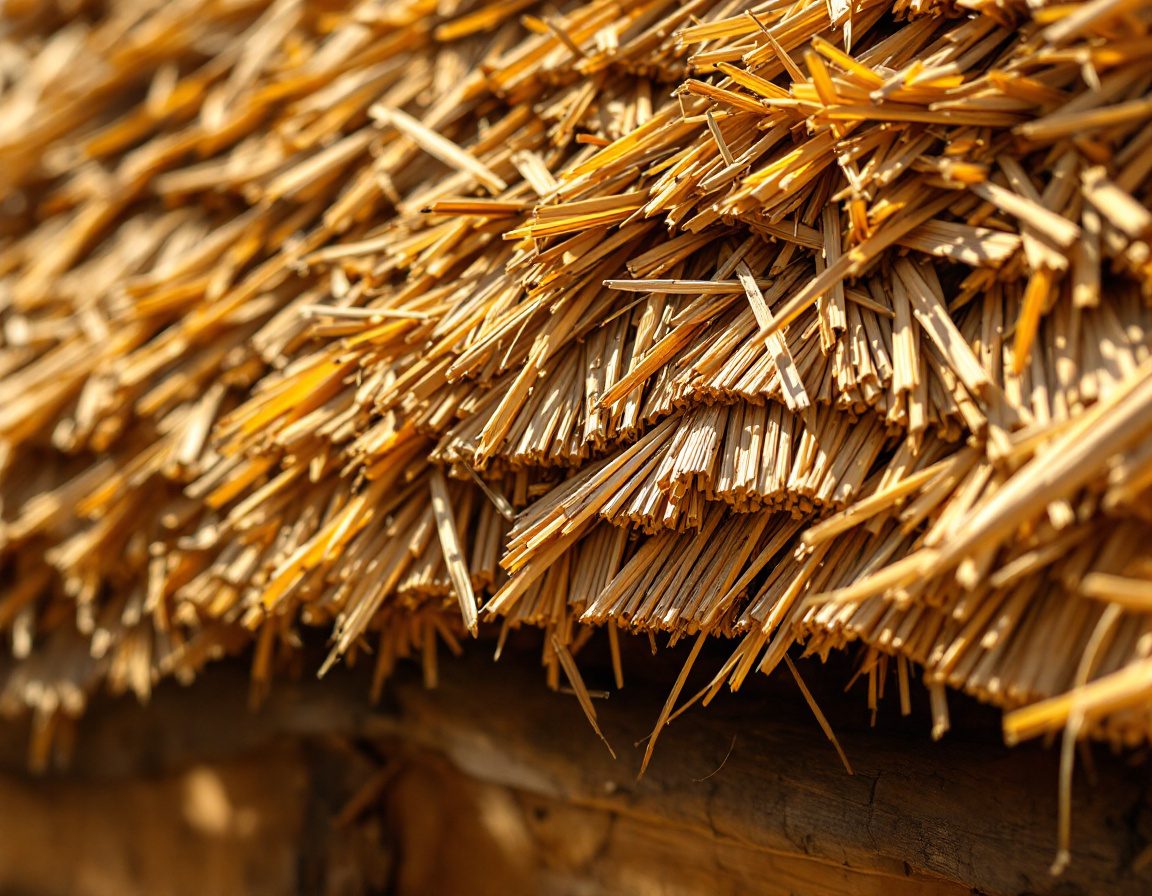
Layered dry vegetation — grass, straw, reed or palm leaf — fixed to battens so water sheds off the surface and drips at the eaves. Needs a steep pitch (≥ 45°) to shed monsoon rain; insulates well but is flammable and needs regular upkeep.[1]
Thatch — and why it must be steep
A thatch roof keeps out rain not by being waterproof but by being steep: water runs off the surface and drips at the eaves before it can soak in. Layered correctly on a sharp pitch it insulates beautifully — but it burns, and it needs upkeep.
| Property | Value | Note |
|---|---|---|
| Pitch | ≥ 45° (steeper in heavy monsoon) | Water repellency depends on fast run-off — too shallow and rain soaks in.[1] |
| Insulation | U ≈ 0.35 W/m²K for ~300 mm reed thatch | Roughly equal to 100 mm of fibreglass — but a UK reed figure; Indian grass thatch performs differently.[1] |
| Lifespan | reed 25–40 yr; Indian grass far shorter | Grass/palm thatch is often re-laid every few years; the ridge sooner still.[5] |
| Weaknesses | fire risk, decay & vermin | Managed by steep pitch, ventilation, dryness and regular re-ridging.[1] |
Straw-bale walls
Straw-bale walls are built either load-bearing ('Nebraska' style, the bales carrying the roof) or as infill within a timber frame. Bales are stacked like masonry, pinned, and rendered both faces with breathable lime or earth plaster.
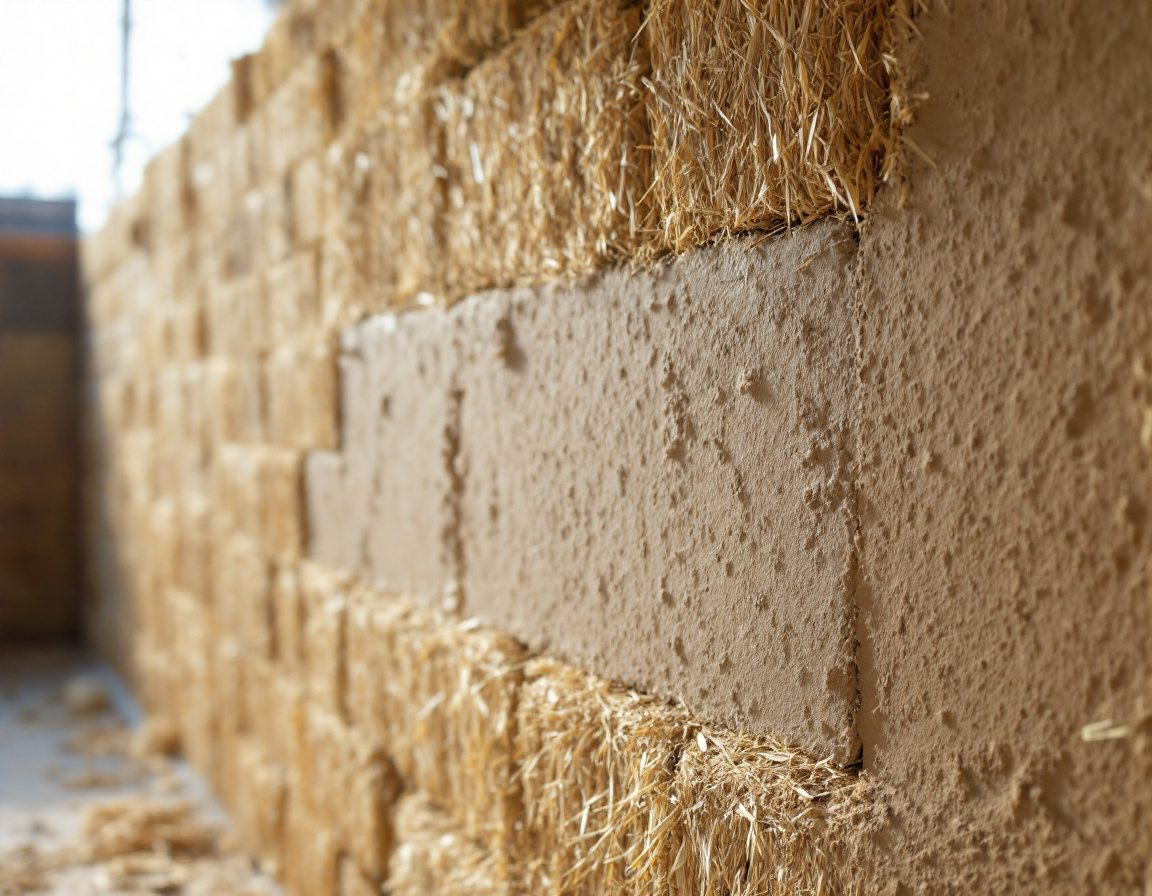
- Thermal insulation: R ≈ 17–55 (US) / U very low — Outstanding but highly variable with density, orientation and moisture — cite as a range.[6]
- Fire: good once plastered — A plastered (compressed, low-oxygen) bale wall has reached a 2-hour fire rating in testing.[6]
- Key risk: moisture > ~20% — Straw rots if it stays damp — needs a base barrier, roof overhangs and breathable render.[6]
Self-assessment
1. Why must a thatch roof be steeply pitched (≥ 45°)?
2. What makes the Mangalore tile better than a plain flat tile?
3. What is the single biggest risk to a straw-bale wall?
Recap
References & further reading
- [1]Thatching — materials, pitch, insulation and durability (overview). Wikipedia / Thatching Advisory Services. https://en.wikipedia.org/wiki/Thatching
- [2]Mangalore tiles — origin and interlocking system. Wikipedia. https://en.wikipedia.org/wiki/Mangalore_tiles
- [3]IS 654:1992 (rev. 2023) — Clay Roofing Tiles, Mangalore Pattern — Specification. BIS. https://law.resource.org/pub/in/bis/S03/is.654.1992.pdf
- [4]IS 13317:1992 — Clay Roofing Country Tiles, Half Round and Flat — Specification. BIS. https://law.resource.org/pub/in/bis/S03/is.13317.1992.pdf
- [5]Thatched-roof lifespan (reed vs grass). New England Metal Roof / trade sources. https://www.newenglandmetalroof.com/how-long-does-a-thatched-roof-last/
- [6]Straw-bale construction — methods, R-value, fire and moisture. Wikipedia; and Su, Y. et al. (2024), Sustainability 16(23):10304. https://doi.org/10.3390/su162310304
Further reading
- Minke, G. (2006). Building with Earth: Design and Technology of a Sustainable Architecture. Basel: Birkhäuser.
- Minke, G. (2016). Building with Bamboo (2nd rev. ed.). Basel: Birkhäuser. (companion rural material)
- IS 2690 (Parts 1 & 2) — Burnt Clay Flat Terracing Tiles — Specification. BIS.
Sources gathered and fact-checked June 2026. Published values vary by source, sample and method — treat as indicative and confirm against the cited standard before structural use.
The author
Amogh N P
Architect, interior designer, and creative polymath. Studio Matrx began in his notebooks — his vision of design made honest, useful, and open to everyone. Its Academy is written and taught in his memory, and free, forever.
More about Amogh →