
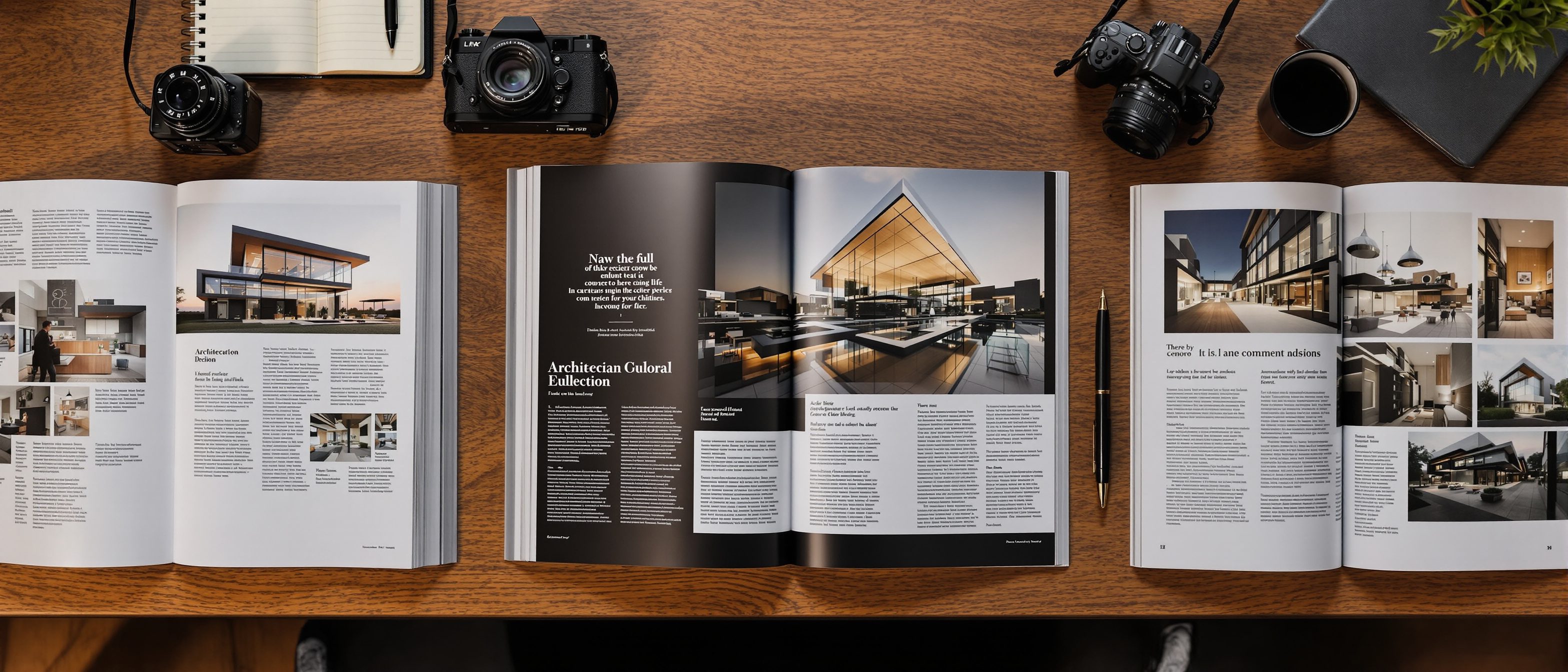
Introduction to Architecture Journalism & Photography
How buildings are told and shown — and the ethics of doing it.
Most people never set foot in the buildings that shape the culture of architecture — they know them through stories and images. This unit introduces the twin crafts of telling and showing architecture: journalism (the writing and reporting that explains buildings to the public) and photography (the images that fix a building in memory). It traces architectural storytelling from the great magazines and the photographs that made buildings famous to today's blogs and Instagram — and sets out the ETHICS that telling other people's work and lives demands.
Learning objectives
By the end of this unit, you will be able to — mapped to the course outcomes for Architecture Journalism & Photography:
Explain the role of journalism and photography in how architecture reaches the public.
Trace the historical and contemporary perspectives on architectural storytelling.
Identify the ethical considerations and responsibilities of architecture journalism and photography.
Critically analyse how a building's story and image shape its public reception.
Told and shown
A building is experienced by a few but known by many through words and images; communication is a design skill, and the channels run from magazines to Instagram.[11, 10]
Architecture beyond the building
A building is a physical thing few people visit, but it lives in culture as a STORY and an IMAGE — the article that explains it, the photograph that fixes it in memory. Architecture JOURNALISM tells (writes, reports, critiques); architecture PHOTOGRAPHY shows. Together they form the public discourse of architecture — how ideas spread, reputations are made, and the public comes to understand (or misunderstand) the built world. The architect who can tell and show their work, and read others' well, has a powerful voice.[11]
The ethics
To write about and photograph others' work is a real power — be truthful, be fair, disclose your conflicts, and remember a photograph is an interpretation, not neutral truth.[7, 4]
Power comes with responsibility
To write about and photograph architecture is to make public judgements about other people's work, money, homes and lives — a real power that demands ETHICS. Journalism ethics (accuracy, fairness, independence, accountability) apply, plus the architect-journalist's own conflicts: writing about a friend's, a firm's, or a rival's building. Award's 'philosophical foundations of global journalism ethics' frames it; the practical rule is simple — be truthful, be fair, and disclose your interests.[7]
At a glance
| Aspect | One | The other |
|---|---|---|
| Journalism vs photography | Journalism: tells (words) | Photography: shows (images) |
| A building is | Experienced by a few | Known by many through stories & images |
| Digital media | Democratic, fast, global | Shallow, crowded — needs depth & judgement |
| Conflict of interest | Hide it | Disclose it — or step aside |
| A photograph is | Myth: neutral truth | Reality: an interpretation, used honestly |
Key terms
Writing, reporting and criticism that explains buildings and cities to the public.
The craft of photographing buildings and spaces — the image that fixes a building in memory.
Telling and showing architecture through words and images, across magazines, media and social platforms.
Accuracy, fairness, independence and accountability — the bedrock of credible reporting.
A connection (friend, firm, client, sponsor) that compromises impartial coverage — disclose or step aside.
Paid content disguised as independent editorial — deceives the reader.
Wrongly attributing a building's authorship — a serious ethical wrong in architecture.
A photograph is shaped by angle, light, crop and processing — not neutral truth.
Studio task
Pick a famous building you have never visited and list everything you know about it — then note where each piece of knowledge came from (an article, a photograph, a post). Reflect on how its story and image shaped your impression. Then write a short ethics checklist you would follow before publishing a review of a building designed by a firm you hope to work for.
Self-assessment
1. In the culture of architecture, most people experience a famous building primarily through —
2. When an architect writes about a building by their own firm or a client, the ethical response is to —
3. An architectural photograph should be understood as —
Recap
References & further reading
- [2]Fuller, David & Waugh, Patricia (eds.) — The Arts and Sciences of Criticism (Oxford University Press, 1999).
- [3]Foust, James — Online Journalism: Principles and Practices of News for the Web (Holcomb Hathaway, 2005).
- [4]Harris, Michael — Professional Architectural Photography (Focal Press, 2001).
- [7]Ward, S.J. — 'Philosophical Foundations of Global Journalism Ethics', Journal of Mass Media Ethics 20(1), 2005.
- [10]Blau, Eve & Kaufman, Edward — Architecture and Its Image / Photography and Architecture 1839–1939.
- [11]Lange, Alexandra — Writing About Architecture: Mastering the Language of Buildings and Cities (Princeton Architectural Press).
Further reading
- Alexandra Lange — Writing About Architecture.
- Eve Blau & Edward Kaufman — Photography and Architecture 1839–1939.
- S.J. Ward — Philosophical Foundations of Global Journalism Ethics (2005).
Sources gathered and fact-checked June 2026. Published values vary by source, sample and method — treat as indicative and confirm against the cited standard before structural use.
The author
Amogh N P
Architect, interior designer, and creative polymath. Studio Matrx began in his notebooks — his vision of design made honest, useful, and open to everyone. Its Academy is written and taught in his memory, and free, forever.
More about Amogh →