
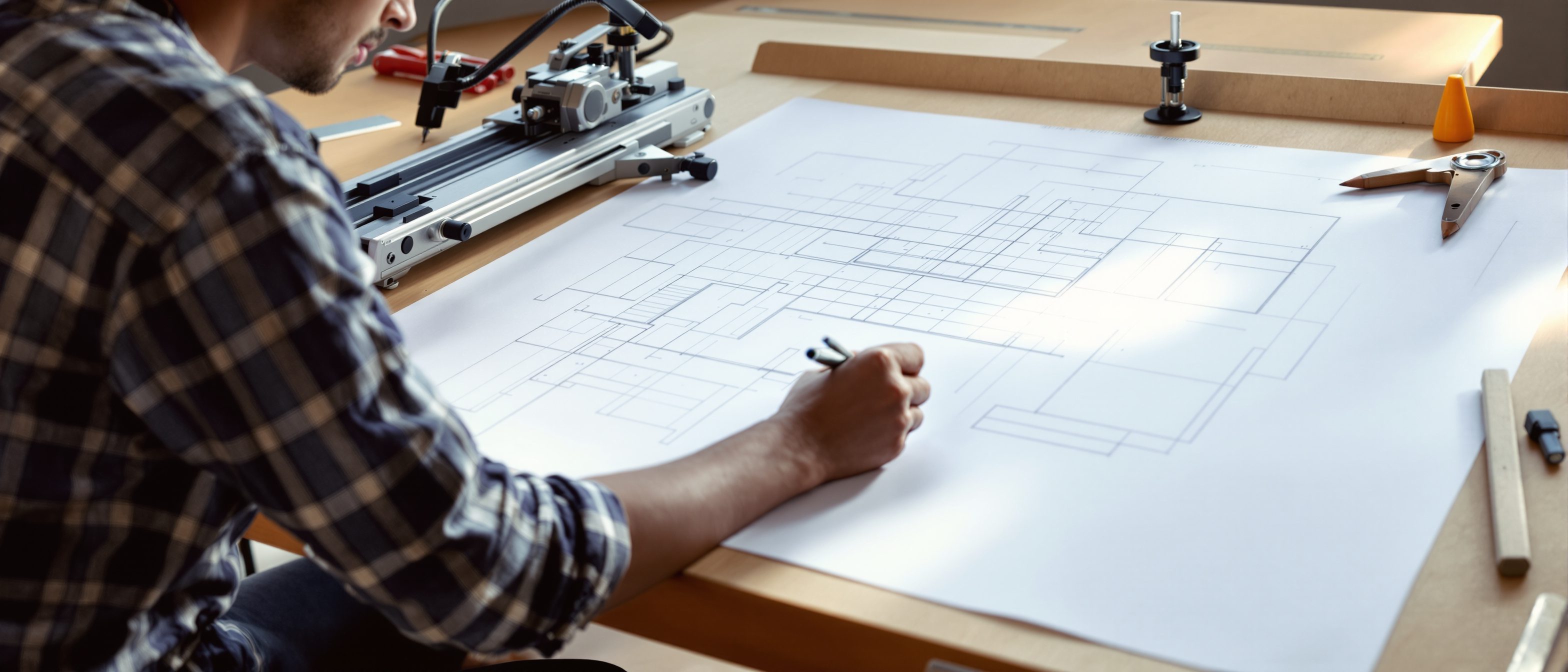
Setting Up the Board
Instruments, lines, lettering and scales — the standards before the drawing.
Technical drawing is a precise language, and like any language it has a grammar — the instruments, the sheet, the line conventions, the lettering and the scales. Get the grammar right and anyone, anywhere, can read your drawing exactly. This first lesson sets it up.
Learning objectives
By the end of this lesson, you will be able to — mapped to the course outcomes for Building Materials & Construction I:
Identify the drafting instruments and what each is for.
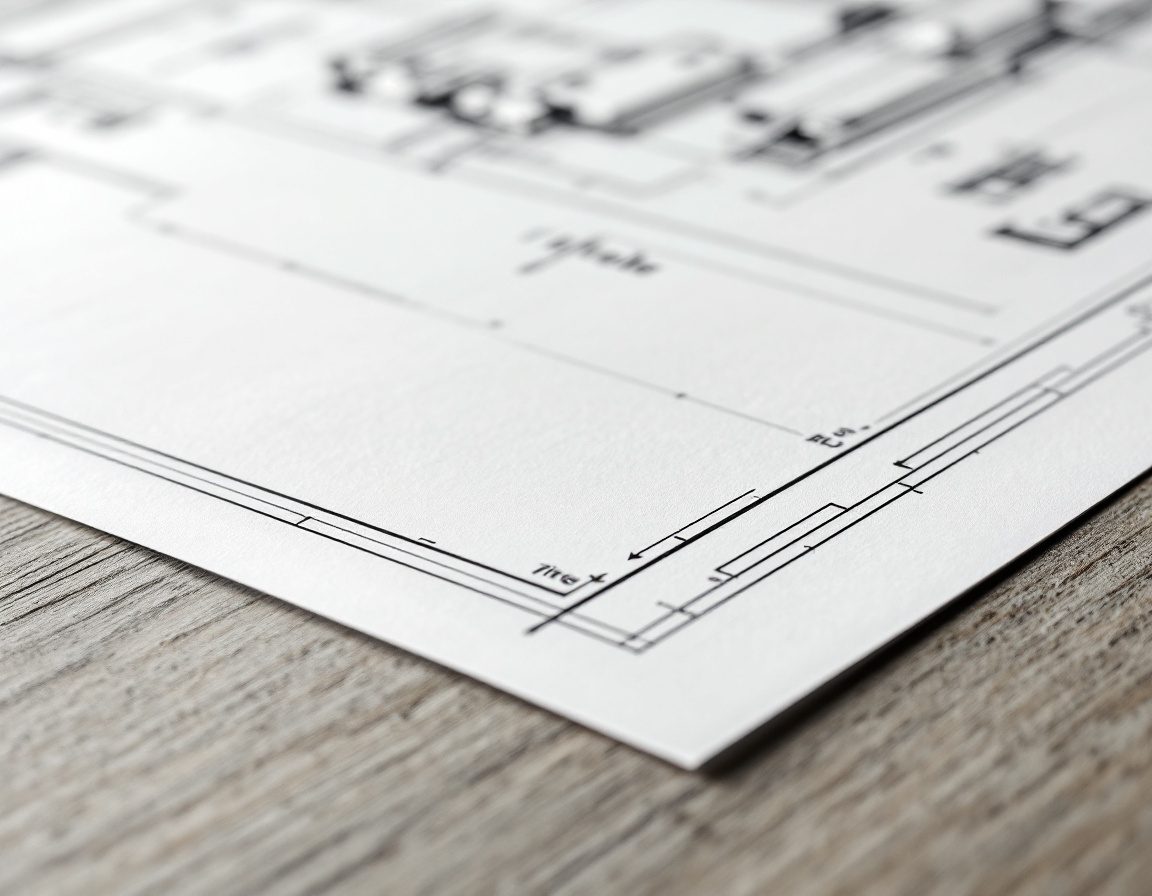
Lay out a sheet to IS 10711 — border, filing margin and title block.
Use the conventional line types and single-stroke lettering correctly.
Construct and read plain and diagonal scales; state the RF.
Set up to standard
This is the instrument side of drawing — the precise counterpart to the freehand Design Drawing kit. Select a topic.
The kit
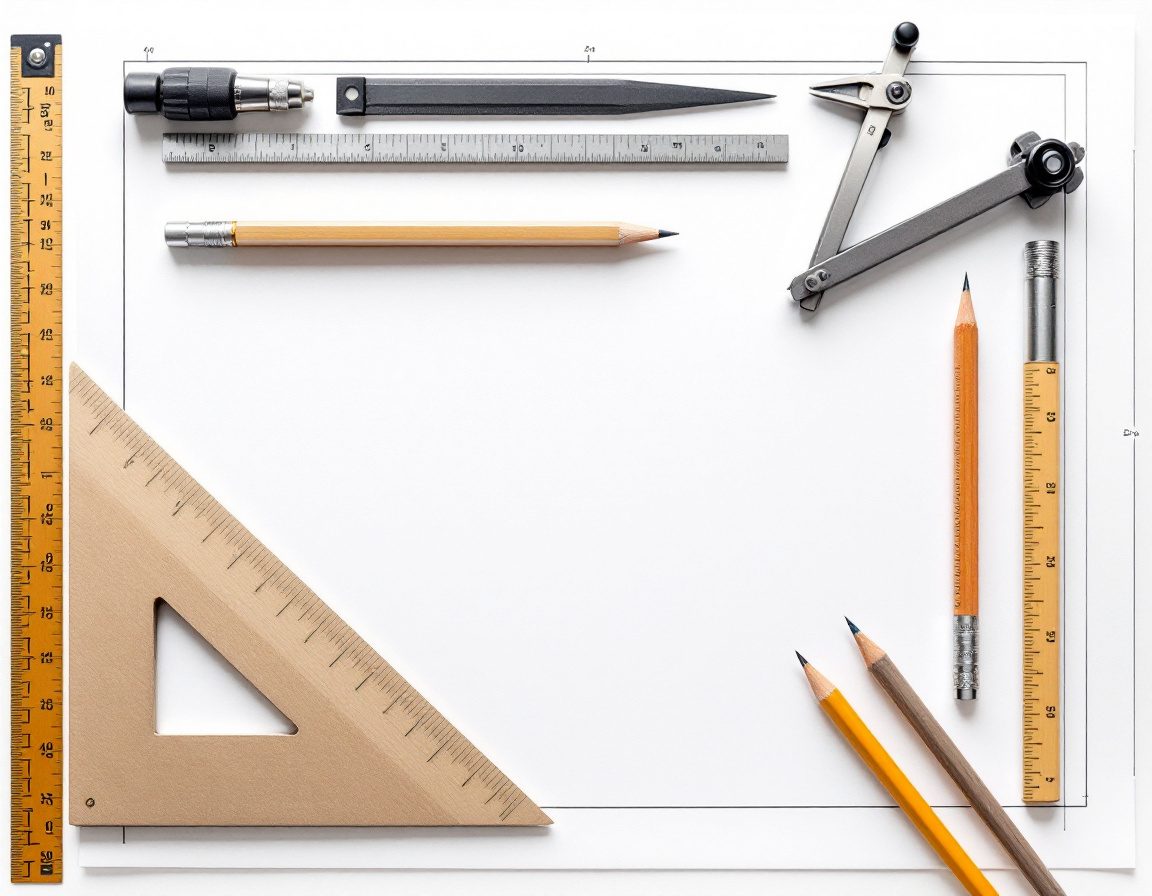
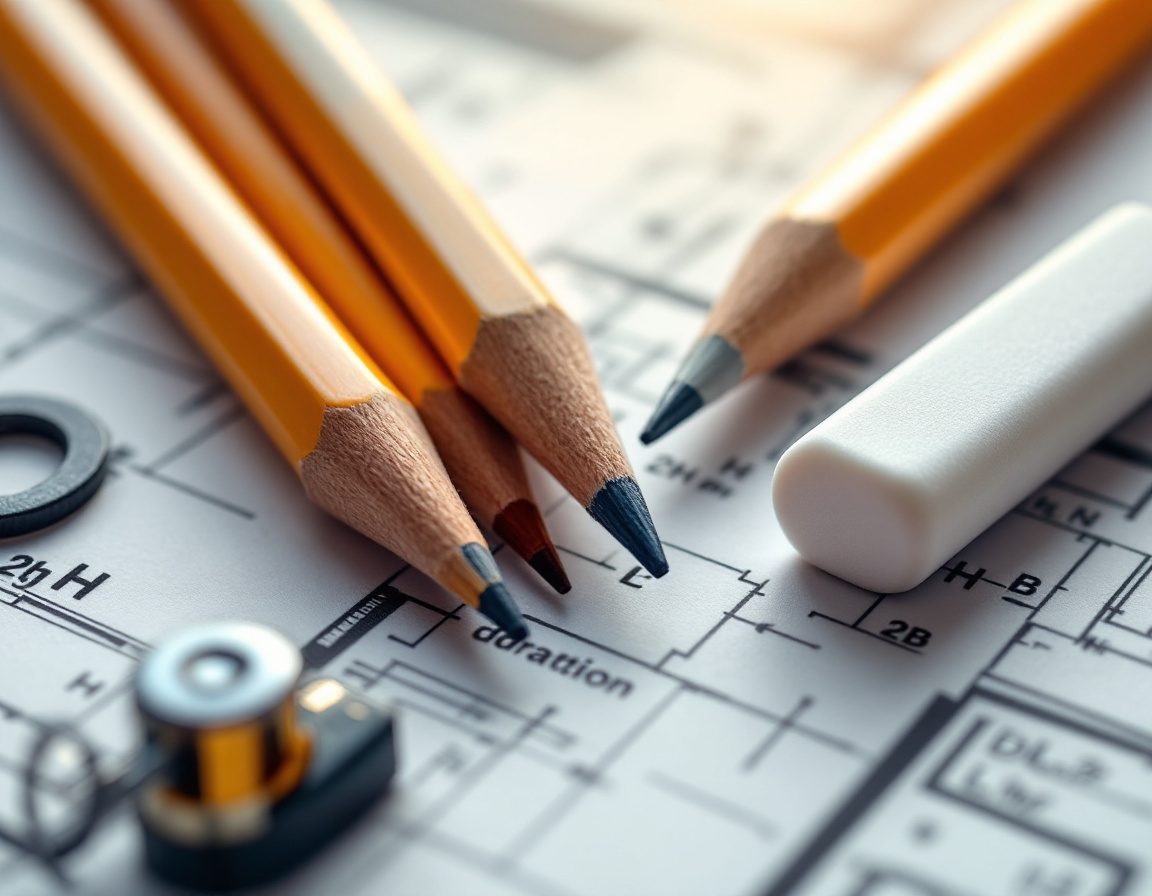
T-square or mini-drafter (parallel-arm drafting machine) for straight lines and angles; 45° and 30°-60° set squares; compass and divider; French curves; and pencil grades — 2H-4H for light construction lines, H/HB for linework and lettering, 2B-4B for bold work.[8]
Scales & which projection
A drawing is useless without a scale, and ambiguous without declaring its projection system. The Representative Fraction fixes the first; the truncated-cone symbol fixes the second.[6, 7]
Self-assessment
1. An A0 sheet has an area of:
2. The cutting-plane line is drawn as:
3. India draws in which projection system?
Recap
References & further reading
- [1]ISO 216 — A-series paper sizes (A0 = 1 m², ratio 1:√2). Overview. https://en.wikipedia.org/wiki/ISO_216
- [2]IS 10711:2001 — Technical product documentation: sizes and layout of drawing sheets (= ISO 5457:1999). BIS. https://law.resource.org/pub/in/bis/S01/is.10711.2001.pdf
- [3]IS 10714 (Parts) / ISO 128 — General principles of presentation: line types. SP 46:2003 consolidates for schools. https://law.resource.org/pub/in/bis/S01/is.10714.30.2006.pdf
- [4]IS 9609 / ISO 3098 — Technical product documentation: lettering (single-stroke Type A/B; standard heights). https://law.resource.org/pub/in/bis/S01/is.9609.1.2006.pdf
- [5]IS 11669:1986 — General principles of dimensioning on technical drawings (= ISO 129:1985). https://law.resource.org/pub/in/bis/S01/is.11669.1986.pdf
- [6]ISO 5455:1979 — Technical drawings: scales; plus the plain/diagonal/vernier scale constructions. https://www.iso.org/standard/11500.html
- [7]SP 46:2003 — Engineering Drawing Practice for Schools and Colleges (BIS); India uses first-angle. https://law.resource.org/pub/in/bis/S01/is.sp.46.2003.pdf
- [8]Drafting instruments and pencil grades — standard drafting practice (consolidated in SP 46). https://en.wikipedia.org/wiki/Technical_drawing_tool
Further reading
- Ching, F.D.K. (2023). Architectural Graphics (7th ed.). Hoboken, NJ: Wiley. ISBN 978-1-394-20626-1.
- Bhatt, N.D. (2014). Engineering Drawing — Plane and Solid Geometry (53rd ed.). Anand: Charotar. ISBN 978-93-80358-96-3.
- Bureau of Indian Standards (2003). SP 46: Engineering Drawing Practice for Schools and Colleges.
Sources gathered and fact-checked June 2026. Published values vary by source, sample and method — treat as indicative and confirm against the cited standard before structural use.
The author
Amogh N P
Architect, interior designer, and creative polymath. Studio Matrx began in his notebooks — his vision of design made honest, useful, and open to everyone. Its Academy is written and taught in his memory, and free, forever.
More about Amogh →