

Lesson 02Module 0 · Drawing as thinking
Tools, Media, and Warm-Up Disciplines
Setting up the kit and the hand
2 hours studioByAmogh N P· Architect & interior designer
Learning objectives
By the end of this lesson, students will be able to:
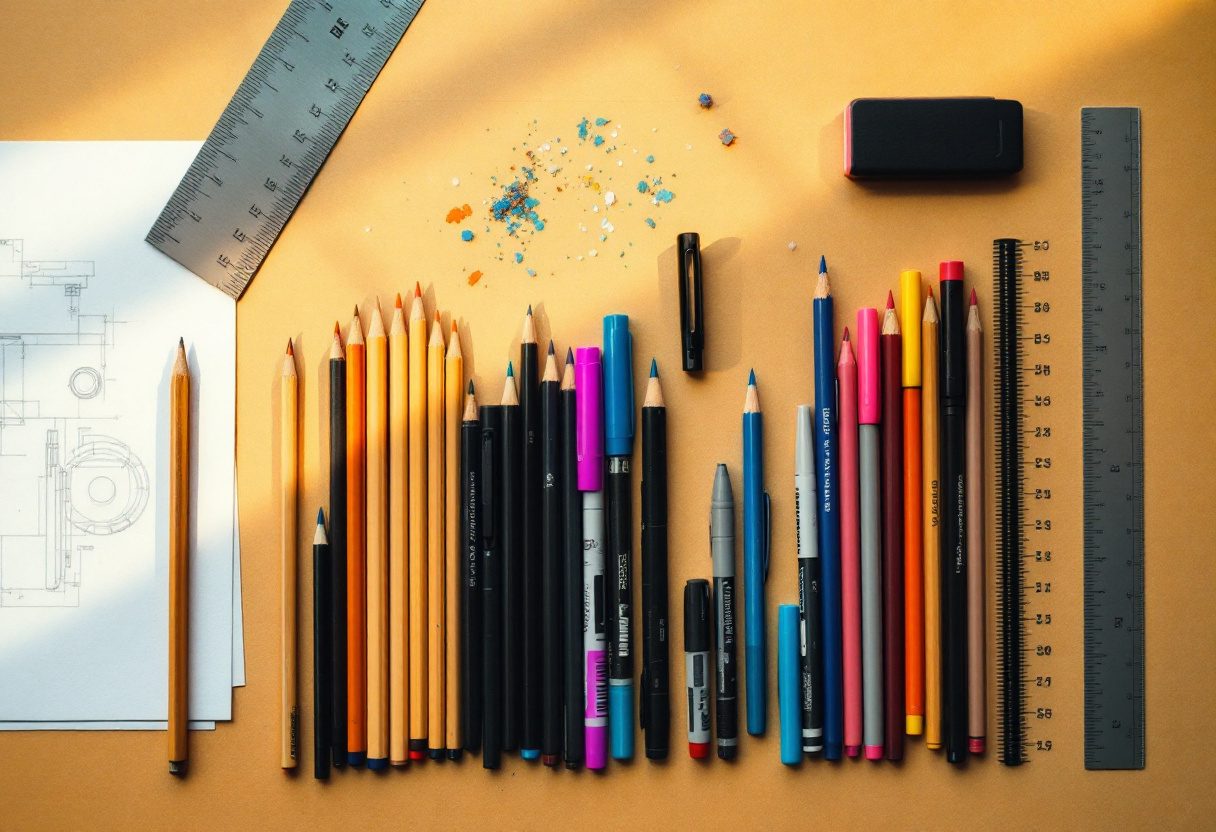
- Select and handle the core toolkit: graphite grades (2H–6B), fineliner pens, felt markers, tracing paper, and smooth vs. textured drawing paper.
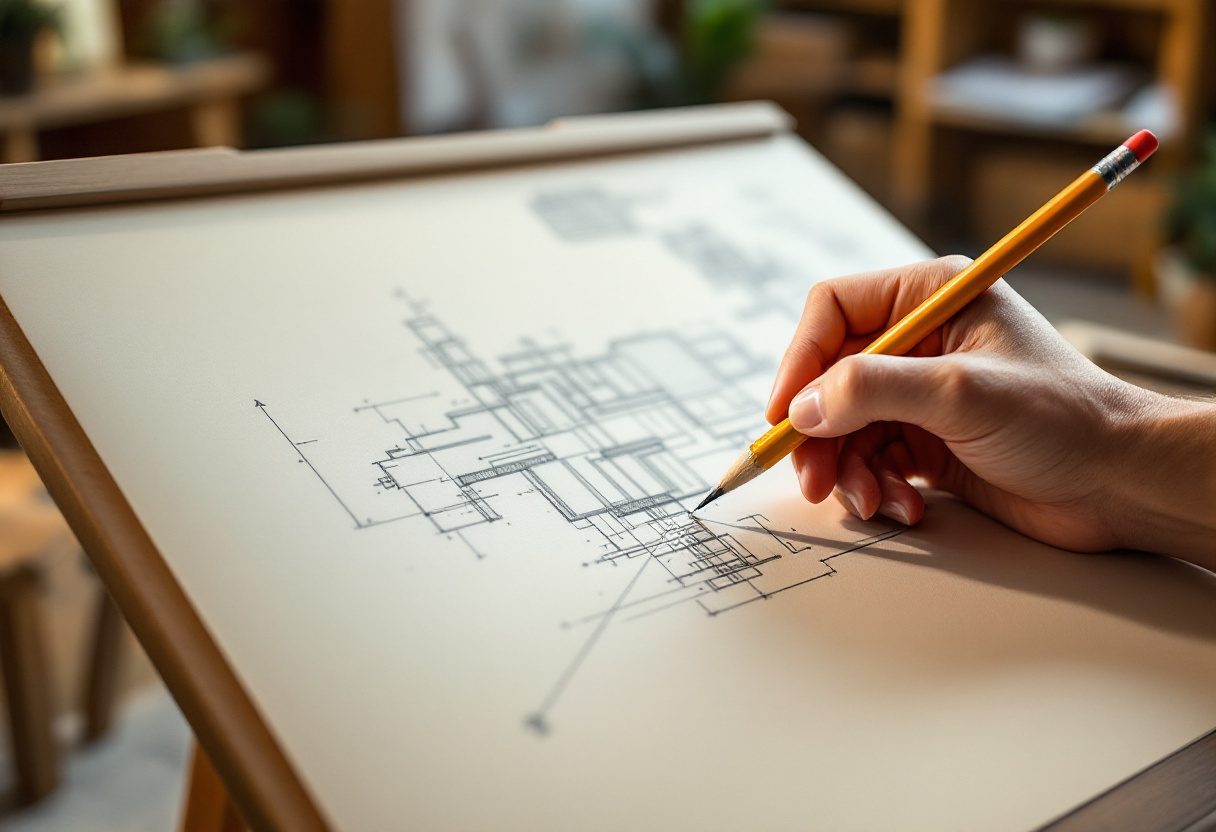
- Demonstrate correct posture, paper position, and arm movement for confident long strokes.
- Compare hand and digital sketching workflows and understand when each is appropriate.

Key concepts
- How pencil grade, pressure, and paper tooth interact to produce different line qualities.
- Pens force commitment; pencils invite revision — the psychology of media choice.
- Drawing from the shoulder vs. the wrist: why scale of movement matters.
- Digital tools (tablet sketching apps, stylus pressure) as an extension of, not a replacement for, hand skills.
In-class activities & exercises
Media sampler (30 min)A worksheet grid where students fill cells with the same stroke using each pencil grade, pen weight, and marker — building a personal reference chart.
Line calisthenics (30 min)Pages of long parallel lines, concentric circles, ellipses, and freehand straight lines between two dots — first in pencil then in ink.
Speed ladder (20 min)The same coffee cup drawn in 5 minutes, 1 minute, and 10 seconds — discovering what survives compression.
Digital demo (20 min)Instructor repeats the cup exercise on a tablet, projected live.
Worked example sketches
How the technique looks in practice — loose, hand-drawn examples. Scroll to watch each one draw in; click to zoom.
Homework / studio assignment
Complete three pages of line calisthenics and one media-sampler chart for your own toolkit. Bring all materials to every future class.
Assessment
Completion check of calisthenics pages; instructor gives one-line feedback on line confidence.
A
The author
Amogh N P
Architect, interior designer, and creative polymath. Studio Matrx began in his notebooks — his vision of design made honest, useful, and open to everyone. Its Academy is written and taught in his memory, and free, forever.
More about Amogh →