

2D Geometry & Curves
Building shapes with compass and straightedge — and the curves architecture loves.
With nothing but a compass and a straightedge you can build almost any flat figure exactly — no measuring, just geometry. This lesson covers those constructions, the four conic sections, and the engineering curves that keep turning up in real buildings.
Learning objectives
By the end of this lesson, you will be able to — mapped to the course outcomes for Building Materials & Construction I:
Perform the basic constructions — bisect, perpendicular, divide a line, regular polygon.
Define the conic sections by eccentricity (e) and the focus-directrix rule.
Construct an ellipse, a parabola and a hyperbola by instrument methods.
Recognise these curves in real buildings — and avoid the catenary/parabola confusion.
Constructions, polygons & conics
Start with the basic moves, then the regular polygons, then the conic family defined by a single number — eccentricity. Select a topic.
The basic moves
All built with an un-marked straightedge and a compass: bisect a line (the perpendicular bisector), bisect an angle, drop a perpendicular, and divide a line into n equal parts using a slanted ray of equal steps (the intercept theorem).[1]
Curves that roll and unwind
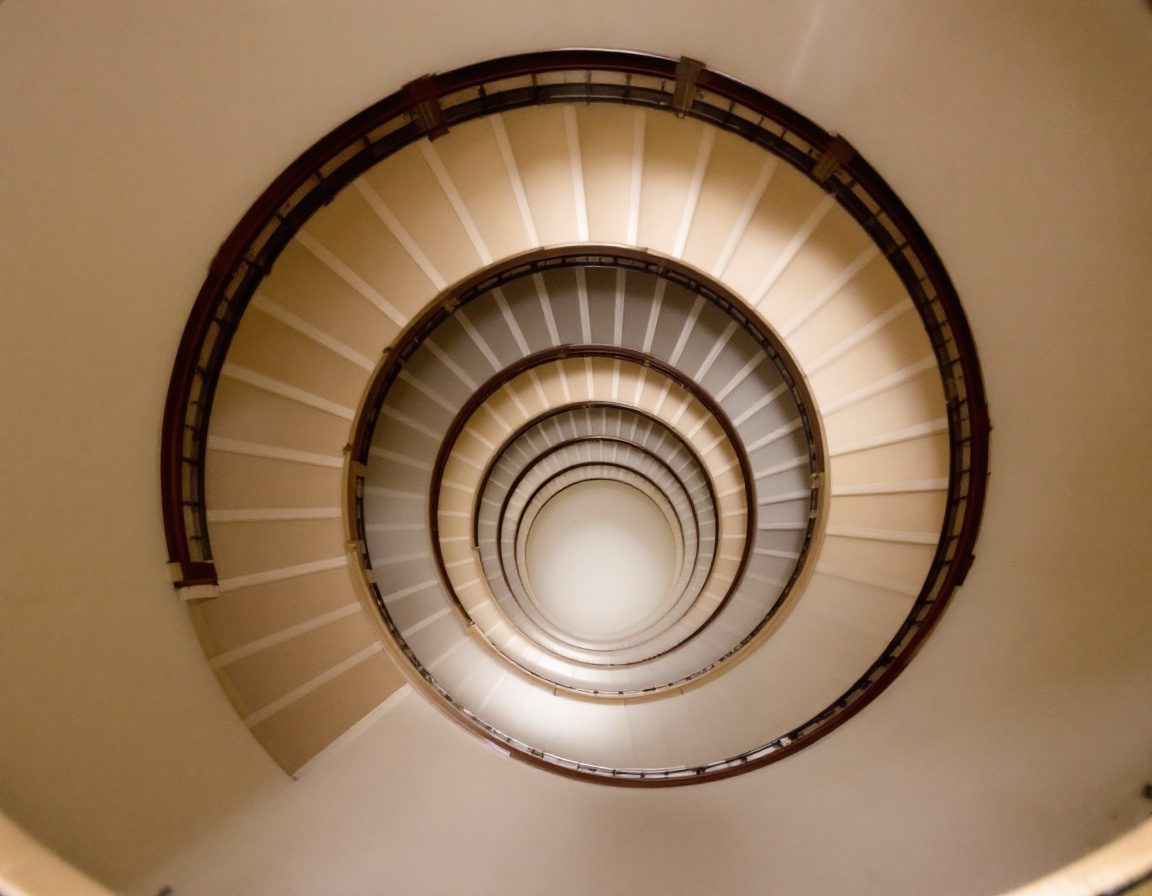
The cycloid, involute and spiral are all built as instrument constructions — and they show up as gear teeth, ramps and spiral stairs.[4]
Two myths to drop
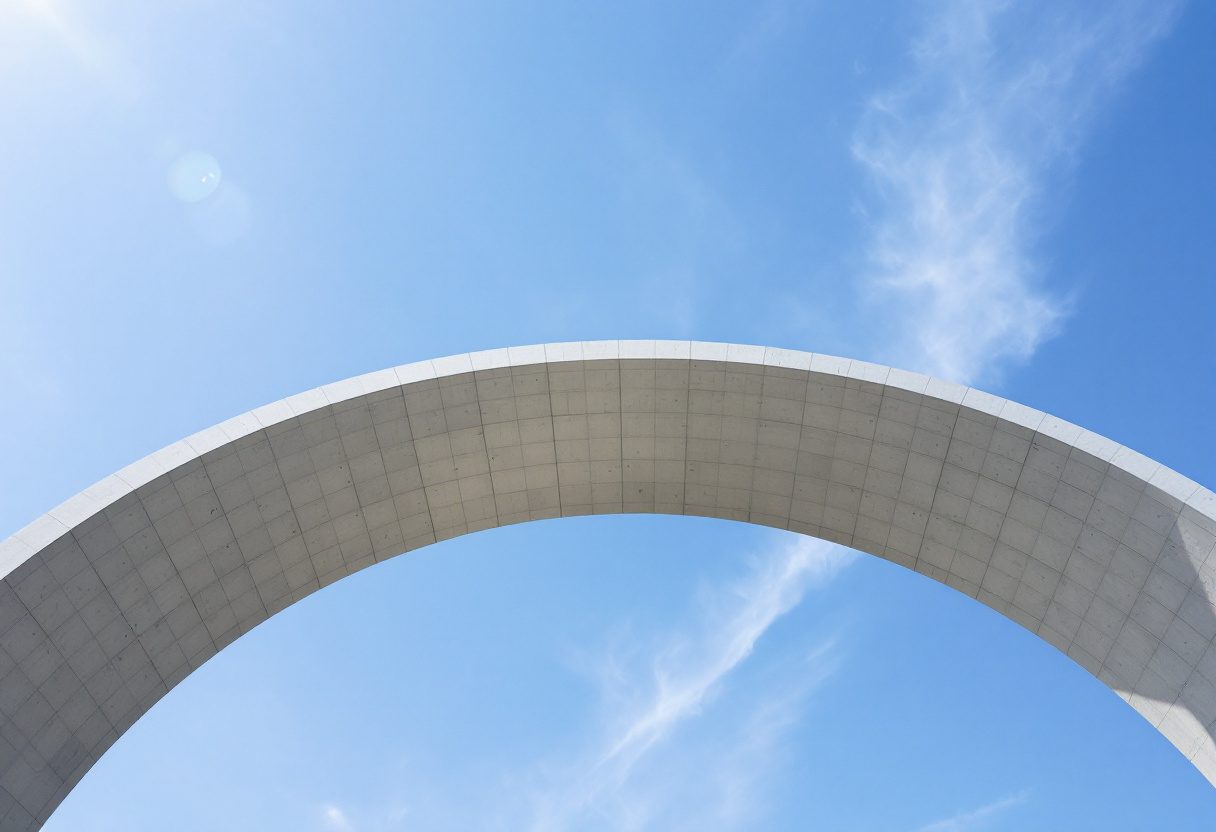
A freely hanging chain is a catenary, not a parabola — the famous Gateway Arch is a weighted catenary, and Gaudí designed with hanging-chain models. (And the Colosseum plan is most likely a polycentric oval, not a true ellipse.)[5, 6]
Self-assessment
1. A conic with eccentricity e = 1 is:
2. A freely hanging chain of uniform weight forms a:
3. The involute is the curve traced by:
Recap
References & further reading
- [1]Straightedge-and-compass constructions (bisect, perpendicular, divide, polygons). Math Open Reference. https://www.mathopenref.com/constructions.html
- [2]Conic section — definition, focus-directrix and eccentricity. Encyclopaedia. https://en.wikipedia.org/wiki/Conic_section
- [3]Engineering curves — ellipse / parabola / hyperbola construction methods. GRIET course notes. http://www.it.griet.ac.in/wp-content/uploads/2014/08/I-_UNIT-_CURVES.pdf
- [4]Cycloid, involute and Archimedean spiral — definitions. https://en.wikipedia.org/wiki/Involute
- [5]Catenary vs parabola; the Gateway Arch as a weighted catenary; Gaudí's hanging-chain models. https://en.wikipedia.org/wiki/Catenary_arch
- [6]The Colosseum plan — ellipse or polycentric oval? (scholarly debate). The-Colosseum.net. https://the-colosseum.net/wp/en/ellipse/
Further reading
- Bhatt, N.D. (2014). Engineering Drawing — Plane and Solid Geometry (53rd ed.). Anand: Charotar — chapters on Geometrical Construction and Curves.
- Osserman, R. (2010). Mathematics of the Gateway Arch. Notices of the AMS 57(2) — the catenary-vs-parabola authority.
- Venugopal, K. & Prabhu Raja, V. Engineering Drawing and Graphics. New Delhi: New Age International.
Sources gathered and fact-checked June 2026. Published values vary by source, sample and method — treat as indicative and confirm against the cited standard before structural use.
The author
Amogh N P
Architect, interior designer, and creative polymath. Studio Matrx began in his notebooks — his vision of design made honest, useful, and open to everyone. Its Academy is written and taught in his memory, and free, forever.
More about Amogh →