
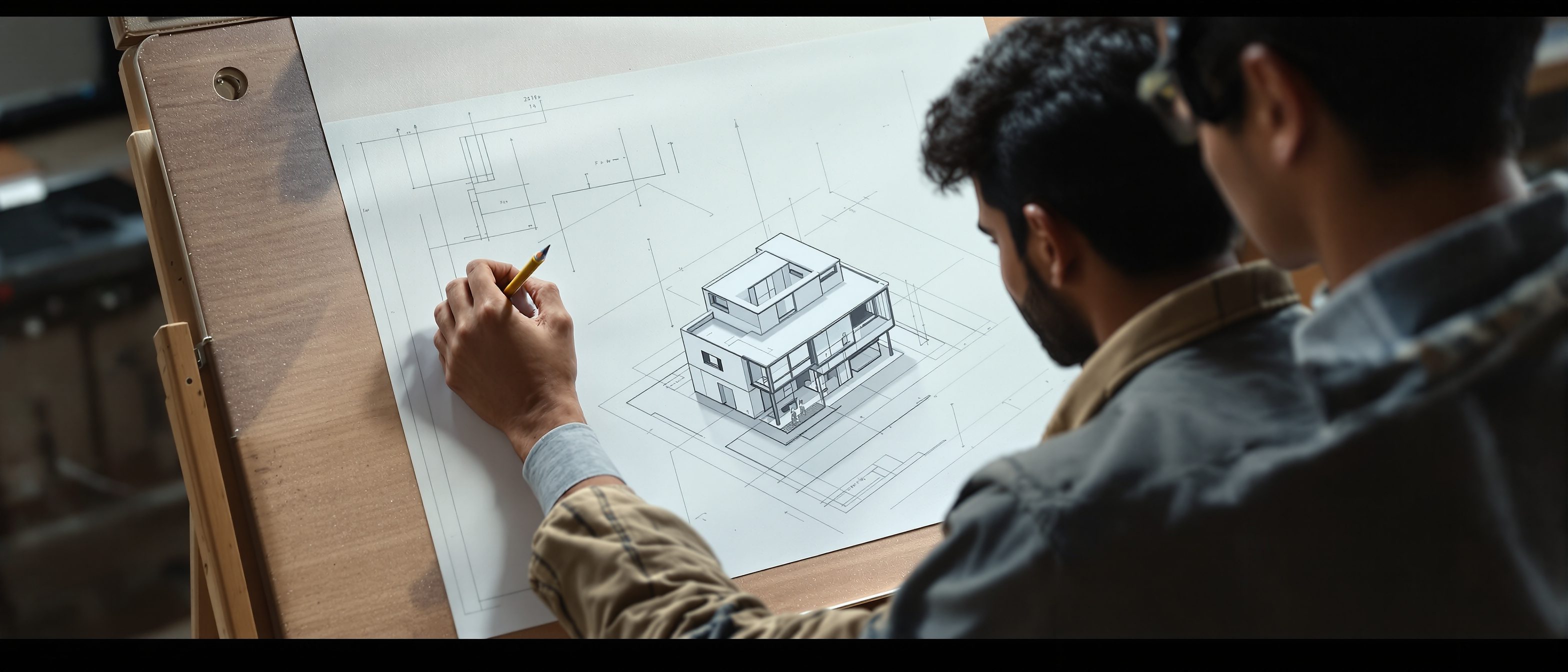
Pictorial Views
One drawing that shows three dimensions — constructed, not sketched.
A pictorial view shows three faces of an object in a single picture — the quickest way to make a drawing read as three-dimensional. Here we construct them with instruments: isometric, axonometric and oblique — the precise counterpart to the freehand paraline of Design Drawing.
Learning objectives
By the end of this lesson, you will be able to — mapped to the course outcomes for Building Materials & Construction I:
Explain isometric projection and the isometric scale (0.816).
Distinguish isometric, dimetric and trimetric — and plan-oblique.
Construct cavalier and cabinet oblique views.
Build an isometric from the orthographic views.
Isometric, axonometric, oblique
Three related systems, each with its own rule — and one number (0.816) that everyone muddles. Select a topic.
Isometric & the 0.816 scale
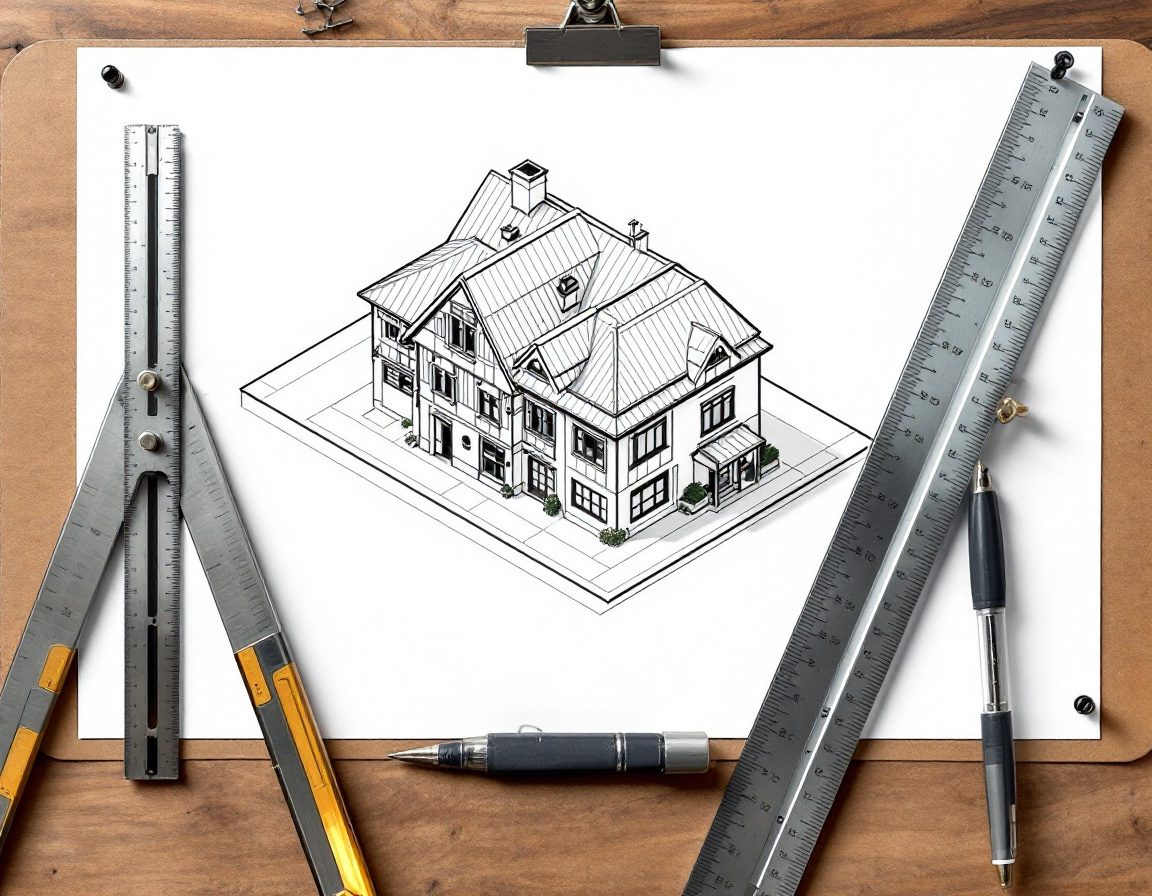
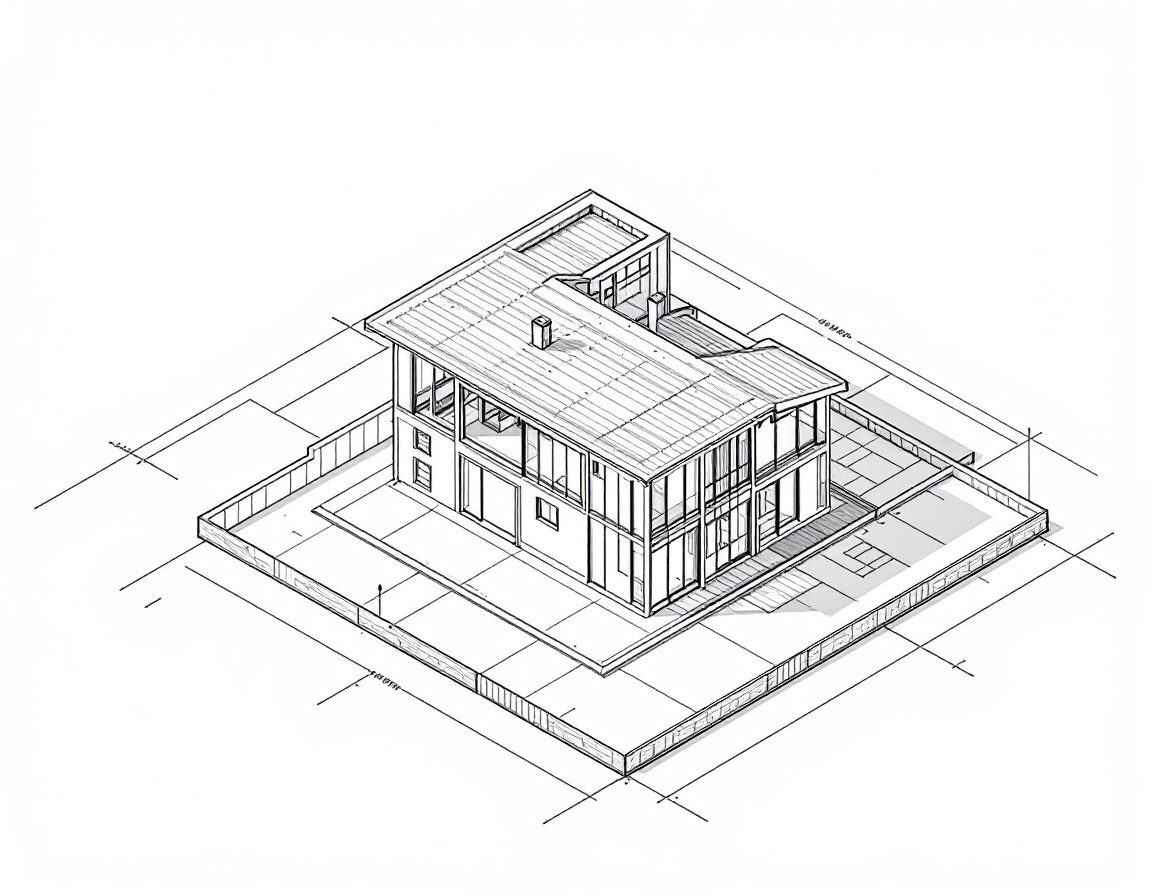
Three axes at 120°, equally foreshortened. The catch most muddle: a true isometric PROJECTION foreshortens lengths to 0.816 (the isometric scale); an isometric DRAWING just uses full true lengths for convenience and is therefore about 22% larger. Same shape — only the size differs.[1]
Build it from the views
A constructed pictorial is taken straight from the orthographic views — heights, widths and depths stepped off along the three isometric axes.[1]
Where it came from
William Farish formalised isometric drawing in 1822; Auguste Choisy turned the worm's-eye axonometric into a tool of architectural history; and De Stijl, the Bauhaus and El Lissitzky made axonometry a signature of modernism.[4]
Self-assessment
1. The isometric scale (~0.816) belongs to:
2. In a plan-oblique (planometric) view, what stays true shape?
3. Cabinet oblique differs from cavalier oblique by:
Recap
References & further reading
- [1]Isometric projection — axes at 120°, the isometric scale 0.816 vs full-length isometric drawing. https://en.wikipedia.org/wiki/Isometric_projection
- [2]Axonometric projection — isometric / dimetric / trimetric; history (Farish 1822, the moderns). https://en.wikipedia.org/wiki/Axonometric_projection
- [3]Oblique projection — cavalier vs cabinet; plan-oblique / military projection. https://en.wikipedia.org/wiki/Oblique_projection
- [4]William Farish, 'On Isometrical Perspective' (1822) — the rules of isometric drawing. https://en.wikipedia.org/wiki/William_Farish_(chemist)
Further reading
- Ching, F.D.K. (2023). Architectural Graphics (7th ed.). Hoboken, NJ: Wiley — paraline and pictorial drawing.
- Bhatt, N.D. (2014). Engineering Drawing — Plane and Solid Geometry (53rd ed.). Anand: Charotar — Isometric Projection.
Sources gathered and fact-checked June 2026. Published values vary by source, sample and method — treat as indicative and confirm against the cited standard before structural use.
The author
Amogh N P
Architect, interior designer, and creative polymath. Studio Matrx began in his notebooks — his vision of design made honest, useful, and open to everyone. Its Academy is written and taught in his memory, and free, forever.
More about Amogh →