

The Design Process & Communication
Working the process — and showing it — at every stage.
Architectural Design I introduced the design loop; this studio teaches you to work it and to communicate it. Design is thought made visible — so it begins with the language of representation, runs as an iterative cycle, and is shared at every step with yourself, your team and the public.
Learning objectives
By the end of this lesson you will be able to — mapped to the course outcomes for Architectural Design II:
Represent ideas with drawing skills, conventions, abstraction and expression.
Work the studio cycle — analysis, exploration, discovery and verification — as an iterative loop.
Communicate a design as an individual, in a team and in public.
Represent the design process itself, graphically and in multiple media.
Representation & the loop
The basics are the language of representation — drawing, convention, and the move between abstraction and expression — and the shape of the process: an iterative loop, not a straight line. Select a topic.[1, 5]
Drawing, convention, abstraction
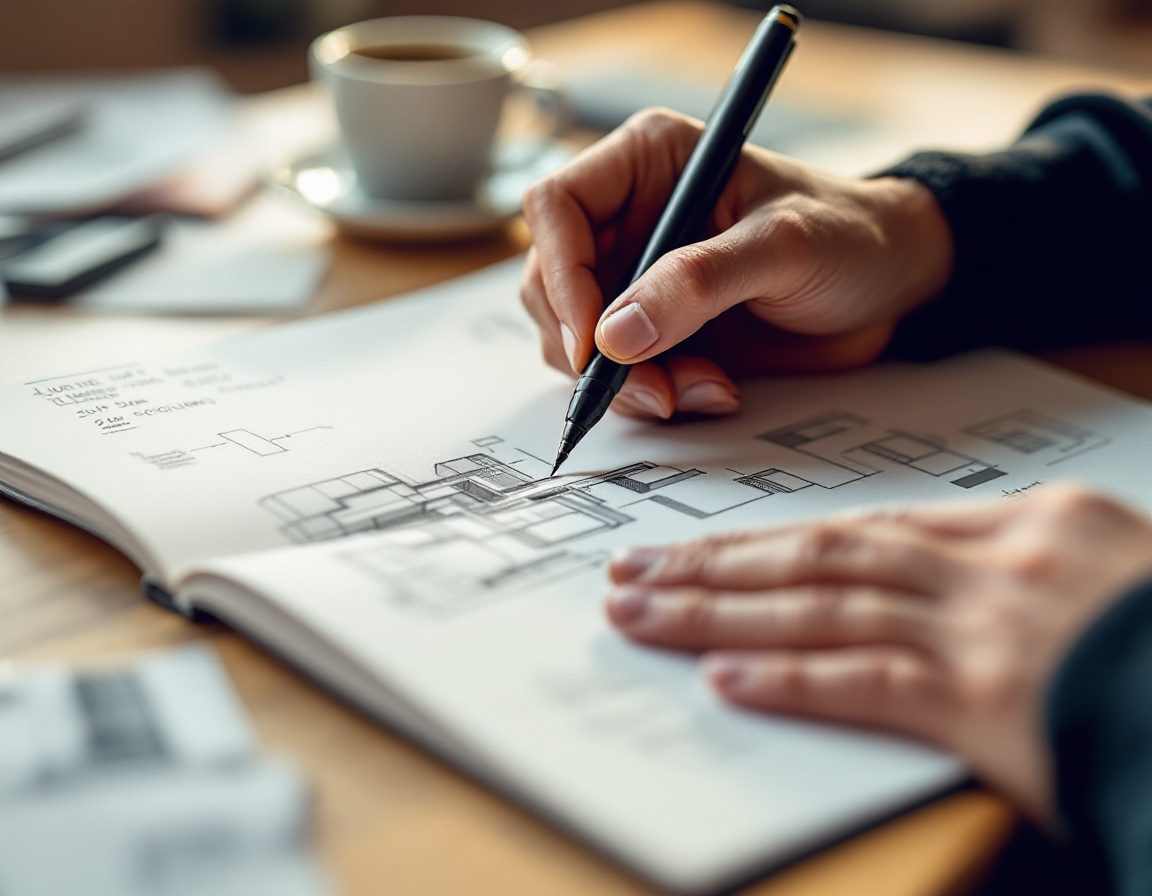
Design is thought made visible, so the basics are the language of representation: drawing skill, the shared conventions (plan, section, scale, symbols), and the move between ABSTRACTION (a diagram that strips a problem to its essentials) and EXPRESSION (a drawing that gives an idea feeling and character). You move constantly between the two.[5]
The working cycle
This studio works the loop in four moves — and loops back when the test fails. These are the studio's working terms, in the long analysis–synthesis–evaluation tradition.[1, 2]
| Move | The question | What you do |
|---|---|---|
| Analysis | What is the problem? | Read the brief, user, site and standards; frame the real question. |
| Exploration | What are the possibilities? | Generate many options — diverge, don't fix too soon. |
| Discovery | Which idea has promise? | Recognise and develop the strongest direction. |
| Verification | Does it actually work? | Test against brief, standards, feasibility — then loop back. |
Communicate the design
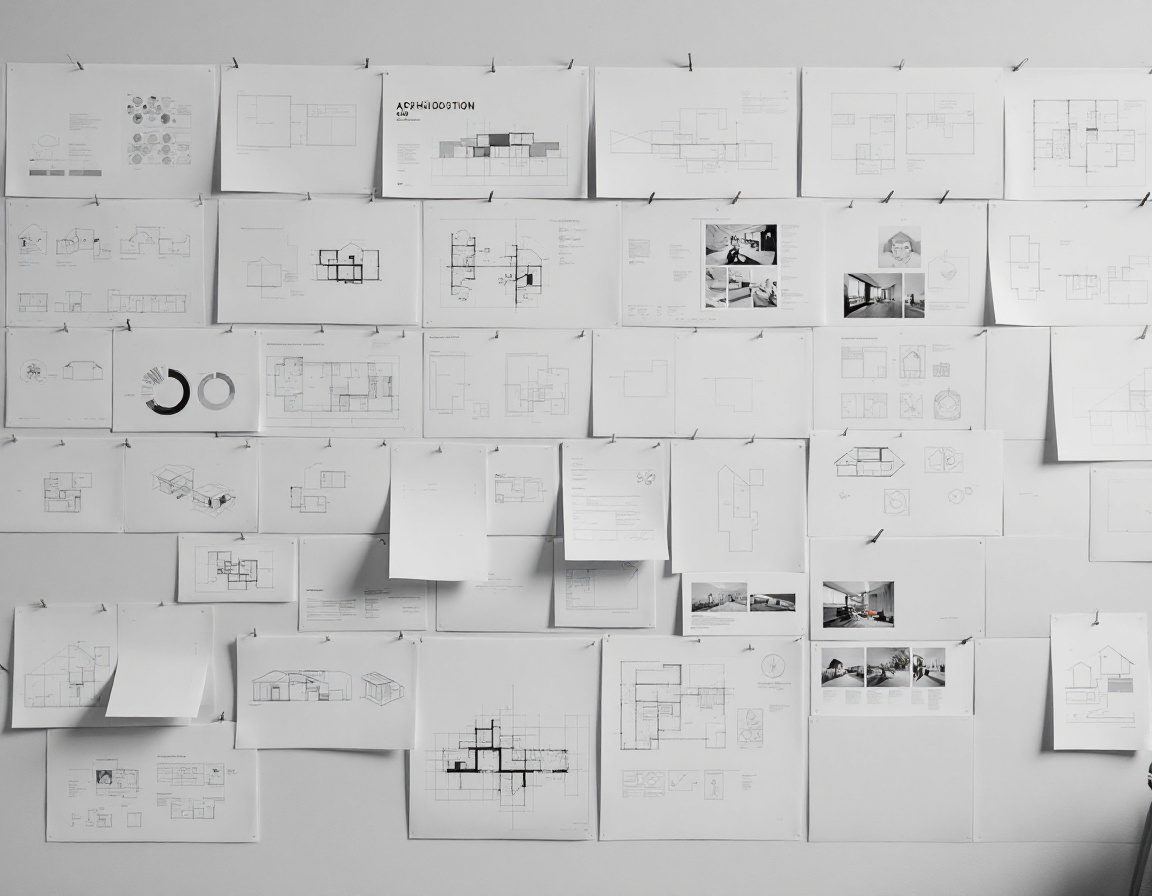
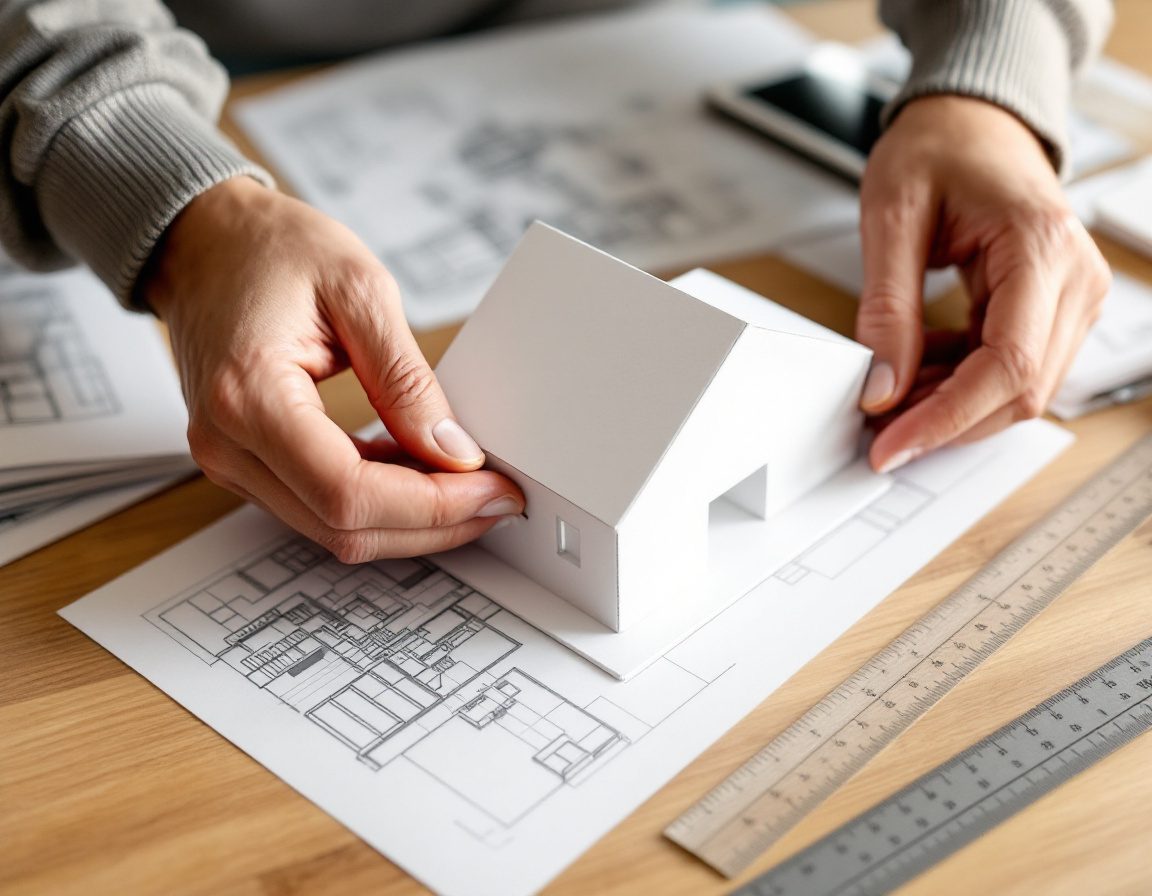
A design is a conversation held in many media — and the process itself is part of what you present.[3, 4, 6]
Self-assessment
1. The design process is best described as:
2. ‘Abstraction’ in design representation means:
3. Designing ‘in public’ refers to communicating with:
Recap
References & further reading
- [1]Markus / Maver — the ‘route map’ of the design process (analysis → synthesis → appraisal → decision; iterative). Design-process overview. https://ioannouolga.wordpress.com/2018/01/16/markus-maver-route-map-of-the-design-process/
- [2]Rittel, H. & Webber, M. (1973) — ‘wicked problems’ (no definitive formulation, no stopping rule). Overview. https://en.wikipedia.org/wiki/Wicked_problem
- [3]Lawson, B. — How Designers Think: the design process demystified (design as communicated, negotiated activity). Routledge. https://www.routledge.com/How-Designers-Think/Lawson/p/book/9780750660778
- [4]Schön, D. (1983) — The Reflective Practitioner: ‘reflection-in-action’, thinking by doing. Reference. https://en.wikipedia.org/wiki/Donald_Sch%C3%B6n
- [5]Ching, F.D.K. — Architecture: Form, Space and Order (representation, drawing and ordering). Wiley. https://www.wiley.com/en-us/Architecture%3A+Form%2C+Space%2C+and+Order%2C+5th+Edition-p-9781119853381
- [6]Architectural drawing & design communication — drawings, models and digital media for different audiences. Overview. https://en.wikipedia.org/wiki/Architectural_drawing
Further reading
- Lawson, B. (2005). How Designers Think: The Design Process Demystified (4th ed.). Oxford: Architectural Press.
- Schön, D.A. (1983). The Reflective Practitioner: How Professionals Think in Action. New York: Basic Books.
- Ching, F.D.K. (2023). Architecture: Form, Space and Order (5th ed.). Hoboken, NJ: Wiley.
Sources gathered and fact-checked June 2026. Published values vary by source, sample and method — treat as indicative and confirm against the cited standard before structural use.
The author
Amogh N P
Architect, interior designer, and creative polymath. Studio Matrx began in his notebooks — his vision of design made honest, useful, and open to everyone. Its Academy is written and taught in his memory, and free, forever.
More about Amogh →