

Design Exercises II — Multiple Spaces
From one room to a small building — organising spaces that relate.
Now the leap from one room to several that must work together. The second set of exercises designs simple multi-space buildings — and the design problem shifts from the room to the relationships between rooms, grounded in how a building actually stands up.
Learning objectives
By the end of this lesson you will be able to — mapped to the course outcomes for Architectural Design II:
Organise multiple spaces by zoning, circulation and adjacency.
Recognise the spatial-organisation types — centralised, linear, radial, clustered, grid.
Work a functional brief for a simple building type into a resolved plan.
Describe building anatomy from foundation to parapet.
Spaces that relate
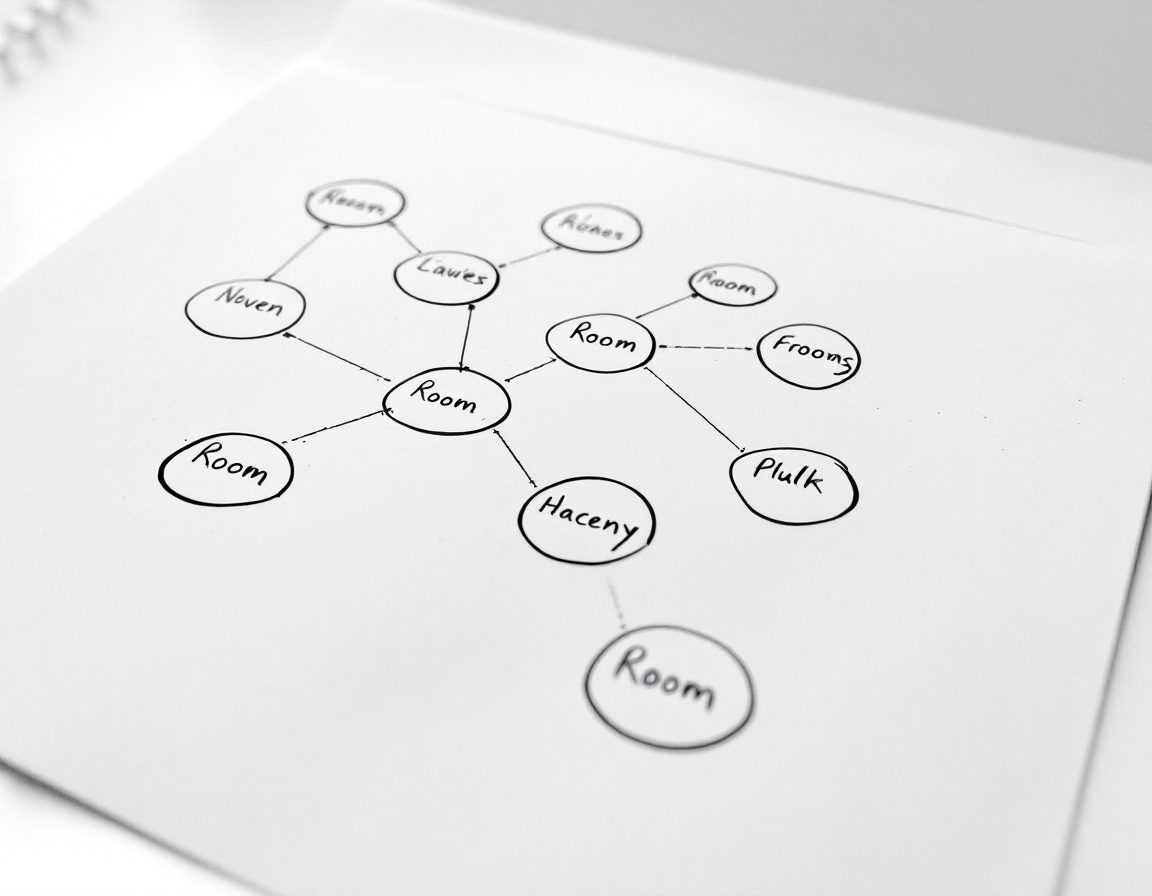
A building is several spaces that must work together — so you start with a bubble/adjacency diagram, zone by character, and let circulation link the zones. Select a topic.[2, 1]
Spaces that relate
A building is several spaces that must work TOGETHER. The design problem shifts from one room to the RELATIONSHIPS between rooms — what is next to what, what connects to what, and what must be kept apart. Start with a bubble/adjacency diagram before any plan.[2]
Five ways to organise space
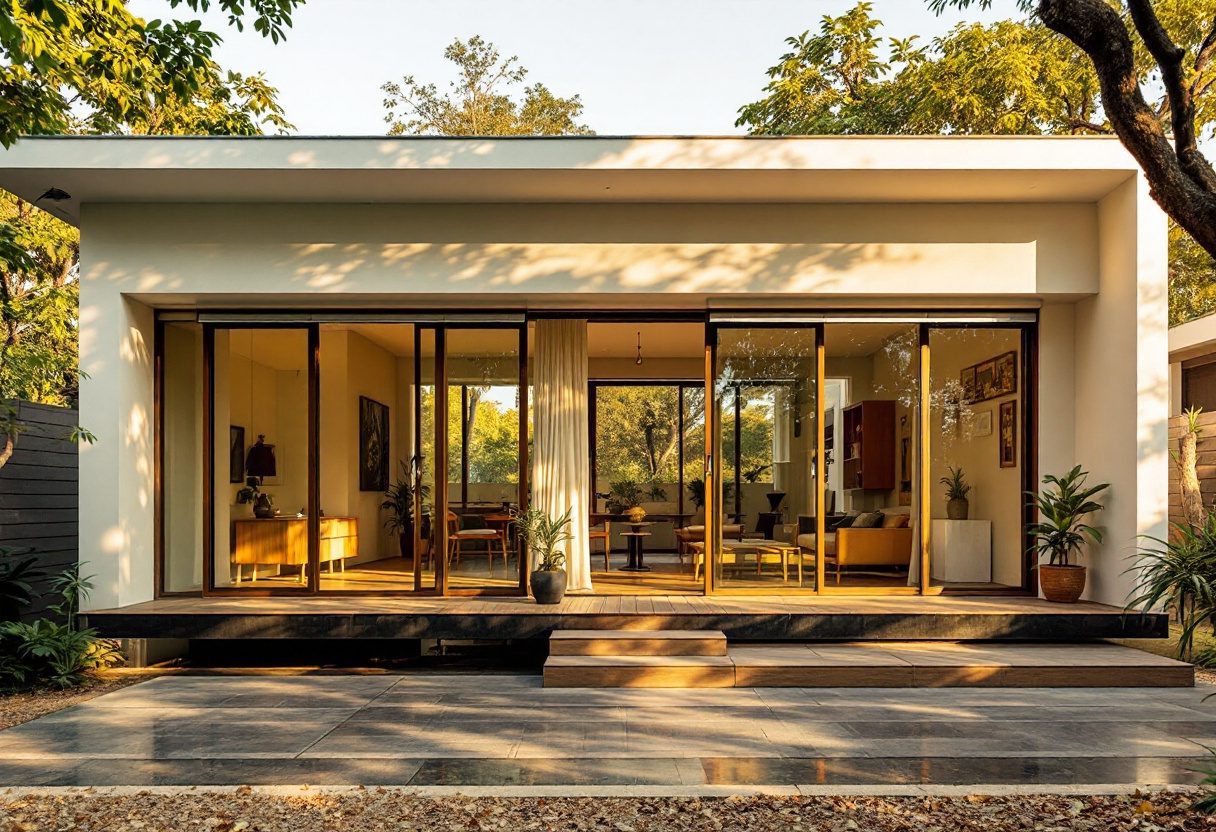
Ching names five spatial organisations; the building type often suggests one — a courtyard house is centralised, a row of shops is linear.[1]
| Organisation | The idea | Example |
|---|---|---|
| Centralised | Rooms around a dominant central space | A courtyard house |
| Linear | A sequence of spaces along a path | A motel / a row of shops |
| Radial | Linear arms radiating from a centre | A hospital with wings |
| Clustered | Spaces grouped by proximity / function | A village cluster, a school |
| Grid | Spaces ordered by a modular grid | An office floor on a column grid |
Building anatomy
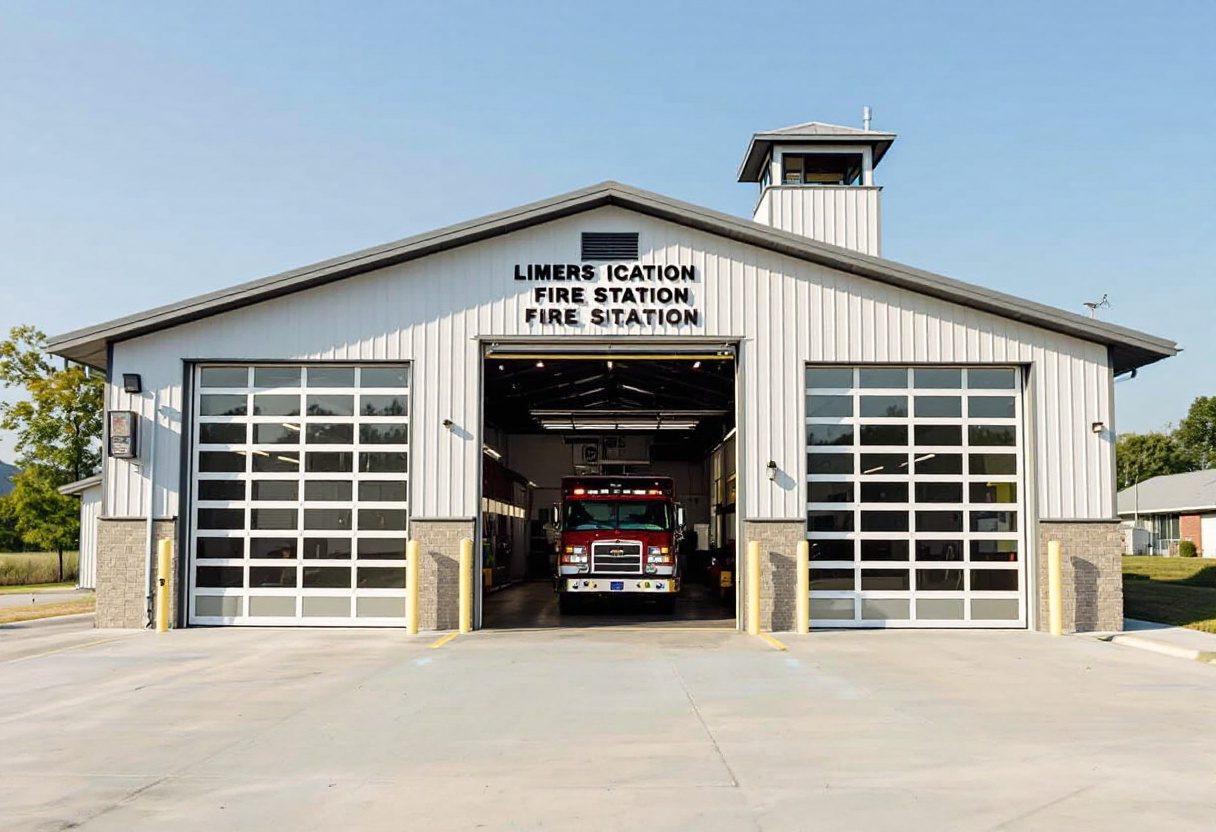
Design must know how it stands up. From the bottom — foundation, plinth and DPC, walls and columns, lintels and sills, slabs and beams, roof and parapet — knowing the parts keeps a design buildable.[4]
Self-assessment
1. ‘Zoning’ a plan means:
2. A courtyard house, with rooms wrapped around a central open space, is which organisation?
3. In building anatomy, the element that stops rising damp is the:
Recap
References & further reading
- [1]Ching, F.D.K. — Architecture: Form, Space and Order: the five spatial organisations and circulation. Wiley. https://www.wiley.com/en-us/Architecture%3A+Form%2C+Space%2C+and+Order%2C+5th+Edition-p-9781119853381
- [2]Space-planning basics — bubble/adjacency diagrams, zoning and circulation. First In Architecture. https://www.firstinarchitecture.co.uk/space-planning-basics/
- [3]Neufert, E. — Architects' Data: functional briefs and space requirements by building type. Reference. https://www.uceb.eu/DATA/CivBook/03.%20Architect_s%20Data.pdf
- [4]Components of a building (foundation, plinth, DPC, walls, lintel, sill, slab, beam, roof, parapet). Civiconcepts. https://civiconcepts.com/blog/components-of-building
Further reading
- Ching, F.D.K. (2023). Architecture: Form, Space and Order (5th ed.). Hoboken, NJ: Wiley — spatial organisation.
- De Chiara, J. & Callender, J. Time-Saver Standards for Building Types. New York: McGraw-Hill.
- Ching, F.D.K. (2014). Building Construction Illustrated (5th ed.). Hoboken, NJ: Wiley — building anatomy.
Sources gathered and fact-checked June 2026. Published values vary by source, sample and method — treat as indicative and confirm against the cited standard before structural use.
The author
Amogh N P
Architect, interior designer, and creative polymath. Studio Matrx began in his notebooks — his vision of design made honest, useful, and open to everyone. Its Academy is written and taught in his memory, and free, forever.
More about Amogh →