
B.Arch CurriculumFree, forever
A tribute to Amogh N P
Architectural Conservation
A country's old buildings are its memory made physical — and once lost, they cannot be remade. This elective is about CONSERVATION: the discipline of caring for heritage so it survives for the future. It begins with the philosophy — why we conserve, and the spectrum from preservation through restoration to adaptive reuse — and the agencies and charters (UNESCO, ICOMOS, ICCROM, the ASI and INTACH) that govern it worldwide and in India. It studies conservation in India through its great sites and living heritage towns — Hampi, Mahabalipuram, the temple cities of the south. And it teaches the conservator's method: researching a monument's history, documenting it in detail, and analysing its significance, its threats and its condition — the disciplined, evidence-led care that good conservation demands.
Course byAmogh N P· Architect & interior designer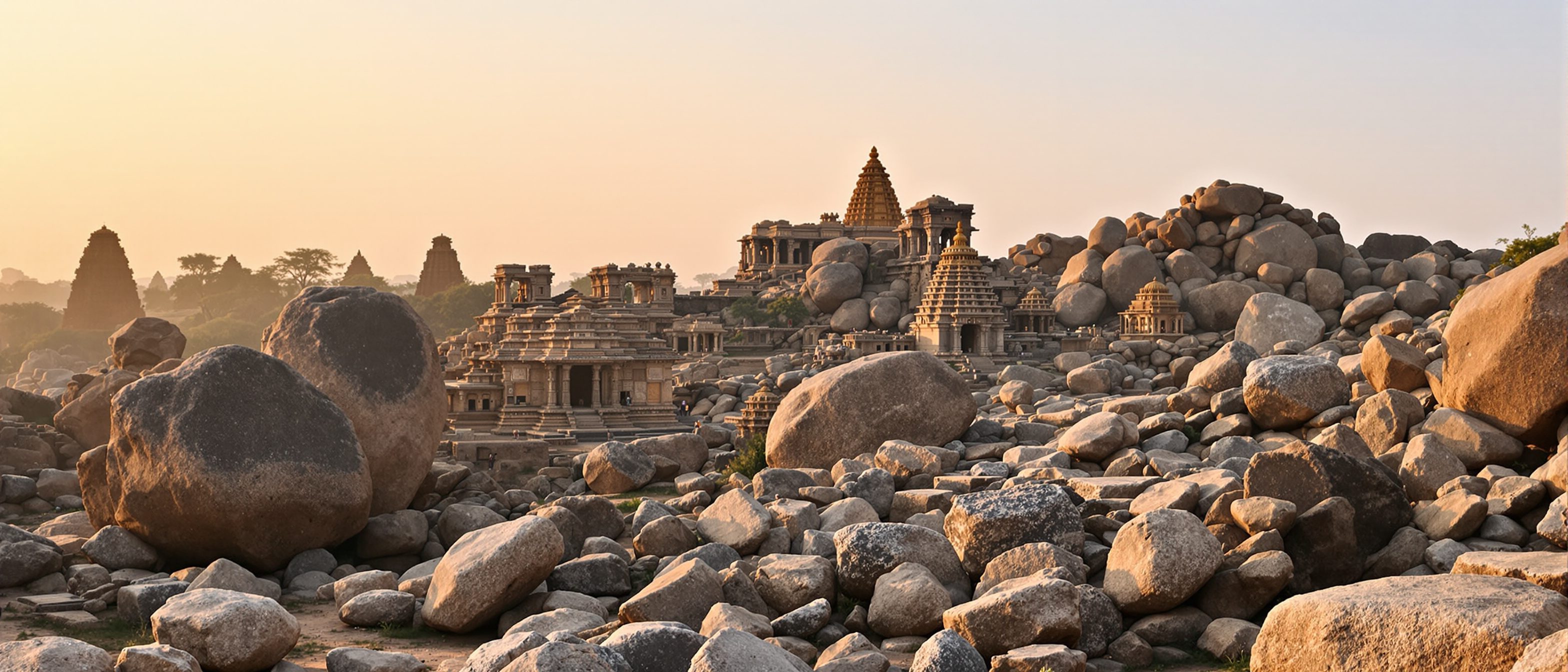
The syllabus
5 units · 5 liveTranscribed from the official B.Arch syllabus. All 5 units are live as full interactive lessons, each with original diagrams, a self-assessment quiz and studio work.
Unit 1 — Introduction to Conservation
LiveConservation — its need, the debate and its purpose; defining conservation, preservation and adaptive reuse; the distinction between architectural and urban conservation; the international agencies (ICCROM, UNESCO, ICOMOS) and their charters; museum and monument conservation; the role of the ASI and INTACH; and central and state policies and legislation.
Unit 2 — Conservation in India
LiveAn overview of monumental and urban conservation through Indian projects — case studies of sites such as Hampi, Golconda and Mahabalipuram; the craft issues of conservation; and the character and issues of historic towns and living temple cities like Srirangam, Kumbakonam and Kanchipuram, with their historic districts and heritage precincts.
Unit 3 — Conservation Practice
LiveThe first step of practice — the search and review of relevant literature and sources on a heritage building or monument: establishing its period, its style and its historicity, so that any intervention rests on firm historical evidence rather than guesswork.
Unit 4 — Site Visit & Documentation
LiveThe detailed documentation of an identified historic city or area — studying its physical, socio-economic, environmental and governance aspects; understanding its setting, its significance and the determinants that shaped the building, through measured drawings, survey and record.
Unit 5 — Analysis & Assessment
LiveThe analysis and identification of the important issues — material, construction, style, morphology and transformations; identifying the threats from natural and man-made causes of defect and deterioration; and the condition assessment of the building and area, delivered as drawings and a report.
Course outcomes
What you will be able to doUnderstand the importance of heritage and the issues and practices of conservation through case studies.
Be familiar with historic materials, their properties, investigation technologies and repair methods.
Gain knowledge of the government agencies involved in conservation.
Understand the methods of urban conservation.
Gain knowledge of conservation techniques and design.
Gain knowledge of the policies involved in conservation and practice in India.
The author
Amogh N P
Architect, interior designer, and creative polymath. Studio Matrx began in his notebooks — his vision of design made honest, useful, and open to everyone. Its Academy is written and taught in his memory, and free, forever.
More about Amogh →Heritage, once lost, cannot be remade.
The philosophy and agencies, conservation in India, and the method of research, documentation and assessment. Work the five units, study the diagrams, then test yourself.
The curriculum is free, forever