
Automated takeoffs & QA
Let AI count the bricks and catch the clashes - then verify every number yourself, because the one that's wrong is the one that goes in the contract.
Lesson byAmogh N P· Architect & interior designer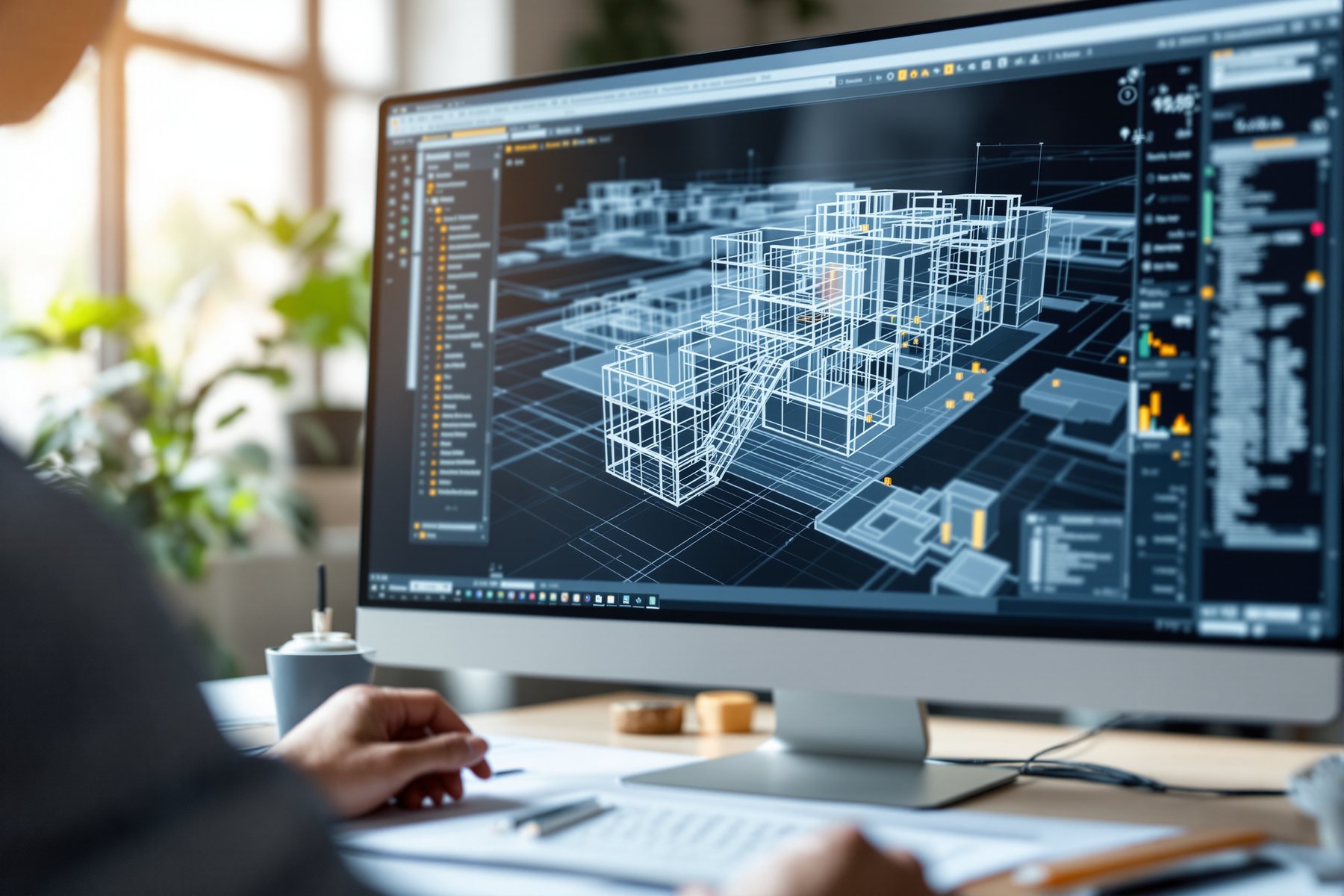
AI counted 4,820 sqm of flooring in nine seconds. The estimator's job was no longer counting - it was catching the one room it got wrong.
An estimator in Chennai used to spend two days doing a flooring takeoff for a mid-rise by hand - measuring rooms off drawings, tallying areas, transcribing into a BOQ. Now the model spits out quantities in seconds, and AI cross-checks the drawings for clashes and missing dimensions before anyone prices a thing. It is genuinely faster, and it catches errors a tired human at 7pm misses. But the estimator's job didn't vanish - it moved up a level. The machine does the counting; she does the verifying. Because the quantity that's wrong is invisible until it's in a signed contract, and then it's a dispute.
AI counts and checks fast; the human verifies what becomes binding
Pull quantities from the model in seconds instead of measuring by hand
A quantity takeoff is the count behind every estimate - how much flooring, how many doors, how much concrete - and traditionally it's slow, manual and error-prone. AI-assisted takeoff reads the BIM model or drawings and extracts the quantities automatically: areas, counts, lengths, volumes, schedules, in a fraction of the time.
When the model is clean, this is a clear win - you re-derive a takeoff in seconds after a design change instead of redoing two days of measuring. It's the same logic as everywhere in this course: AI is brilliant at the fast, repetitive, mechanical task of counting what's in front of it.
But a takeoff is only as good as the model it reads. If a wall is mis-modelled, a room is tagged wrong, or the drawing is ambiguous, the AI counts the mistake confidently and presents a tidy number that's wrong. There is no red underline under a wrong quantity - which is exactly why the next step matters.
AI counts what's in the model. If the model is wrong, you get a tidy, confident, wrong number.
Tireless pattern-matching that catches what a tired human misses
The other half is quality assurance: catching errors before they cost money. AI helps in three places. Clash detection - flagging where a duct runs through a beam or a pipe hits a column in the coordinated model - is the classic one, now faster and more automated. Drawing and document QA - spotting missing dimensions, inconsistent schedules, a spec that contradicts a drawing. And defect detection - vision models flagging cracks, spalling or finish defects from site photos.
This plays straight to AI's strength: it is a tireless pattern-matcher that never gets bored at clash 4,000, where a human's attention has long since drifted. It catches the boring, repetitive errors that slip past fatigue.
What it can't do is judge. It flags a clash; it can't tell you whether it matters or how to resolve it. It flags a crack; it can't tell you if it's structural. The AI raises the hand; the professional decides what the flag means and what to do about it.
The one number that's wrong is the one that ends up in the contract
Here is the discipline that makes all of this safe. A takeoff and a QA pass are drafts and flags, not signed-off facts. The BOQ is a contract document - the basis of payments, claims and disputes - so every quantity that lands in it gets a human check before it's priced and bound.
This is the red-list rule from Module 0, sharpened to a point: dimensions, quantities and counts are exactly where plausible and true diverge, and where being wrong is expensive. AI gives you a fast first-pass takeoff and a fast first-pass error sweep; you spot-check the big-ticket and the suspicious quantities against the drawings, sanity-check totals against rates-of-thumb, and resolve every flag with judgement.
The payoff is real - early adopters report better material prediction and fewer onsite errors, of a piece with the sector's broad gains. But it comes from AI doing the counting and catching faster, with the human still owning the numbers that go into a BOQ, a tender or a contract. Speed from the machine, accountability from you.
Automated takeoffs and AI clash/QA sweeps are a genuine productivity lift on documentation and coordination - the dimensioned middle of the project where you're usually slowest. Use them to re-derive quantities instantly after a design change and to catch coordination clashes before they reach site. But the model is the source: garbage-in, garbage-out, so a clean, well-tagged BIM model is the real prerequisite. And every quantity bound into a BOQ or tender is a professional deliverable you verify - spot-check the big items, resolve every clash with judgement. AI counts and flags; you sign.
For a fit-out, AI takeoff can pull joinery runs, finish areas and fixture counts off your model fast, and a QA pass can catch the schedule that doesn't match the drawing before it goes to the contractor. It's a real time-saver on the tedious measuring that eats your evenings. The trap is the same as everywhere: it counts what's modelled, so a mis-tagged finish or a forgotten room becomes a wrong quantity in your FF&E schedule. Verify the costly lines - the stone, the imported tile, the bespoke joinery - against the real drawings before any number reaches a client quote.
As a small studio you probably do your own takeoffs and your own checking at 11pm, which is exactly when errors creep in - so AI here is genuine relief. Even a model-based takeoff and an automated clash sweep catch the kind of tired mistakes a one-person practice can't afford to ship. Lean on it, but build the verify-before-binding habit hard: you have no senior to catch a wrong quantity in a BOQ, so the spot-check is on you. Use this platform's cost tools as an independent sanity layer on the totals, and never let a fast AI number go into a quote unverified.
Model-based quantity takeoff (from BIM)
Automated quantities
Extracts areas, counts, lengths and volumes straight from the BIM model in seconds and re-derives them after a design change. Only as accurate as the model is clean and correctly tagged - garbage in, garbage out, so the quantities still get verified before they're priced.
ChatGPT (GPT-5 era) / Claude
BOQ drafting + tabular checks
ChatGPT is strong at tabular output - drafting BOQ structures, trade nomenclatures and unit-price schedules; Claude holds very long specs and tenders for consistency checks. Both will confidently invent rates, codes and quantities, so every figure is verified against a real source before it's used.
AI clash & defect detection (Reconstruct, vision QA)
Coordination + site QA
Automated clash detection in the coordinated model and vision-based defect flagging (cracks, finish issues) from site photos. Tireless at catching the boring, repetitive errors; it raises the flag, but whether a clash or a crack actually matters is a professional's call.
“If AI does the takeoff, I can drop those quantities straight into the BOQ - the computer measured it, so it's exact.”
The computer measured the model, not the building - and a takeoff is only as right as what was modelled and tagged. A mis-modelled wall or a wrongly tagged room produces a tidy, confident, wrong quantity with no warning. A BOQ is a contract document, so every quantity that goes in gets a human verification: spot-check the big-ticket items against the drawings and sanity-check the totals before anything is priced and bound.
Workshop — let AI take off a BOQ section, then catch its wrong number
You'll generate one section of a BOQ from a model or drawing with AI help, then run a deliberate verification pass to find at least one quantity you wouldn't trust into a contract - turning 'AI did the takeoff' into 'AI drafted it and I signed it'.
A BIM model or drawing set with quantities; a model takeoff feature or an LLM (ChatGPT/Claude) for the table; your rate references. One real or studio project.
TAKEOFF VERIFICATION PASS

Project: ________  Section: ________ (e.g. flooring)
Source: BIM model / drawings / AI-drafted table

Item        | AI quantity | My check | Match? | Note
------------|-------------|----------|--------|-----
            |             |          |        |
            |             |          |        |
            |             |          |        |

Big-ticket items spot-checked (>= top 3 by value):
  1. ________   2. ________   3. ________
Total sanity vs rate-of-thumb: ________
WRONG / SUSPECT quantity found: ________
Why it was wrong: model error / tag / ambiguity
SIGNED OFF FOR BOQ? Y / N by: ________- 1Generate one BOQ section (say flooring or doors) - pull quantities from the model's takeoff, or have an LLM draft the table structure from your drawing.
- 2List the AI's quantities in the starter, item by item, exactly as it gave them.
- 3Spot-check the three biggest-value items: re-measure or recount them against the drawings yourself and record whether they match.
- 4Sanity-check the totals against a rate-of-thumb or a past similar project - a number that's wildly off is a flag even before you measure.
- 5Hunt for at least one quantity you wouldn't sign - a room the model missed, a mis-tagged finish, an ambiguous drawing the AI guessed on - and note why it was wrong.
- 6Resolve it: correct the model or the number, and decide what the fix changes downstream.
- 7Sign or withhold: mark the section signed-off only once you've verified the big items and the totals - the human gate before anything becomes a contract figure.
You’ll walk away with
A verified BOQ section with a documented verification pass - AI's quantities, your spot-checks, at least one caught error and why it happened, and an explicit human sign-off: the workflow that lets you use AI speed without shipping a wrong number into a contract.
Two quick checks, if you have five minutes.
- 01Run an AI takeoff, then deliberately mis-tag one wall in the model and re-run it. Watch the quantity change with total confidence and no warning - that's why you verify.
- 02Ask an LLM to draft a BOQ with unit rates for your project, then check three rates against a real price list. Note that it never once flagged that the rates were invented.
AI-automated takeoffs pull quantities from a model in seconds, and AI QA tirelessly catches clashes, defects and document errors a fatigued human misses - real speed on the slow, mechanical middle of the project. But a takeoff is only as right as the model, and a BOQ is a contract document, so every quantity gets a human check before it's bound. AI counts and flags fast; you verify and sign.
Automated takeoffs extract quantities from BIM in seconds; AI clash, document and defect QA catch repetitive errors a tired human misses. Both are drafts and flags, not facts - the model is the source, so garbage in means garbage out, and a BOQ is binding. Spot-check the big items, sanity-check totals, resolve flags with judgement. AI counts and catches; the human verifies and signs.
Can AI generate a BOQ automatically?
It can draft one fast - pulling quantities from a clean BIM model and structuring the table with an LLM that's good at tabular output. What it can't do is guarantee the numbers, because the takeoff is only as accurate as the model and LLMs will confidently invent rates and codes. A BOQ is a contract document, so every quantity and rate gets a human verification before it's priced and bound.
Is AI clash detection reliable?
It's reliable at the mechanical part - tirelessly flagging where elements physically intersect in the coordinated model, far past the point where a human's attention fades. What it can't do is judge whether a flagged clash actually matters or how to resolve it. So it's a powerful first-pass error sweep that surfaces issues fast, with a professional deciding which flags are real problems and what to do about each.
Will AI replace quantity surveyors and estimators?
It's automating the slow, mechanical counting, not the role. The job shifts from measuring by hand to verifying, judging and owning the numbers that go into binding documents - which is the harder, higher-value part. An estimator who uses AI to take off in seconds and spends the saved time verifying and catching errors is far more productive; the accountability for a contract quantity stays human.
The author
Amogh N P
Architect, interior designer, and creative polymath. Studio Matrx began in his notebooks — his vision of design made honest, useful, and open to everyone. Its Academy is written and taught in his memory, and free, forever.
More about Amogh →That closes the loop where ML meets the building itself - predicting it, watching it rise, capturing it as-built and counting it. Next module, we step back to the studio: running an AI-augmented practice, pricing the work, and keeping a team and its clients on side.