
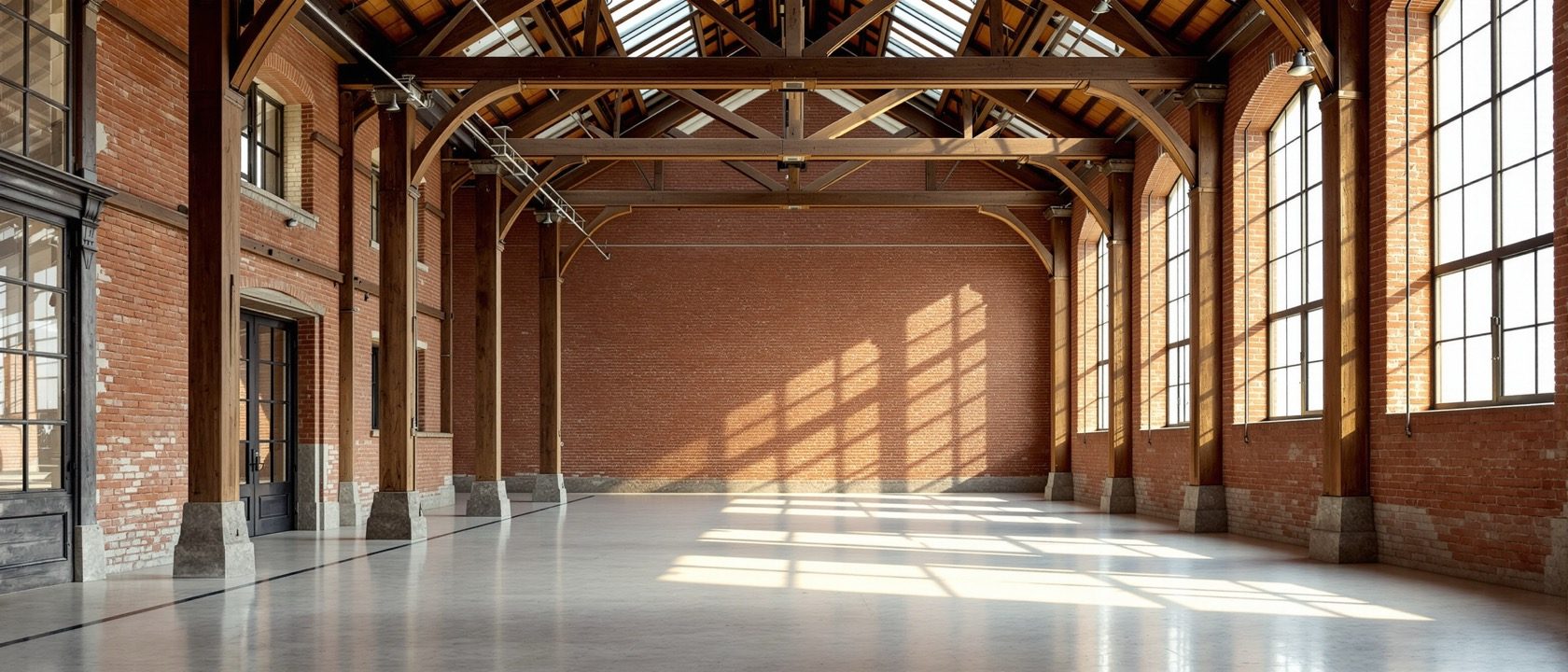
Introduction to Adaptive Reuse
The greenest building is the one that already exists
Adaptive reuse is giving an old building a new use while keeping its structure and character — instead of demolishing it. Its guiding truth, in Carl Elefante’s phrase, is that the greenest building is the one that already exists: an old building holds decades of embodied energy, material and memory, and keeping it spends almost none of the new carbon a fresh building demands. This unit introduces adaptive reuse and its theories, cultural inheritance and the whole range of heritage buildings — grand and ordinary alike — and how to ascertain whether an old building is sound enough to reuse.
Learning objectives
By the end of this lesson, you will be able to — mapped to the course outcomes for Adaptive Reuse & Recycling:
Explain what adaptive reuse is, its history and its theories.
Recognise the range of heritage buildings and old structures worth reusing.
Understand how a building's structural stability and prolonged life are assessed.
What adaptive reuse is
Working with what already exists — a mill becomes a studio, a warehouse a home, a haveli a hotel — is design at its most resourceful and most rooted. It saves the embodied energy, material and cultural memory of a building that already stands, and often makes a richer interior than any new box.[1, 6]
New life in an old building
ADAPTIVE REUSE is giving an existing building a NEW use while keeping its structure and character — a cotton mill becomes a design studio, a warehouse becomes a home, a colonial bungalow becomes a museum, a fort or haveli becomes a hotel. Instead of DEMOLISHING and building afresh, the designer works WITH what is already there. Its guiding truth, in Carl Elefante's famous phrase (2007), is that 'the greenest building is the one that already exists': an old building holds decades of EMBODIED energy, material and memory, and keeping it spends almost none of the new carbon and material a fresh building demands. Adaptive reuse is design at its most resourceful and most rooted — it saves the planet's resources, keeps a place's cultural memory alive, and often makes a richer, more characterful interior than any new box could. This whole elective teaches how to do it well, and how to design with recycled materials too.[1, 6]
An old idea, newly urgent
Reusing buildings is as old as building; what is new is the theory (the conservation charters) and the urgency (the climate and resource crisis). Adaptive reuse sits where conservation meets sustainability.[1, 5]
Cultural inheritance & heritage
Heritage is a cultural inheritance — and not only palaces and temples. Ordinary houses, bazaars, mills and warehouses carry memory and embodied value too, and are most of what reuse works with. The first skill is to see the value in a tired old building.[1, 5]
Can it be reused — and for how long?
Old buildings are not automatically unsafe (a myth). But it must be established: ascertaining structural stability assesses the walls, beams and foundations, and estimating the prolonged life asks how many more decades it can serve. An assessment, not a prejudice, decides.[4, 7]
Not only grand monuments
The buildings we inherit are a CULTURAL INHERITANCE — the built memory of a place, handed down. And heritage is NOT only grand palaces, temples and monuments (a common myth): it is also the ordinary and the industrial — the courtyard house, the bazaar street, the cotton mill, the railway shed, the colonial warehouse. These 'ordinary' buildings carry a community's memory and a huge store of embodied material and craft, and they are the MAJORITY of what adaptive reuse actually works with. India is full of them: heritage havelis, forts and bungalows reborn as hotels and museums, old industrial buildings reborn as galleries and studios. Learning to SEE the value in an old structure — famous or humble — is the first skill of this course: to look at a tired old building and see not a problem to clear, but a resource, a memory and an opportunity.[1, 5]
Decode the vocabulary
Adaptive reuse and recycling come with real terms and comfortable myths. Filter the reuse decoder by theme and see each idea graded VERIFIED, NUANCED or MYTH.
Reuse decoder · the vocabulary of adaptive reuse
Approaches, materials, conservation and sustainability — graded VERIFIED, NUANCED or MYTH.
Adaptive reuse
New life in an old building
Means: Giving an existing building a NEW use while keeping its structure and character — a mill becomes a museum, a warehouse becomes a home, a haveli becomes a hotel — instead of demolishing and building new.
Honestly · The heart of this course, and one of the most powerful moves in sustainable design: it saves the embodied energy, the material and the cultural memory of a building that already exists. Adaptation is design at its most resourceful and most rooted.
'The greenest building already exists'
Carl Elefante, 2007
Means: The idea (Carl Elefante, 2007) that the most sustainable building is usually the one already built — because demolishing it wastes the huge EMBODIED energy and carbon locked in its materials and construction.
Honestly · The intellectual heart of adaptive reuse. A new 'green' building still costs a mountain of new material and carbon to build; keeping an old one spends almost none. Reuse is climate action you can walk into.
'Reuse is always cheaper'
Not always
Means: The belief that reusing an old building is always cheaper than building new.
Honestly · A MYTH. Reuse is almost always GREENER, but not always cheaper: hidden conditions (rot, damp, weak structure), code and services upgrades, and structural strengthening can cost more than a new build. Its case is environmental and cultural first, financial only sometimes — be honest about that.
'Old buildings are unsafe'
An assessment decides
Means: The prejudice that old buildings are automatically unsafe, unusable or not worth keeping.
Honestly · A MYTH. Many old buildings are remarkably robust and can be assessed, strengthened and upgraded to serve for another century. A proper STRUCTURAL ASSESSMENT, not a prejudice, decides whether a building can be reused — and how.
Recycled steel
Recyclable, keeping its strength
Means: Steel that is melted down and reformed — a beam from a demolished building becomes new steel — retaining its fundamental properties through many cycles, again and again.
Honestly · Metals are recycling's success story: steel can be recycled almost endlessly WITHOUT losing quality, and most structural steel already is. Recycled (secondary) steel takes far less energy than making it from ore. A genuinely circular material.
Recycled glass (cullet)
Infinitely recyclable, if sorted
Means: Waste glass crushed into 'cullet' and melted into new glass — recyclable again and again with the same clarity and strength, saving energy and raw sand.
Honestly · Glass recycles infinitely IN PRINCIPLE — but only if it is SORTED by colour and kept clean; ceramics, laminated and tempered glass and other contaminants can ruin a whole batch. Recyclable, yes, but not casually: the criteria and separation matter.
Reclaimed timber
Often better than new
Means: Old timber salvaged from a demolished or altered building, de-nailed, cleaned, checked and re-graded for a second life as structure, flooring or joinery.
Honestly · Often SUPERIOR to new: old-growth reclaimed timber is frequently denser, more stable and finer-grained than fast-grown new wood. But it must be assessed — checked for rot, insect damage, hidden metal and moisture, and re-graded — before it is trusted structurally. Quality estimated, not assumed.
'Everything is recyclable'
Much is not
Means: The comfortable belief that any material can simply be recycled.
Honestly · A MYTH. Thermoset plastics, laminates, composites, treated and contaminated materials, and mixed multi-material assemblies often CANNOT be economically recycled at all. Knowing what can and cannot be reused — and designing for disassembly — is a real part of the craft.
Downcycling vs upcycling
Quality up or down
Means: Two directions for a recycled material: UPCYCLING raises its value or quality; DOWNCYCLING lowers it — e.g. old concrete crushed into road sub-base, or mixed plastics into a park bench.
Honestly · Much of what we call 'recycling' is really DOWNCYCLING — a one-way step down the quality ladder that only delays the landfill. A truly circular design aims to keep material at its HIGHEST use (reuse the brick as a brick), not just find it a lesser one.
Embodied vs operational carbon
The carbon already spent
Means: EMBODIED carbon is the energy and emissions already spent to make and build a building; OPERATIONAL carbon is what it uses to run. Demolition throws the embodied carbon away.
Honestly · The killer argument for reuse. A new efficient building may save operational carbon, but its embodied carbon of demolition and rebuild can take DECADES to pay back. Keeping the old fabric spends almost no new carbon — reuse wins on the whole-life view.
Sustainability & the Earth Summit
Economic, social, environmental
Means: Sustainable development — meeting the needs of the present without compromising the ability of future generations to meet theirs (Brundtland, 1987) — affirmed at the 1992 Rio Earth Summit, balancing ECONOMIC, SOCIAL and ENVIRONMENTAL needs.
Honestly · The frame the whole course sits in. Adaptive reuse and recycling are sustainability made concrete in buildings: they honour all three pillars — economic (value kept), social (memory and community kept), environmental (material and carbon saved).
Green rating & LEED
A useful tool, not the whole
Means: Green building rating systems — LEED (USGBC; Certified, Silver, Gold, Platinum), and in India GRIHA and IGBC — that score a building's sustainability against set criteria, including reuse of existing structure and materials.
Honestly · Useful for setting targets and rewarding reuse — but a rating is a TOOL, not the whole of sustainability. A high score on a checklist is not the same as a genuinely low-impact, whole-life building; chase the outcome, not just the plaque.
Levels of intervention
A ladder, not one choice
Means: The graded ways to act on a heritage building, from least to most change (the Burra Charter): MAINTENANCE, PRESERVATION, RESTORATION, RECONSTRUCTION and ADAPTATION — each right in different circumstances.
Honestly · Conservation is not one thing; it is a LADDER. The guiding rule is MINIMUM intervention — do as little as the building needs, keep as much original fabric as you can, and make changes reversible where possible. Adaptive reuse lives at the 'adaptation' end, giving the old fabric a new use.
'Conservation freezes a building'
Adaptation is legitimate
Means: The belief that conserving an old building means freezing it in time and never changing it.
Honestly · A MYTH. Buildings survive by being USED, and adaptation — giving a building a viable new use — is a recognised conservation act, not a betrayal of it. The honest aim is respectful change: keep what matters, adapt what must, and let the old building live on rather than die pristine.
'Heritage = grand monuments'
The ordinary matters too
Means: The belief that only grand palaces, temples and monuments count as heritage worth keeping.
Honestly · A MYTH. Ordinary houses, bazaars, mills, warehouses and vernacular buildings carry cultural memory and embodied value too — and are the majority of what adaptive reuse works with. Cultural inheritance is the whole built fabric handed down, not only the famous few.
Documentation & condition mapping
Know it before you touch it
Means: Recording an existing building fully — measured drawings, a building assessment report, and CONDITION MAPPING of cracks, damp, decay and sound fabric onto the plans — before deciding any design move.
Honestly · The professional discipline that separates careful reuse from guesswork. You cannot responsibly design for a building you have not understood; the survey, the assessment report and the condition map are what turn an old building from a mystery into a brief.
Revival of old techniques
Lime, craft, traditional finishes
Means: Bringing back the traditional materials, crafts and finishes an old building was made with — lime plaster and mortar, traditional joinery, stone dressing, natural finishes — to repair it truthfully.
Honestly · Old buildings often need OLD methods: lime (which breathes) not cement (which traps damp), matched craft not modern substitutes. Reviving these techniques repairs a building honestly and keeps living the very crafts that made it — conservation of skill as well as fabric.
The circular economy
Design out waste
Means: An economy that designs out waste and keeps materials in use at their highest value for as long as possible — reuse, repair, remanufacture, recycle — rather than the linear take-make-throw model (Ellen MacArthur Foundation).
Honestly · The big idea behind both halves of this course. Buildings and their materials should be seen as a BANK of resources to be kept circulating, not waste in waiting. Adaptive reuse keeps whole buildings in the loop; recycling keeps their materials in it.
The greenest building is the one that already exists — keep the fabric, keep the memory, keep the material in the loop.
At a glance
| Aspect | The fact | The folklore |
|---|---|---|
| Adaptive reuse means | Giving an old building a NEW use, keeping its structure & character | Demolishing and building new |
| 'The greenest building is...' | The one that already exists (Elefante, 2007) — embodied energy saved | A brand-new certified 'green' building |
| Reusing buildings is | An OLD idea, made newly urgent by the climate & resource crisis | A recent fashion |
| Heritage is | The whole inheritance — ordinary, industrial AND grand | Only palaces, temples and monuments |
| Old buildings are | Not automatically unsafe — an ASSESSMENT decides | Always unsafe and best cleared |
| Structural stability is | ASCERTAINED by survey and testing, not assumed | Guessed from the building's age |
Key terms
Giving an existing building a new use while keeping its structure and character, instead of demolishing and building new — the most resourceful, most rooted way to build.
Carl Elefante's phrase (2007): the most sustainable building is usually the one already built, because demolishing it wastes the embodied energy and carbon locked in its fabric.
The energy and emissions already spent to extract, make, transport and assemble a building's materials — all thrown away when the building is demolished.
The built memory of a place handed down through its buildings — not only monuments but ordinary, vernacular and industrial buildings too, all carrying value.
Assessing the real condition and load capacity of an old building's walls, beams, floors and foundations — by survey and testing — to judge whether it can be safely reused.
The estimate of how many more decades a building can serve with sensible repair and strengthening — often another century for a sound, well-assessed old structure.
Study task
Find one old building near you that has been (or could be) given a new life — an old house, a mill, a warehouse, a bungalow. First, argue its case for reuse: what embodied energy, material and memory would be lost if it were demolished? Second, look at it as a designer: is it grand or ordinary heritage, and what cultural value does it hold? Third, ask the honest question: how would you ascertain whether it is structurally sound enough to reuse, and estimate its prolonged life — what would you check, and who would you involve? Finally, imagine a new use that would suit it, and write one line on why keeping and adapting this building is greener than knocking it down and building new. The goal is to practise the first move of adaptive reuse: seeing a tired old building not as a problem to clear, but as a resource.
Self-assessment
1. What is adaptive reuse?
2. What does 'the greenest building is the one that already exists' mean?
3. What counts as heritage worth reusing?
4. How is it decided whether an old building can be reused?
Recap
References & further reading
- [1]Harimohan Pillai, Heritage Conservation and Cultural Continuity, Saraswatham Publishers, 2002; and the concept, history and theories of adaptive reuse. https://www.icomos.org/
- [4]J. Stanley Rabun & Richard M. Kelso, Building Evaluation for Adaptive Reuse and Preservation, John Wiley & Sons, 2009 — structural assessment and estimating a building's life. https://www.wiley.com/
- [5]Robert W. Burchell & David Listokin, The Adaptive Reuse Handbook, Transaction Publishing, New Jersey — heritage, cultural inheritance and reuse. https://www.routledge.com/
- [6]Carl Elefante, 'The Greenest Building Is... One That Is Already Built', Forum Journal (National Trust for Historic Preservation), 2007. https://carlelefante.com/insights/the-greenest-building-is/
- [7]Ascertaining structural stability and the prolonged life of old buildings — structural assessment for adaptive reuse. https://www.astm.org/
Further reading
- Robert W. Burchell, The Adaptive Reuse Handbook, Transaction Publishing, New Jersey.
- J. Stanley Rabun, Building Evaluation for Adaptive Reuse and Preservation, John Wiley & Sons, 2009.
- Harimohan Pillai, Heritage Conservation and Cultural Continuity, Saraswatham Publishers, 2002.
Sources gathered and fact-checked June 2026. Published values vary by source, sample and method — treat as indicative and confirm against the cited standard before structural use.
The author
Amogh N P
Architect, interior designer, and creative polymath. Studio Matrx began in his notebooks — his vision of design made honest, useful, and open to everyone. Its Academy is written and taught in his memory, and free, forever.
More about Amogh →