
We raised our house after the flood
The water came in one August night and never fully left our minds. So we lifted the house to meet it.
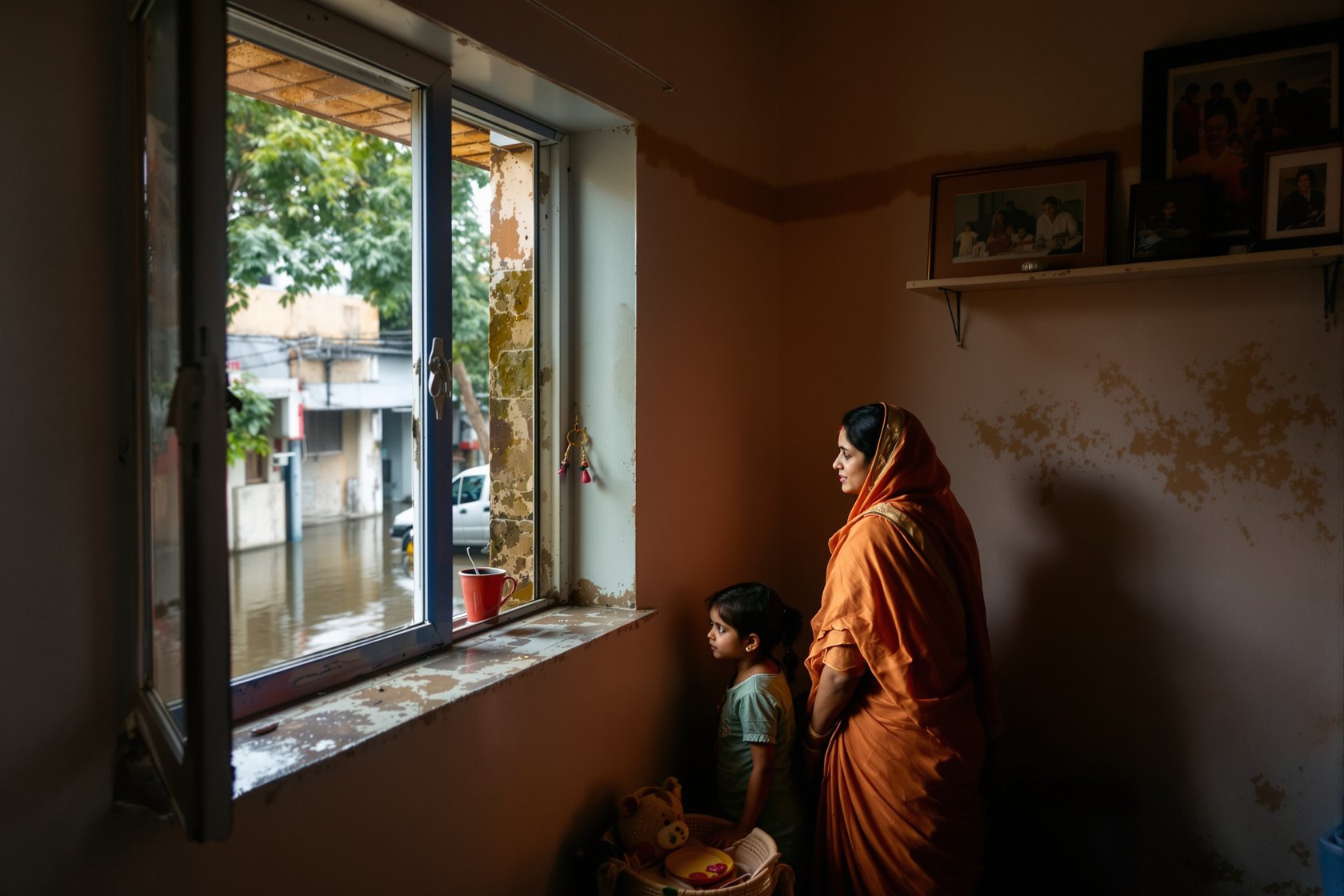
The water came at night, which is the cruelty of it. By the time we understood what the sound was — not rain on the roof but rain inside the house — it was already at our ankles in the hall, cold and the colour of milky tea. My husband carried our daughter to the bed and we stood the sofa on bricks, which felt clever for about ten minutes until the bricks disappeared too. I remember watching the fridge lean, slow and stupid, like a drunk man, and I remember the smell most of all. Not clean rain. The drain, the road, the whole neighbourhood, coming in through our front door as if it had been invited.
We are an ordinary family in a town that had never called itself a flood town. Two floods in nine years changed that, and the second one, the bad one, put a metre of water through the ground floor and left a brown tide line on the wall at the exact height of my daughter's shoulder. It stayed three days. It took a month to truly leave — the damp, the smell, the mould that came up behind the paint like a bruise. We lost the sofa, the beds, the kitchen cabinets that puffed up and never closed right again, my father-in-law's books, the almirah with the wedding photographs. Furniture you replace. The photographs you do not.
The water did not ruin the house. It ruined everything we had put inside the house without ever thinking about water.
What the water taught us
For weeks after, we cleaned. And while you clean a flooded house on your hands and knees, it tells you things. It showed us that the water always came from the same low corner where the road drained toward us, not away. It showed us the plug points were exactly at the wrong height, that the inverter we had bought so proudly sat on the floor of the store room like an offering to the flood. It showed us that our walls, good solid brick, were completely fine once they dried, and that everything we had lost was the soft stuff we had bolted to those good walls without a second thought. The house was not our enemy. Our choices were.
The decision to lift
The easy thing was to repaint, replace, and pray. We did that after the first flood. The second flood taught us that prayer is not a drainage strategy. So we made the hard, expensive decision: we would raise the living part of the house above the water instead of meeting the water every year on our knees. We could not lift the whole structure — that is a fortune and a gamble. What we could do, an honest local engineer told us, was build up. Make the ground floor a floor we were allowed to lose, and move our real life upstairs, above the line the flood had so helpfully drawn for us on the wall.
The hard choices, and the money
I will not pretend it was cheap or that we did it all at once. We did it in the order our money allowed. First, the cheap and vital things: we lifted every electrical point, the board, the inverter, the gas, all of it well above that tide line, and we put a one-way valve on the drain so the road could never come up through our own bathroom again. We regraded the yard so water ran away from the house and dug two soak pits so our own rain went into the ground instead of pooling at the door. Then, over the next two seasons, the big one: we finished a proper upstairs — two bedrooms, a small kitchen, the things we could not bear to lose — and we let the ground floor become what it now honestly is: tiled hard, holding the car, the cycles, a washing line, nothing soft, nothing loved. A floor we can hose out and walk away from.
The next monsoon
The rain came again the following August, the way it always will now. I noticed I was not doing the thing I used to do — lying awake, listening, calculating how fast I could move a mattress. The water rose in the street, came a little way up the ground floor, sat there for a day, and left. We swept it out. The car had been moved up the road the night before, out of habit now, not panic. Upstairs, the photographs were dry. My daughter slept through it. That is the whole thing, really. We did not defeat the flood. You cannot, and the people who sell you that are lying. We just stopped putting our lives in the water's way and gave the water somewhere to go. The house takes the flood now, the way you take a season. And in the morning it is still our house.