The anatomy of a sloped roof
Pitch, overhang and gutter — why each one matters.
A flat slab tells you nothing about where the water goes. A sloped roof is a diagram of it — every angle and edge is a decision about getting rain off the building as fast and as cleanly as possible. Read one closely and the whole logic is visible from the street.
Start with the pitch, the angle of the slope. Steeper sheds water faster, which is why the heavy-rain regions — Kerala, the Konkan, the North-East — build steep, while drier zones get away with shallow. Go too flat and water creeps back under the tiles by capillary action; a Mangalore-tiled roof generally wants around 22 degrees or more. Rainfall and the choice of covering set the angle together.
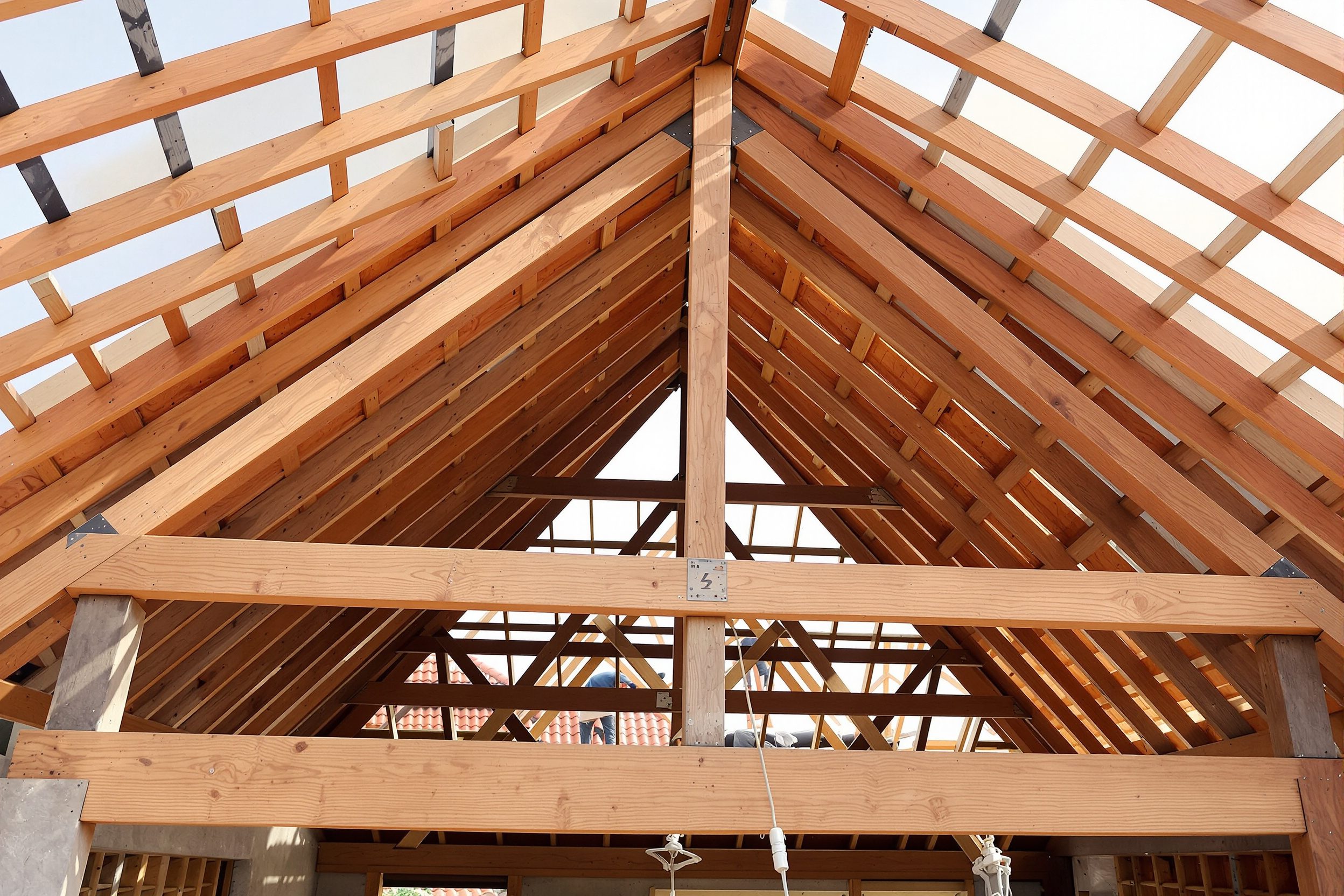
Beneath the surface is the frame that holds that angle: rafters running down the slope, purlins crossing them, and the truss or ridge that carries the whole assembly. Timber traditionally, increasingly steel today. The covering — clay or Mangalore tiles, metal sheet, shingles — sits on battens fixed across the rafters, so the structure and the skin are two separate, replaceable layers.
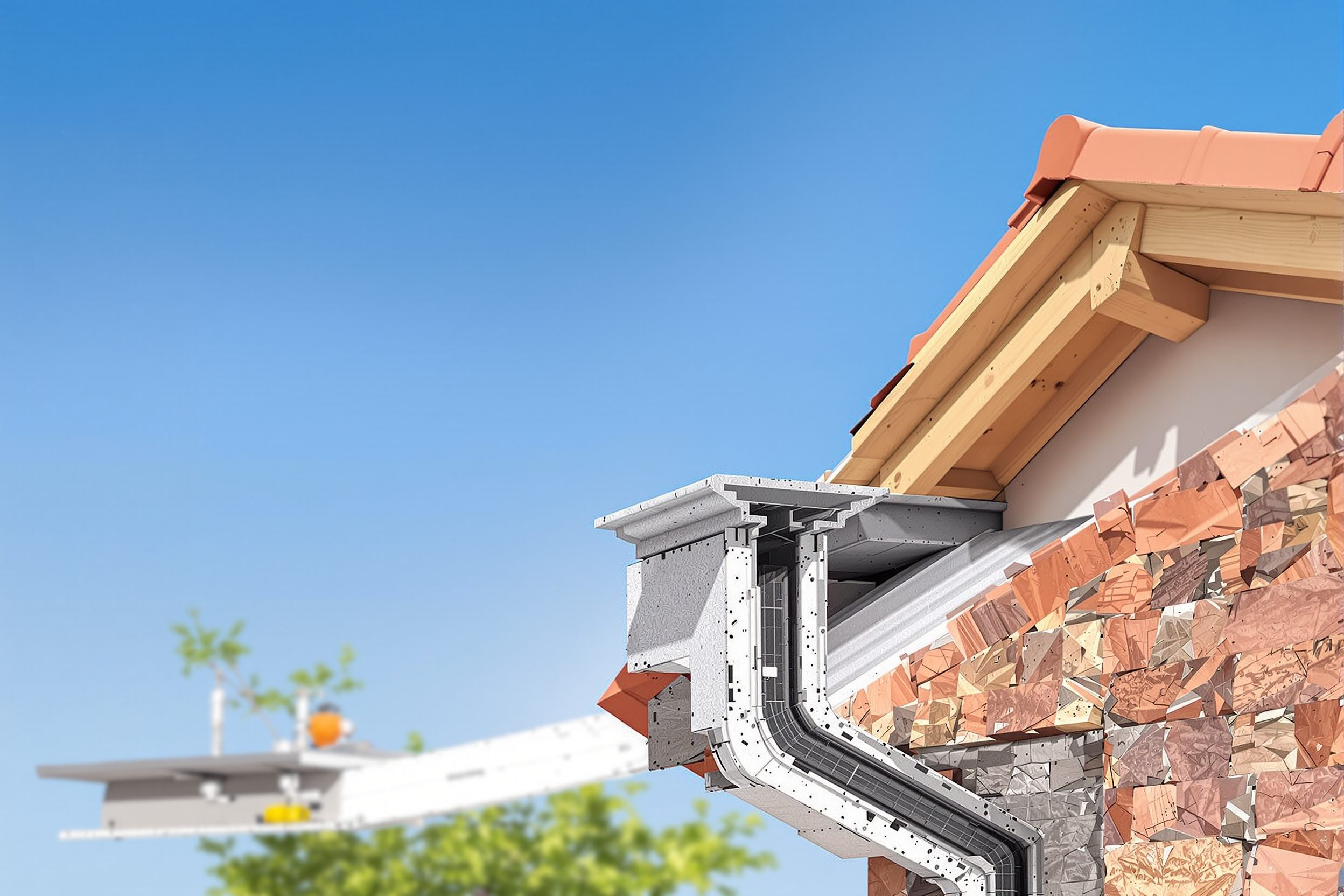
Then the most underrated line on the whole roof: the overhang, or eave. A deep overhang throws rainwater — and the high summer sun — well clear of the wall below. Skimp on it to save a little money and you will meet it again as the dark stain that starts at the top of every facade. The humble chajja over a window is the same idea, scaled down.
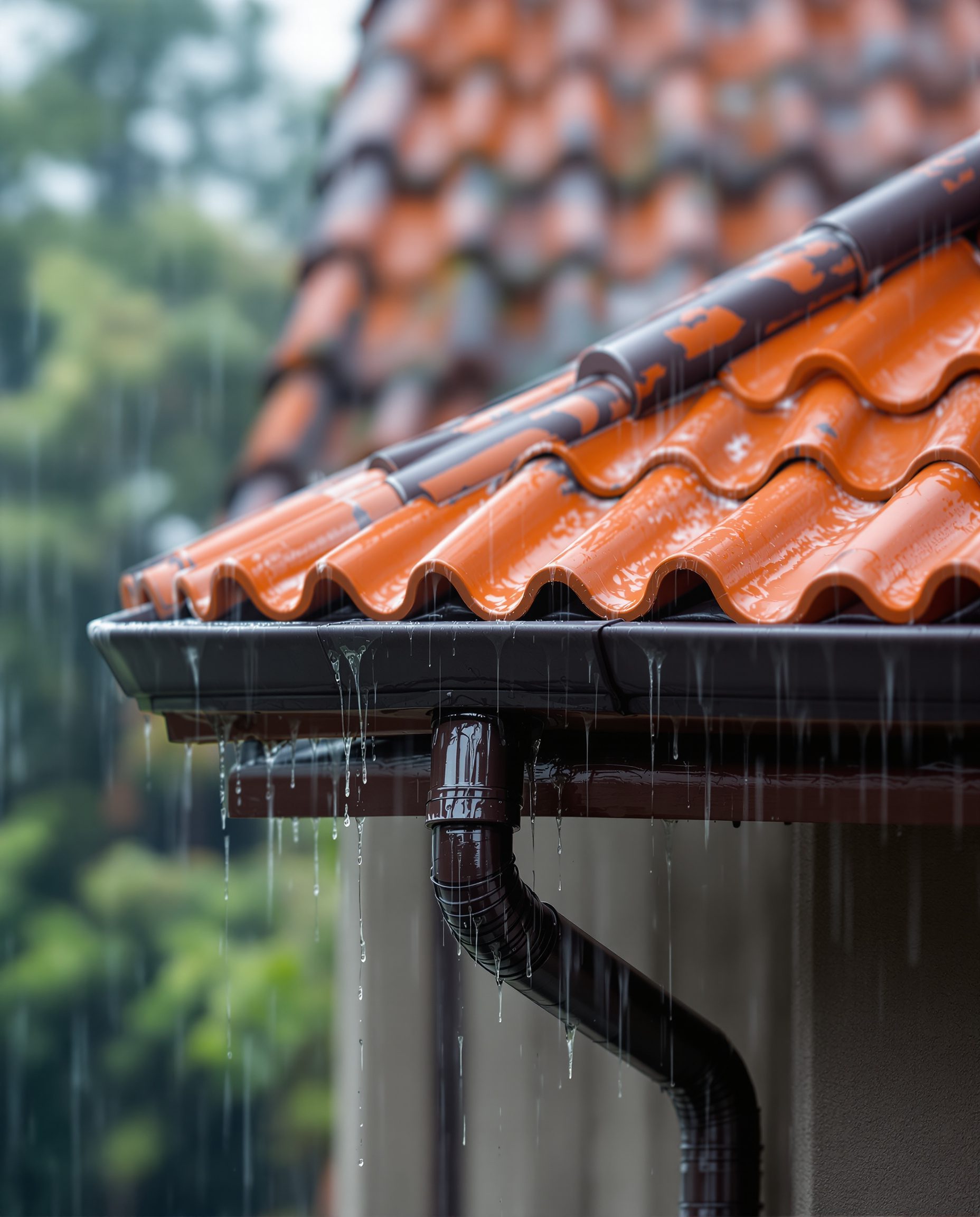
Finally the edge, where the water is collected and sent away. The gutter runs along the eave; the downpipe carries the catch down to a drain or, better, a harvesting tank; and the valley — where two slopes meet in an internal angle — is the single highest-risk point on the roof, the place leaks begin if the flashing is wrong.
Put together, the sequence is almost mechanical: the pitch sheds, the overhang protects, the gutter collects, the downpipe discharges. Get any one of the four wrong and the other three cannot save the wall beneath. A good sloped roof is not a style choice — it is a small, well-tuned machine for moving water.