
The post-monsoon news desk
The flood line the season just redrew, the drainage-code confusion worth clearing up, and the audit every building owes itself now that the rain has eased.

Three things are crossing the practice desk now that the clouds are thinning: a rule the flood line just made real, a code confusion worth clearing up, and the inspection the season quietly demands before the damage gets painted over.
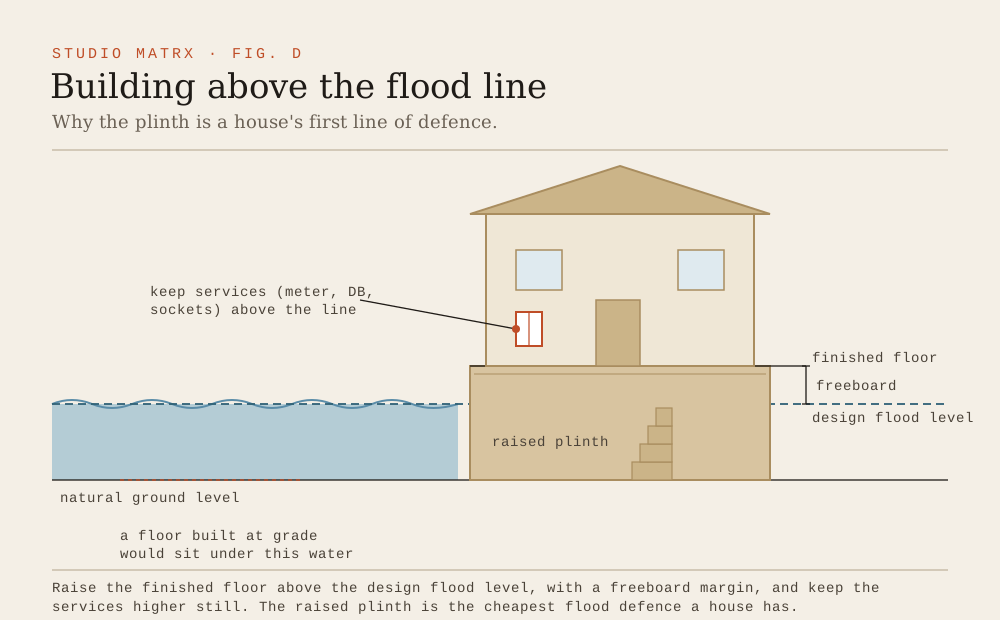
First, the rule clients suddenly care about. A bad season is when flood-zone regulation stops being abstract. Building on low or notified land in India is not a free choice — many states regulate construction in demarcated flood plains, the coast is governed by the CRZ notification, and local bye-laws set minimum plinth and finished-floor levels above a flood datum precisely so the water has somewhere to go that is not your living room. The National Disaster Management Authority publishes flood-management guidance that states and cities draw on. Treat the flood level as a design input, not an afterthought: raise the plinth, keep habitable floors and critical services above the local datum, and confirm the flood-plain and CRZ status of the plot before you site anything. Thresholds and datums vary by state and local body and are enforced harder after a wet year, so verify the current rule with the authority before you advise a client.

Second, a confusion worth clearing up. When a terrace ponds or a basement floods, the reflex is to blame the waterproofing and to reach for a bigger pipe. Both miss the point. There is no single national storm-drainage code to switch to; drainage in an Indian building is governed together by NBC 2016 Part 9, the CPHEEO manuals for the public network, and the local municipal bye-laws — verify which design rainfall your city expects you to plan for. And the fix is rarely a fatter downpipe. Drainage is capacity, slope and a clear path: outlets sized for the right rainfall intensity, falls that actually move water, and rainwater pipes and gullies that are not choked. Waterproofing is the last line of defence, not the strategy. A flat slab with the wrong fall and a blocked outlet will defeat the best membrane every monsoon.
Third, the reminder the weather enforces. The weeks after the rain are the audit window, and the season has handed you a free diagnostic. Walk the terrace and look for ponding and the tide-marks of standing water; trace the seepage stains back to their source; open and desilt the storm and rainwater drains before they are forgotten until next June; and check the underground sump and tank for ingress and contamination after a wet season. Most of what you find will trace to design and maintenance — flat falls, choked outlets, a chajja throwing water at the wall — rather than to a failed chemical. Log rain-day and force-majeure delays honestly for RERA-registered timelines rather than reconstructing them later, and keep an eye on state SDMA and NDMA advisories through the tail of the season.
And a housekeeping note to close on: post-monsoon is the one month of the year when the evidence is still fresh. It is the right window to fix while you can still see what failed, and to plan next year's water works — rainwater harvesting and recharge, drainage upgrades, a waterproofing renewal — before the memory fades and the first cloud of the next June catches the site unprepared.