
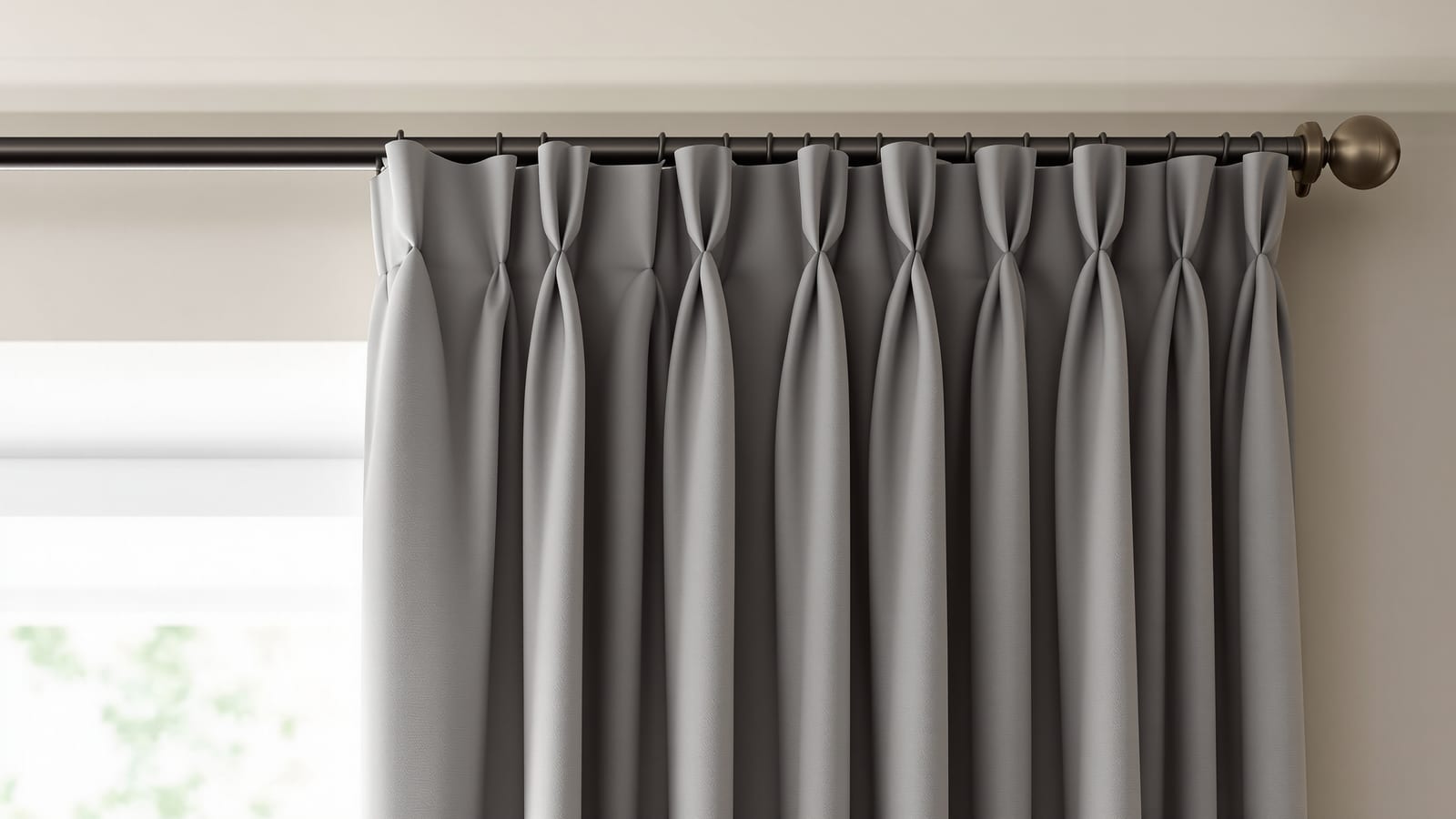
Goblet Pleat Curtains: Formal, Traditional Drama (India 2026)
Rounded, padded cups that read like a row of goblets — the grandest, most formal curtain heading there is. When it earns its premium, how to care for it, and why it is best left mostly drawn.
Some curtains are meant to be used; a few are meant to be admired. The goblet pleat sits firmly in the second camp. It takes a tailored pinch pleat and opens the top of each fold into a rounded, padded cup — a row of goblets standing to attention across the top of the window. It is the most formal, most traditional, most unapologetically grand heading there is, and in the right room it turns a length of cloth into a piece of architecture. In the wrong room it is fussy, expensive and forever in the way. This guide is the honest case for goblet pleats, and the honest case against.
A goblet pleat is the difference between a curtain and a gown. It is dress, not function — buy it for the rooms you want to feel grand, and let humbler headings do the daily work.
If you want the whole field of headings first — eyelet, pencil, pinch, wave — start with curtain pleats and headings explained, then come back here for the deep dive on the dressiest one.
What a goblet pleat actually is
Picture a triple pinch pleat: fabric hand-gathered into a tight group of folds, stitched firmly a few inches down from the top. A goblet pleat starts exactly the same way at the base — but instead of leaving the top pinched flat, the tailor flares the top open into a rounded cup and stuffs it with wadding (batting, interlining offcuts, or even a roll of stiff net) so the cup holds its shape permanently. The result is a sculpted, three-dimensional top edge: a regular rhythm of bowl-shaped cups, each one catching light on its curve.
That stuffing is the whole point and the whole limitation. The padding is what gives the goblet its proud, architectural form — and it is also why the heading is semi-rigid and fixed. You cannot crush a row of padded cups flat against a stackback every night without ruining them. Goblet pleats want to stand still and be looked at.
Where goblet pleats belong (and where they don't)
This is a heading with a narrow, clear brief. It shines when the room can carry the formality:
- Tall and double-height rooms — the vertical drama of a long drop suits the formality; a 3-metre-plus curtain in goblet pleats reads like a column. See double-height curtains for Indian homes for the proportions that work.
- Formal living and dining rooms — period furniture, classic mouldings, a chandelier; goblets belong with that vocabulary.
- Heavier, richer fabrics — silk, faux-silk, heavy jacquard, velvet and lined cottons hold the cup's shape. Light, floaty fabrics flop and look sad in a goblet.
- Static "dress" curtains — windows you keep permanently dressed open, with the real light-and-privacy work done by a separate layer behind.
And where it does not belong: small or low-ceilinged rooms (the cups look top-heavy and the formality reads as overdressed), modern minimal interiors (goblet is the opposite of the clean wave fold look), and any window you need to open and close daily. A bedroom blackout you yank shut every night is the worst possible candidate.
Fullness, fabric and how much cloth it eats
Goblet is a fabric-hungry heading. The cups need generous cloth to flare properly, so the natural fullness sits at the top of the scale:
| Heading | Typical fullness | Hangs on | Daily use | Relative cost |
|---|---|---|---|---|
| Eyelet | 1.5x | Rod | Fine | Low |
| Pencil pleat | 2x | Either | Fine | Low to Medium |
| Pinch pleat (triple) | 2.2x to 2.5x | Either | Good | Medium to High |
| Goblet pleat | 2.5x | Either (kept static) | Poor | High |
| Wave fold | 2x to 2.3x | Track only | Excellent | Premium |
At 2.5x fullness, a 2-metre-wide window needs roughly 5 metres of fabric width per pair — two-thirds more cloth than a lean eyelet panel — before you add the wadding, the heavier interlining a formal curtain expects, and the extra hand-stitching labour each cup demands. Fabric is the biggest line in any custom curtain, so a high-fullness heading on a premium fabric is where the rupees go. The Curtain Cost Calculator turns your width, drop and a 2.5x fullness straight into fabric metres and a per-window price, so you can see the goblet premium before you commit. For the room-by-room grand scheme, the luxury curtain planner helps you decide which windows deserve it.
What goblet pleat curtains cost in India
Treat these as honest ranges, not quotes — fabric, drop, lining and city move the number hugely:
- The fabric dominates. Goblet is almost always specified in premium cloth — silk or faux-silk, heavy jacquard, velvet — running anywhere from a few hundred to a few thousand rupees per metre. At 2.5x fullness you are buying a lot of it.
- The stitching labour is higher than a pencil or eyelet, because each cup is hand-formed, padded and set. Expect a meaningful premium on the tailoring line over a pencil pleat, and a modest one over a triple pinch.
- The wadding and interlining add a small material cost but a real quality difference — skip the interlining and the cups sag.
- Hardware is usually a track or a sturdy decorative rod; goblets are heavy and want strong fixings.
Per formal window, a well-made goblet curtain in a good fabric commonly lands in the mid-to-upper thousands of rupees and climbs from there for double-height drops or luxury cloth. It is a deliberate splurge, not an everyday buy. The luxury curtain design guide sets goblet in the wider context of high-end window dressing.
Goblet versus pinch pleat: the decision
These two are cousins, and most people choosing goblet are really weighing it against a triple pinch. The honest comparison:
- Look. Pinch pleat is crisp, tailored and architectural — the designer default. Goblet is grander, softer-topped, more period and more occasion. Goblet is dressier; pinch is more versatile.
- Function. Pinch pleat opens and closes happily every day. Goblet does not — the padded cups are made to stay dressed. If the curtain has a daily job, choose pinch.
- Cost. Goblet costs more: more fullness, more labour, the wadding. Pinch (especially double) is the value option.
- Fabric. Both want body, but goblet is least forgiving — it needs a fabric heavy enough to hold the cup. Pinch works across a wider range of weights.
The clean rule: if you will move it, pick pinch pleat; if you will only look at it, goblet earns its drama. Many grand Indian living rooms run both — goblet on the fixed feature window, pinch or a simple sheer on the ones that actually get drawn.
How to live with goblet pleats
Because they are static and padded, goblets ask for a particular setup and a gentle hand:
- Pair them with a working layer. Goblet curtains rarely do the real job alone. Hang a separate sheer for daytime privacy and a dim-out or blackout behind for night and sleep, and let the goblets be the permanent dress curtain framing the window. The two-layer logic runs through the complete curtain guide for Indian homes.
- Dress them once, well. Set the cups evenly and train the folds below them with a soft tie for a few days after hanging so they fall in a clean rhythm.
- Clean gently. The wadding makes goblets hard to machine-wash without deforming the cups, so they are usually dry-clean or careful vacuum-and-spot-clean items. Re-stuffing and re-pressing the cups after a wet clean is a tailor's job, not a weekend one.
- Mind the Indian sun. Premium silks and faux-silks fade and weaken in direct UV. On a bright west or south window, protect the goblet curtain with a separate UV-filtering layer rather than letting the costly fabric take the hit directly.
The honest caveats
- They are not for daily use. This is the single most important thing to accept. If you need to open and close the curtain, goblet is the wrong heading — full stop.
- They demand a skilled tailor. Uneven, under-stuffed or wonky cups look worse than a plain pencil pleat. Ask to see a sample of the tailor's goblet work before committing a whole window, let alone a house.
- They suit specific interiors. In a small flat or a modern minimal home, goblet pleats read as overdressed. Be honest about whether your room is grand enough to carry them.
- Every number here is indicative. Fullness, prices and metre estimates are working guidance — measure your own windows and price your own fabric and stitching locally before ordering.
In one line
Goblet pleat curtains are the grandest heading you can hang: padded, formal cups for tall, traditional rooms in premium cloth, best left dressed open while a quieter layer does the work. Buy them as drama, not as utility.
Plan the grand windows with Studio Matrx. Size the fabric and see the goblet premium in the Curtain Cost Calculator, scheme your whole formal room with the luxury curtain planner, and read the complete curtain guide for Indian homes for the full system — opacity, layers, headings and which windows deserve the splurge. Compare it head-to-head with pinch pleat curtains before you commit.
Export this guide
Related Guides — Deep-dive reading
Luxury Curtain Design Trends for Indian Homes (2026)
What actually makes a curtain read expensive — generous fullness, floor-length drops, premium fabrics, tailored headings, layering, concealed tracks and motorisation — plus the honest cost reality for Indian villas and penthouses.
Window TreatmentsFloor-to-Ceiling Curtains: The Height Illusion Done Right (India 2026)
Why hanging high and dropping to the floor makes a room look taller and more expensive, where to mount, how to measure the drop, and the fabric, hardware and costs that make long curtains work in Indian homes.
Window TreatmentsPencil Pleat Curtains: The Versatile All-Rounder (India 2026)
Gathered three-cord tape, adjustable fullness, works on rod or track — the forgiving, economical heading that quietly dresses most Indian windows. Here is exactly when it is the right call.
Window TreatmentsRelated Tools — Try Free
Curtain Cost Calculator
Get the fabric metres you need plus the total curtain cost by window size, fabric, pleat, lining and hardware.
Curtain CalculatorCurtain Fullness Calculator
Work out the fabric width and number of widths you need for a chosen heading and fullness.
Curtain CalculatorWindow Treatment Selector
Curtains, blinds or a layered system? Answer five questions about your room and get a specific recommendation.
Selector