
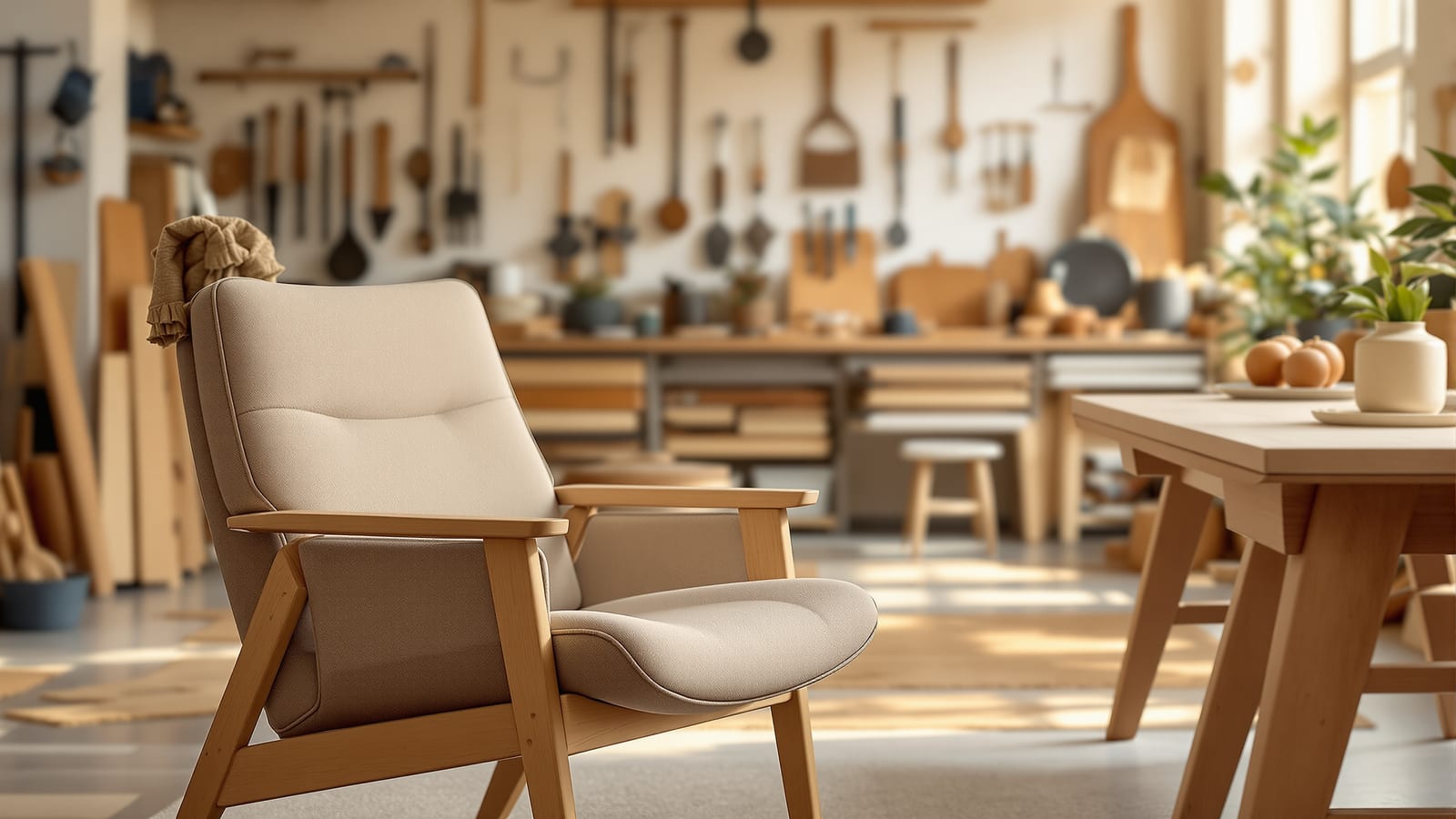
Off-the-Shelf, Reuse & Bespoke
Three ways to get furniture into a project — buy it, reuse it, or make it — and the trade-offs in cost, control, lead time and sustainability.
Every piece of furniture on a project arrives by one of three routes: you buy it off-the-shelf, you reuse it, or you make it bespoke. Each has its own profile of cost, control, lead time, risk and sustainability — and the professional's skill is matching the route to the piece. A back-office task chair and a signature reception desk want completely different answers. This module gives you the logic to choose, and the practicalities of each route.
What you'll be able to do
By the end of this module you will be able to — mapped to the course outcomes for Furniture for Interior Design:
Describe the three routes to sourcing furniture — off-the-shelf, reuse/recycle, and bespoke — and how each works in practice.
Compare the routes on cost, control, lead time, risk, uniqueness and sustainability.
Understand the practicalities of specifying manufactured furniture and of commissioning bespoke pieces.
Match the right route to each piece in a scheme, and build a sensible hybrid strategy.
The three routes
Off-the-shelf, reuse and bespoke — plus the decision that ties them together: read each piece against cost, control, lead time, risk and sustainability, and choose accordingly.[1, 5]
Specify what already exists
Most furniture is bought OFF-THE-SHELF — chosen from a manufacturer's range and specified by model, finish and quantity. The advantages are real: it is tested and warrantied, meets known standards (contract-grade durability, fire safety), is usually the cheapest route, and has a known, often short lead time. The trade-off is fit and originality — you take what is made, and so can everyone else. The designer's craft here is a well-built specification (Module VI) and knowing the market: which makers, which ranges, trade accounts and discounts, and the difference between domestic and contract grades.[1, 5]
In practice
How the routes play out on real jobs — the speed of an off-the-shelf fit-out, the soul of reuse, the identity of a bespoke hero, and the hybrid mix that most projects actually use.[1, 3]
Off-the-shelf, at speed
A tight programme — a café or office to open in weeks — pushes hard toward off-the-shelf contract furniture: ranges held in stock, delivered fast, tested to commercial durability, and covered by warranty. The designer's value is curation and specification: choosing pieces that look considered together, meet the fire and durability standards, and land on time and on budget. Well done, an all-off-the-shelf scheme need not look generic.[1, 5]
The route trade-offs
| Aspect | One | The other |
|---|---|---|
| Control & fit | Off-the-shelf — take what's made | Bespoke — designed to the exact space and brief |
| Cost | Off-the-shelf — usually cheapest | Bespoke — most expensive; reuse variable |
| Lead time | Off-the-shelf (stock) — fast | Bespoke — long; needs drawings & prototype |
| Sustainability | Reuse — keeps embodied carbon in use | New (either route) — spends carbon again |
| Character | Off-the-shelf — everyone can have it | Reuse & bespoke — unique to this scheme |
Key terms
Furniture specified from a manufacturer's existing range by model, finish and quantity — tested, warrantied, usually cheapest and fastest.
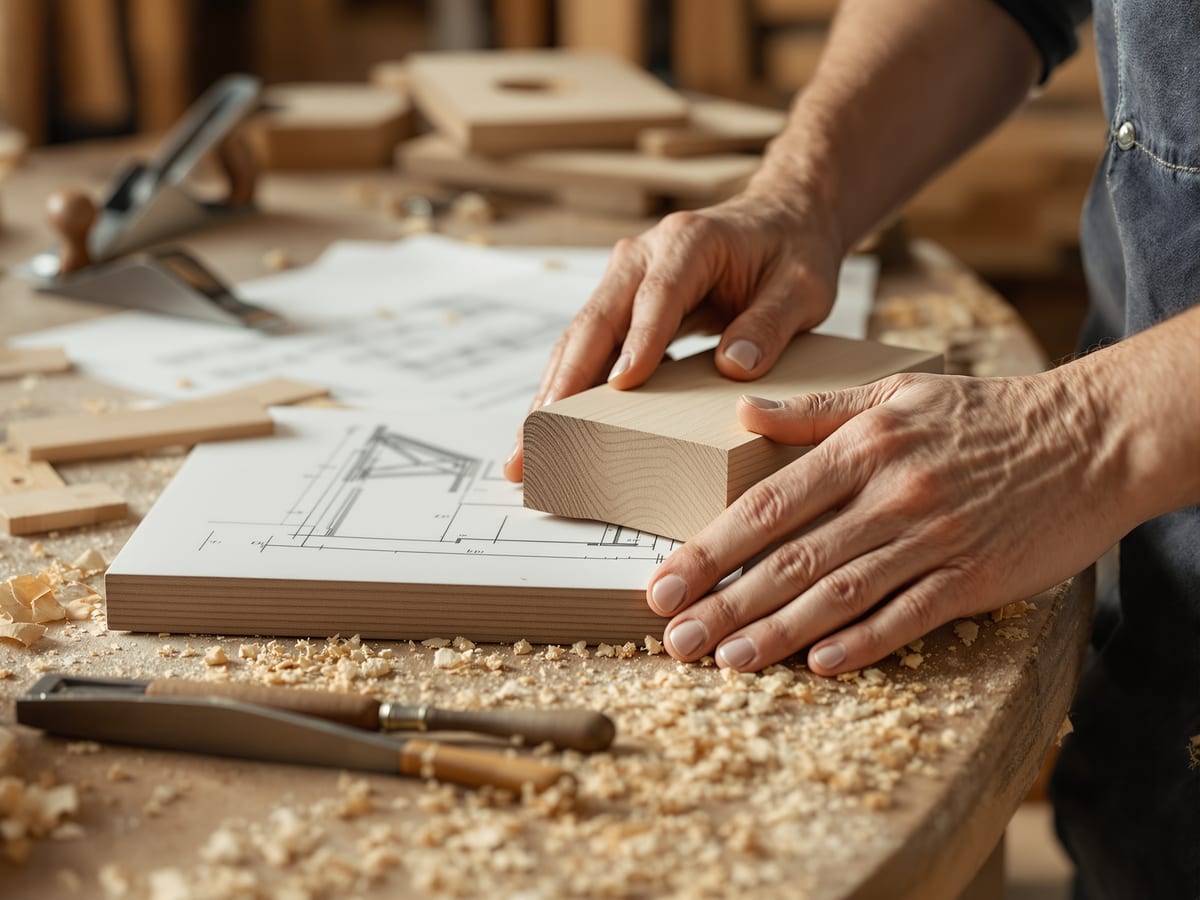
Furniture designed by the interior designer and made to order by a specialist maker — total control, higher cost and longer lead time.
Bringing existing, salvaged or vintage furniture back into use, often reworked; the most sustainable route.
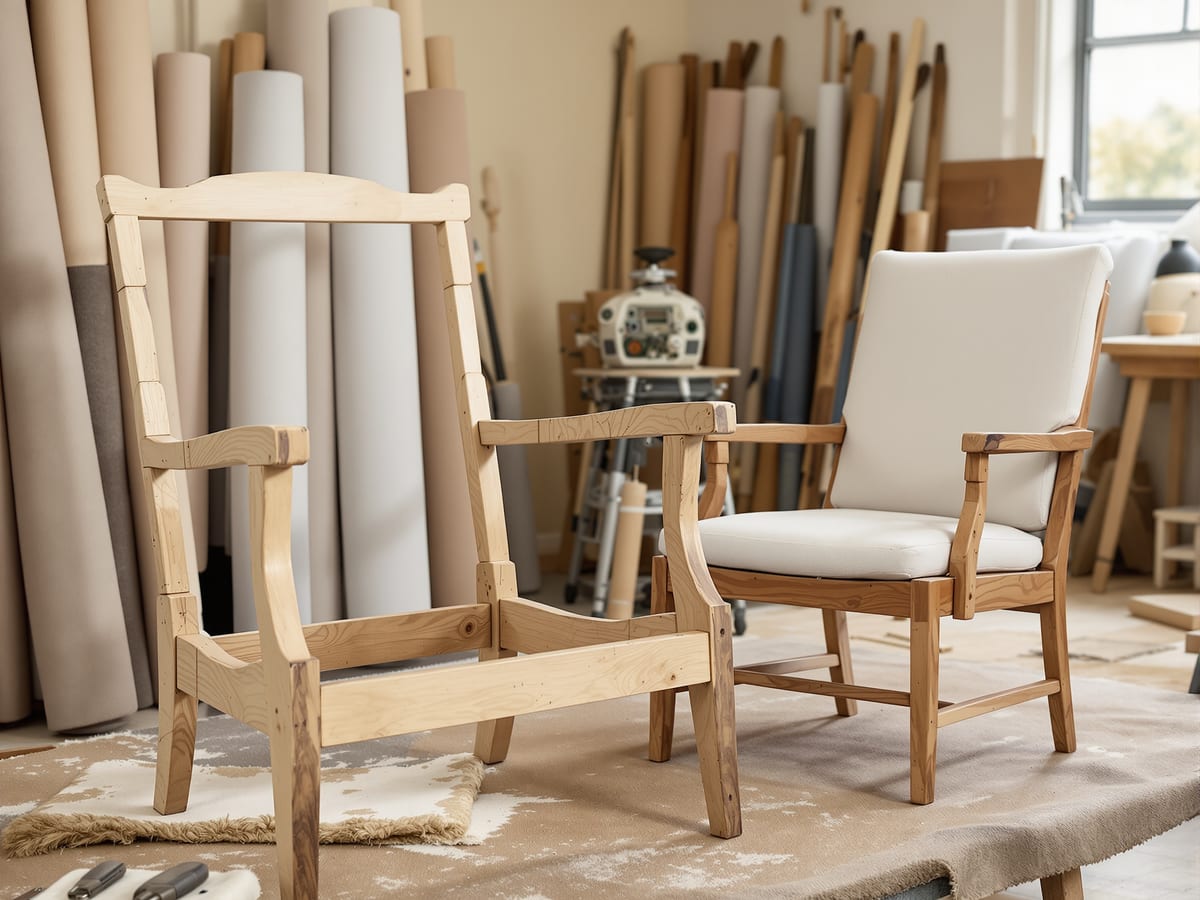
Stripping a seat back to its frame and rebuilding the webbing, padding and cover — a common way to reuse seating.
Furniture certified for heavy commercial use and fire safety — required in most non-domestic projects.
The time from order to delivery/installation; short for stock off-the-shelf, long for bespoke or imported pieces.
A designer's professional account with a supplier, giving trade pricing on specified furniture.
The carbon already spent making a piece; reusing furniture keeps it in use and avoids spending it again — the case for reuse.
Practice task
Take a room you are (or could be) designing and list its furniture. Against each piece, mark the route you would take — off-the-shelf, reuse or bespoke — and one reason (cost, fit, lead time, character or sustainability). Then sanity-check the mix: is the money spent where it shows, and is anything bespoke that a catalogue could have supplied?
Self-check
1. Which route is generally the cheapest and fastest for standard pieces like task chairs?
2. The strongest argument for reusing existing furniture is —
3. When is bespoke furniture the right choice?
Recap
References & further reading
- [1]Drew Plunkett & Sam Booth, Furniture for Interior Design. London: Laurence King Publishing, 2015.
- [2]Katie Treggiden and others on reuse & circular design in interiors (design-practice references).
- [3]Francis D.K. Ching & Corky Binggeli, Interior Design Illustrated (3rd ed.). Hoboken: John Wiley & Sons, 2012.
- [4]BS EN / BIFMA contract furniture and upholstered-furniture fire-safety standards (industry practice).
- [5]Studio Matrx — Vendor & Marketplace and FF&E specification tools (practitioner references). https://www.studiomatrx.org/for-designers
Further reading
- Drew Plunkett & Sam Booth, Furniture for Interior Design. Laurence King.
- Chris Grimley & Mimi Love, The Interior Design Reference & Specification Book. Rockport.
- Francis D.K. Ching & Corky Binggeli, Interior Design Illustrated. Wiley.
Sources gathered and fact-checked June 2026. Published values vary by source, sample and method — treat as indicative and confirm against the cited standard before structural use.
Where this course goes next
To specify or commission well, you have to know what furniture is made of and how. Module V, Materials & Manufacture, covers timber and boards, metal, plastics and upholstery, the joints that hold furniture together, and the CNC and digital fabrication that puts bespoke within reach.