
Materials & Manufacture
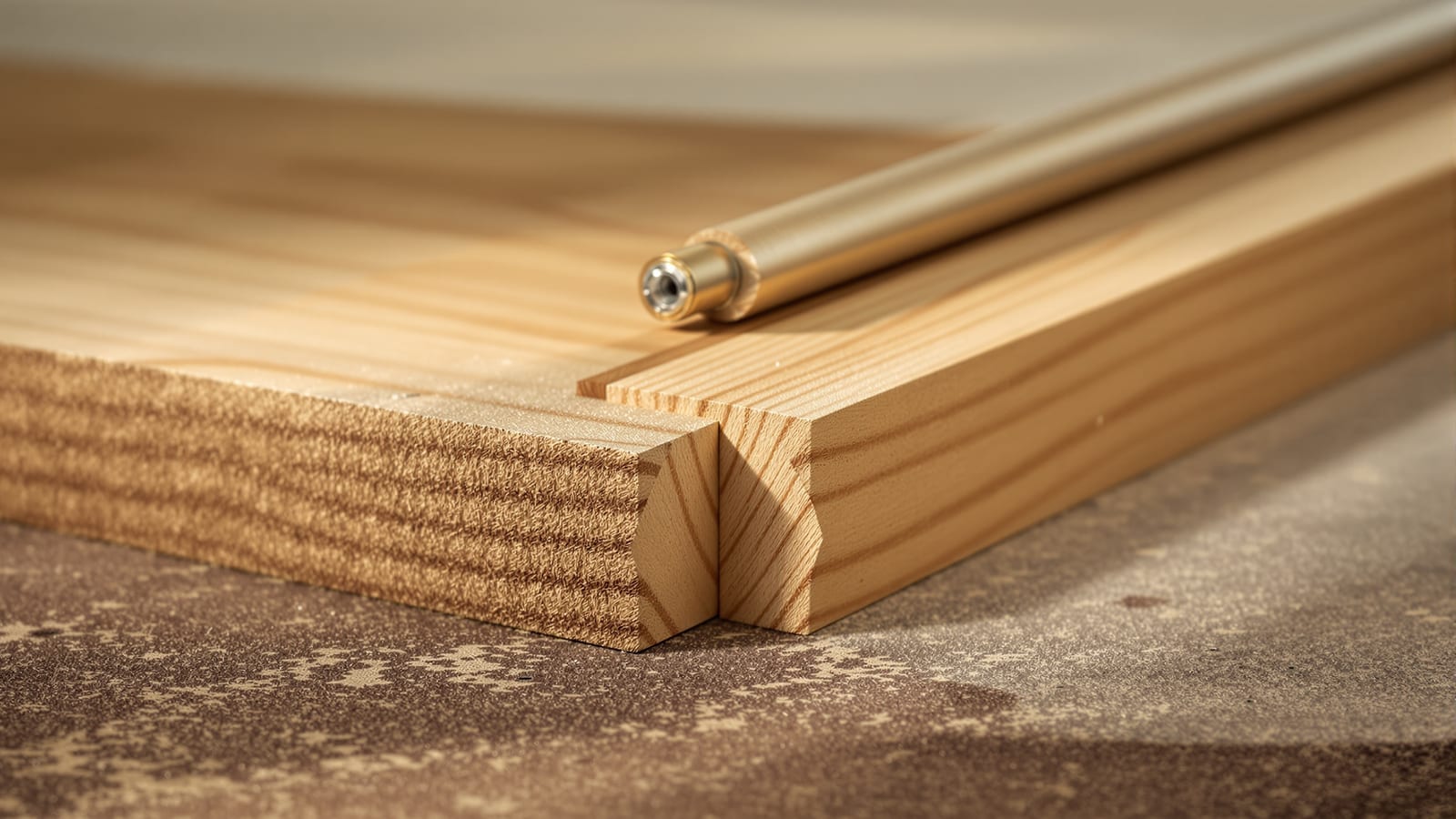
What furniture is made of and how it's made — timber and boards, metal, plastics and upholstery; the joints that hold it; and CNC that puts bespoke within reach.
To specify or commission furniture well, you have to know what it's made of and how. Material choice decides how a piece looks, lasts, costs and weighs on the planet; the joints decide whether it survives years of use; and the manufacturing method decides what shapes are even possible. Get fluent in this and you can read a piece in seconds, write a specification a maker respects, and know when a bespoke idea is buildable.
What you'll be able to do
By the end of this module you will be able to — mapped to the course outcomes for Furniture for Interior Design:
Describe the main furniture material families — solid timber, manufactured boards, metal, plastics and upholstery — and how each behaves.
Explain the common furniture joints and construction methods, and why they determine durability.
Outline the main manufacturing processes, including moulding, bending and CNC/digital fabrication.
Choose appropriate materials and construction for a piece by weighing cost, durability, appearance and sustainability.
The material families
Four families make up almost all furniture — solid timber and manufactured boards, metal, plastics, and the layered structure of upholstery — each with its own behaviour, cost and character.[1, 3]
Solid wood and the manufactured board
SOLID TIMBER — hardwood (oak, walnut, beech) or softwood (pine) — is strong, repairable and beautiful, but it moves with humidity and is costly in width. So most modern furniture uses MANUFACTURED BOARDS: PLYWOOD (cross-laminated veneers — strong, stable, mouldable), MDF (fine, dense, uniform — takes paint and routing beautifully but hates water), and PARTICLEBOARD/chipboard (cheap, heavy, weak — the flat-pack staple). Boards are stable and available in big flat sheets, and are usually faced with a VENEER (a thin slice of real wood) or a LAMINATE for their surface. Choosing solid vs board is a core furniture decision.[1, 2]
How it's made
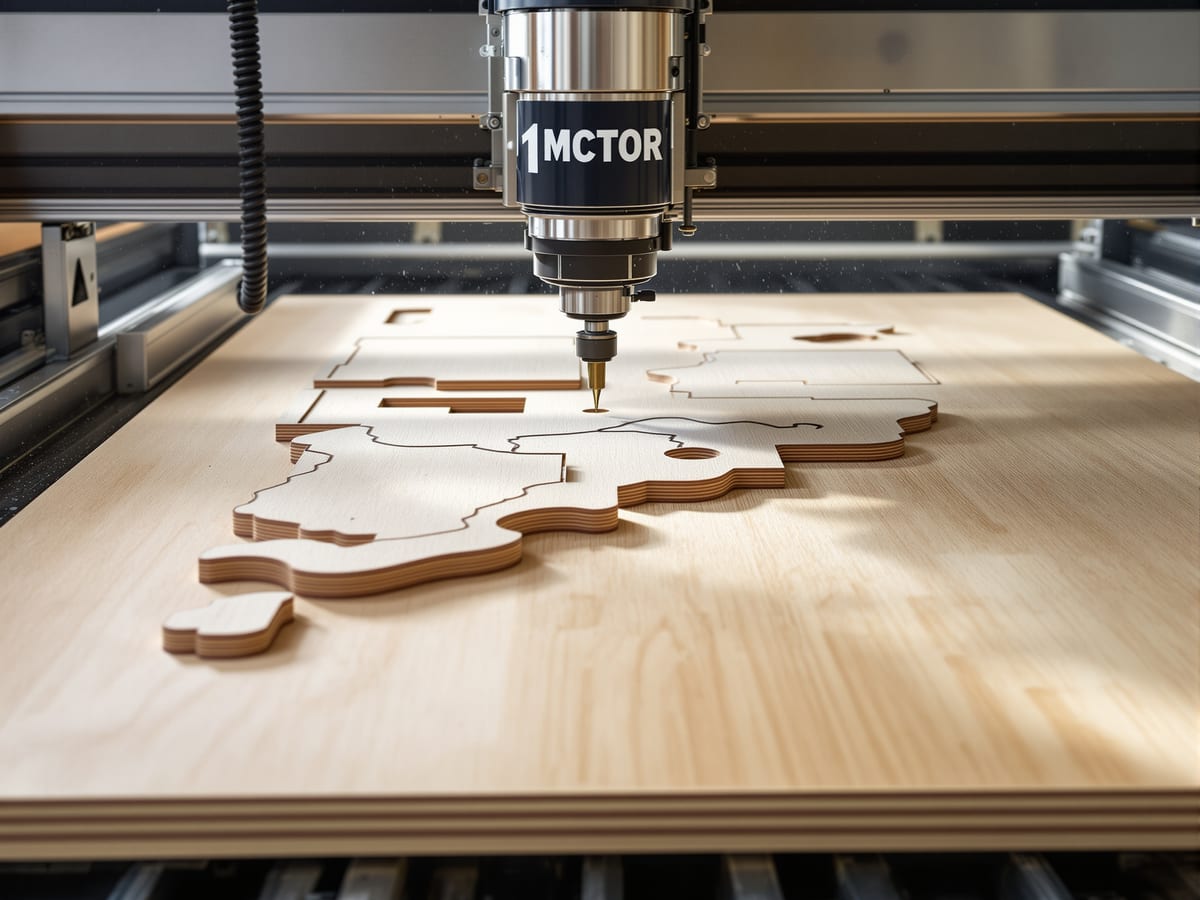
From the joints that hold a piece together and the finishes that protect it, to the moulding that shapes it and the CNC that has put affordable bespoke within reach of any studio.[1, 4]
What holds furniture together
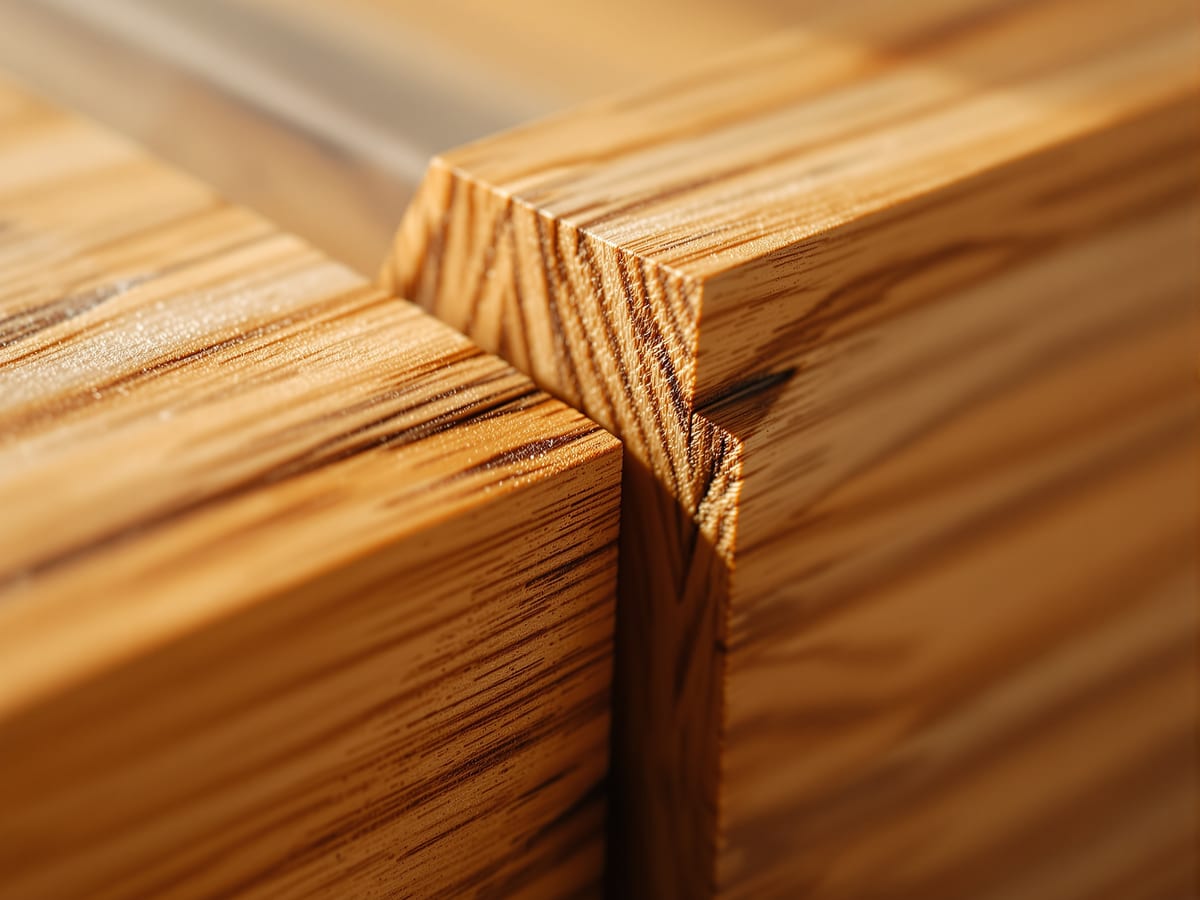
A piece is only as good as its JOINTS. The MORTISE-AND-TENON (a tongue in a socket) is the strong traditional timber frame joint; the DOVETAIL (interlocking fingers) resists pulling apart and signals quality drawers; the DOWEL joint (glued pegs) is the efficient factory standard; and KNOCK-DOWN (KD) FITTINGS — cam locks, screws — allow the flat-pack furniture you assemble on site. Metal is welded or bolted. When you judge or specify a piece, look at the joints: they decide whether it survives years of use.[1, 2]
Material & construction choices
| Aspect | One | The other |
|---|---|---|
| Timber choice | Solid timber — strong, repairable, moves & costly | Manufactured board — stable, big sheets, cheaper |
| Surface | Veneer — real wood, premium look | Laminate/melamine — printed, tough, cheap |
| The best drawer joint | Dovetail — interlocks, resists pulling apart | Dowel — glued pegs, the efficient factory standard |
| Plastic vs metal frame | Plastic — moulded, colour-through, cheap at volume | Metal — slim, strong, weldable, needs a finish |
| Making bespoke | Traditional — hand joinery, skilled and costly | CNC/digital — precise, flat-pack, affordable one-offs |
Key terms
Furniture made from solid wood — strong, repairable and beautiful, but it moves with humidity and is costly in width.
A board of thin timber veneers cross-laminated — strong, stable and mouldable (the Eames shell).
Medium-density fibreboard — fine, dense and uniform; takes paint and routing well but swells if it gets wet.
A cheap board of glued wood chips — heavy and weak; the flat-pack staple, usually veneered or laminated.
Veneer is a thin slice of real wood on a board; laminate/melamine is a printed, tougher, cheaper surface.
The main timber joints — strong traditional frame joint; interlocking drawer joint; efficient factory pegged joint.
Cam locks and screws that let furniture be flat-packed and assembled on site.
Computer-controlled routing (and laser/3D) that cuts sheet parts precisely from a file — the affordable-bespoke breakthrough.
Practice task
Pick one piece of furniture near you and reverse-engineer it. Identify its material (solid timber? which board? veneer or laminate? metal? plastic?), its joints (look at the drawers and frame), and its likely manufacture. Then write one line on how you would specify a better version — a material, joint or finish you would upgrade, and why.
Self-check
1. Why do most modern cabinets use manufactured boards rather than solid timber?
2. Which joint best signals a quality drawer?
3. What has CNC / digital fabrication most changed for interior designers?
Recap
References & further reading
- [1]Drew Plunkett & Sam Booth, Furniture for Interior Design. London: Laurence King Publishing, 2015.
- [2]Ernst Neufert, Architects' Data (4th ed.) — furniture materials and construction. Oxford: Wiley-Blackwell, 2012.
- [3]Chris Lefteri, Materials for Design. London: Laurence King, 2014.
- [4]Digital fabrication in furniture — CNC routing and maker-space practice (industry references).
- [5]BS EN furniture strength, durability and fire-safety standards (industry practice).
Further reading
- Chris Lefteri, Materials for Design. Laurence King.
- Drew Plunkett & Sam Booth, Furniture for Interior Design. Laurence King.
- Bill Hylton, Illustrated Cabinetmaking / joinery references. Fox Chapel.
Sources gathered and fact-checked June 2026. Published values vary by source, sample and method — treat as indicative and confirm against the cited standard before structural use.
Where this course goes next
You can now read context, size to the body, know the classics, source by the right route, and understand materials and making. The final module pulls it together: Module VI, Working on a Project — the brief, the furniture drawings, the specification, the FF&E schedule, and designing for sustainability and long life.