
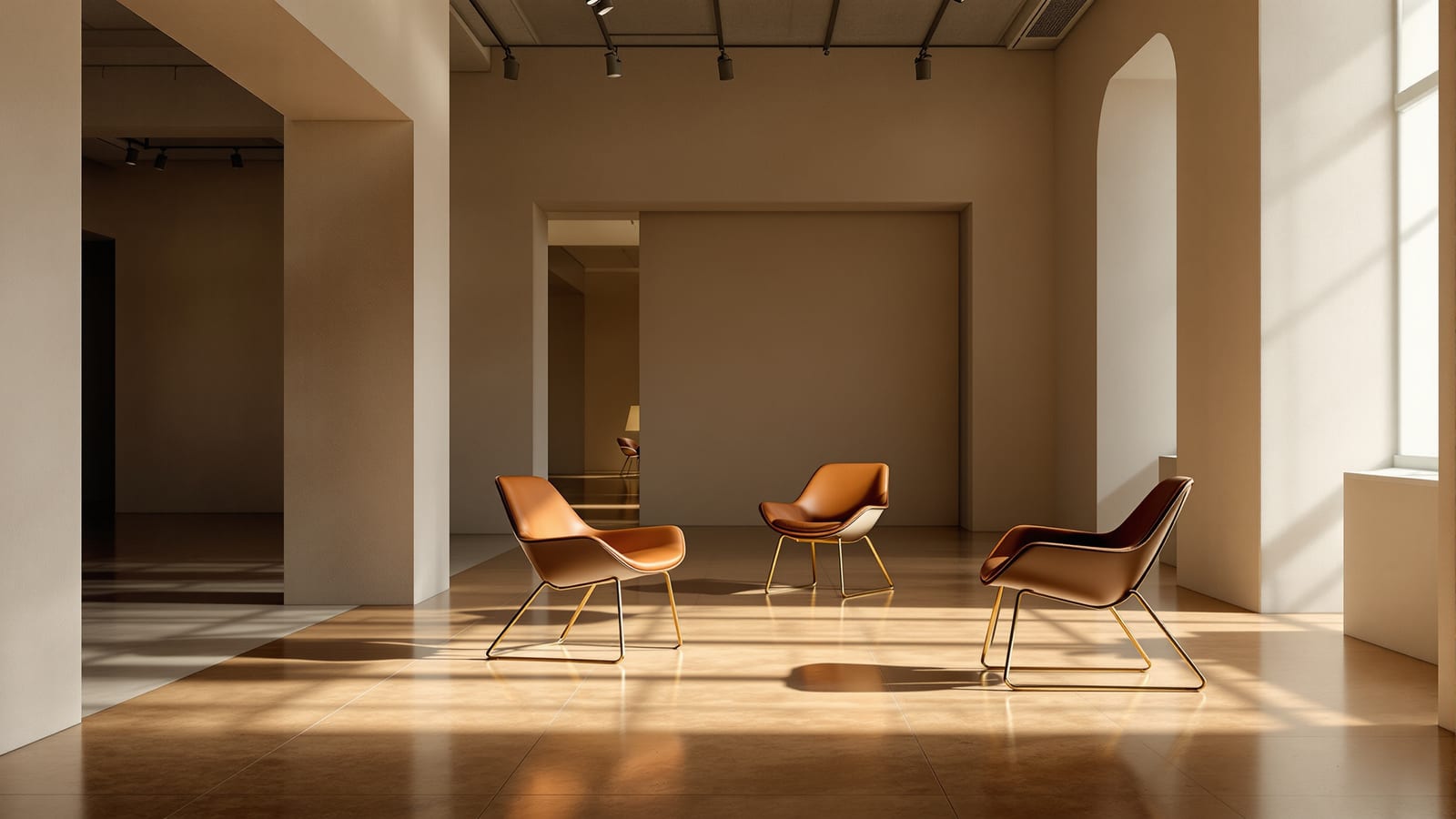
Iconic Pieces & Modern Classics
The chairs every interior designer should know — and the movements, designers and materials that made them.
Some pieces never go away. A century after they were drawn they are still made, still quoted, still specified — the modern classics. Knowing them is part of a professional's literacy: it tells you what a piece signals in a scheme, why it looks the way it does, and — the connoisseur's secret — which material breakthrough made it possible. Learn the pieces and you learn the whole story of modern furniture, from Thonet's bent beech to Panton's single shot of plastic.
What you'll be able to do
By the end of this module you will be able to — mapped to the course outcomes for Furniture for Interior Design:
Recognise the modern-classic pieces an interior designer is expected to know and specify.
Link each classic to the material breakthrough that made it — bentwood, tubular steel, moulded plywood, plastic.
Place the classics in their movements — Thonet, the Bauhaus, mid-century American and Scandinavian modern.
Judge what a chosen classic signals in a scheme, and the difference between an original and a copy.
Four breakthroughs behind the classics
Every classic rides a technical leap: Thonet's steam-bent wood, the Bauhaus tubular-steel cantilever, the moulded plywood-and-plastic shell, and the warm sculptural line of Scandinavian modern.[1, 3]
Thonet industrialises the chair
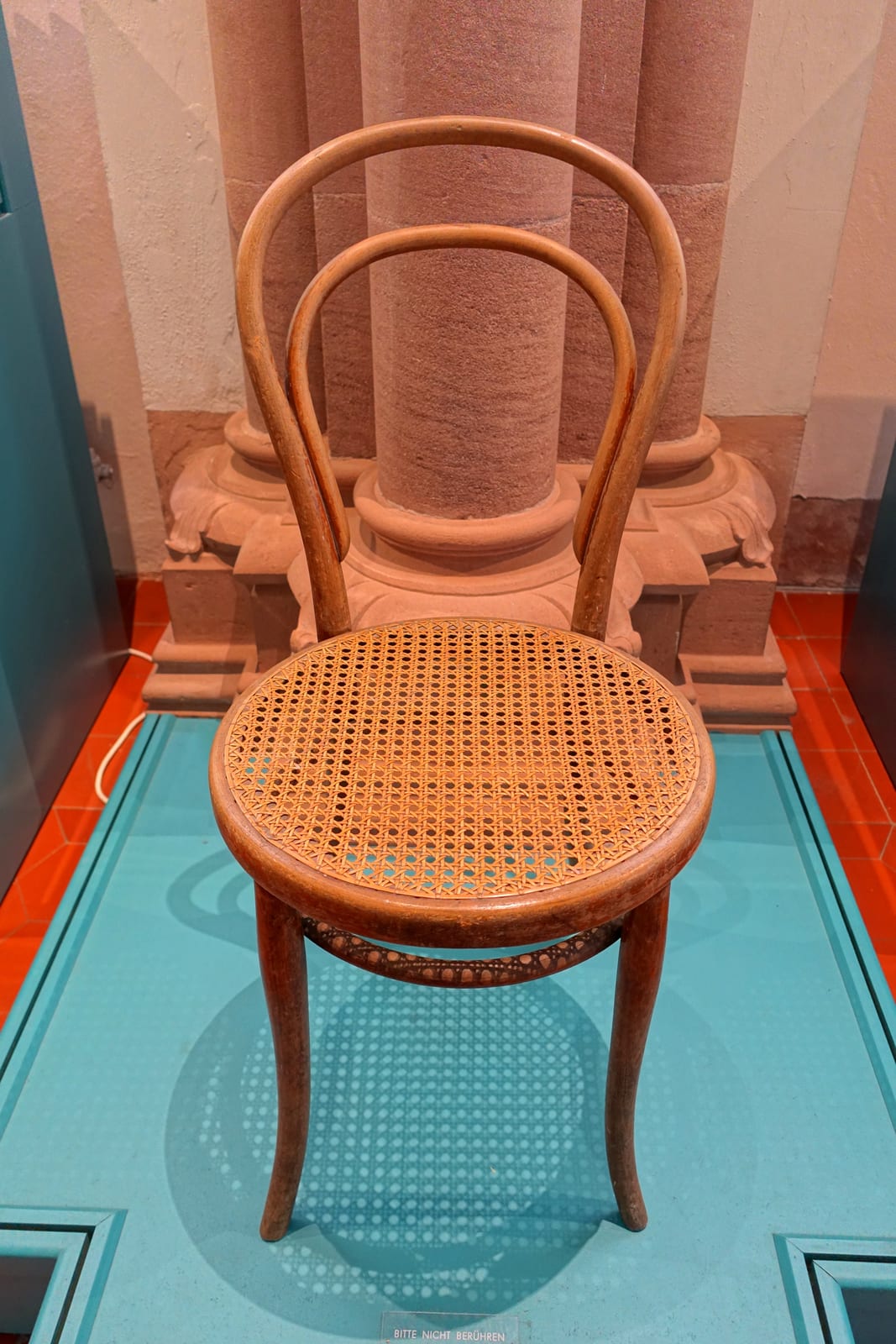
Michael Thonet's steam-BENT solid beech let curved chair parts be mass-produced and shipped flat. The Model No. 14 (1859) — six pieces, ten screws, two nuts — became the first truly global chair, made in the millions and still made today. It is the ancestor of all mass-produced furniture, and the reason a good chair could be cheap. Every 'off-the-shelf' decision in Module IV descends from this.[1, 3]
The pieces to know
Now the chairs themselves — the vocabulary of the modern interior, and their place on a century-long timeline.[1, 2]
The chair that started mass production
Thonet's Model No. 14 (1859) — the 'bistro chair' or 'consumer chair number one' — is the piece that made good design cheap and global. Its steam-bent beech loops are honest, light and endlessly repairable, and it flat-packed for export before IKEA was a word. Specify it (or its countless descendants) and you are quoting the birth of the modern furniture industry.[1, 3]
Reading the classics
| Aspect | One | The other |
|---|---|---|
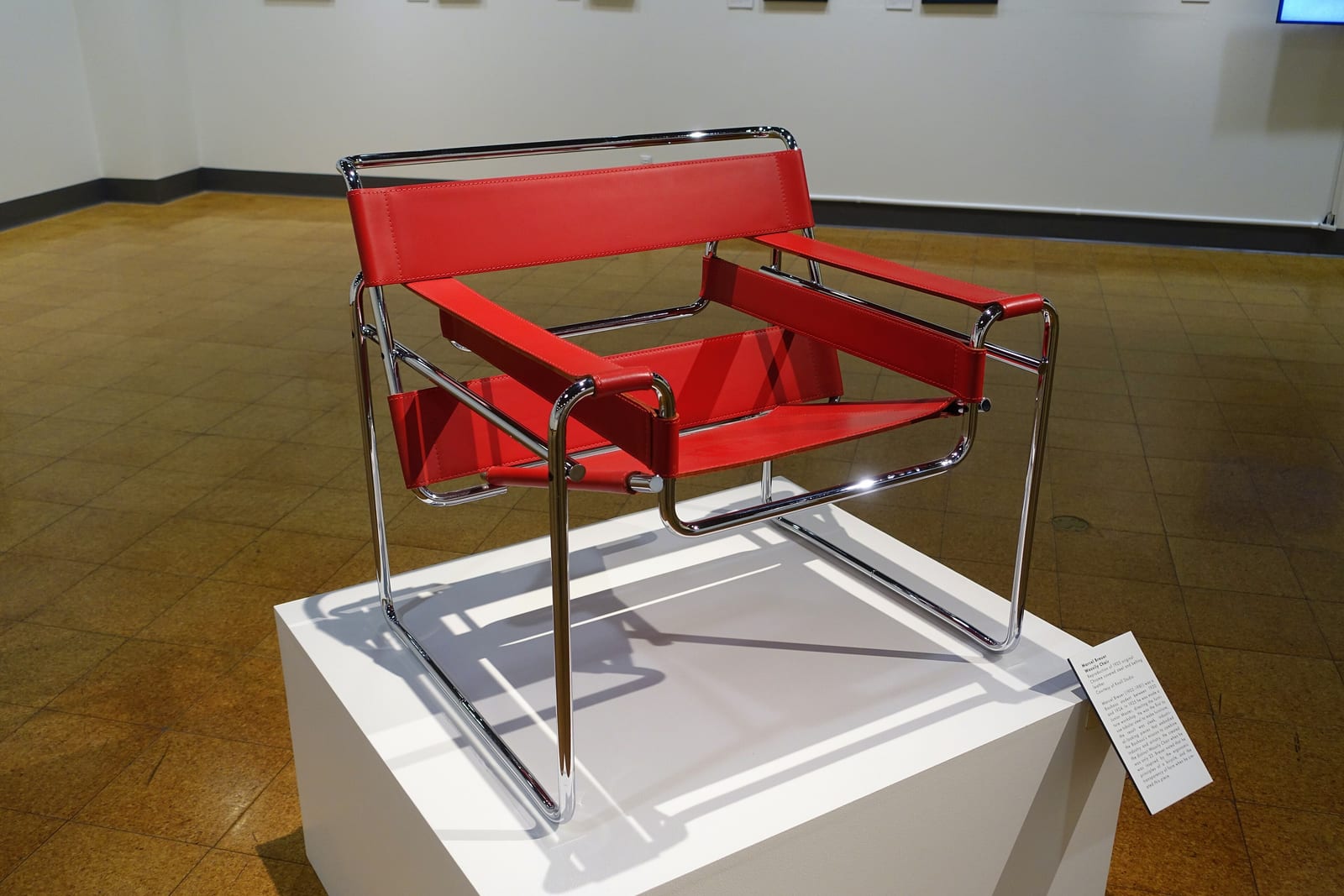
| The breakthrough material | Thonet — steam-bent solid wood | Bauhaus — bent tubular steel |
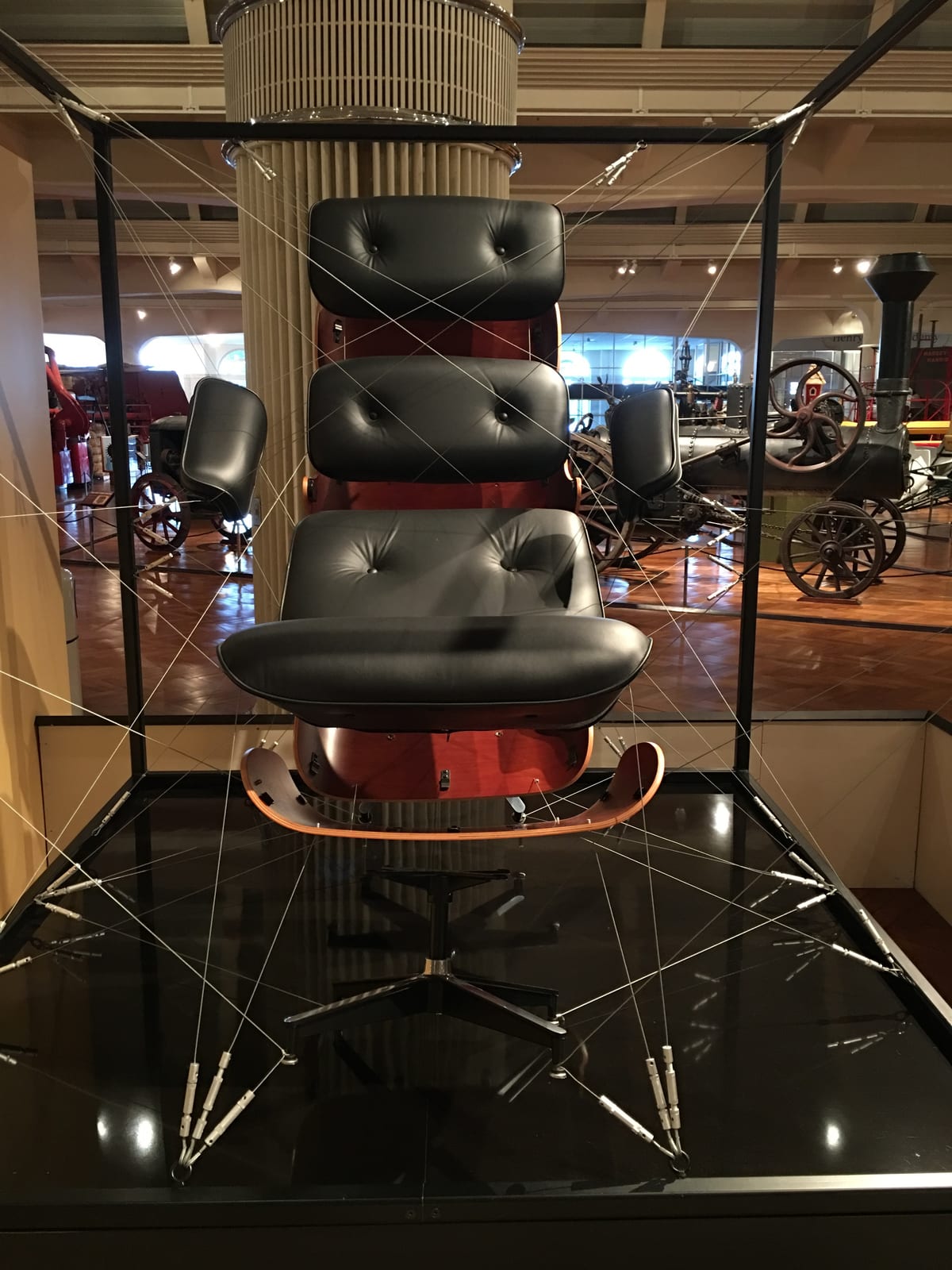
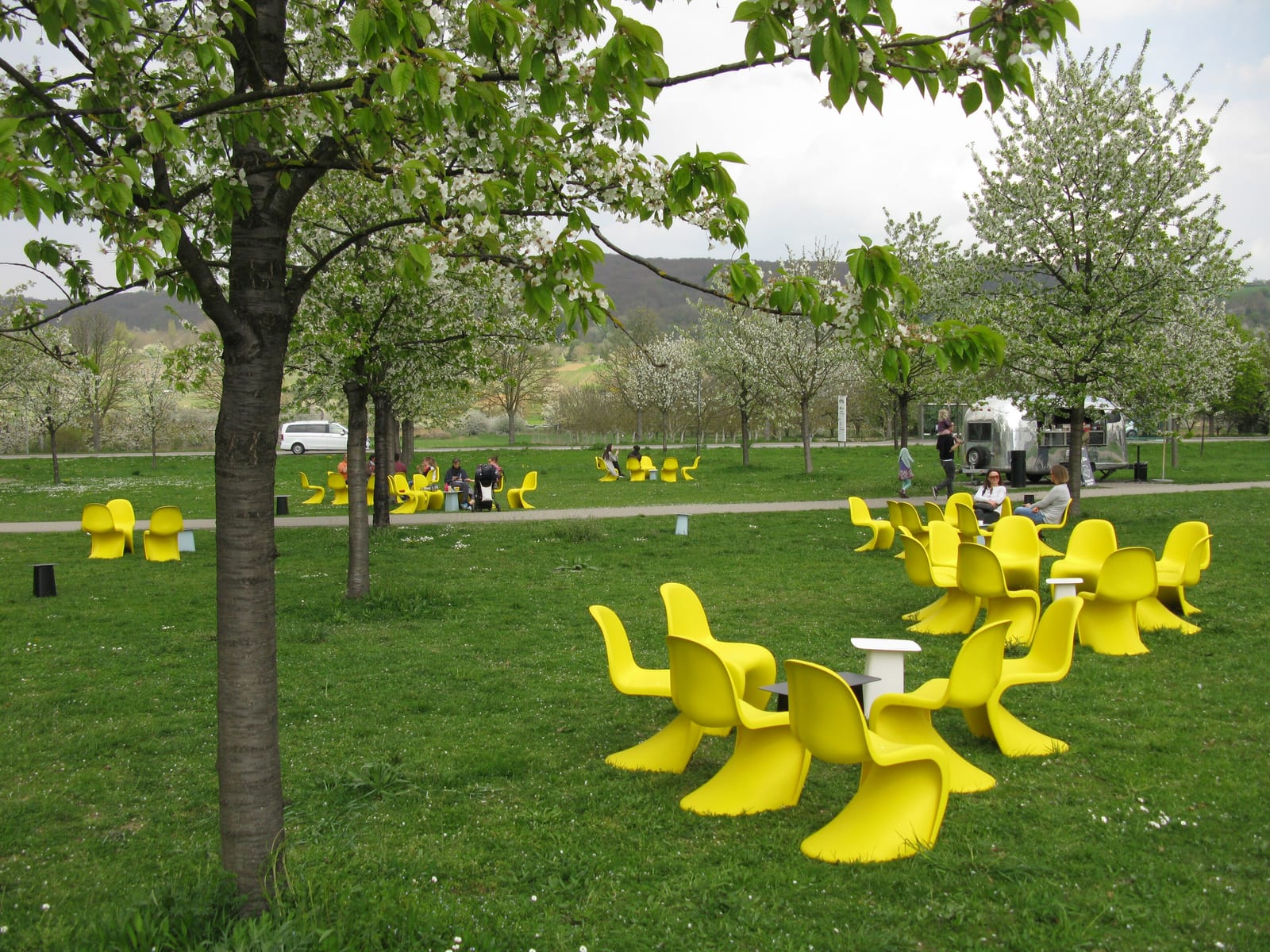
| How the shell is made | Eames — moulded plywood, then plastic | Panton — one single piece of moulded plastic |
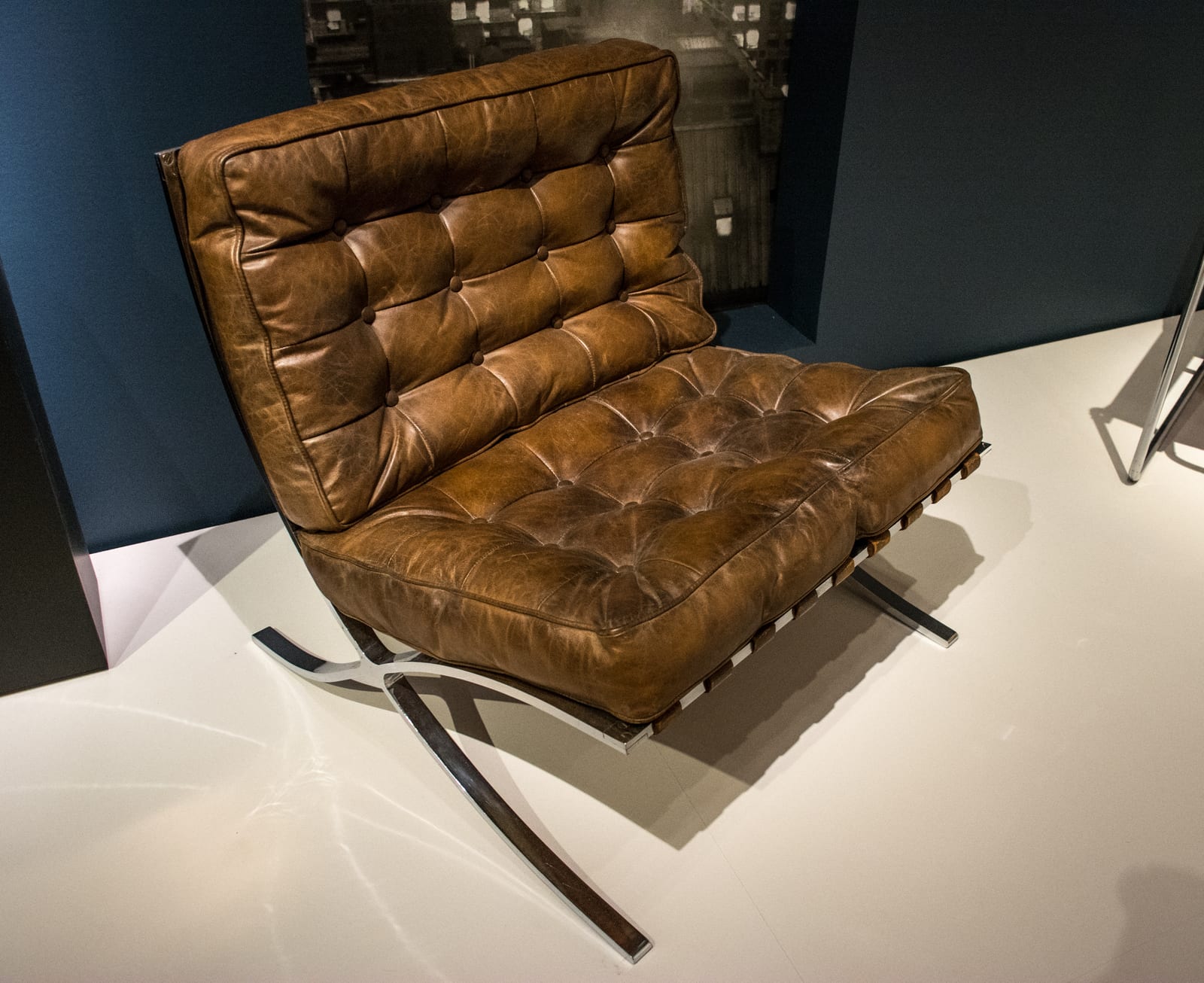
| The mood | Bauhaus steel — industrial, taut, modern | Scandinavian — organic, warm, crafted |
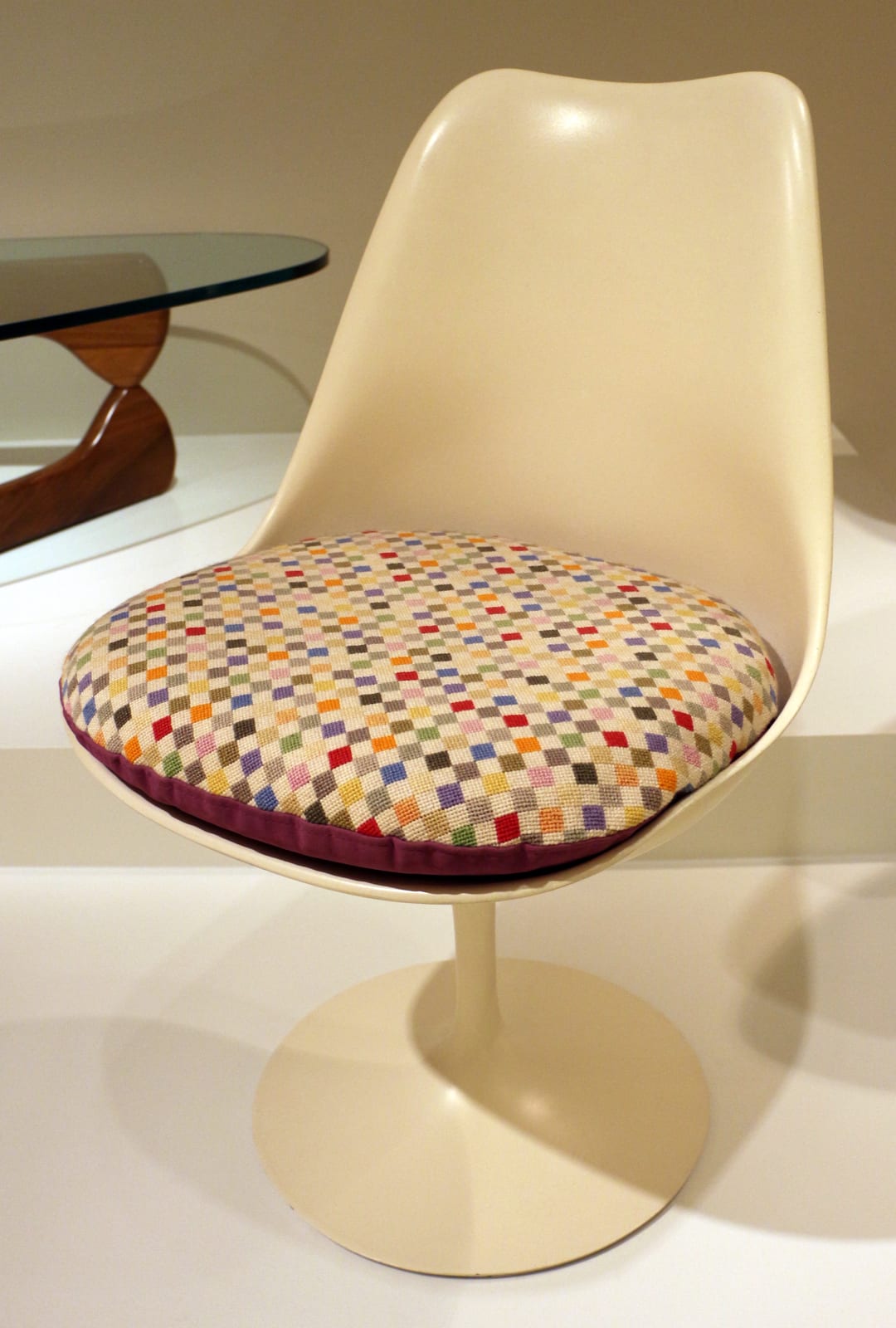
| The leg problem | Four legs — the 'slum of legs' | Saarinen pedestal — one clean stem |
| What you're specifying | Original / licensed — quality, ethics, cost | Replica — cheaper, but variable and contested |
Key terms
A piece of furniture, usually from c. 1859–1970, still in production and continually specified for its design significance.
Solid timber (typically beech) softened with steam and bent into curves — Thonet's mass-production breakthrough.
Bent hollow steel tube — the Bauhaus material that made furniture light, hygienic and modern.
A chair with no back legs, sprung on the flex of a continuous frame (Stam, Breuer's Cesca; later Panton in plastic).
Thin timber veneers glued and pressed into a compound-curved shell — perfected by Aalto and the Eameses.
A seat formed as one shell from glass-fibre or plastic — cheap, comfortable, and endlessly repeatable.
A single central stem supporting a chair or table, clearing the clutter of legs (Saarinen's Tulip).
An authorised piece (original manufacturer / licensee) vs an unlicensed 'replica'; matters for quality, ethics and specification.
Practice task
Choose one modern classic from this module and write a two-line specification note for a client: name the piece and its designer/maker, the material breakthrough it represents, and what it will signal in their scheme. Then add one honest line on original vs licensed vs replica— what you would specify, and why.
Self-check
1. Which piece is credited with making good chair design cheap and globally mass-produced?
2. A cantilever chair is one that —
3. The Eameses' great contribution to the modern chair was —
Recap
References & further reading
- [1]Drew Plunkett & Sam Booth, Furniture for Interior Design. London: Laurence King Publishing, 2015.
- [2]Charlotte & Peter Fiell, 1000 Chairs. Cologne: Taschen, 2017.
- [3]Judith Gura, The Bloomsbury Encyclopedia of Design / design-history references (modern furniture). Bloomsbury.
- [4]Vitra Design Museum & MoMA collection notes on 20th-century furniture (museum references).
- [5]Manufacturer / licensee documentation — Thonet, Knoll, Herman Miller/Vitra, Fritz Hansen (authorised production).
Further reading
- Charlotte & Peter Fiell, 1000 Chairs. Taschen.
- Judith Miller, Miller's 20th-Century Design. Mitchell Beazley.
- Drew Plunkett & Sam Booth, Furniture for Interior Design. Laurence King.
Sources gathered and fact-checked June 2026. Published values vary by source, sample and method — treat as indicative and confirm against the cited standard before structural use.
Where this course goes next
You know the pieces — now, how do you get furniture into a real project? Module IV, Off-the-Shelf, Reuse & Bespoke, covers the three ways designers source furniture and the trade-offs in cost, control, lead time and sustainability.