
Tradition Today — A Critical View
Recover the climate wisdom, name the belief, refuse the superstition.
How should a thoughtful contemporary architect engage Vastu and the traditional system? The answer this course defends is a triage: take the climate and spatial wisdom (which is real and valuable), be candid about the ritual/belief layer (which is not building science), and refuse the commercial pseudo-science that sells compliance as a guarantee of wealth or health. Learn the strong recoverable case, the honest critical view, the heritage-conservation and craft-revival dimension, and the respectful-but-honest stance the whole course models.
Learning objectives
By the end of this lesson, you will be able to — mapped to the course outcomes for Vastu & Traditional Indian Architecture:
Make the case that much of Vastu is recoverable as climate-responsive passive design.
State honestly where the tradition is belief, not building science — and why.
Distinguish genuine climate/spatial advice from commercial Vastu superstition.
Value the heritage-conservation and craft-revival dimension of the tradition.
A critical appraisal
Much of Vastu is recoverable as climate-responsive passive design; the prosperity claims are unfalsifiable belief; the commercial superstition should be refused — and the crafts are worth reviving.[3, 5]
Vastu as passive design
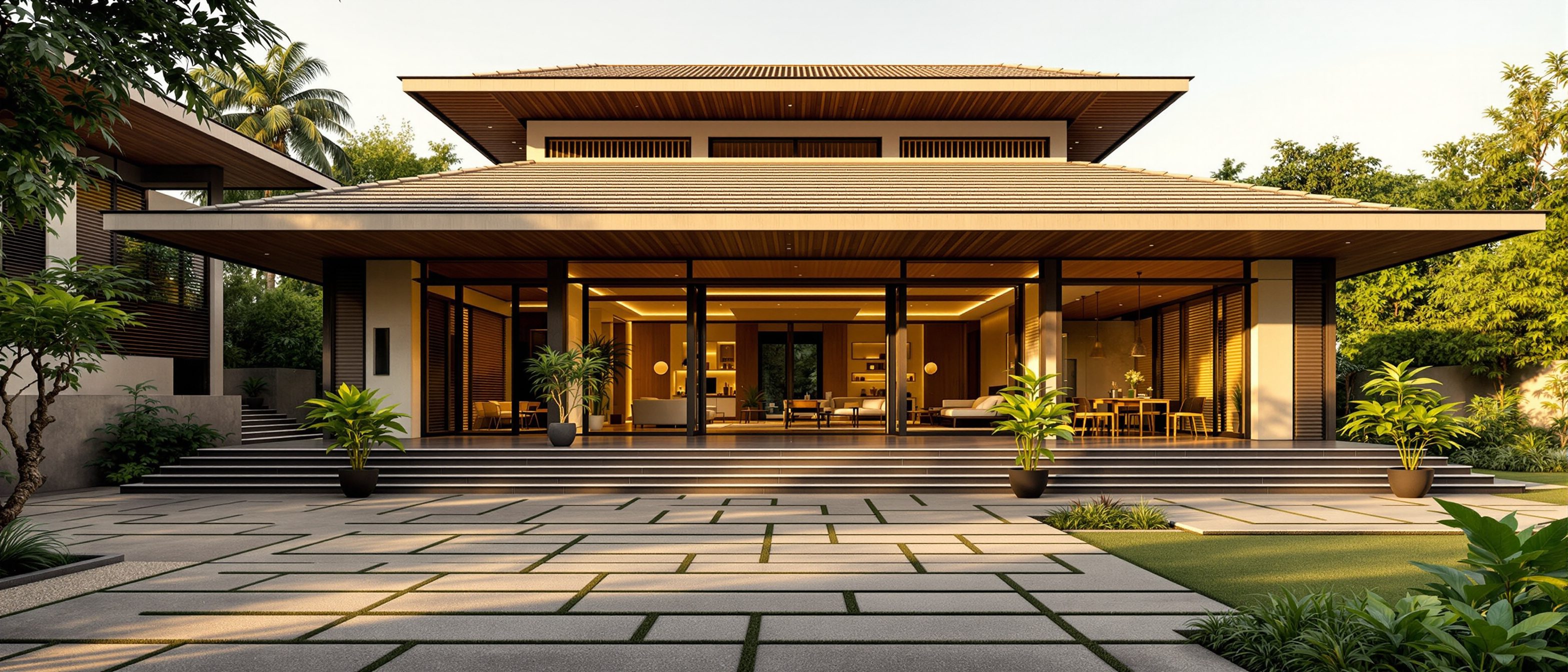
Much of traditional planning re-emerges, almost intact, as PASSIVE, climate-responsive architecture: the courtyard is a daylighting and cross/stack-ventilation device; thick masonry and heavy SW mass are thermal mass and solar shading; NE-low/open-with-water places the cool, lit, drained quarter where it helps; deep verandahs, jaali and jharokhas are shading and glare control; orientation to sun and wind is the first move of good environmental design. None of this needs the deities to be true — it works because of physics, and it dovetails with today's low-energy agenda.[3]
The respectful-but-honest stance
Keep the climate/spatial wisdom, name the belief content as belief (accommodating it where harmless), and refuse the superstition that trades on the real wisdom — starting every design from sun and wind.[3]
Keep, name, refuse
The mature position: KEEP the genuine environmental and spatial intelligence (orientation, courtyard, mass, shading, human-scaled proportion); NAME the belief content as belief (deity placements, auspicious arithmetic, prosperity claims), accommodating it where it costs nothing and harms nothing; REFUSE the commercial superstition that trades on the credibility of the real wisdom. Hold all three at once — never mocking, never asserting belief as fact.[3, 5]
At a glance
| Claim / practice | Belief framing | Building-science reading |
|---|---|---|
| Open Brahmasthan / court | Belief: pleases Brahma, brings fortune | Building science: ventilates & daylights the plan |
| NE water body | Belief: purity and prosperity | Building science: morning sun + breeze cool the house |
| SW heavy mass | Belief: seat of stability (Nirriti) | Building science: shades the worst sun; thermal buffer |
| Ayadi auspicious dimensions | Belief: a lucky remainder ensures success | No demonstrated effect — numerology |
| 'Vastu guarantees wealth/health' | Belief: compliance brings prosperity | No evidence; unfalsifiable — the value is the climate logic |
Key terms
Achieving comfort through form, orientation, mass and openings rather than mechanical systems.
A claim presented as scientific but unfalsifiable and unsupported by evidence (e.g. prosperity guarantees).
Whether a claim can in principle be tested and proven wrong; the belief claims here cannot.
Documenting and protecting historic fabric and living building traditions.
Sustaining the traditional building crafts and their practitioners — often low-carbon and local.
Design driven by local sun, wind, rain and temperature.
Studio task
Take a real Vastu prescription a client might bring you and write a one-page, respectful-but-honest response: what is genuinely sound about it as climate/spatial design (and why), what is belief with no building-science basis, and how you would advise the client — accommodating harmless belief, declining to dress it up as engineering, and never selling fear-based remedies. Note one way you would also support the traditional crafts.
Self-assessment
1. The single most defensible, recoverable Vastu principle in contemporary climate-responsive design is —
2. The honest scholarly statement about 'Vastu guarantees wealth and health' is that —
3. A thoughtful architect engaging the tradition should —
Recap
References & further reading
- [1]V. Ganapati Sthapati, Building Architecture of Sthapatya Veda — the living tradition's case (read critically for devotional claims).
- [2]Stella Kramrisch, The Hindu Temple — the cosmological framing being appraised.
- [3]Passive / climate-responsive design literature for India — courtyard houses and vernacular climate strategy (INTACH publications).
- [4]George Michell / Adam Hardy — the heritage-conservation dimension of temple and traditional architecture.
- [5]General critical-thinking sources on falsifiability and pseudo-science (for the belief-vs-evidence framing).
Further reading
- V. Ganapati Sthapati — Building Architecture of Sthapatya Veda (read critically).
- Stella Kramrisch — The Hindu Temple.
- INTACH heritage & craft-conservation publications.
Sources gathered and fact-checked June 2026. Published values vary by source, sample and method — treat as indicative and confirm against the cited standard before structural use.
The author
Amogh N P
Architect, interior designer, and creative polymath. Studio Matrx began in his notebooks — his vision of design made honest, useful, and open to everyone. Its Academy is written and taught in his memory, and free, forever.
More about Amogh →